The Thermal Reality of Modern Diesel Drivetrains
As of 2026, the heavy-duty diesel truck segment is dominated by high-torque, multi-gear transmissions like the GM Allison 10-speed, the Ram Aisin AS69RC, and the Ford 10R140. While these units offer incredible towing capability, they generate massive amounts of parasitic heat. When a 3/4-ton or 1-ton diesel truck is towing near its Gross Combined Weight Rating (GCWR), torque converter slip alone can dump upwards of 45,000 BTUs per hour into the transmission fluid. If fluid temperatures exceed 225°F, synthetic ATF begins to oxidize, varnish forms on valve bodies, and clutch friction materials degrade rapidly.
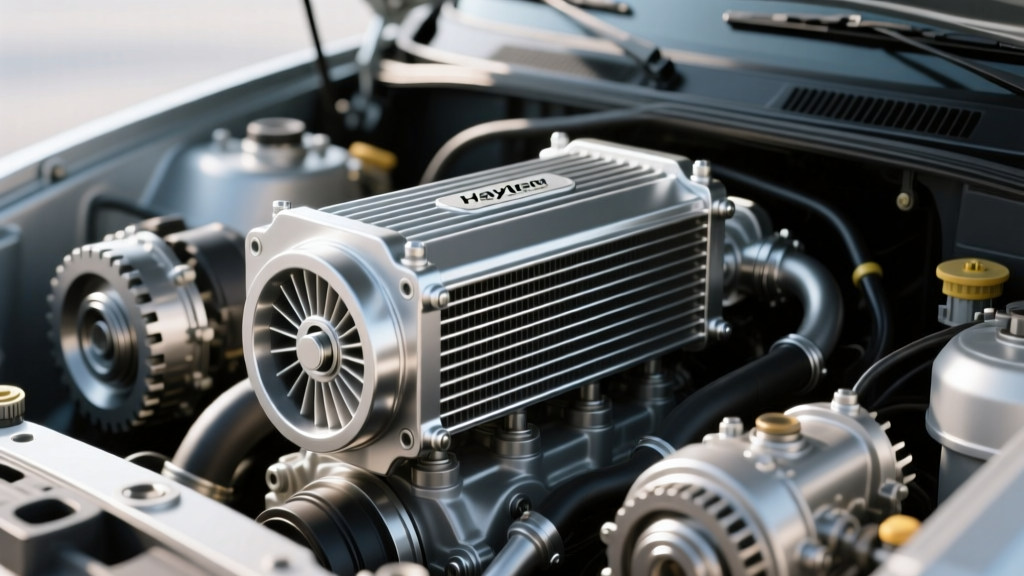
To manage this thermal load, the factory auxiliary cooler is rarely sufficient for sustained heavy towing or commercial use. This is where the Hayden transmission cooler 678 enters the conversation. Designed as a heavy-duty, plate-and-fin heat exchanger, the Hayden 678 Rapid-Cool is a staple in the diesel performance community. This technical deep-dive explores the fluid dynamics, thermal efficiency, and exact installation parameters required to integrate this cooler into modern diesel platforms.
Anatomy of the Hayden 678 Rapid-Cool Design
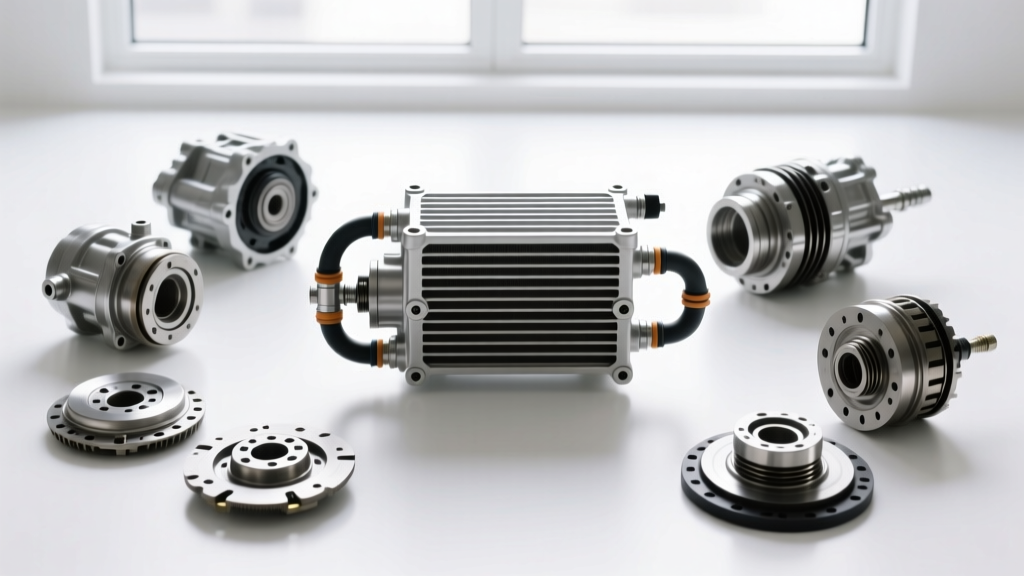
Unlike traditional tube-and-fin coolers that rely on low-pressure fluid routing through serpentine tubes, the Hayden 678 utilizes a plate-and-fin architecture. In this design, transmission fluid flows between flat aluminum plates, while exterior turbulator fins dissipate heat into the ambient air stream.
Why Plate-and-Fin for Diesels?
- Surface Area Density: Plate-and-fin coolers offer up to 30% more heat transfer surface area per cubic inch compared to tube-and-fin designs.
- Lower Pressure Drop: Diesel transmissions like the 68RFE and Allison 1000 rely heavily on cooler return flow to lubricate the rear planetary gearsets and clutch packs. A high-pressure-drop cooler can starve the lube circuit, leading to catastrophic mechanical failure.
- Structural Rigidity: The brazed aluminum plate structure resists the high-pressure spikes (up to 250+ PSI) generated during heavy-load downshifts and torque converter lockup (TCC) apply events.
Specifications and Flow Dynamics
When evaluating the Hayden transmission cooler 678 for heavy-duty applications, understanding its exact flow metrics is critical. Below is a comparative analysis of the Hayden 678 against a standard OEM-style tube-and-fin replacement.
| Specification | Hayden 678 Rapid-Cool | OEM Tube-and-Fin (Baseline) |
|---|---|---|
| Core Design | Plate-and-Fin | Tube-and-Fin |
| Dimensions (Core) | 13" x 11-3/8" x 3/4" | 11" x 9" x 1" |
| GVWR Rating | 24,000 lbs | 10,000 lbs |
| Pressure Drop (@ 2.5 GPM) | ~1.8 PSI | ~4.2 PSI |
| Inlet/Outlet Fittings | 11/32" Barb | 5/16" Barb |
| Estimated BTU/hr Dissipation | ~38,000 BTU/hr | ~22,000 BTU/hr |
The most critical metric here is the pressure drop. The Allison 1000 and 10R140 require a minimum of 1.5 to 2.0 Gallons Per Minute (GPM) through the cooler circuit to maintain adequate lube pressure. The Hayden 678’s wide-flow plate channels keep the pressure drop under 2 PSI at 2.5 GPM, ensuring the transmission's internal lube circuit is never starved, even during high-RPM towing.
Integration with Heavy-Duty Transmissions
GM Duramax (Allison 1000 & 10-Speed)
The Allison platform utilizes a wax-element thermal bypass valve located in the cooler adapter housing. This valve blocks fluid flow to the auxiliary cooler until the ATF reaches approximately 180°F. While this aids in rapid warm-up, it can cause localized hot-spotting when towing heavy loads in stop-and-go traffic. When installing the Hayden 678 on an Allison, it is highly recommended to perform a thermal bypass delete or install a fixed-orifice bypass plate. This ensures continuous fluid circulation through the 678 core, stabilizing temperatures between 160°F and 190°F under load.
Ram Cummins (68RFE & Aisin AS69RC)
The 68RFE is notorious for lube starvation in the overdrive clutches when towing. Because the 68RFE routes cooler return fluid directly to the clutch cooling jets, any restriction in the cooler lines is detrimental. The Hayden 678’s low pressure drop makes it an ideal candidate for the 68RFE. However, you must upgrade the factory 5/16" steel lines to 3/8" or -6 AN hose to prevent flow bottlenecks upstream of the cooler.
Ford PowerStroke (10R140)
The 10R140 operates with a highly pressurized hydraulic system and requires precise thermal management to maintain optimal clutch apply times. Ford's factory integrated cooler is efficient, but adding the Hayden 678 in series (post-radiator, pre-return) provides the necessary thermal buffer for modified trucks pushing over 600 lb-ft of torque at the wheels.
Installation, Plumbing, and Torque Specifications
Proper installation is where most auxiliary cooler upgrades fail. The Hayden 678 ships with 11/32" barb fittings, but for a professional-grade diesel installation, upgrading to AN (Army-Navy) fittings is the industry standard.
Plumbing and Fittings
Instead of using the provided rubber hose and worm-gear clamps, machine the cooler inlets or use an adapter to accept -6 AN O-ring boss (ORB) fittings. Use Earl's ProLite or Russell stainless steel braided -6 AN hose. This eliminates the risk of blown hoses under high-pressure TCC apply events.
Critical Torque Specs
- -6 AN Aluminum Fittings to Cooler/Adapter: 12-15 ft-lbs (Use a crowfoot wrench; do not overtighten, or you will crush the internal O-ring or strip the aluminum threads).
- Hose Clamps (if using barb fittings): 25-30 in-lbs. Use constant-tension T-bolt clamps rather than standard worm-gear clamps to prevent cold-flow cutting into the rubber hose.
- Core Support Mounting Brackets: 15-20 ft-lbs. Always use the provided nylon mounting rods and foam pads to isolate the cooler from chassis vibration. Never bolt the cooler directly to metal brackets without isolation pads, as harmonic vibration will fatigue and crack the aluminum brazed joints.
Expert Tip: Always mount the Hayden 678 in series with the factory radiator cooler, not as a standalone replacement. The factory cooler acts as a fluid warm-up mechanism in cold climates and a pre-cooler in extreme heat. Routing the fluid from the transmission output -> factory radiator cooler -> Hayden 678 -> transmission return is the optimal configuration.
Cost vs. Catastrophic Failure ROI
As of current market pricing, the Hayden transmission cooler 678 retails between $65 and $85, depending on the vendor. Upgrading to -6 AN fittings and high-quality braided lines will add approximately $120 to $150 to the total build cost.
Compare this sub-$250 investment to the replacement cost of modern diesel transmissions. A rebuilt Allison 10-speed or Aisin AS69RC, including removal, installation, and fresh synthetic fluid, routinely costs between $4,500 and $7,000 at a specialized diesel shop. Furthermore, a single overheating event on a modified truck can glaze the torque converter and burn the C4/C5 clutch packs, necessitating a full teardown. The ROI on a properly plumbed Hayden 678 is effectively immediate for any truck owner who tows trailers exceeding 10,000 lbs.
Summary and Sourcing
The Hayden 678 remains a benchmark in heavy-duty transmission cooling due to its optimal balance of high BTU dissipation and low pressure drop. By respecting the fluid dynamics of modern diesel transmissions and utilizing proper AN plumbing techniques, you can effectively eliminate heat-induced transmission degradation.
For further technical documentation on transmission cooling requirements and OEM flow specifications, consult the Hayden Automotive Transmission Cooler Catalog and the Allison Transmission Service Manuals.