Understanding the GMT800 Rear Axle Architecture
The GMT800 platform remains one of the most durable and widely supported truck architectures on the road today. As of 2026, keeping these workhorses operational requires strict adherence to drivetrain maintenance protocols. When planning your next service, knowing the exact 2003 Silverado rear differential fluid capacity
Unlike modern sealed units found on some passenger crossovers, the 2003 Chevrolet Silverado utilizes a traditional, serviceable hypoid gear set housed in either a 10-bolt or 14-bolt differential casing. Proper fluid evacuation, surface preparation, and precise torque specifications are mandatory to ensure a leak-free seal and optimal gear longevity.
2003 Silverado Rear Differential Fluid Capacity Chart
Before purchasing gear oil, you must identify your specific rear axle. The 1500-series trucks predominantly use the 8.625-inch 10-bolt, while 2500HD and 3500 models utilize the massive 10.5-inch 14-bolt full-floating or semi-floating axles.
| Axle Type | Ring Gear Size | Fluid Capacity | Fill Plug Type | Cover Bolt Torque |
|---|---|---|---|---|
| GM 10-Bolt (1500) | 8.625 inches | 2.0 - 2.1 Quarts (1.9L) | 3/8-inch Square Drive | 20 lb-ft (M8 Bolts) |
| GM 14-Bolt SF (2500) | 9.50 inches | 2.5 - 2.7 Quarts (2.4L) | 3/8-inch Square Drive | 25 lb-ft (M10 Bolts) |
| GM 14-Bolt FF (2500HD/3500) | 10.50 inches | 3.0 - 3.5 Quarts (2.8L) | 3/4-inch Hex / 3/8 Sq | 30 lb-ft (M10/M12 Bolts) |
Debunking the G80 Locker Additive Myth
One of the most pervasive myths in the GM truck community involves the Eaton G80 automatic locking differential. Many owners mistakenly believe that because the G80 is a 'locker,' it requires a limited-slip friction modifier additive. This is entirely false.
The G80 is a mechanical, flyweight-actuated locking differential. It does not utilize the clutch packs found in Ford's Trac-Lok or Chrysler's Sure-Grip differentials. Adding a friction modifier to a G80-equipped 2003 Silverado will actually degrade the locking mechanism's engagement speed and can lead to premature wear of the internal governor spring. You only need a straight API GL-5 certified 75W-90 synthetic gear oil. For a deeper dive into GM differential lubrication myths, the technical archives at GMTrucks.com Technical Forums provide extensive teardown documentation confirming that standard GL-5 is the only approved fluid for the G80.
Required Tools and OEM Fluid Specifications
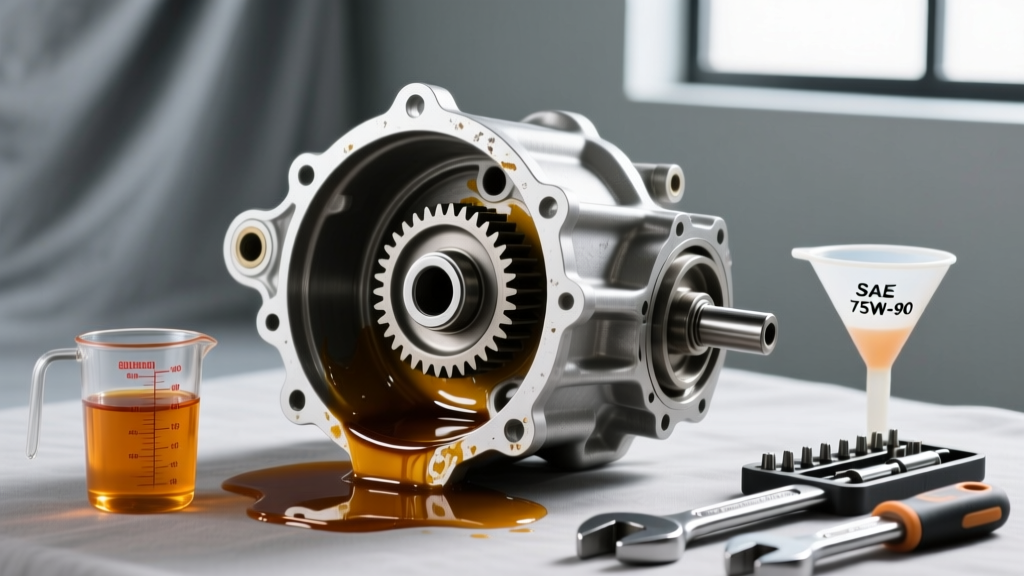
Performing this job in your driveway requires minimal but specific tooling. Do not use cheap, off-brand gear oils; the hypoid gear sliding action requires high-quality extreme pressure (EP) additives found in top-tier synthetics.
- Gear Oil: 3 Quarts of 75W-90 Synthetic GL-5 (e.g., Mobil 1 Synthetic Gear Lubricant or ACDelco Dexron Gear Oil). Refer to API Service Categories to ensure GL-5 compliance.
- Gasket Maker: Permatex Ultra Black RTV Silicone (Part #81878) or a reusable LubeLocker elastomer gasket.
- Tools: 10mm socket (for 10-bolt cover), 3/8-inch drive ratchet (for fill plug), brass wire brush, gasket scraper, drain pan, and brake cleaner.
- Consumables: Shop towels, nitrile gloves, and a standard fluid transfer pump.
Step-by-Step Differential Service Procedure
Step 1: Vehicle Preparation and Safety
Park the Silverado on a level surface. A sloped driveway will result in an inaccurate fluid level reading during the refill process. Chock the front wheels, engage the parking brake, and lift the rear axle using a floor jack. Support the frame rails with heavy-duty jack stands. Never work under a vehicle supported only by a hydraulic jack. Remove the rear tires if they obstruct access to the differential cover bolts.
Step 2: Fill Plug Removal (Critical First Step)
Pro-Tip: Always remove the fill plug before you remove the differential cover or drain plug. The fill plug on the 2003 Silverado 10-bolt is located on the upper passenger side of the housing and features a 3/8-inch square drive recess. If the fill plug is seized or stripped, and you have already drained the fluid, you will be stranded with an inoperable truck until the plug is extracted. Apply penetrating oil and use a high-torque breaker bar if necessary.
Step 3: Cover Removal and Fluid Evacuation
Place a drain pan capable of holding at least 3 gallons beneath the differential. The 2003 10-bolt axle does not feature a dedicated drain plug; the fluid must be evacuated by breaking the seal on the differential cover. Use a flathead screwdriver or a specialized gasket scraper to gently wedge between the cover and the axle housing flange. Allow the 20-year-old gear oil to drain completely. Note the condition of the fluid: a slight metallic sheen is normal for high-mileage axles, but large chunks or a milky appearance indicates water intrusion or severe bearing wear.
Step 4: Cleaning and Gasket Surface Prep
Remove the factory magnet from the inside of the differential cover. Clean it thoroughly; it will likely be covered in a thick paste of fine metallic dust. Use a brass wire brush and aerosol brake cleaner to remove all old RTV silicone from both the cover and the axle housing flange. The mating surfaces must be completely bare, dry, and free of oil residue. If using Permatex Ultra Black RTV, apply a continuous 1/4-inch bead to the differential cover, ensuring you circle every bolt hole to prevent oil weeping.
Step 5: Sealing and Reinstallation
Press the cover into place and thread the 10mm cover bolts by hand to prevent cross-threading the aluminum or thin-stamped steel housing. Tighten the bolts in a crisscross, star-pattern sequence. The factory torque specification for the 10-bolt M8 cover bolts is exactly 20 lb-ft. Over-torquing will warp the thin stamped steel cover, guaranteeing a persistent leak.
Step 6: Filling to the Correct Level
Attach your fluid transfer pump to the 75W-90 gear oil bottle and pump the fluid into the fill hole. The correct fluid level is exactly flush with the bottom edge of the fill plug opening. Insert your pinky finger into the hole; the oil should just touch the first knuckle. Once the fluid begins to weep out of the hole, wipe the area clean and reinstall the fill plug. Torque the fill plug to 24 lb-ft.
Factory Maintenance Intervals vs. Real-World Towing
According to General Motors' original 2003 Silverado owner's manual, the rear differential fluid is classified under 'Normal' driving conditions as a 100,000-mile service item. However, 'Severe' driving conditions dictate a much shorter interval of 50,000 miles.
If your Silverado is used for towing boats, hauling camper trailers, or operating in deep snow, the differential fluid temperatures can easily exceed 250°F, rapidly depleting the EP additives in the gear oil. For fleet and heavy-duty use, draining and refilling the rear axle every 30,000 miles is a cheap insurance policy against a $2,500 ring and pinion replacement.
Troubleshooting Post-Service Issues
- Whining Noise After Service: If the axle whines after a fluid change, verify you did not overfill the housing. Overfilling causes the ring gear to churn the fluid into a foam, leading to aeration, loss of lubrication, and overheating.
- Pinion Seal Leak: If you notice fluid slung forward onto the driveshaft after your service, the differential was likely overfilled, causing internal pressure to blow out the aging pinion seal. Alternatively, check that the axle vent tube on top of the housing is not clogged with mud or debris.
- Chatter on Tight Turns: If you have an aftermarket limited-slip differential (not the factory G80) installed and experience binding or chatter during low-speed parking lot turns, you forgot to add the required limited-slip friction modifier additive.
By adhering to these precise torque specifications and fluid capacities, your 2003 Silverado's rear axle will continue to deliver reliable power to the pavement for hundreds of thousands of additional miles.