The Drivetrain Dilemma: Open vs. Limited Slip in 2026
When building, buying, or maintaining a rear-wheel-drive or four-wheel-drive vehicle, the differential is the unsung hero of your drivetrain. Whether you are crawling over rocks, towing heavy loads, or navigating icy commutes, the choice between an open differential and a limited-slip differential (LSD) dictates your traction, maintenance schedule, and overall reliability. But how do you evaluate the health of a used axle before committing to a purchase or a rebuild? The secret lies in a meticulous inspection of the differential fluid leak color, residue, and viscosity.
In this comprehensive buyer’s guide and diagnostic comparison, we will break down the mechanical differences between open and limited-slip axles, analyze what specific fluid colors tell you about internal wear, and provide the exact torque specs and fluid capacities you need to keep your rig moving in 2026.
Mechanical Comparison: Open vs. Limited Slip Differentials
Before diving into fluid diagnostics, it is crucial to understand the mechanical distinctions that influence fluid degradation and leak characteristics.
Open Differentials: The Baseline Standard
An open differential is the most common and cost-effective setup from the factory. It utilizes a simple spider gear arrangement that allows the left and right wheels to rotate at different speeds during cornering. However, torque is distributed equally. If one wheel loses traction (e.g., on ice or mud), all power is routed to the path of least resistance, leaving the vehicle stranded. Because there are no internal friction clutches, open differentials run cooler and require standard GL-5 gear oil without specialized friction modifiers.
Limited Slip Differentials (LSD): Traction on Demand
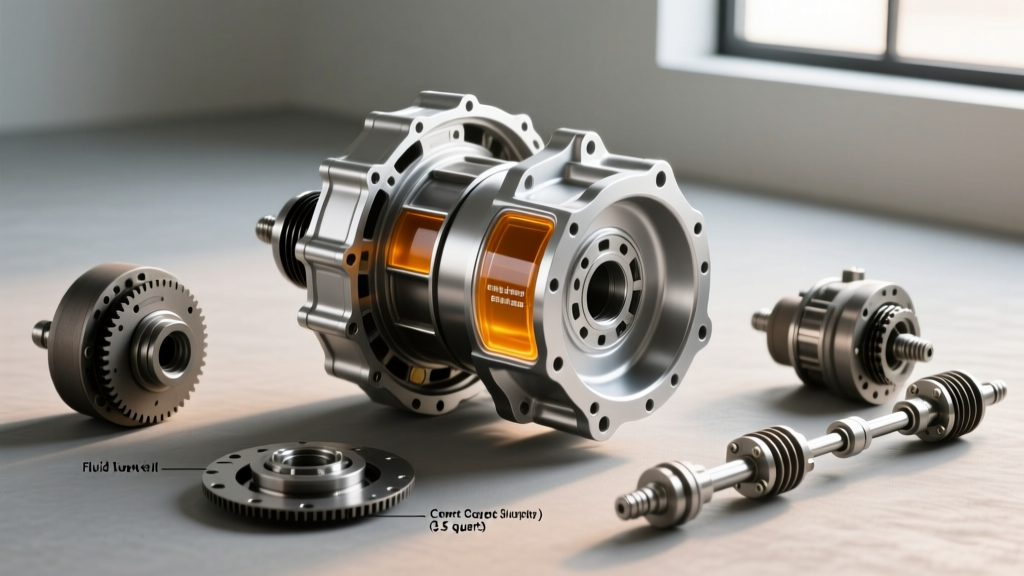
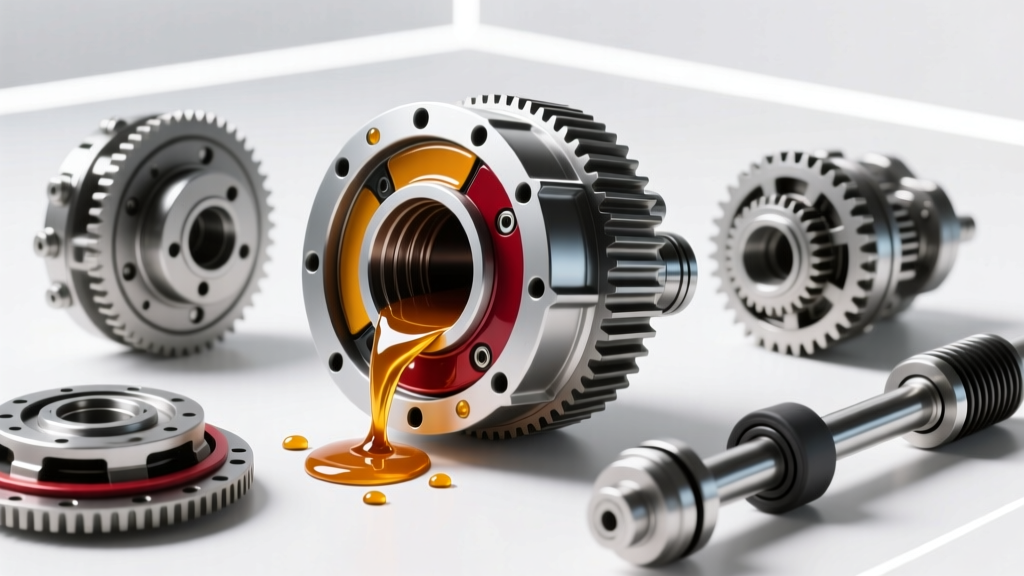
Limited-slip differentials, such as the Eaton Positraction or Auburn Gear LSD, utilize internal clutch packs and preload springs to mechanically link the axleshafts. When one wheel slips, the clutch packs engage to transfer torque to the wheel with grip. Helical gear designs, like the Eaton Truetrac, offer a maintenance-free alternative by using gear separation forces to create torque biasing without friction clutches. Clutch-based LSDs generate significantly more internal heat and friction, heavily influencing the rate at which gear oil degrades and changes color.
Diagnostic Goldmine: What Your Differential Fluid Leak Color Tells You
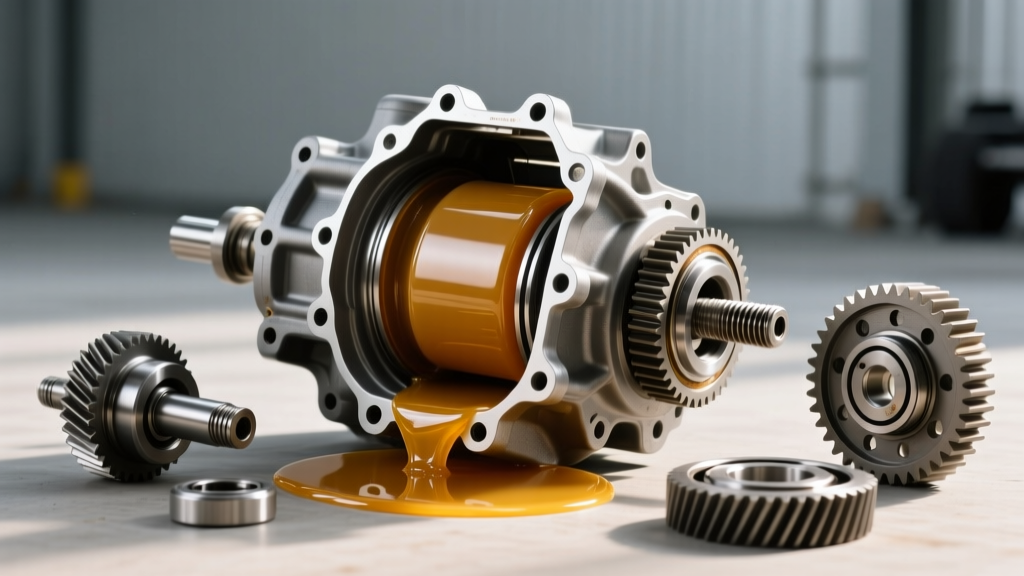
When inspecting a vehicle—whether it is a used Ford F-150 with an 8.8-inch rear end or a Jeep Wrangler with Dana 44 axles—checking the differential fluid leak color is your most accurate non-invasive diagnostic tool. A leak on the driveway or a weep around the pinion seal is not just a nuisance; it is a window into the differential's internal health.
Pro Tip: Never judge fluid health solely by the dipstick or fill plug. Fluid inside the housing may look acceptable, but the fluid that seeps past failing axle seals or the pinion bearing often carries concentrated metallic particulates and oxidized sludge that reveals the true state of the ring and pinion gears.
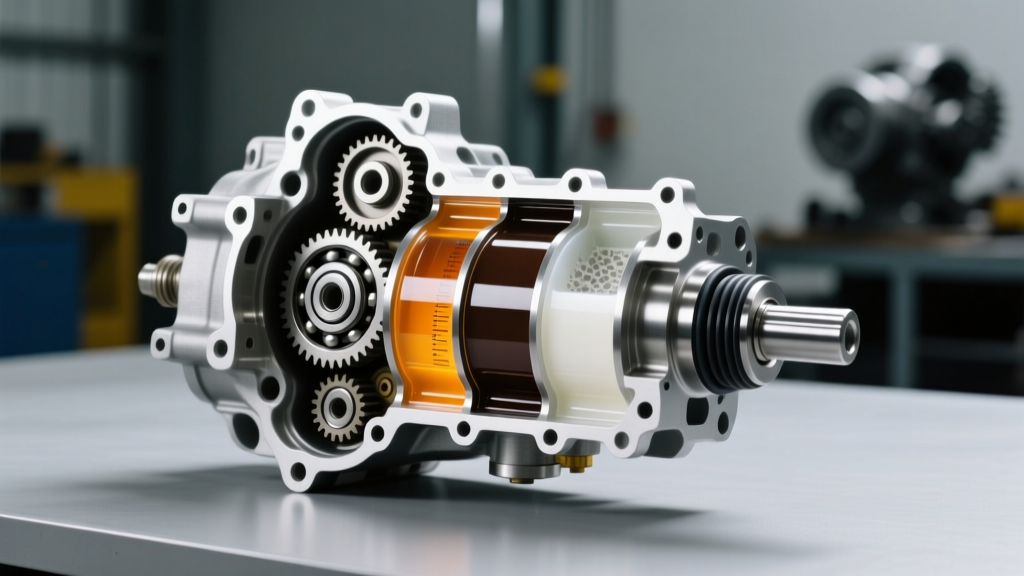
Fluid Color & Condition Matrix
| Leak Color & Consistency | Odor | Open Differential Diagnosis | Limited Slip Diagnosis |
|---|---|---|---|
| Translucent Amber/Honey | Mild Petroleum | Normal. Fresh 75W-90 or 80W-90 fluid. Minor seal weep is cosmetic. | Normal. Fresh fluid with active friction modifier. |
| Opaque Black / Sludgy | Sulfur / Rotten Eggs | High mileage oxidation. Needs immediate drain and fill. Inspect cover gasket. | Severe clutch pack wear. Friction modifier has broken down. Chatter likely present. |
| Metallic Silver / Glitter | Burnt Oil / Hot Metal | Ring/pinion spalling or pinion bearing failure. Rebuild required. | Clutch pack disintegration or side gear wear. Complete teardown necessary. |
| Milky / Chocolate Milk | Damp / Musty | Water intrusion. Failed axle seal, submerged breather tube, or cracked housing. | Water intrusion. Rust will rapidly destroy clutch pack steels and friction discs. |
| Dark Brown with Burnt Smell | Acrid / Burnt Toast | Rare. Usually indicates severe overloading or towing beyond GCWR limits. | Classic LSD failure. Clutch packs are slipping and cooking the fluid. Rebuild imminent. |
Fluid Specifications & The Friction Modifier Factor
The chemical composition of your gear oil directly impacts how leaks manifest and how the differential performs. According to Yukon Gear & Axle, using the incorrect fluid viscosity or omitting required additives is the leading cause of premature differential failure in aftermarket builds.
Open Diff Fluid Requirements
Standard open differentials typically call for 80W-90 or 75W-90 API GL-5 gear oil. For modern 2026 daily drivers and light-duty trucks, full synthetic 75W-90 is highly recommended for its superior cold-flow properties and high-temperature shear stability. Capacities generally range from 1.5 quarts (GM 8.5-inch 10-bolt) to 3.5 quarts (Dana 60). If you spot an amber leak, it simply means your pinion seal or axle seal is weeping fresh fluid—a cheap fix before catastrophic loss occurs.
LSD Fluid Requirements & Additives
Clutch-based limited-slip differentials require the same GL-5 base oil, but they must include a Friction Modifier (FM). Products like Motorcraft XL-3 or GM EOS (EOS Additive) are essential. The FM alters the friction coefficient of the fluid, allowing the clutch packs to slip smoothly during tight turns rather than binding and causing 'axle hop' or chatter. If your differential fluid leak color is dark brown and smells burnt, it is a primary indicator that the FM has degraded, causing the clutches to aggressively grab, generate immense heat, and literally cook the gear oil.
Buyer’s Guide: Choosing the Right Setup for Your Build
When deciding between retaining an open differential, upgrading to a clutch-type LSD, or investing in a helical gear LSD, consider your budget, traction needs, and maintenance tolerance.
- Open Differential: Best for budget builds, highway cruisers, and dedicated winter vehicles where predictable, neutral handling is preferred. Maintenance Cost: Low. Fluid changes every 50,000 miles ($40-$60 in synthetic fluid).
- Clutch-Type LSD (e.g., Eaton Posi, Auburn): Ideal for drag racing, muscle cars, and light off-roading. Requires strict adherence to fluid and FM change intervals (every 30,000 miles). Rebuild Cost: $1,200 - $1,800 when clutch packs and side gears wear out.
- Helical Gear LSD (e.g., Eaton Truetrac, Torsen): The ultimate 'set-it-and-forget-it' upgrade. Uses standard GL-5 gear oil with no friction modifiers required. Provides seamless torque biasing without clutch wear. Cost: $700 - $950 for the unit, plus installation.
Seal Replacement & Critical Torque Specifications
If your differential fluid leak color analysis indicates fresh fluid escaping from the pinion yoke, you likely need a pinion seal replacement. This is a common maintenance item, but it requires precision to avoid destroying the crush sleeve and altering your bearing preload.
GM 8.5-inch 10-Bolt (Common in Silverado/Tahoe)
- Pinion Nut Torque (Crush Sleeve): 160 - 220 ft-lbs (Rotate pinion while tightening to achieve correct rotational torque of 15-25 in-lbs).
- Ring Gear Bolts: 70 ft-lbs (Always use Red Loctite 272 and verify bolt hole depth to avoid bottoming out).
- Fluid Capacity: ~2.1 Quarts (75W-90 Synthetic GL-5).
Ford 8.8-inch (Common in Mustang/F-150)
- Pinion Nut Torque (Standard Crush Sleeve): 85 - 140 ft-lbs (Target 8-14 in-lbs rotational preload).
- Solid Spacer Conversion: Highly recommended for LSD upgrades. Requires ~250 ft-lbs pinion nut torque and eliminates the risk of crush sleeve over-compression during high-horsepower launches.
- Fluid Capacity: ~1.8 to 2.5 Quarts (Depending on cover design; requires 4 oz of XL-3 Friction Modifier for Traction-Lok LSDs).
Final Verdict: Read the Leaks, Pick the Right Diff
Whether you are evaluating a used truck or planning a drivetrain overhaul, the differential fluid leak color is your most reliable diagnostic ally. An open differential offers simplicity and low maintenance, but a limited-slip differential provides the traction necessary to truly utilize your vehicle's power. By understanding the unique fluid requirements, wear patterns, and torque specifications of each system, you can make an informed purchase and avoid the costly mistake of buying an axle with cooked clutch packs or spalled ring gears. Always consult authoritative resources like Dana Spicer Drivetrain for exact OEM specifications before tearing into your next axle rebuild.