The Centrifugal Principle: How Does a Go Kart Clutch Work?
When novice racers and backyard mechanics ask, "how does a go kart clutch work?", the answer fundamentally relies on centrifugal force and friction management. Unlike the manual diaphragm or hydraulic clutches found in full-size automotive manual transmissions, a go-kart utilizes a centrifugal clutch. This device is designed to engage automatically as engine RPM increases and disengage at idle, eliminating the need for a foot pedal.
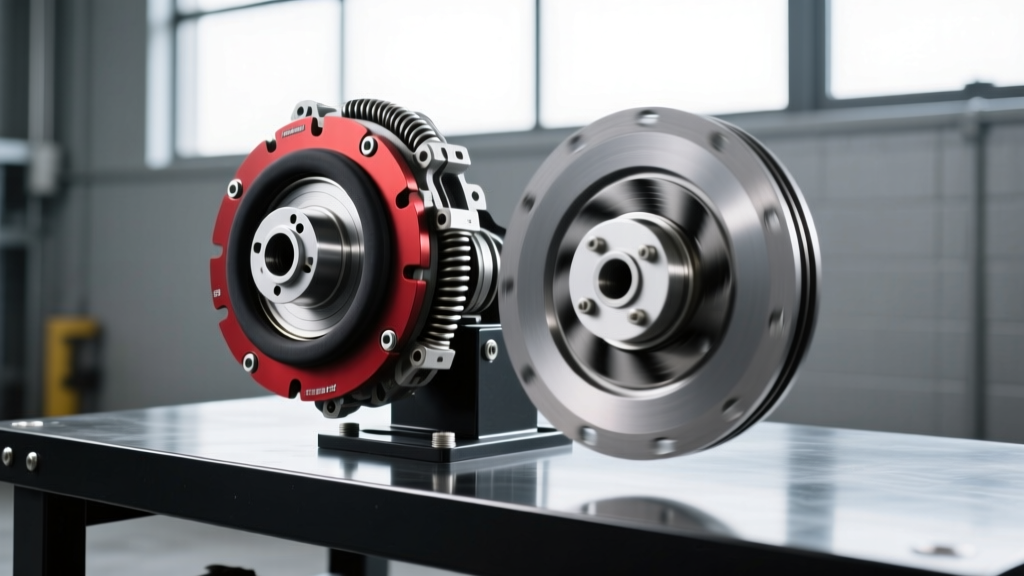
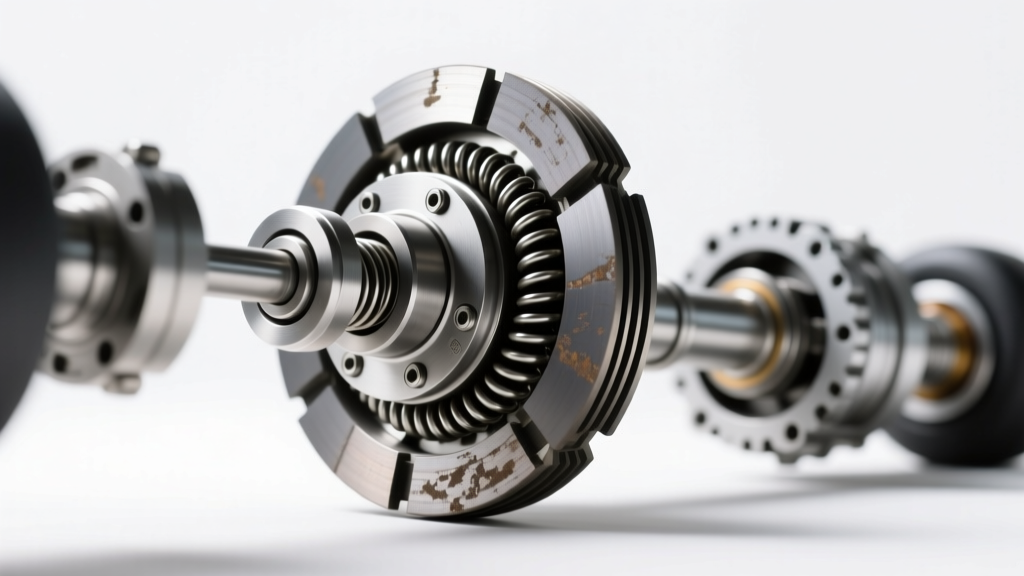
The assembly consists of three primary components: the drive hub (spider), the friction shoes, and the clutch drum. The drive hub is keyed directly to the engine crankshaft. Attached to the hub via pivot pins are the friction shoes, which are lined with organic, Kevlar, or sintered iron friction material. Tension springs hold these shoes inward toward the hub at low RPMs. As the engine accelerates, centrifugal force overcomes the spring tension, forcing the friction shoes outward against the inner diameter (ID) of the clutch drum. The drum, which has a sprocket welded to its exterior to drive the #35, 219, or 428 chain, begins to rotate, transferring power to the rear axle.
Understanding this mechanical sympathy is critical for accurate diagnostics. Because the engagement is entirely dependent on RPM and spring tension, wear signs manifest differently than in automotive applications. Below, we detail the exact failure modes, lifespan indicators, and precision measurements required to diagnose a failing go-kart clutch in the 2026 racing landscape.
Identifying Centrifugal Clutch Wear Signs
Diagnosing a centrifugal clutch requires observing both dynamic behavior on the track and static physical degradation on the workbench. Here are the primary symptoms of a clutch reaching the end of its service life.
1. High-RPM Slipping and Thermal Glazing
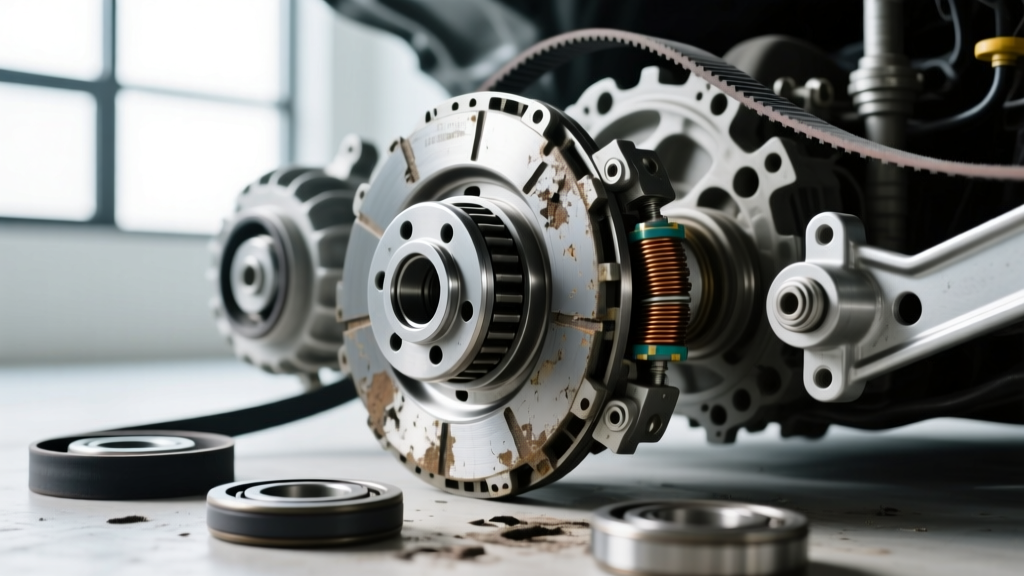
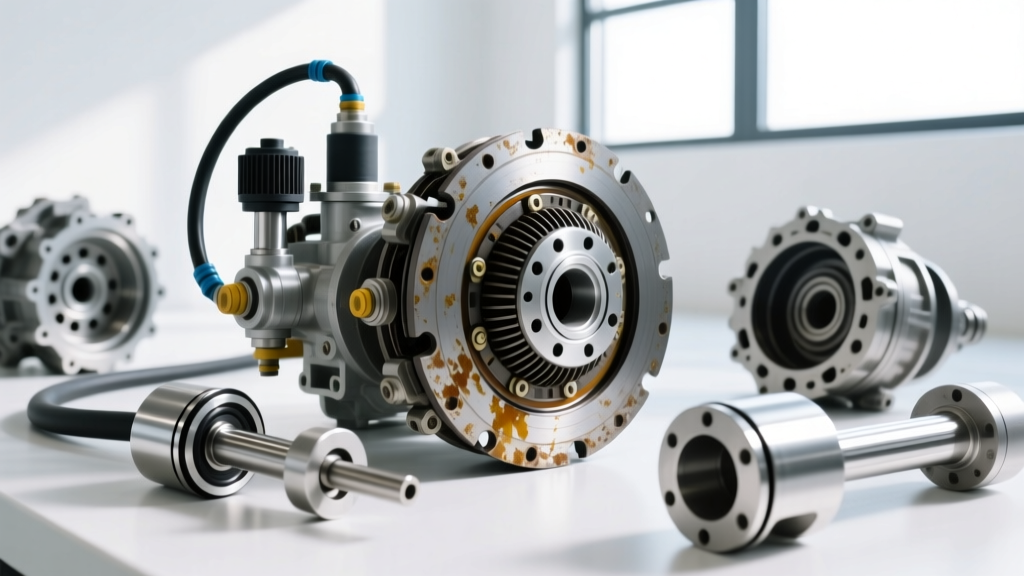
The most common symptom of clutch wear is slipping under load, particularly when exiting a corner or climbing an incline. Slipping generates immense localized heat, often exceeding 400°F (204°C) at the friction interface. This heat bakes the organic friction material, causing a phenomenon known as thermal glazing. A glazed shoe develops a hard, glassy surface that drastically reduces the coefficient of friction. If your engine RPMs surge without a corresponding increase in kart speed, the shoes are likely glazed or worn down to the backing plate.
2. Spring Fatigue and Engagement RPM Drift
Tension springs are rated for specific engagement RPMs (e.g., 1800 RPM for standard yellow springs, 2200 RPM for racing red springs). Over time, the continuous cycle of heating and cooling, combined with high-G centrifugal stretching, causes the steel to anneal and lose its tensile strength. The primary symptom of spring fatigue is premature engagement. If a clutch spec'd to engage at 2200 RPM begins pulling the chain at 1600 RPM, the kart will "creep" forward at idle, and the engine will bog down due to the mismatched power band.
3. Needle Bearing Failure and Drum Runout
Between the drive hub and the clutch drum sits a sealed needle bearing (typically accommodating a 5/8" or 3/4" crankshaft bore). If the bearing seal fails and dirt infiltrates the assembly, or if the lubricant breaks down from excessive heat, the bearing will develop radial play. Symptoms include a high-pitched squealing at idle, erratic chain tension, and the chain derailing from the sprocket. In severe cases, the drum will wobble, causing catastrophic runout that can snap the chain or damage the crankshaft keyway.
Quantitative Lifespan Indicators: Measurement Thresholds
Visual inspection is insufficient for high-performance applications. To accurately determine if a clutch requires a rebuild or total replacement, you must measure critical tolerances using digital calipers and a dial indicator. Refer to the BMI Karts Technical Library for OEM baseline specifications.
| Component Parameter | OEM Specification (Nominal) | Wear Limit / Replace Threshold |
|---|---|---|
| Clutch Drum Inner Diameter (#35 Chain) | 2.000" - 2.062" | > 2.085" (Out-of-round or oversized) |
| Friction Shoe Material Thickness | 0.125" (1/8") | < 0.060" (Replace immediately) |
| Needle Bearing Radial Play | 0.000" - 0.002" | > 0.005" (Bearing failure imminent) |
| Spring Free Length (2200 RPM Red) | 2.850" | < 2.650" (Loss of tension) |
| Drum Sprocket Tooth Wear (Pitch Dia) | Match chain pitch exactly | Hooked tips or >0.015" pitch elongation |
Technical Teardown and Precision Diagnostics
When symptoms point to internal degradation, a systematic teardown is required. Follow this procedure to isolate the exact failure point:
- Removal: Remove the crankshaft retaining bolt and washer. Use a dedicated clutch puller tool to extract the clutch. Never strike the clutch with a hammer, as this will instantly brinell the needle bearing and destroy the crankshaft threads.
- Disassembly: Remove the external circlip (or snap ring) securing the drum to the hub. Carefully slide the drum off the bearing. Note the orientation of the spacer washers.
- Friction Inspection: Measure the shoe thickness. If the material is below 0.060", or if the surface is highly reflective (glazed), the shoes must be replaced. Sintered iron shoes can sometimes be scuffed with 80-grit sandpaper to remove light glazing, but organic shoes must be replaced.
- Bearing Test: Hold the inner race of the needle bearing stationary and attempt to wiggle the outer race. Any detectable "click" or lateral movement indicates the needles are pitted or the cage is compromised.
- Drum Evaluation: Measure the ID of the drum in an X-Y axis pattern using inside calipers. If the drum is worn into an oval shape (exceeding 0.015" variance between X and Y), it will not allow the shoes to make uniform contact, leading to perpetual hot-spots and slipping.
Pro-Tip for 2026 Engine Builds: Modern cloned engines (like the Tillotson 225RS or modified Predator 212s) produce significantly more low-end torque than legacy flatheads. Upgrading to a clutch with Kevlar-lined shoes and billet steel drums is highly recommended to prevent premature drum warping under aggressive launch conditions.
Rebuild vs. Replace: Cost and Performance Analysis
Deciding whether to rebuild a centrifugal clutch or purchase a complete new assembly depends on the condition of the drum and the internal bearing. According to market data from suppliers like Kart Parts Depot, here is the financial breakdown for standard 5/8" bore clutches:
- Complete Rebuild Kit ($25 - $45): Includes new friction shoes, tension springs, pivot pins, and circlips. This is the most cost-effective route if the drum ID is within spec and the needle bearing spins smoothly without play.
- Replacement Needle Bearing ($12 - $18): If the bearing is shot but the drum is pristine, pressing in a new sealed needle bearing (e.g., INA or SKF equivalent) saves the cost of a full unit.
- Complete New Clutch Assembly ($65 - $130): Required if the drum is warped, out-of-round, or if the sprocket teeth are hooked. High-end racing clutches (like the Hilliard Flame or Comet Torque-A-Verter) sit at the top of this price range but offer superior thermal dissipation.
Installation Torque Specifications
Improper installation is a leading cause of premature clutch failure. When reinstalling the clutch onto the crankshaft, ensure the woodruff key is perfectly seated and flush. The crankshaft end-play must be managed with the correct thickness of spacer washers to prevent the clutch from binding against the engine block when the bolt is tightened.
- 5/8" Bore Crankshafts (3/8"-24 UNF Bolt): Torque to 30-35 lb-ft.
- 3/4" Bore Crankshafts (1/2"-20 UNF Bolt): Torque to 45-50 lb-ft.
Always apply a medium-strength, oil-tolerant threadlocker (such as Loctite 243) to the crankshaft bolt threads to prevent vibration-induced backing out, which will result in the clutch walking off the shaft and destroying the engine case.
Summary
Understanding how does a go kart clutch work is only the first step in drivetrain maintenance. By monitoring engagement RPMs, measuring drum tolerances with precision instruments, and adhering to strict torque specifications during installation, you can maximize the lifespan of your centrifugal clutch. Whether you are running a backyard trail kart or a highly modified sprint racer, treating the clutch as a precision wear-item rather than a static component will ensure consistent power delivery and prevent catastrophic track-side failures.