GM Corporate Axle Leak Diagnostics and LSD Fluid Service Guide
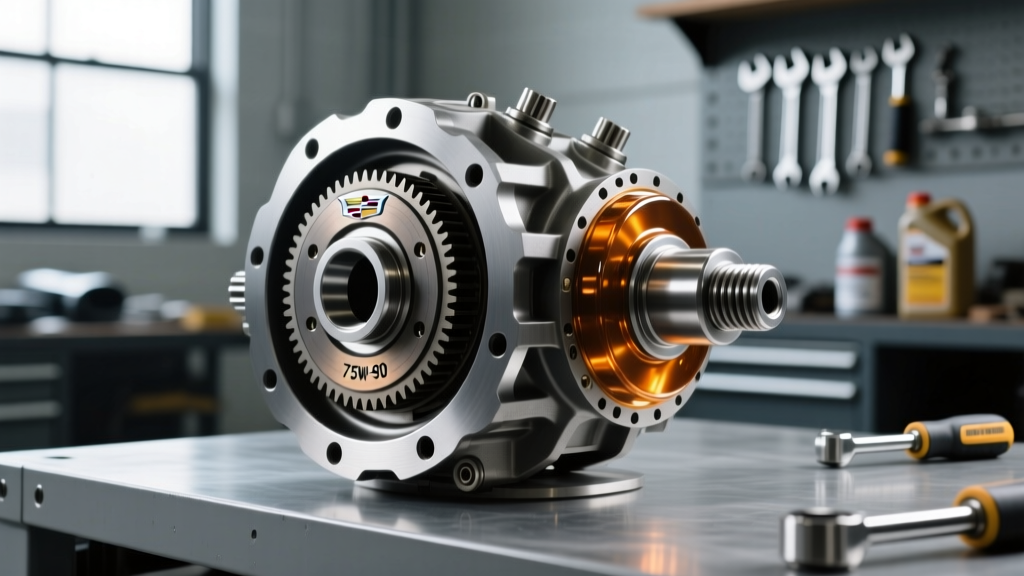
General Motors’ light-duty truck, SUV, and performance car lineup relies heavily on the legendary corporate 8.5-inch 10-bolt and 9.5-inch 14-bolt semi-floating axles. Whether you are maintaining a 2018 Silverado 1500, a C6 Corvette, or a modern Tahoe, these differentials are robust but not immune to seal degradation and fluid breakdown. By 2026, many of these vehicles are surpassing the 100,000-mile mark, making differential leak detection and subsequent fluid service a critical maintenance interval.
When a GM axle develops a leak, owners are forced to drain and refill the housing. This presents a secondary challenge: managing the friction modifiers required for clutch-type limited-slip differentials. Misunderstanding the application of a gm limited slip differential additive can lead to catastrophic clutch-pack shudder, premature wear, and voided powertrain warranties. This model-specific repair guide details the exact diagnostic framework, seal replacement procedures, and fluid chemistry required to service GM axles correctly.
Identifying GM Axle Leak Sources: The Diagnostic Framework
Before ordering seals and gear oil, you must accurately pinpoint the leak source. GM axles typically leak from three primary locations, each requiring a different repair strategy and toolset. Gear oil has a distinct, pungent sulfur smell, which helps differentiate it from engine oil or transmission fluid leaking from the transfer case output shaft.
| Leak Source | Common GM Application | OEM / Aftermarket Part # | Est. DIY Cost |
|---|---|---|---|
| Pinion Seal | 8.5" 10-Bolt (Silverado, Camaro) | SKF 18721 / National 8660S | $25 - $40 |
| Axle Shaft Seal | 9.5" 14-Bolt Semi-Float (Tahoe) | Timken 8660S | $15 - $25 per side |
| Diff Cover Gasket | All Corporate Axles | Fel-Pro RDS55028 | $15 - $20 |
| Crush Sleeve (Internal) | 8.5" / 9.5" (Preload Loss) | Ratech 1100 Solid Spacer Kit | $45 - $60 |
Note: Always verify your exact RPO code (e.g., GU6 for 3.42 gears, G80 for locking differential) via the glovebox sticker before ordering internal hard parts.
Step-by-Step Pinion Seal Replacement (GM 8.5" 10-Bolt)
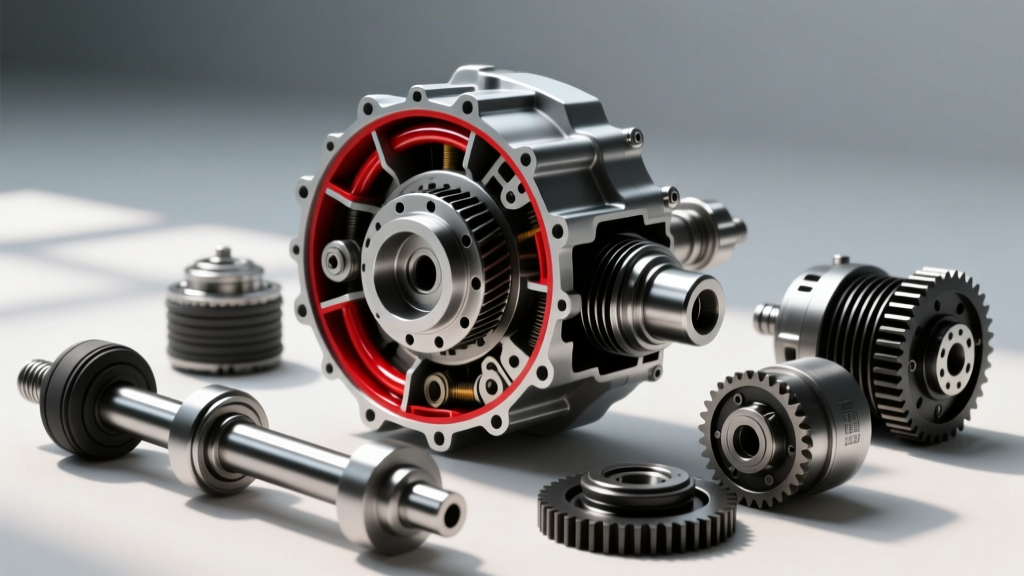
The pinion seal is the most frequent failure point on GM 10-bolt axles, often exacerbated by worn U-joints and excessive driveline harmonic vibration. Replacing this seal is straightforward, but managing the crush sleeve is where amateur mechanics destroy their ring and pinion gearsets.
The Crush Sleeve Dilemma
GM uses a one-time-use crush sleeve to set pinion bearing preload. If you remove the pinion nut to swap the seal, the crush sleeve is already deformed to its specific tension. Reusing it will result in a loose pinion bearing, leading to catastrophic gear whine and eventual tooth shearing.
Expert Tip: Instead of installing a new OEM crush sleeve (which requires a massive impact gun or specialized torque multiplier to crush), upgrade to a Ratech 1100 Solid Spacer Kit. This eliminates the crush sleeve entirely, using machined steel spacers and shims to set rotational preload perfectly, allowing you to safely remove and reinstall the pinion nut in the future without destroying your preload setup.
Replacement Procedure and Torque Specs
- Mark and Remove: Mark the pinion nut and yoke with a paint pen. Remove the driveshaft and support it safely.
- Extract the Seal: Use a dedicated seal puller to extract the old SKF 18721 seal. Inspect the pinion yoke sealing surface for deep grooves; if grooved, install a Speedi-Sleeve or replace the yoke.
- Install New Seal: Tap the new seal flush using a seal driver. Coat the rubber lip with a dab of fresh 75W-90 gear oil.
- Set Preload: If using a solid spacer kit, tighten the pinion nut while measuring rotational torque with a beam-style torque wrench. Target 20 to 30 inch-pounds of rotational drag (add 5 in-lbs if reusing original bearings).
- Final Torque: The pinion nut itself will typically require between 200 and 250 lb-ft to achieve this bearing preload. Apply blue Loctite to the threads before final tightening.
The Additive Conundrum: Eaton G80 vs. Auburn LSD
When refilling the differential, the most critical decision revolves around friction modifiers. GM installed two vastly different types of limited-slip and locking differentials across their fleet, and confusing them is a common, costly mistake.
The Eaton G80 Mechanical Locker
The RPO G80 is a mechanical locking differential, not a traditional clutch-type limited-slip. It utilizes flyweights, a governor, and a locking mechanism that engages when wheel speed differences exceed 100 RPM. Because it does not rely on friction clutches to transfer torque, the Eaton G80 does not require and should not use any friction modifier additive. Standard 75W-90 GL-5 Synthetic gear oil is all it needs. Adding a modifier to a G80 can actually cause the governor mechanism to slip, delaying or preventing engagement.
Auburn Gear and Clutch-Type LSDs
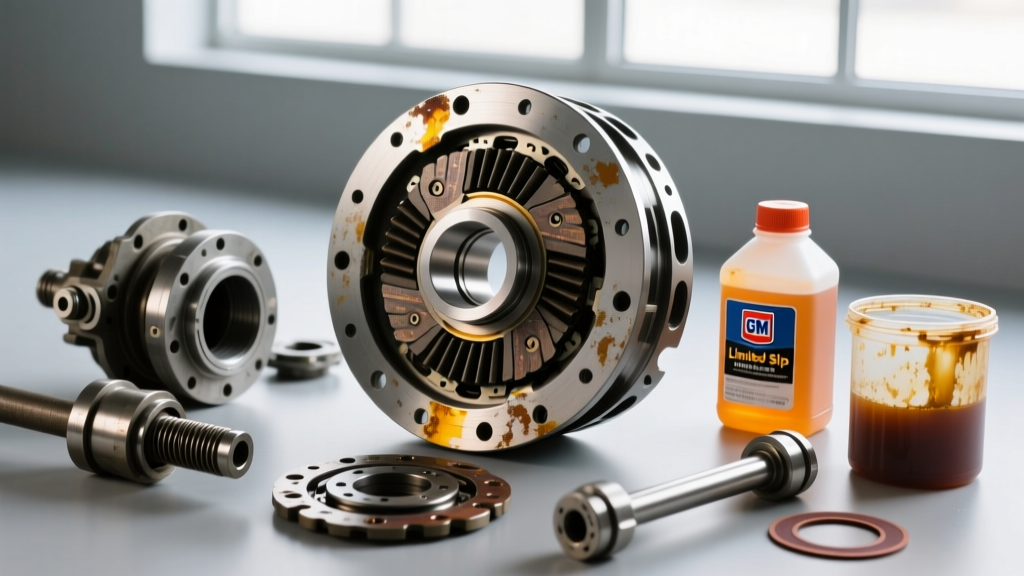
Conversely, GM performance vehicles (like the Camaro SS and Corvette) and many aftermarket/upgraded truck axles utilize Auburn Gear clutch-type limited-slip differentials or the Eaton Truetrac. These units rely on alternating steel and friction clutch packs. Without the correct chemical friction modifiers, these clutches will bind and release violently during low-speed cornering, causing a severe 'chatter' or 'judder' that will physically destroy the clutch packs and cross-pin shafts.
This is exactly where a dedicated gm limited slip differential additive becomes mandatory. The OEM recommended fluid modifier is the ACDelco Limited Slip Axle Lubricant Additive (Part #88900333 / 10-4016). You can verify current fluid specifications and cross-reference OEM part numbers directly via the ACDelco official parts catalog.
Fluid Drain, Refill, and Additive Dosing Protocol
Proper fluid chemistry and fill procedures are just as important as the mechanical seal repair. For a standard GM 8.5-inch 10-bolt, the total fluid capacity is approximately 2.1 quarts. For the 9.5-inch 14-bolt semi-float, expect to use between 2.75 and 3.0 quarts.
The Mixing Strategy
A common error is pouring the gear oil in first, followed by the additive. Because the additive is highly viscous, it will often pool at the bottom of the differential housing and fail to circulate into the upper clutch packs during initial operation.
- Pre-Mix: Pour the entire bottle of ACDelco 88900333 additive (typically 4 oz) into your first quart bottle of 75W-90 Synthetic Gear Oil (e.g., ACDelco 88862624). Shake vigorously to emulsify the friction modifiers into the base oil.
- Fill: Pump the pre-mixed quart into the differential fill hole first. Follow with straight 75W-90 until the fluid level reaches the bottom edge of the fill plug threads.
- Seal the Housing: If your axle uses a reusable gasket (like the Fel-Pro RDS55028), ensure the mating surfaces are cleaned with brake cleaner. If using RTV, apply a continuous 3mm bead of Permatex Ultra Black, wait 10 minutes for it to skin over, and torque the cover bolts to 25 lb-ft in a crisscross star pattern.
The Figure-8 Break-In Procedure
If you have serviced an Auburn or clutch-type LSD and added the required modifier, the mechanical break-in is non-negotiable. The friction modifiers need heat and shear force to coat the clutch surfaces evenly.
Find a large, empty, dry parking lot. Drive the vehicle in a series of 20 tight figure-8 patterns at roughly 10 to 15 MPH. This forces the outer wheel to spin faster than the inner wheel, intentionally slipping the clutch packs under load and distributing the additive evenly across all friction surfaces. Following the figure-8s, complete 10 to 15 miles of varied highway driving to bring the differential up to full operating temperature (typically 160°F to 190°F). For more technical data on differential bearing tolerances and seal material compatibility, reference the SKF Automotive Engineering portal.
Summary of 2026 Service Intervals
While GM historically labeled differential gear oil as a 'lifetime' fluid, independent tribology testing and real-world towing data dictate that severe-use vehicles (towing, off-roading, or track use) should have their differential fluid and additive replenished every 50,000 miles. Normal commuter vehicles should target a 100,000-mile drain interval. By accurately diagnosing leaks, upgrading to solid pinion spacers, and correctly dosing your friction modifiers, your GM corporate axle will reliably transfer torque for hundreds of thousands of miles.