The xDrive Synergy: Understanding Your BMW's Drivetrain
Welcome to the fascinating world of BMW's xDrive all-wheel-drive system. If you are a new BMW owner or an enthusiast just beginning to dive into DIY maintenance, the underside of your vehicle can look like a complex maze of metal and fluids. One of the most common questions beginners ask when planning their first major drivetrain service is how the various components interact. Specifically, how does the transfer case relate to the axles, and why is changing your BMW rear differential fluid so critical to the health of the entire system?
To answer this, we must look at the drivetrain not as a collection of isolated parts, but as a symbiotic ecosystem. In this beginner-friendly explainer, we will break down the mechanical relationship between the transfer case and the differentials, decode the specific fluid chemistry required for each, and provide the exact torque specs and part numbers you need for a proper service in 2026.
The Mechanical Link: From Transmission to Tarmac
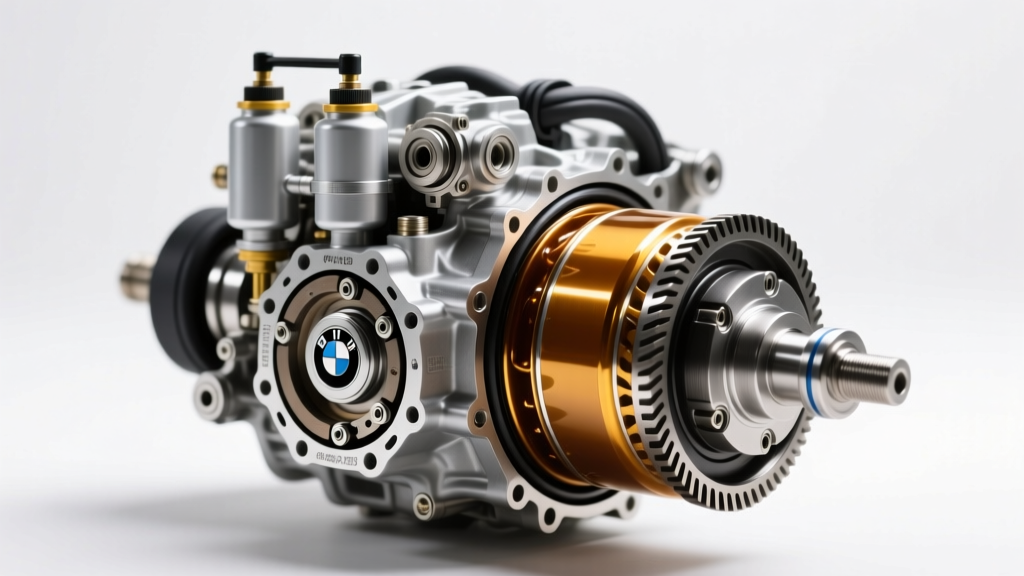
To understand why your fluids matter, you first need to understand the path the power takes. In most modern BMWs equipped with the ubiquitous ZF 8HP 8-speed automatic transmission, engine torque is sent rearward into a component called the Active Transfer Case (ATC). Common models include the ATC35L and ATC45L.
The Transfer Case: The Traffic Cop
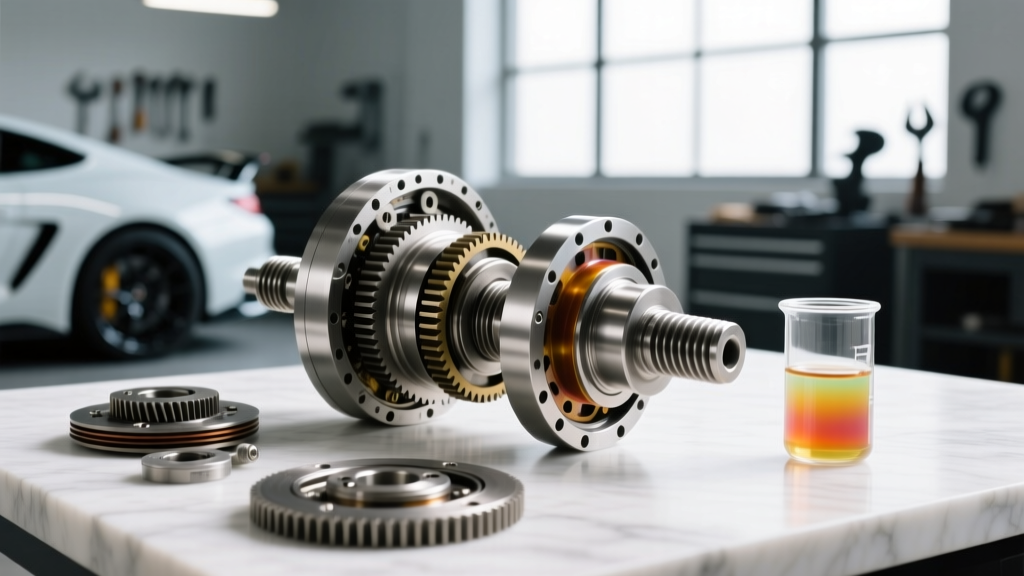
Think of the transfer case as the drivetrain's traffic cop. Inside the ATC housing is a wet multi-plate clutch pack controlled by an electric servo motor. Under normal cruising conditions, the transfer case sends the majority of the torque to the rear wheels to preserve BMW's signature rear-biased driving dynamics. However, the moment the vehicle's sensors detect slip, the ATC clamps the clutch pack, diverting up to 100% of the available torque to the front axle via a driveshaft.
The Rear Differential: The Final Multiplier
While the transfer case manages the front-to-rear split, the rear differential takes the torque sent backward by the ATC and multiplies it through the ring and pinion gears before distributing it left and right to the rear wheels. Because the rear differential handles the brunt of the baseline torque load—and absorbs the shock of aggressive launches and heavy towing—it operates under immense mechanical stress. This is exactly why pristine BMW rear differential fluid is non-negotiable.
Fluid Chemistry: Why You Cannot Mix Them
A dangerous mistake many beginners make is assuming that 'gear oil is gear oil.' The transfer case and the rear differential operate on entirely different mechanical principles, requiring vastly different chemical formulations.
Transfer Case Fluid (TF-0870 / DTF-1)
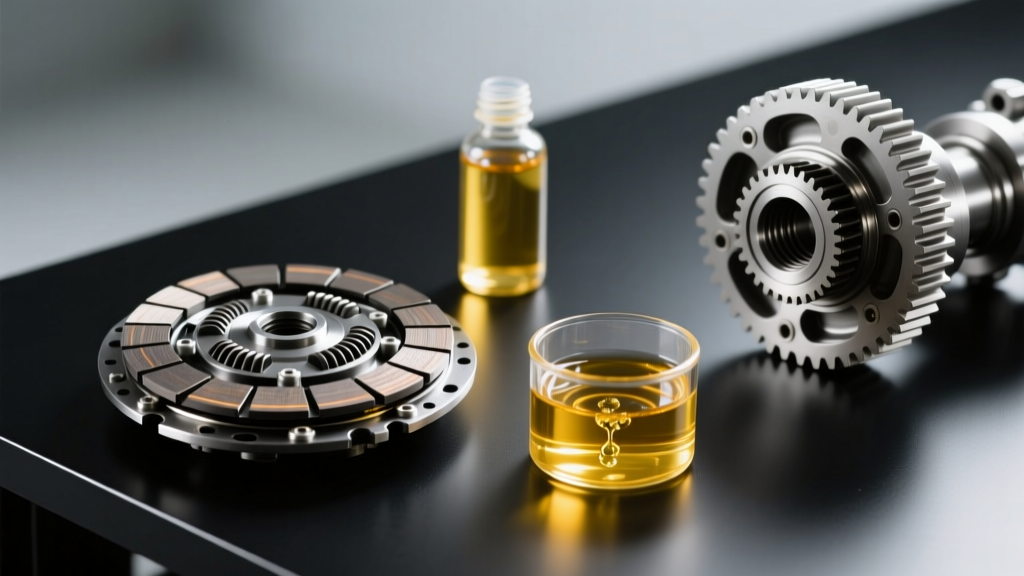
The transfer case relies on a wet clutch pack to modulate torque. Therefore, its fluid must contain specialized friction modifiers that allow the clutch plates to grab smoothly without shuddering or glazing. Historically, BMW used TF-0870. In recent years, they have transitioned to DTF-1 (Dynamic Transfer Fluid), which offers improved shear stability and thermal resistance for the newer generation of xDrive systems.
BMW Rear Differential Fluid (SAF-XO 75W-90)
Conversely, the rear differential relies on hypoid gears that slide and scrape against one another under extreme pressure. The fluid here does not need friction modifiers for clutches; instead, it requires high levels of Extreme Pressure (EP) additives, typically containing zinc and phosphorus, to prevent the gear teeth from microwelding together. Using transfer case fluid in your rear differential will lead to catastrophic gear wear within a few thousand miles.
Drivetrain Fluid Specifications & Capacities
Below is a reference chart for standard xDrive models (such as the F30 3-Series or F15 X5). Always verify with your specific chassis code using a resource like RealOEM before purchasing parts.
| Component | OEM Fluid Type | BMW Part Number (Reference) | Approx. Capacity | Drain/Fill Plug Torque |
|---|---|---|---|---|
| Transfer Case (ATC) | DTF-1 (or TF-0870) | 83222446673 | 0.6 - 0.8 Liters | 30 Nm (22 ft-lb) |
| Rear Differential | SAF-XO 75W-90 | 83222413511 | 0.8 - 1.2 Liters | 30 Nm (22 ft-lb) |
| Front Differential | SAF-XO 75W-90 | 83222413511 | 0.4 - 0.6 Liters | 30 Nm (22 ft-lb) |
How Transfer Case Neglect Destroys Rear Differential Fluid
You might be wondering: 'If they use different fluids and are physically separated by a driveshaft, how does the transfer case affect my BMW rear differential fluid?'
The answer lies in torque distribution and mechanical binding. If you neglect your transfer case fluid, the wet clutch pack inside will begin to degrade. The friction material sheds into the fluid, and the clutches may begin to stick or engage erratically. When this happens, the transfer case can send 'parasitic torque' to the front axle while the rear wheels are trying to push the car forward.
This creates a condition known as 'driveline wind-up' or 'crow-hopping.' The front and rear axles fight each other. Because the rear differential is physically larger and handles the primary thrust, the shockloads from this binding transfer directly into the rear ring and pinion gears. These violent micro-shocks literally shear the molecular bonds of the BMW rear differential fluid, causing it to lose its viscosity and EP protection. In short, a failing transfer case will accelerate the degradation of your rear differential fluid, leading to whining noises and eventual gear failure.
DIY Service Guide: Tools and Procedures
Servicing the xDrive system at home is highly rewarding and saves hundreds of dollars in dealership labor. However, it requires specific tools and a strict adherence to procedure.
The Golden Rule: Fill Before You Drain
Whether you are servicing the ATC or the rear differential, always remove the fill plug before you remove the drain plug. If you drain the fluid and then discover your fill plug is seized or stripped, your vehicle is immobilized.
Required Tools
- 14mm Hex socket (for most BMW drain/fill plugs)
- Torque wrench (capable of measuring 30 Nm / 22 ft-lb)
- Fluid transfer pump (essential for the rear differential)
- Gravity feed hose or specialized syringe (for the transfer case)
- Replacement aluminum crush washers (Never reuse the old ones)
Step-by-Step Rear Differential Service
- Safely lift and level the vehicle on jack stands. The vehicle must be level, or the fluid capacity will be inaccurate.
- Place a drain pan beneath the rear differential.
- Remove the 14mm fill plug, followed by the 14mm drain plug.
- Allow the old fluid to drain completely. Inspect the magnetic drain plug for excessive metal shavings (a fine gray paste is normal; chunky metal shards indicate internal failure).
- Reinstall the drain plug with a new crush washer and torque to 30 Nm (22 ft-lb).
- Use a fluid transfer pump to pump the new SAF-XO 75W-90 into the fill hole until it begins to weep out of the opening.
- Reinstall the fill plug with a new washer and torque to 30 Nm (22 ft-lb).
Note: The transfer case requires a similar process, but due to its tight packaging near the transmission exhaust crossover, a flexible hose and gravity feed, or a very compact syringe, is usually required to get the DTF-1 fluid into the fill port.
Maintenance Intervals and Cost Breakdown
BMW officially labels their drivetrain fluids as 'lifetime.' However, industry experts and master technicians on forums like Bimmerpost universally agree that 'lifetime' simply means 'the lifetime of the warranty.' For a vehicle you intend to keep past 100,000 miles, proactive maintenance is mandatory.
Recommended Intervals
- Transfer Case Fluid: Every 40,000 to 50,000 miles. The wet clutches are highly sensitive to degraded fluid.
- BMW Rear Differential Fluid: Every 50,000 to 60,000 miles. If you tow, track the car, or live in a mountainous region, reduce this to 30,000 miles.
Estimated Costs (2026 Pricing)
If you visit a dealership, expect to pay between $350 and $500 for a complete xDrive fluid service (Transfer case, front diff, and rear diff). By sourcing OEM fluids from reputable suppliers like FCP Euro and doing the work in your garage, your total out-of-pocket cost will be roughly $90 to $130 for the fluids and crush washers. The investment in time is about two hours on a Saturday afternoon, but the peace of mind and preservation of your drivetrain is priceless.
Summary
Understanding the relationship between your transfer case and your axles transforms you from a passive car owner into an informed enthusiast. The xDrive system is a masterpiece of engineering, but it relies entirely on the chemical protection of its specialized lubricants. By respecting the unique requirements of your transfer case clutches and your hypoid rear gears, and by adhering to strict torque specs and service intervals, you ensure your BMW continues to deliver power to the pavement flawlessly for years to come.