The GM 8.625-Inch 10-Bolt: A Modern Workhorse with Known Seepage Points
As of 2026, the GM 8.625-inch 10-bolt rear axle remains one of the most prevalent drivetrain components underpinning the half-ton truck market. Found in millions of 2014-2024 Chevrolet Silverado, GMC Sierra, Tahoe, and Suburban models (often identified by RPO codes GU6 or G80), this axle is renowned for its durability and torque capacity. However, like all high-load drivetrain components, it is susceptible to fluid seepage over time. Understanding the specific architecture of the 8.625-inch housing is critical for accurate diagnosis and repair.
Unlike older solid-axle designs that relied heavily on cork gaskets and loose tolerances, the modern GM 10-bolt utilizes precision-machined surfaces, RTV silicone, and advanced synthetic lubricants. When leaks develop, they rarely occur at the differential cover; instead, they manifest at the dynamic sealing surfaces: the pinion yoke and the axle shaft ends. Misdiagnosing the source or utilizing incorrect repair procedures can lead to catastrophic gear failure, making a model-specific approach mandatory for professional-grade results.
Diagnostic Philosophy: How We Use Differentials to Estimate Leak Severity
When assessing drivetrain health, master technicians use differentials to estimate remaining fluid life and internal gear wear by comparing the leak rate against the differential's thermal expansion cycles. A static puddle on the garage floor tells an incomplete story. By analyzing the fluid's viscosity, metallic sheen, and the specific location of the weep relative to the axle's thermal hotspots, we can extrapolate the internal condition of the ring and pinion without cracking the housing.
For instance, fluid migrating past the pinion seal often carries a high concentration of ferrous particulate due to its proximity to the hypoid gear mesh. Conversely, fluid weeping from the axle shaft seals may contain clutch pack material if the vehicle is equipped with the G80 Eaton automatic locking differential. By mapping these leak profiles, technicians can accurately predict whether a simple seal replacement will suffice, or if a full differential rebuild is imminent.
Pinion Seal Failure and the Crush Sleeve Protocol
The most common leak point on the GM 8.625-inch axle is the pinion seal. The high rotational speed of the pinion yoke, combined with road debris and harmonic vibrations, eventually compromises the viton sealing lip. The OEM replacement seal (often cross-referenced with SKF 28462 or National 710928 via RockAuto) is a straightforward part, but the installation procedure is fraught with pitfalls.
The Crush Sleeve Dilemma
The GM 8.625-inch utilizes a crush sleeve to establish pinion bearing preload. Many amateur mechanics attempt to remove the pinion nut, swap the seal, and reuse the old crush sleeve by torquing the nut to a generic specification. This is a critical error. Once a crush sleeve has been compressed, it loses its structural memory. Re-torquing it will almost always result in insufficient bearing preload, leading to pinion deflection, accelerated ring gear wear, and a howling differential within 5,000 miles.
The Correct Protocol:
- Measure Baseline Preload: Before disassembly, use a beam-style inch-pound torque wrench to measure the rotational torque required to spin the pinion yoke (typically 15-25 in-lbs for used bearings).
- Replace the Sleeve: Remove the yoke using a proper puller (never hammer it off, as this damages the threads and bearing races). Extract the old seal and install the new one using a stepped seal driver to ensure it sits perfectly square in the bore.
- Crush the New Sleeve: Install a new crush sleeve and pinion nut. Torque the nut in small increments (using a high-capacity torque multiplier or heavy-duty breaker bar) while frequently checking the rotational preload until the baseline inch-pound specification is matched exactly.
Axle Shaft Seals: Navigating the C-Clip Design
The second most frequent leak source involves the axle shaft seals. The GM 10-bolt is a semi-floating axle that retains the shafts using internal C-clips located inside the differential carrier. This design means you cannot simply unbolt the shafts from the outside; the differential cover must be removed, the carrier rotated to access the cross-pin, and the C-clips extracted.
When replacing these seals (ACDelco P/N 23479390 or equivalent), the sealing surface on the axle shaft itself must be inspected. Over time, the bearing and seal ride on the same journal, creating a microscopic groove. If a groove is present, installing a new seal will not stop the leak. In such cases, a Speedi-Sleeve can be pressed over the axle shaft journal to provide a fresh, pristine sealing surface, saving the cost of a complete axle shaft replacement.
Fluid Specifications: The 75W-85 Synthetic Mandate
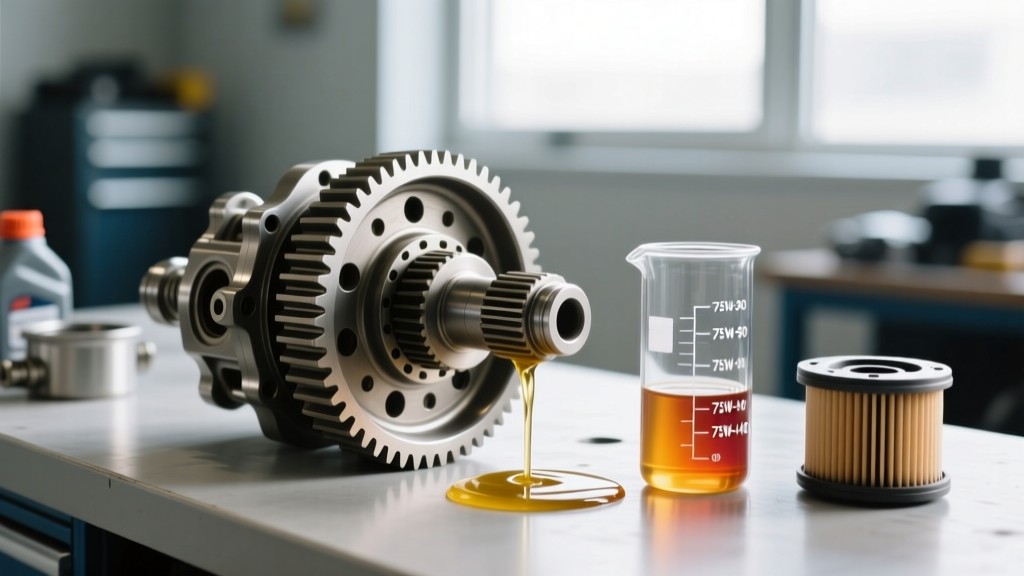
A major shift in GM's drivetrain maintenance occurred over the last decade, moving away from the traditional 75W-90 gear oil to a lower-viscosity 75W-85 Synthetic GL-5 lubricant. This change was engineered to reduce parasitic drag and improve fleet fuel economy. When servicing a leaking GM 8.625-inch axle, it is imperative to use the correct fluid, such as AMSOIL Severe Gear 75W-85 or the OEM ACDelco Dexron ULV / 75W-85 equivalent available through the GM Parts Center.
The G80 Locker Additive Requirement:
If the vehicle is equipped with the RPO G80 automatic locking differential, the fluid must be supplemented with the GM Friction Modifier (P/N 88900333). Failing to add this 4-ounce bottle of modifier will result in clutch pack chatter, harsh engagement, and premature failure of the locking mechanism. The total fill capacity for the 8.625-inch axle is approximately 2.2 quarts (2.1 liters), though models with the G80 locker may accept up to 2.4 quarts. Always fill until the fluid level is exactly even with the bottom of the fill plug threads.
Differential Leak Estimation and Repair Cost Matrix
To assist owners and service advisors in planning, the following matrix breaks down the estimated costs, part requirements, and labor intensity for the most common GM 8.625-inch differential leaks in the current market.
| Leak Source | Required Parts | Labor Time | Estimated Cost (Parts + Labor) | Complexity Level |
|---|---|---|---|---|
| Pinion Seal | Seal, Crush Sleeve, Nut, RTV | 1.5 - 2.0 Hours | $280 - $450 | High (Requires preload measurement) |
| Axle Shaft Seals (Both) | 2x Seals, 2x Wheel Bearings (Optional), Cover Gasket | 2.5 - 3.5 Hours | $400 - $650 | Medium (Requires C-clip extraction) |
| Differential Cover | RTV Silicone or Lube-Locker Gasket, 75W-85 Fluid | 1.0 Hour | $120 - $180 | Low (Standard drain and fill) |
Critical Torque Specifications
Precision torque application is the difference between a lasting repair and a warranty return. Adhere strictly to the following specifications for the GM 8.625-inch 10-bolt axle:
- Differential Cover Bolts (M10 x 1.5): 25 lb-ft (34 Nm). Note: These bolts are prone to snapping if over-torqued or if corrosion is present in the aluminum/steel interface. Always chase the threads with a tap before installation.
- Pinion Nut (New Crush Sleeve): Torque to yield (typically 250-300 lb-ft) until rotational preload reaches 15-25 in-lbs.
- Brake Caliper Bracket Bolts: 129 lb-ft (175 Nm). Must be removed to access the axle shaft retainer plate.
- Axle Shaft Retainer Plate Nuts: 59 lb-ft (80 Nm).
Conclusion: Proactive Drivetrain Maintenance
Ignoring a minor differential weep on a GM 10-bolt axle is a gamble with expensive consequences. The hypoid gear set relies entirely on a precise film of 75W-85 synthetic fluid to manage the extreme sliding friction inherent in its design. By understanding the specific failure modes of the 8.625-inch housing, utilizing the correct crush sleeve procedures, and adhering to OEM fluid specifications, technicians and DIY enthusiasts alike can ensure this critical drivetrain component survives well past the 200,000-mile mark. Always prioritize rotational preload measurements over generic torque specs, and your differential will reward you with years of quiet, reliable service.