The Thermal Bottleneck in GM's 6L80 and 6L90 Platforms
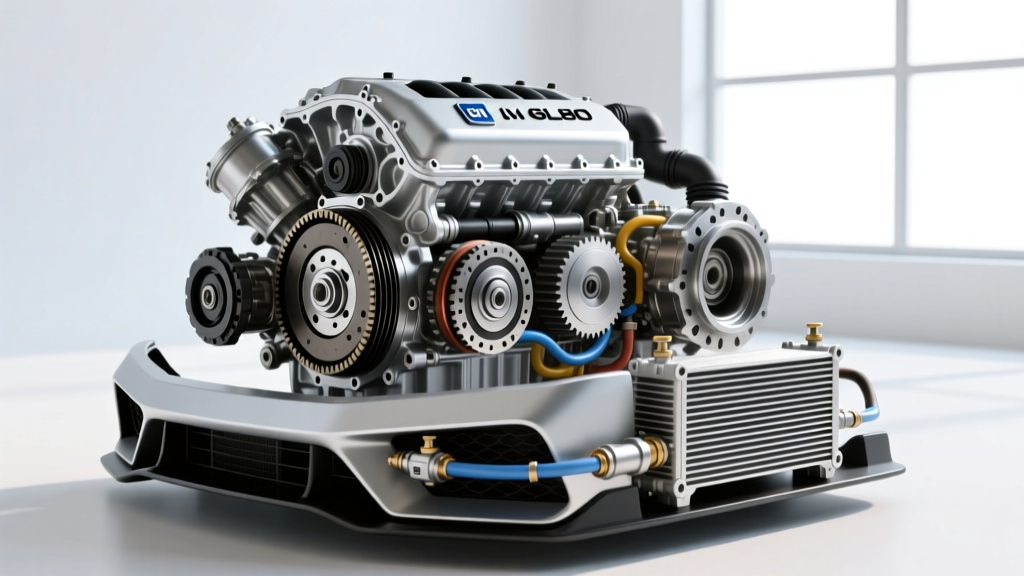
The GM 6L80-E and 6L90-E six-speed automatic transmissions are formidable powertrain components, widely deployed in Silverado, Sierra, Tahoe, and Suburban platforms. While their internal clutch packs and planetary gearsets are highly durable, their factory thermal management systems are notoriously inadequate for sustained heavy-duty use. For owners towing fifth-wheels, running snow plows, or pushing through high-ambient desert environments, optimizing transmission cooling is not an optional modification—it is a critical requirement for survival.
As of 2026, the aftermarket has developed highly targeted solutions to address the specific fluid routing and heat rejection deficiencies of the GM full-size truck platform. This technical deep-dive explores the exact failure points of the factory system, provides empirical data on auxiliary cooler selection, and outlines the definitive installation and routing protocols for the 6L80/6L90 family.
Diagnosing the Factory Thermostatic Bypass Valve
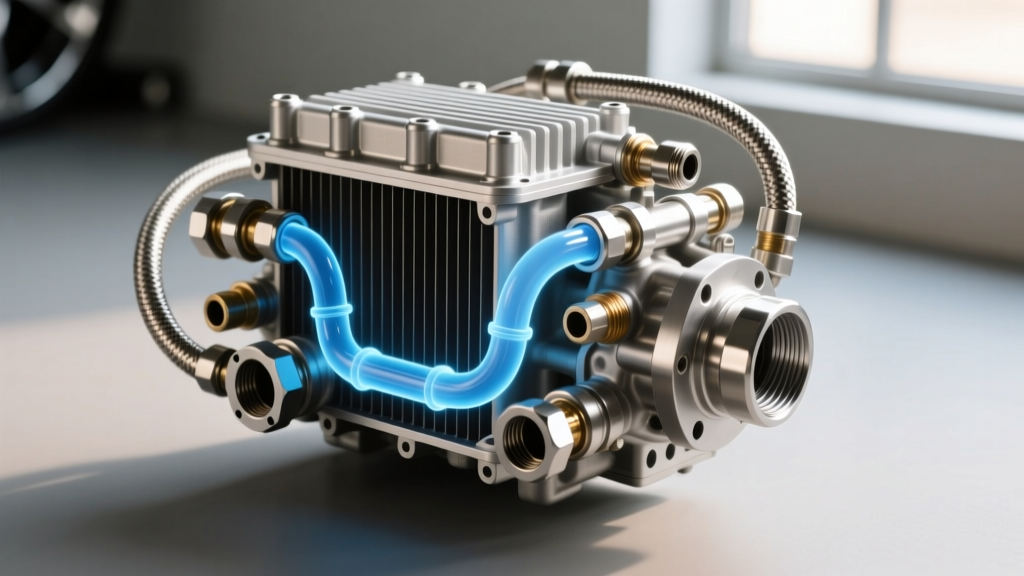
Before adding an auxiliary cooler, you must understand the primary point of failure in the GM factory cooling circuit: the thermostatic bypass valve. Located either inline on the cooler return hose or integrated into the radiator end-tank (depending on the exact model year), this valve is designed to restrict fluid flow to the cooler until the transmission fluid temperature (TFT) reaches approximately 185°F (85°C). The engineering intent was to prevent overcooling in freezing climates and help the fluid reach optimal operating viscosity faster.
The Plastic Failure Mode
The internal components of the factory bypass valve are constructed from a thermoplastic polymer that degrades under continuous thermal cycling. According to Sonnax Technical Resources, when these plastic internal sleeves warp or the internal spring fatigues, the valve sticks in the closed or partially closed position. The result is catastrophic: the transmission fluid is entirely bypassed around the radiator cooler. Owners frequently report TFT spikes exceeding 230°F on the highway, completely unaware that their factory cooler is being starved of flow. Deleting or replacing this bypass valve is the mandatory first step in any 6L80 cooling upgrade.
Selecting the Auxiliary Cooler: Stacked-Plate vs. Plate-and-Fin
The 6L80 transmission holds approximately 11.9 quarts (dry) and requires a cooler capable of high flow volume without introducing excessive pressure drop. The factory cooler lines utilize 3/8-inch outer diameter tubing, and any auxiliary unit must match or exceed this flow capacity to prevent torque converter clutch (TCC) slip caused by low return-line pressure.
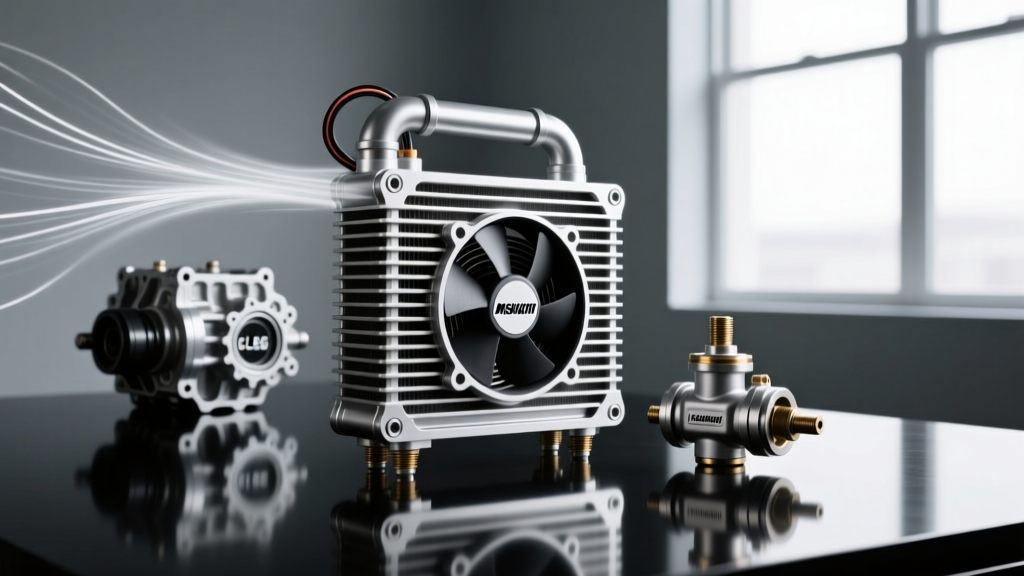
While tube-and-fin coolers are cheap and ubiquitous, they are entirely obsolete for heavy-duty towing applications. The choice in 2026 comes down to plate-and-fin versus stacked-plate architectures.
| Cooler Model | Architecture | GVWR Rating | Core Dimensions | Est. Price (2026) |
|---|---|---|---|---|
| Derale 13740 | Stacked-Plate | 40,000 lbs | 13.0' x 8.75' | $180 - $210 |
| Mishimoto MMTC-CS2 | Stacked-Plate | 30,000 lbs | 12. 7.5' | $240 - $270 |
| Hayden 678 Rapid-Cool | Plate-and-Fin | 24,000 lbs | 11.5' x 8.75' | $110 - $130 |
Expert Recommendation: For the 6L80/6L90, a stacked-plate design (like the Derale 13740 or Mishimoto MMTC-CS2) is vastly superior. Stacked-plate coolers utilize turbulators inside flat extruded aluminum plates, offering up to 30% greater heat rejection per square inch compared to plate-and-fin designs, while maintaining a significantly lower pressure drop. This is crucial for preserving the line pressure required to actuate the 6L80's 3-5-R clutch pack.
The Gold Standard Routing Strategy
A common mistake in the DIY community is routing the auxiliary cooler as a complete replacement for the factory radiator cooler, or running them in parallel. Both methods introduce severe operational flaws. Running an auxiliary cooler alone in cold climates prevents the transmission from ever reaching the 185°F threshold required for proper shift scheduling and moisture evaporation. Parallel routing creates a path of least resistance, causing fluid to bypass the cooler with the highest restriction.
Optimal Series Routing Protocol
The definitive routing method, endorsed by transmission rebuilders and detailed in Derale Technical Information guides, is a Series Configuration. This uses the factory radiator as a thermal buffer and pre-heater.
- Transmission OUT (Pressure Line): Route hot fluid directly from the transmission output fitting to the INLET of the auxiliary stacked-plate cooler mounted in front of the A/C condenser.
- Auxiliary OUT to Radiator IN: Route the pre-cooled fluid from the auxiliary cooler to the INLET of the factory radiator's integrated transmission cooler.
- Radiator OUT to Transmission IN: Route the fluid from the factory radiator outlet back to the transmission return fitting.
Why this works: The auxiliary cooler handles the massive BTU rejection required during heavy towing. The factory radiator cooler then acts as a thermal regulator, using engine coolant temps to warm the fluid during cold winter starts, ensuring the 6L80's adaptive shift algorithms operate correctly.
Installation Hardware, Torque Specs, and Line Upgrades
GM utilizes 3/8-inch quick-disconnect fittings at the transmission case. These plastic-collared clips are prone to becoming brittle and snapping during removal. Use a specialized 3/8-inch fuel line disconnect tool (not a flathead screwdriver) to release the collars without scoring the aluminum transmission case ports.
Upgrading to -6AN Lines
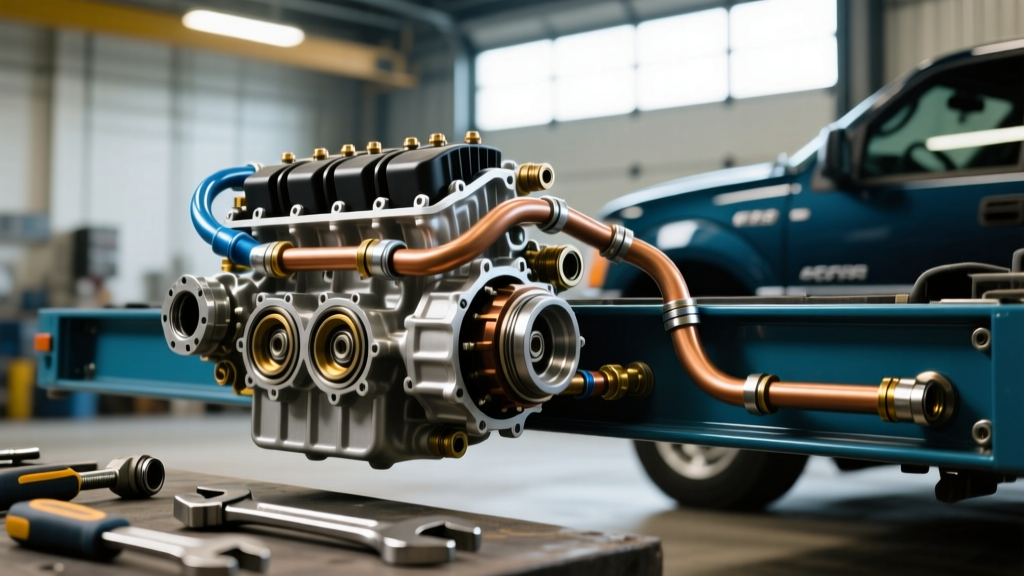
To eliminate the restrictive factory quick-disconnects and rubber hose segments, many 6L80 owners upgrade to braided stainless -6AN lines. You will need:
- Transmission Case Adapters: M14x1.5 O-ring boss to -6AN male adapters (Torque spec: 22-25 ft-lbs. Do not overtighten, as the 6L80 aluminum case threads strip easily).
- Radiator Adapters: 3/8-inch inverted flare or quick-connect to -6AN adapters, depending on your specific radiator end-tank configuration.
- Mounting Hardware: Never use the provided plastic zip-ties to mount the auxiliary cooler to the A/C condenser. The harmonic vibration of a diesel or large-displacement V8 will fatigue the zip-ties, allowing the cooler to saw through the condenser fins. Use 1/4-inch stainless steel bolts with nylock nuts and fender washers, securing the cooler directly to the radiator support bracket.
Fluid Validation and Thermal Monitoring
After completing the bypass delete and auxiliary cooler installation, the system must be bled and validated. The 6L80 requires ACDelco Dexron VI (Part # 10-9395). Do not use generic 'multi-vehicle' ATF, as the precise friction modifiers in Dexron VI are required for the 6L80's woven carbon-fiber clutch materials.
Target Temperature Parameters
Using an OBD-II scanner (such as a ScanGauge or Torque Pro app) to monitor the TFT PID is mandatory for post-installation validation.
- Idle / City Driving: 165°F - 185°F
- Highway Cruising (Unloaded): 175°F - 195°F
- Heavy Towing (6% Grade): Should not exceed 215°F with a properly sized stacked-plate cooler.
According to Mishimoto Engineering data, ATF life is halved for every 20°F increase over 200°F. By dropping peak towing temperatures from a dangerous 240°F down to a safe 205°F via a bypass delete and stacked-plate series routing, you effectively increase the service life of your Dexron VI fluid and your 6L80 transmission by a factor of four.
Summary
Upgrading transmission cooling on GM 6L80 trucks requires more than just bolting a generic cooler to the grille. By eliminating the flawed factory thermostatic bypass valve, selecting a high-flow stacked-plate core, and executing a series routing strategy, you transform the 6L80 from a heat-sensitive liability into a bulletproof towing asset. Invest in proper -6AN hardware, respect the aluminum case torque limits, and monitor your TFT data to ensure your drivetrain survives the long haul.