The Diagnostic Trap: Decoding Sensor Failures in Performance Builds
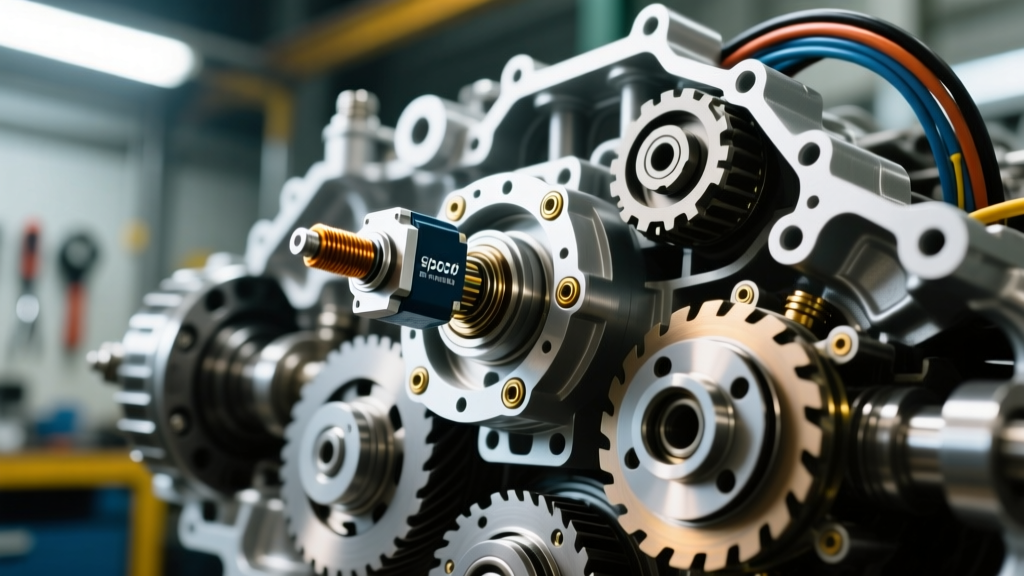
When modifying late-model automatic transmissions like the GM 6L80, 8L90, or the ubiquitous ZF 8HP series, precise hydraulic line pressure management is the difference between a tire-shredding launch and a vaporized clutch pack. As enthusiasts push these platforms beyond their factory limits in 2026, a common and frustrating diagnostic paradox has emerged. Many tuners and DIY mechanics waste hours and hundreds of dollars chasing transmission position sensor symptoms—such as a flashing PRNDL display, intermittent no-start conditions, or erratic reverse engagement—when the root cause is actually a degraded Transmission Fluid Pressure Sensor (TFPS).
Modern Transmission Control Modules (TCMs) rely on a delicate web of sensor inputs. If the TFPS detects an anomalous drop in hydraulic pressure, the TCM will often invalidate the current gear command to protect the internal hardware. This fail-safe state frequently locks the electronic shifter mechanism or ignores the Transmission Range (TR) sensor inputs entirely, leading to a misdiagnosis of transmission position sensor symptoms. Understanding the distinction between a failing range sensor and a fatigued pressure transducer is critical for any high-performance drivetrain build.
Why Stock Fluid Pressure Sensors Bottleneck Performance
Original equipment fluid pressure sensors and Pressure Switch Manifolds (PSMs) are engineered for longevity and cost-efficiency, not for the extreme hydraulic demands of track or drag racing. Stock sensors are typically calibrated for standard passenger vehicle line pressures, peaking around 230 to 275 PSI in normal driving and reaching 300 PSI only in extreme tow/haul modes.
When you increase line pressure via TCM tuning—such as pushing a 6L80 to 350+ PSI or a ZF 8HP70 to 400+ PSI for drag racing applications—the stock diaphragm and piezoelectric elements fatigue rapidly. The sensor begins to suffer from hysteresis, where the voltage output no longer accurately reflects the actual hydraulic pressure. This corrupted data forces the TCM into a conservative torque management mode, killing your performance.
The GM 6L80/6L90 Pressure Switch Manifold (PSM) Vulnerability
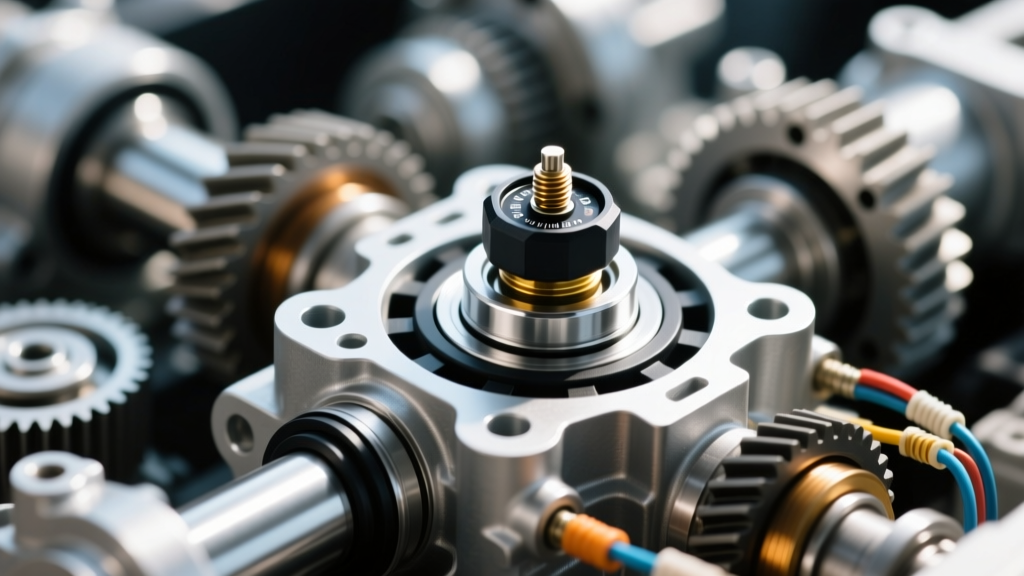
In the GM 6L-family, the TFPS is integrated into the Pressure Switch Manifold (OEM Part # 24236939). This unit contains multiple pressure switches and the primary fluid pressure transducer. Under high thermal and hydraulic loads, the composite plastic housing of the OEM PSM is known to warp microscopically. This warping causes internal cross-leaks between the clutch apply circuits and the sensor diaphragm cavity. The resulting pressure bleed mimics a catastrophic mechanical failure, triggering codes like P0842 (TFPS Circuit Low) or P0706 (TR Sensor Range/Performance), further muddying the diagnostic waters.
ZF 8HP Mechatronic Pressure Transducers
The ZF 8HP70 and 8HP90 units utilize a highly integrated Mechatronic valve body where the pressure transducers are soldered directly to the internal wiring harness sleeve (ZF Part # 6870 980 238). When subjected to the aggressive heat cycles of track use, the solder joints on the OEM transducers develop micro-fractures. Because the ZF TCM cross-references these pressure readings with the output speed sensors, a failing pressure transducer will cause the TCM to trigger a neutral safety default, which many mistakenly attribute to a transmission range or position sensor fault.
Performance Upgrade Matrix: OEM+ vs. Race-Grade
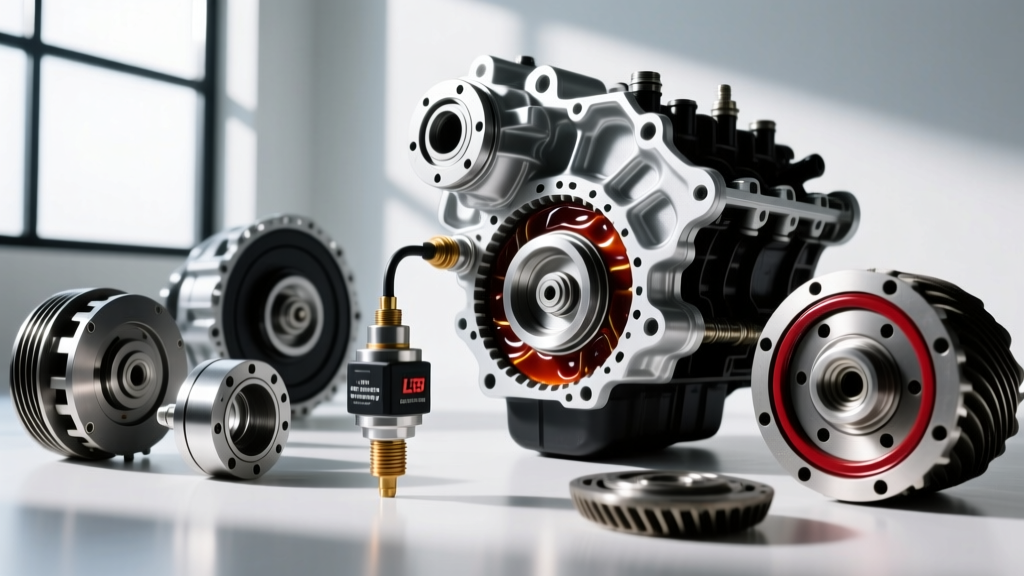
To eliminate these bottlenecks and ensure your TCM receives flawless hydraulic data, you must upgrade the sensing hardware. Below is a comparison of the most effective upgrade pathways for modern performance builds.
| Sensor Platform | OEM Pressure Limit | Upgraded Limit | Part Number / Kit | Est. Cost (2026) |
|---|---|---|---|---|
| GM 6L80/6L90 PSM | 300 PSI | 450 PSI | Sonnax Zip Kit (6L80-ZIP) | $180 - $220 |
| GM 8L90 / 10L90 | 350 PSI | 500+ PSI | Custom Billet Transducer | $250 - $320 |
| ZF 8HP70/90 Mechatronic | 380 PSI | 500+ PSI | Upgraded Sleeve & Transducers | $350 - $450 |
Note: When utilizing standalone billet transducers for dedicated drag vehicles, you must cap the OEM PSM electrical connector and wire the new transducer directly to an unused analog input on your aftermarket engine management or standalone TCM.
Precision Installation: Torque Specs and Clearances
Upgrading the fluid pressure sensor requires meticulous attention to cleanliness and torque specifications. A single piece of clutch material or a mis-torqued bolt can destroy a new valve body or sensor diaphragm.
- Pan Removal & Filtration: Drop the transmission pan and remove the filter. Inspect the magnet for excessive ferrous debris, which indicates internal mechanical wear that a sensor upgrade cannot fix.
- Electrical Disconnect: Carefully release the locking tab on the main internal wiring harness connector. Do not pull by the wires; use a specialized T-handle release tool for GM units to avoid snapping the brittle plastic pins.
- PSM / Valve Body Torque: For the GM 6L80, the PSM-to-Valve Body bolts (M6 x 1.0) must be torqued to exactly 10 Nm (89 lb-in). Overtightening will crack the composite housing. The Valve Body-to-Case bolts must be torqued to 11 Nm (97 lb-in) in the factory-specified spiral sequence.
- Fluid Selection: Always refill with the correct specification fluid. Use ACDelco Dexron VI for 6L80/6L90 applications, and strictly adhere to ACDelco Dexron ULV (Ultra Low Viscosity) for 8L90 and 10L90 builds. Mixing fluid viscosities will alter hydraulic timing and invalidate your pressure sensor calibration.
TCM Rescaling: Bridging Hardware and Software
Hardware is only half the battle. If you install a high-pressure aftermarket transducer, the TCM’s internal voltage-to-pressure map must be rescaled. Most OEM sensors operate on a 0.5V to 4.5V linear scale, correlating to 0–300 PSI. A race-grade 500 PSI transducer will output 4.5V at 500 PSI. If the TCM is not recalibrated, it will read 500 PSI as an over-pressure fault and immediately command limp mode.
"In 2026, datalogging is non-negotiable. Before making a single pass down the track, you must log the 'Commanded Line Pressure' against the 'Actual TFPS Voltage' using software like HP Tuners or EFI Live. If the actual pressure trails the commanded pressure by more than 15 PSI during a wide-open-throttle shift, your sensor is fatigued, or your pump is cavitating."
— Senior Drivetrain Calibration Engineer, Independent Tuning Syndicate
To recalibrate, access the Transmission > Fluid Pressure tables in your tuning software. Adjust the linear transfer function to match the specification sheet provided by your transducer manufacturer. For ZF 8HP platforms, modifying the internal Mechatronic pressure tables requires specialized software like ZF Tuning or XHP, as the torque-to-pressure algorithms are deeply embedded in the factory flash.
Conclusion: Stop Chasing Ghosts, Start Upgrading Hardware
The next time your diagnostic scanner throws a code that points toward transmission position sensor symptoms, take a step back and analyze the hydraulic data. In high-performance applications, the TFPS is the unsung hero of shift quality and clutch survival. By upgrading to heavy-duty pressure sensing hardware, adhering to strict torque specifications, and properly scaling your TCM tables, you will eliminate phantom limp-mode triggers and unlock the true potential of your drivetrain. For further technical documentation on valve body upgrades and hydraulic circuit modifications, consult resources from the Sonnax Technical Resource Library and the Automatic Transmission Rebuilders Association (ATRA).