The Hidden Costs of Ignoring Your Axles: A 2026 Preventive Maintenance Guide
When vehicle owners think of preventive maintenance, engine oil, transmission fluid, and brake pads immediately come to mind. The differential, however, is frequently relegated to the 'out of sight, out of mind' category—until it starts whining at 65 mph or leaves you stranded with a seized axle shaft. As we navigate the automotive service landscape in 2026, labor rates and synthetic lubricant costs have shifted significantly, making proactive differential servicing more financially critical than ever.
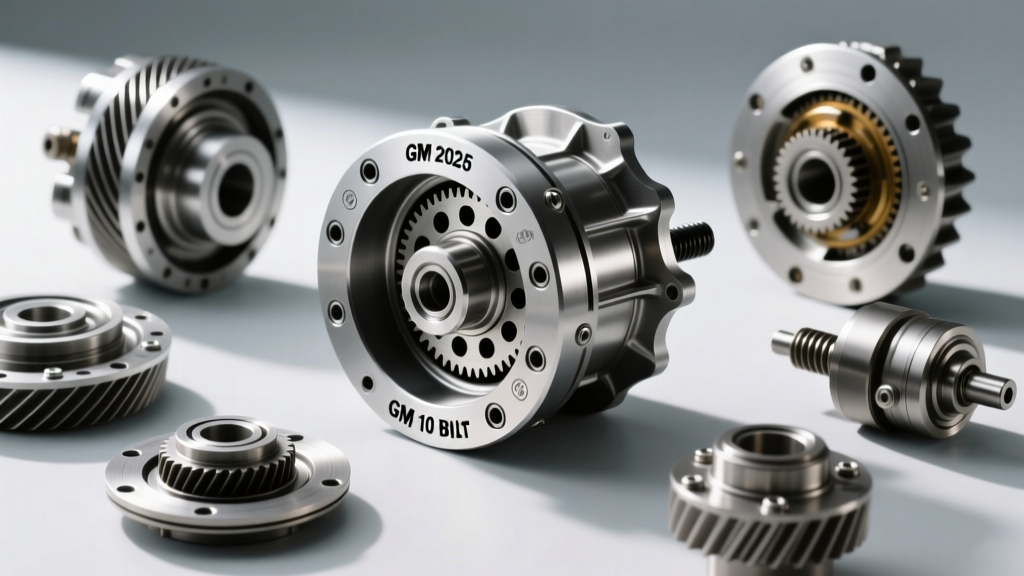
Before you can accurately budget for a differential service, you must know exactly what housing sits beneath your vehicle. This is where a differential gm 10 bolt identification chart becomes an essential tool for any GM truck or SUV owner. Misidentifying your axle can lead to purchasing the wrong fluid capacity, using the wrong friction modifiers, or getting overcharged by a shop that bills you for a 14-bolt semi-float service when you only have a light-duty 10-bolt.
Decoding the Axle: GM 10-Bolt Identification & RPO Codes
The GM Corporate 10-bolt differential—most notably the 8.5-inch and 8.2-inch ring gear variants—has been a staple in Silverados, Sierras, Tahoes, and Suburbans for decades. While counting the bolts on the differential cover is the first step (10 bolts total), it is not enough to determine your exact gear ratio, locker type, or precise fluid capacity.
The Glovebox RPO Chart Method
The most accurate way to identify your GM 10-bolt's internals without pulling the cover is by checking the Service Parts Identification (SPID) sticker in your glovebox. Look for these specific RPO (Regular Production Option) codes:
- GU5: 3.23 Gear Ratio
- GU6: 3.42 Gear Ratio
- GT4: 3.73 Gear Ratio
- GT5: 4.10 Gear Ratio
- G80: Eaton Gov-Loc (Automatic Locking Differential)
If your SPID tag lists G80, you have an Eaton Gov-Loc. This is a critical identification point because it drastically alters the type of fluid and additives you must use during your service, which directly impacts your final bill.
Visual Cover Identification
The 8.5-inch 10-bolt cover is generally round but features a distinct flat area at the bottom and two small 'ears' or protrusions on the sides near the axle tubes. The 8.2-inch 10-bolt cover is more symmetrical and lacks the pronounced bottom flat. According to archives maintained by the GM Truck Club, the 8.5-inch housing typically holds approximately 2.1 to 2.2 quarts of gear oil, whereas the smaller 8.2-inch holds slightly less. Always buy three quarts to ensure you have enough to reach the fill plug level.
2026 Differential Fluid Service Pricing Breakdown
Service pricing in 2026 varies wildly depending on whether you choose a dealership, an independent drivetrain specialist, or the DIY route. Below is a comprehensive cost comparison for a standard GM 10-bolt rear differential service (drain, clean, reseal, and refill with full synthetic 75W-90).
| Service Route | Fluid & Parts Cost | Labor / Shop Fees | Estimated Total (2026) |
|---|---|---|---|
| DIY (Home Garage) | $45 - $65 | $0 (Your Time) | $45 - $65 |
| Independent Shop | $55 - $80 (Shop Markup) | $120 - $180 (1-1.5 hrs) | $175 - $260 |
| GM Dealership | $70 - $100 (OEM ACDelco) | $160 - $250 (1.5 hrs) | $230 - $350 |
Note: If your differential requires a new gasket, RTV silicone, or a replacement fill plug crush washer, add $5 to $15 to the parts cost. Pricing data for synthetic lubricants is based on current market averages from retailers like RockAuto and direct manufacturer suppliers.
The G80 Gov-Loc Warning: A Costly Additive Mistake
Here is where amateur mechanics and even some quick-lube technicians cost owners hundreds of dollars in rebuilds. If your GM 10-bolt identification chart confirms you have the G80 Eaton Gov-Loc, you must NOT add standard limited-slip friction modifiers to your gear oil.
Traditional clutch-type limited-slip differentials (LSDs) require friction modifiers (like GM Part #88900401) to prevent clutch chatter. However, the Gov-Loc is a mechanical locking differential that uses a flyweight governor and a locking block. If you introduce friction modifiers to a Gov-Loc, the internal components will slip, preventing the locker from engaging when a wheel loses traction. Over time, this slipping causes severe wear to the locking block and side gears, turning a $60 preventive fluid change into a $1,200 differential rebuild. Use a high-quality, full-synthetic 75W-90 gear oil that meets API GL-5 specifications without adding aftermarket LSD additives. Brands like AMSOIL Severe Gear or Mobil 1 Synthetic Gear Lube are excellent, safe choices for the Gov-Loc.
Step-by-Step DIY Service & Torque Specifications
Opting for the DIY route is the most cost-effective preventive maintenance strategy. To execute a GM 10-bolt service correctly, follow these exact specifications to avoid stripped threads or leaking covers.
Tools and Materials Required
- 3 Quarts of 75W-90 Full Synthetic Gear Oil (API GL-5)
- 10mm or 3/8-inch drive ratchet (depending on cover bolt style)
- Gasket Scraper & Brake Cleaner
- Permatex Ultra Black RTV (Part #80022) OR Fel-Pro RDS55028 Gasket
- Torque Wrench (inch-pounds preferred)
The Procedure & Torque Specs
- Preparation: Drive the vehicle to warm up the gear oil, making it flow out faster and carry more suspended particulates with it. Safely support the rear axle on jack stands. Never rely solely on a hydraulic jack.
- Open the Fill Plug First: This is a golden rule of drivetrain maintenance. Before breaking the seal on the bottom of the cover or the drain plug, ensure you can remove the fill plug on the side or front of the housing. If the fill plug is seized and you drain the fluid, you are stranded.
- Drain and Clean: Remove the 10 cover bolts, leaving the top two bolts loosely threaded to act as a hinge. Let the fluid drain into a catch pan. Inspect the housing magnets. A fine, dark metallic paste is normal wear. Shiny metal flakes or chunks indicate bearing or gear failure.
- Resealing: Scrape off all old RTV or gasket material. If using RTV, apply a continuous 3mm bead around the cover flange, circling the inside of the bolt holes. Permatex Ultra Black is specifically formulated for high-torque, high-vibration differential applications.
- Torque Sequence: Reinstall the cover. Hand-thread all 10 bolts. Tighten them in a crisscross pattern to ensure even clamping force. The factory torque specification for GM 10-bolt M8 cover bolts is 25 lb-ft (300 inch-lbs). Overtorquing will warp the thin stamped-steel cover and cause immediate leaks.
- Fill and Finalize: Pump the 75W-90 gear oil into the fill hole until it begins to weep out. Reinstall the fill plug and torque to 25 lb-ft.
Fluid Diagnostics: What the Old Oil Tells You
Preventive maintenance is not just about replacing fluids; it is about gathering data. When you drain your GM 10-bolt, evaluate the old fluid to forecast future repair costs:
- Amber/Dark Brown & Clear: Normal. The differential is healthy. Re-fill and reset your maintenance interval to 50,000 miles for normal driving, or 15,000 miles for severe towing.
- Black & Burnt Smell: Indicates severe overheating. If you have a traditional clutch-type LSD, the clutch packs are likely burning up. Budget $300-$500 for a clutch pack rebuild kit.
- Chunky Metal Particles: If you find pieces larger than a grain of rice, the pinion bearings or side gears are disintegrating. A simple fluid change will not save this axle. Begin sourcing a replacement ring and pinion set or a remanufactured axle assembly.
Conclusion
Understanding your specific axle via a differential GM 10 bolt identification chart is the first step toward smart, cost-effective vehicle ownership. By identifying your RPO codes, avoiding the G80 friction modifier trap, and adhering to precise 25 lb-ft torque specs, you can perform a dealer-quality preventive service in your own garage for under $65. In an era where shop labor rates continue to climb, mastering your drivetrain maintenance is the ultimate hedge against catastrophic repair bills.