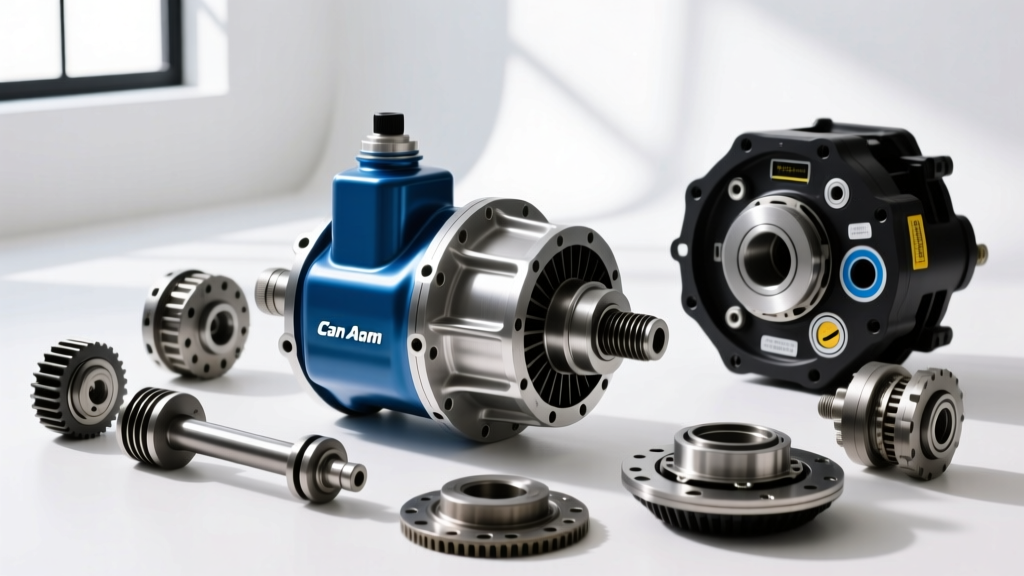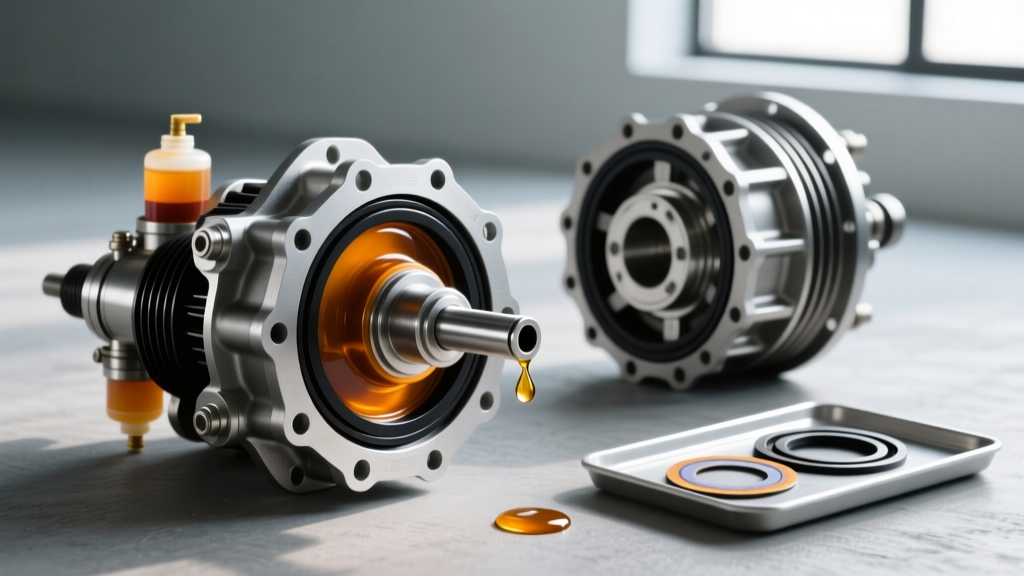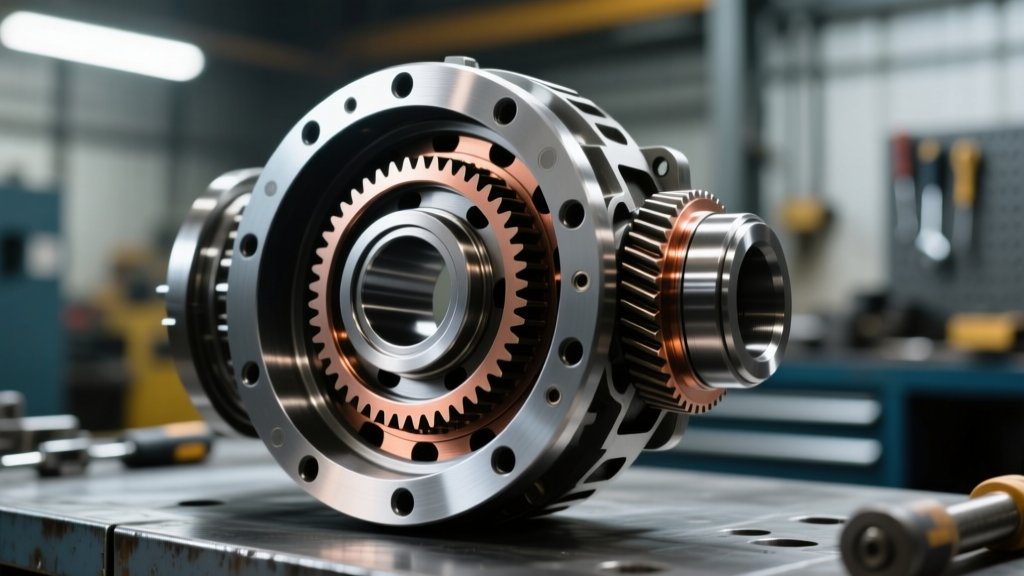
When enthusiasts search for the definition of limited slip differential, they typically find basic explanations about torque biasing, clutch packs, and traction. However, as a drivetrain specialist, I can tell you that the true capability of any limited-slip differential (LSD) is entirely dependent on the foundation it sits on: a flawless ring and pinion gear setup. If your gear geometry is flawed, no amount of advanced traction management will save your axle from catastrophic failure or unbearable whining.
This beginner-friendly explainer bridges the gap between understanding what an LSD does and the precise metrology required to install the ring and pinion gears that drive it. Whether you are rebuilding a classic GM 8.5-inch 10-bolt or setting up a Ford 8.8-inch for a modern track build, the physical laws of gear mesh remain absolute.
The Definition of Limited Slip Differential in Modern Drivetrains
To understand the setup requirements, we must first establish a working definition of limited slip differential mechanics. An open differential sends torque to the path of least resistance, which is useless when one tire loses grip. An LSD limits this slip by using internal friction (clutch packs) or gear geometry (helical/Torsen designs) to bias torque to the wheel with traction.
Why does this matter for your ring and pinion setup? Because LSDs generate immense internal side-loading and thrust forces during cornering and heavy acceleration. If your side bearing preload and backlash are not set to exact factory tolerances, the added stress of an LSD will cause the ring gear to deflect under load. This deflection leads to improper tooth contact, rapid wear, and ultimately, shattered gear teeth.
The Four Pillars of Ring and Pinion Gear Setup
Setting up a ring and pinion is not about guesswork; it is about managing four distinct, interrelated measurements. Altering one will almost always affect another.
1. Pinion Depth
Pinion depth dictates how far the pinion gear sits into the ring gear. This is adjusted using shims located between the pinion head bearing and the pinion shaft, or behind the pinion head race. Even a 0.002-inch deviation will result in a gear pattern that runs too far toward the toe or heel, causing immediate failure under load.
2. Pinion Bearing Preload
This is the rotational resistance of the pinion shaft, measured in inch-pounds. It ensures the pinion bearings are seated and will not wobble under the massive torque multiplication of first gear. For a new pinion bearing setup using a traditional crush sleeve, achieving this requires a heavy-duty 1/2-inch drive torque wrench to literally crush the steel sleeve until the rotating torque reaches spec (typically 15 to 25 in-lbs). Pro Tip: Many modern builders in 2026 opt for solid pinion spacer kits (like those from Ratech) with precision shims to eliminate the risk of over-crushing and to maintain preload during high-horsepower launches.
3. Side Bearing Preload
Side bearing preload applies lateral clamping force to the differential carrier. In an LSD, this preload is vital. If it is too loose, the entire carrier will shift side-to-side under torque, altering your backlash dynamically while driving. On setups with threaded adjusters (like Dana 44 or Ford 9-inch), you tighten the adjusters to achieve a specific drag torque. On shimmed setups (GM 10-bolt, Ford 8.8), you must carefully tap shims into the side bearing caps using a brass drift and dead-blow hammer.
4. Backlash
Backlash is the rotational clearance between the ring gear tooth and the pinion gear tooth. It allows for thermal expansion and the formation of a hydrodynamic oil wedge between the gears. Too tight, and the gears will bind and overheat; too loose, and the gears will slap together, causing a 'clunk' and chipping the teeth.
Reference Chart: Common Axle Setup Specifications
Always verify with your specific service manual, but here are the baseline specifications for three of the most common enthusiast axles.
| Axle Model | Ring Gear Bolt Torque | Pinion Bearing Preload (New) | Target Backlash |
|---|---|---|---|
| GM 8.5" / 8.6" 10-Bolt | 45 lb-ft (w/ Loctite 242) | 15 - 25 in-lbs | 0.006" - 0.010" |
| Ford 8.8" (Super 8.8) | 70 - 85 lb-ft | 16 - 29 in-lbs | 0.008" - 0.012" |
| Dana 44 (JK/JL Wrangler) | 55 - 65 lb-ft | 14 - 26 in-lbs | 0.006" - 0.010" |
Decoding the Gear Contact Pattern
The ultimate judge of your ring and pinion gear setup is the contact pattern. Using a specialized yellow gear marking compound (like ACDelco or Permatex), you paint the teeth of the ring gear and rotate the assembly under moderate drag.
- Drive Side vs. Coast Side: The convex side of the tooth is the drive side (acceleration); the concave side is the coast side (deceleration). Both must be evaluated.
- Face vs. Flank: The face is the outer edge of the tooth (away from the center of the ring gear); the flank is the inner edge (closer to the center).
- The Ideal Pattern: A perfect pattern sits dead-center on the face and flank, and is centered vertically from the root to the tip of the tooth. It should be slightly wider on the toe (inner end) than the heel (outer end).
The Golden Rule of Gear Setup: If your pattern is too high (toward the tip), the pinion is too deep. If it is too low (toward the root), the pinion is too shallow. Adjust pinion depth first, then adjust backlash to center the pattern horizontally. Never sacrifice pinion depth to achieve perfect backlash.
LSD Assembly, Shimming, and Fluid Selection
When installing a clutch-type LSD (such as an Auburn or Eaton Posi), the side gear clearance and clutch pack shimming are critical. If the side gears have excessive clearance, the clutch packs will not engage properly, leading to one-wheel peels and burnt friction material. You must measure the distance from the carrier bore to the side gear and select the appropriate thrust shim to ensure a snug fit with zero binding.
For comprehensive aftermarket LSD options and installation kits, drivetrain authorities like Ring & Pinion and Summit Racing offer complete master install kits that include high-quality Timken bearings and precision shims. For specific torque-biasing or helical gear insights, the engineering documentation at Eaton Performance remains the industry gold standard.
The Importance of Friction Modifiers
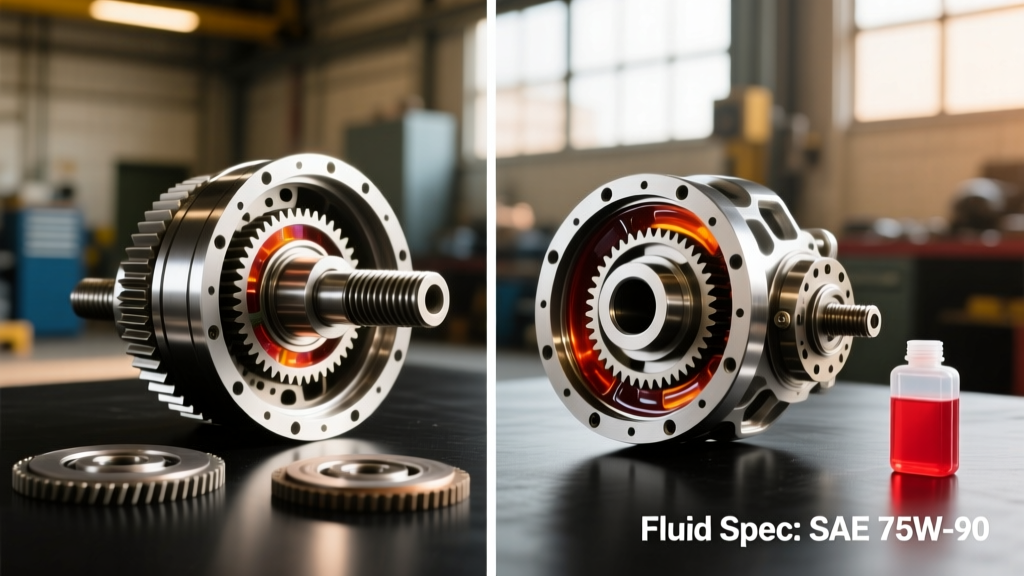
A flawless mechanical setup will still fail if the chemistry is wrong. Clutch-type LSDs require a specific friction modifier to prevent 'chatter' (the violent grabbing and releasing of the clutch plates during low-speed turns). For a standard 75W-90 Synthetic GL-5 gear oil, you must add the manufacturer-specified modifier. For GM applications, ACDelco Limited Slip Axle Lubricant Additive (Part # 10-9003) is mandatory. Ford applications require Motorcraft XL-3. Helical gear LSDs (like the Eaton Truetrac) do not use clutch packs and therefore do not require friction modifiers, allowing you to run standard high-quality synthetic 75W-90 or 75W-140 for heavy-duty towing applications.
Final Break-In Procedures
Once your ring and pinion gear setup is verified and the LSD is assembled, the break-in process is vital. The first 500 miles dictate the metallurgical mating of the gears. Drive conservatively, avoiding full-throttle starts and heavy towing. After the first 15 to 20 miles of mixed driving, stop and check the differential housing temperature. It will be hot to the touch (often 180°F to 200°F), but if it is so hot that you cannot keep your hand on it for 10 seconds, your bearing preload is likely too tight, or your backlash is too narrow. Allow it to cool, and re-verify your setup. After 500 miles, drain the break-in fluid to remove the microscopic metallic shedding from the new gears, and refill with your final synthetic oil and modifier.