Bridging Mechanical Advantage: From Spools to Drivetrains
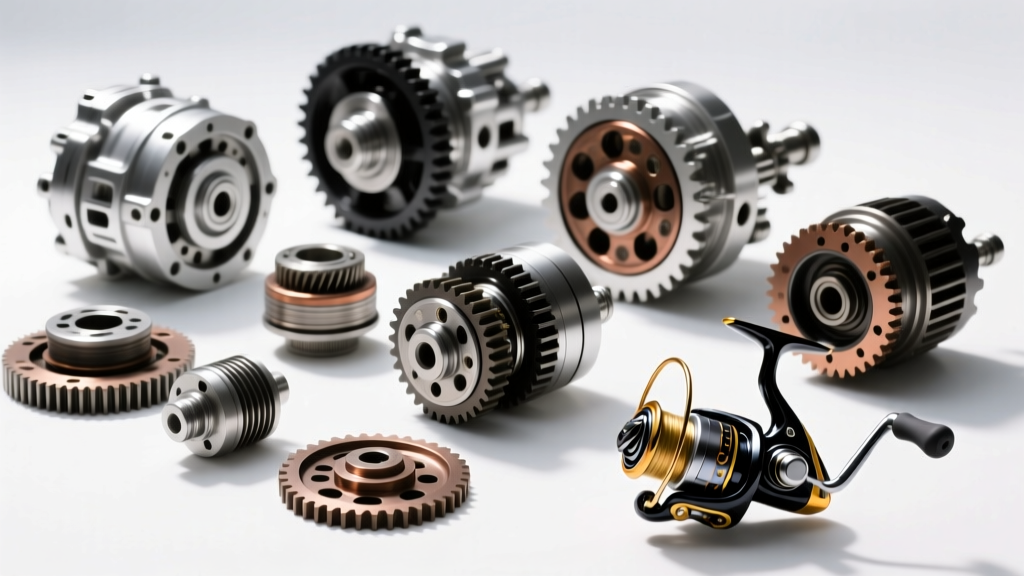
When off-road enthusiasts, marine mechanics, and automotive hobbyists first study mechanical advantage, they sometimes ask what is gear ratio on a reel—referring to the spooling drum of a heavy-duty recovery winch like the Warn Zeon 12-S or a marine anchor windlass. In a winch reel, a high numerical gear ratio (often exceeding 200:1 in planetary stages) multiplies the electric motor's torque to pull 12,000 pounds of dead weight. This exact same principle of rotational speed versus torque multiplication scales directly up to automotive drivetrains, differentials, and multi-speed transmissions.
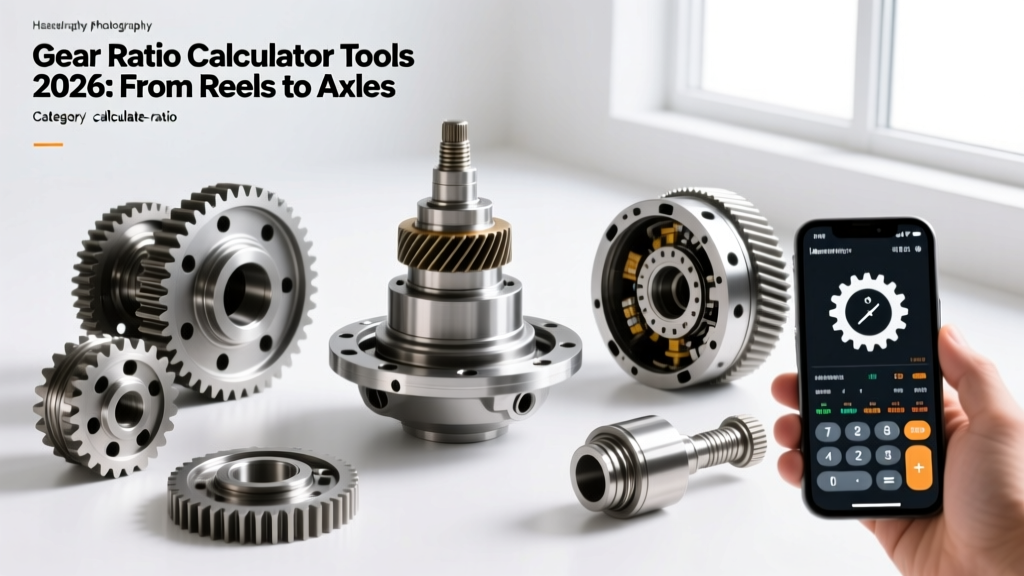
Whether you are calculating the planetary reduction inside a winch reel, the final drive ratio of a Dana 60 axle, or the overdrive spread of a ZF 8HP70 transmission, precision is mandatory. In 2026, the market for gear ratio calculator tools is split between digital software platforms and physical diagnostic hardware. This buyer's guide compares the most authoritative tools available to automotive technicians and drivetrain builders today.
Digital Gear Ratio Calculator Tools
Software-based calculators are essential for the planning phase of a drivetrain swap, axle re-gearing, or transmission build. They allow builders to model theoretical RPM drops, fuel economy impacts, and torque at the wheels before purchasing hardware.
1. Spicer Parts Online Engineering Calculators
Dana Spicer offers one of the most robust web-based calculator suites in the industry. Their tools allow users to input tire diameter, engine RPM, transmission gear ratios, and axle ratios to map out a complete driveline performance chart. For commercial and heavy-duty applications, Spicer's tools also calculate driveshaft operating angles and critical speeds, preventing catastrophic harmonic vibrations at highway speeds.
2. Summit Racing Gear Calculator App
Available for iOS and Android, the Summit Racing app includes a dedicated gear ratio calculator module. It is highly favored by hot rod builders and 4x4 enthusiasts. You input your tire height (e.g., 35x12.50R17 measuring 34.8 inches), your transmission's top gear (e.g., 0.67:1 for a Tremec T-56 Magnum 6th gear), and your target cruising RPM. The app reverse-calculates the ideal differential ring and pinion ratio. It is free, intuitive, and updated annually with new transmission profiles.
3. TREMEC Driveline Builder Software
For manual transmission swaps, TREMEC provides specialized software that models the torque capacity and ratio spread of their TKX and Magnum lineups. This tool is critical when pairing a high-torque diesel or supercharged V8 with a manual gearbox, ensuring the first gear ratio is steep enough to move heavy vehicles without slipping the clutch, while keeping the overdrive ratio low enough for NVH (Noise, Vibration, and Harshness) compliance.
Physical Diagnostic Tools for Real-World Ratio Verification
Digital calculators tell you what the ratio should be. Physical diagnostic tools tell you what the ratio actually is inside a sealed transmission or an unknown salvage-yard axle.
OBD2 Bidirectional Scanners (VSS vs. OSS Data)
Modern automatic transmissions, such as the Ford 10R80 or GM 10L90, do not have external speedometer gears. Instead, the Transmission Control Module (TCM) calculates gear ratios on the fly using the Input Shaft Speed (ISS) and Output Shaft Speed (OSS) sensors. High-end bidirectional scanners like the Autel MaxiSys MS908S Pro (retailing around $3,800) or the Snap-on Zeus+ allow technicians to graph these PIDs (Parameter IDs) in real-time.
The Diagnostic Formula:
Actual Gear Ratio = ISS RPM / OSS RPM
If the ISS reads 2,500 RPM and the OSS reads 530 RPM, the active gear ratio is 4.71:1 (confirming 1st gear in a ZF 8HP transmission).
Dial Indicators and Degree Wheels
For physical teardowns and axle identification, a magnetic-base dial indicator (such as the Mitutoyo 2046S, approx. $120) clamped to the differential cover is the gold standard. By rotating the pinion yoke exactly one full revolution and measuring the degree of rotation on the axle shaft, technicians can verify ratios on unknown Ford 8.8 or GM 10-bolt axles without removing the cover or counting ring gear teeth.
Comparative Analysis: Digital vs. Physical Calculator Tools
| Tool Category | Specific Model / Platform | Estimated Cost (2026) | Best Application |
|---|---|---|---|
| Web-Based Software | Spicer Parts Calculator | Free | Driveshaft critical speed & heavy-duty axle planning |
| Mobile Application | Summit Racing App | Free | Quick tire-to-axle ratio matching for 4x4 builds |
| OBD2 Diagnostic Scanner | Autel MaxiSys MS908S | $3,500 - $4,000 | Live PID graphing for sealed automatic transmissions |
| Precision Measuring | Mitutoyo Dial Indicator | $110 - $140 | Verifying unknown salvage yard differential ratios |
| Degree Wheel Kit | Summit Racing 10" Billet Wheel | $65 - $85 | Cam timing and pinion-to-ring gear rotational math |
Applying Calculations to Modern Transmissions
Understanding how to use these tools requires a baseline knowledge of modern transmission architecture. Let's look at two prevalent platforms and how calculator tools help optimize them:
The ZF 8HP70 (Used in RAM, BMW, Jaguar)
The ZF 8-speed features a deeply numerical 1st gear (4.71:1) and a highly efficient double-overdrive 8th gear (0.67:1). When using a digital calculator tool to swap a ZF 8HP into a classic muscle car, builders must account for the torque converter stall speed. If the calculator shows the vehicle will only reach 45 MPH in 4th gear at 3,000 RPM, the builder knows the final drive ratio in the differential is too numerically high for highway cruising, necessitating a change from a 4.10:1 to a 3.23:1 ring and pinion.
The GM 4L60E (Legacy Light Duty)
Despite its age, the 4L60E remains a staple in budget builds. Its ratio spread is narrow (1st: 3.06:1, 2nd: 1.63:1, 3rd: 1.00:1, 4th: 0.70:1). Calculator tools often reveal that pairing a 4L60E with tall 37-inch off-road tires and a 3.08:1 axle results in a sluggish effective final drive of roughly 2.09:1 in overdrive. The tool will recommend re-gearing the axle to 4.88:1 to restore drivability and prevent excessive clutch pack wear from constant torque converter slip.
The Tire Spin Method: Manual Ratio Calculation
If you lack digital tools and the axle is out of the vehicle, the 'Tire Spin' (or yoke spin) method is the most reliable manual calculation technique. This is especially useful for identifying whether a Dodge Dana 70 contains a 3.54:1 or 4.10:1 ratio.
- Step 1: Jack up the vehicle so both drive tires are off the ground (for open differentials) or leave one tire on the ground (for limited-slip/locking differentials).
- Step 2: Put the transmission in Neutral.
- Step 3: Mark the driveshaft yoke and the tire sidewall with chalk.
- Step 4: Rotate the tire exactly two full revolutions (for open diffs) or one full revolution (for lockers).
- Step 5: Count the driveshaft rotations. If the driveshaft turns roughly 4 and 1/8 times for two tire rotations, you have a 4.11:1 ratio. If it turns 3.5 times, you have a 3.54:1 ratio.
Critical Torque Specifications for Drivetrain Assembly
Once your calculator tools have helped you select the correct ring and pinion or transmission gearset, proper assembly torque is non-negotiable. Incorrect torque leads to gear whine, tooth shearing, and catastrophic failure.
- GM 10-Bolt (8.5" Ring Gear): Ring gear bolts must be torqued to 70-85 lb-ft in a star pattern. Always use a medium-high strength threadlocker like Loctite 272 (Red).
- Ford 8.8" Differential: Ring gear bolts require 70-85 lb-ft. The pinion nut, which crushes the collapsible spacer to set bearing preload, typically requires 150-250 lb-ft of torque to achieve the target 15-25 in-lb of rotational preload.
- Dana 60 (Heavy Duty): Ring gear bolts demand a massive 110-130 lb-ft. Pinion bearing preload is generally measured at 20-35 in-lb of rotational drag.
Final Thoughts on Drivetrain Mathematics
Whether you are analyzing the planetary gears inside a heavy-duty winch reel or programming the TCM of a 10-speed automatic, the physics of rotational leverage remain constant. In 2026, relying on guesswork is a liability. By combining digital modeling tools from industry giants like Spicer and Tremec with physical verification via OBD2 PID graphing and dial indicators, automotive professionals can guarantee optimal performance, longevity, and drivability across any platform.