Defining the Scope: Friction vs. Internal Gear Clutches
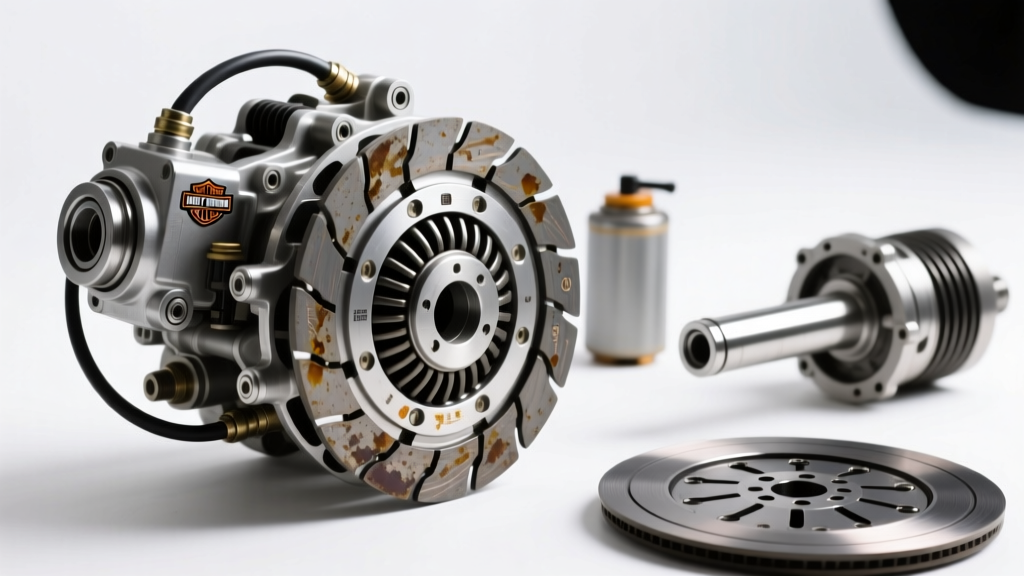
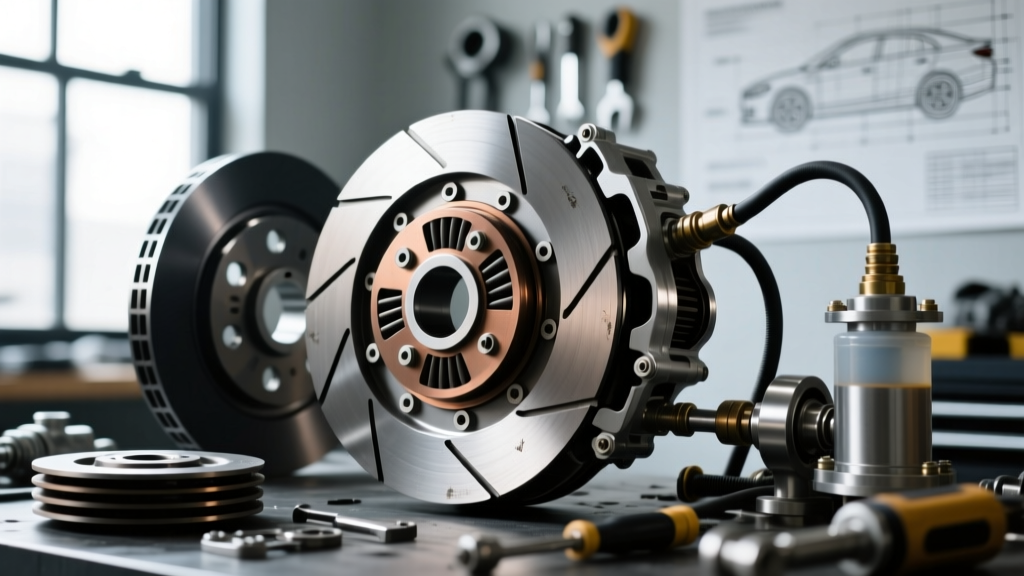
When automotive engineers and transmission specialists refer to gear clutches, the term encompasses two distinct but interconnected systems within the drivetrain. The first is the primary friction clutch assembly (flywheel, friction disc, pressure plate, and release bearing) that couples the engine's rotational mass to the transmission input shaft. The second refers to the internal gear clutches—specifically synchronizers, dog rings, and clutch packs—that lock specific gear ratios to the mainshaft or countershaft.
As we navigate the 2026 automotive landscape, where manual transmissions like the Tremec TR-6060 and dual-clutch automatics are pushed to handle over 700 lb-ft of torque, understanding the precise wear signs and lifespan indicators of these gear clutches is critical for accurate diagnostics. Misdiagnosing a failing internal dog clutch as a slipping primary friction disc can lead to unnecessary transmission removals and thousands of dollars in wasted labor.
Primary Friction Gear Clutches: Quantifiable Wear Signs
The primary friction clutch is a wear item by design. However, its degradation follows specific mechanical and thermal patterns that can be measured before catastrophic failure occurs.
1. Pedal Freeplay and Hydraulic Actuation Limits
As the friction material on the clutch disc wears, the diaphragm spring fingers on the pressure plate move closer to the release bearing. In mechanically linked systems, this reduces pedal freeplay. In modern hydraulic systems utilizing a Concentric Slave Cylinder (CSC), the master cylinder pushrod depth must compensate. A primary wear sign is a clutch engagement point that creeps to the very top of the pedal travel. If the CSC piston extends beyond its maximum stroke limit (typically 11mm to 14mm depending on the OEM), internal bypassing occurs, mimicking a master cylinder failure when the true culprit is disc wear.
2. Thermal Degradation and Slippage Diagnostics
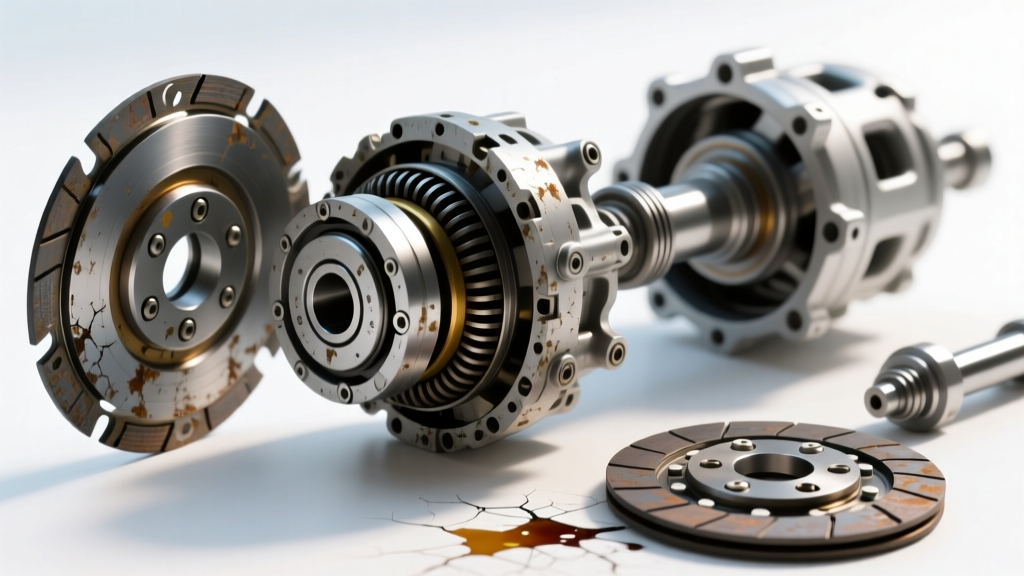
Organic friction materials rely on resin binders that begin to outgas and glaze when subjected to sustained temperatures above 400°F (204°C). To diagnose slippage without relying solely on driver feedback, perform a controlled load test:
- Engage the highest gear (e.g., 6th gear in a TR-6060) at 2,500 RPM on a steady incline.
- Apply wide-open throttle (WOT). If engine RPM climbs disproportionately to vehicle speed (MPH), the friction coefficient has dropped below the 0.35 threshold required for lock-up.
- Inspect the flywheel friction surface for thermal checking (micro-cracks) and bluing, which indicates localized temperatures exceeding 800°F.
Expert Diagnostic Note: Never machine a flywheel that exhibits deep thermal checking or hard spots. The metallurgical structure of the cast iron or steel has been altered, leading to immediate chatter upon reassembly. Always replace or utilize specialized friction-surfacing techniques.
Internal Gear Clutches: Synchronizer and Dog Ring Degradation
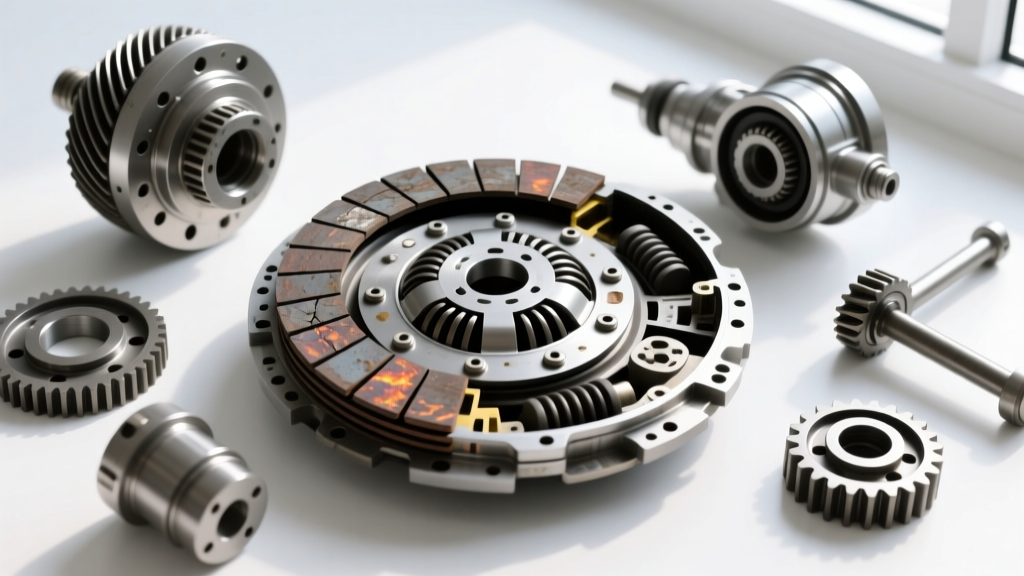
Inside the transmission case, internal gear clutches dictate shift quality. In manual transmissions, brass or carbon-fiber synchronizer rings act as friction cones to match gear speeds before the dog teeth engage. In sequential gearboxes and modern automatics (like the ZF 8HP), dog clutches and friction clutch packs execute the ratio changes.
Identifying Dog Tooth and Synchro Wear
When internal gear clutches wear, the symptoms are distinct from primary clutch slippage:
- Crunching on Engagement: Specifically on the 2-3 or 3-4 shift. This indicates the synchronizer friction cone has worn past its minimum thickness, failing to arrest the gear's inertia before the dog ring forces engagement.
- Popping Out of Gear: Dog teeth are machined with a specific undercut angle (back-taper) to pull the sliding sleeve deeper into engagement under load. When this undercut wears flat due to aggressive shifting or inadequate fluid film strength, axial thrust forces the gear clutch open, causing the transmission to pop into neutral under deceleration.
- Delayed Engagement in DCTs: In dual-clutch transmissions, wear in the internal multi-plate gear clutches manifests as a 'lag' followed by a harsh 'clunk' when shifting from Park to Drive, indicating depleted clutch pack clearance and degraded friction fluid additives.
Lifespan Indicators by Friction Material
The lifespan of a primary gear clutch is heavily dictated by its friction material composition. According to engineering data from manufacturers like Exedy, material selection must align with the vehicle's thermal and torque profile.
| Friction Material | Avg. Lifespan (Miles) | Max Operating Temp | Best Application | Wear Indicator |
|---|---|---|---|---|
| Organic (Kevlar blend) | 60,000 - 90,000 | 400°F (204°C) | Daily Driving, Light Towing | Glazing, high-pedal engagement |
| Ceramic | 30,000 - 50,000 | 800°F (426°C) | Track Use, High HP Drag | Chatter, flywheel grooving |
| Puck-Style Sintered Iron | 15,000 - 30,000 | 1000°F+ (537°C+) | Dedicated Motorsport | Rapid disc thinning, severe chatter |
| Carbon-Carbon | 10,000 - 20,000 | 1500°F+ (815°C+) | Professional Racing | Oxidation, structural delamination |
Precision Diagnostics: Measurements and Torque Specifications
When a gear clutch system requires replacement, precision measurement is non-negotiable to ensure the new assembly achieves its maximum lifespan. Referencing Tremec service guidelines and OEM engineering standards, adhere to the following specifications:
Critical Tolerances
- Flywheel Runout: Measure with a dial indicator at the outer friction surface. Maximum allowable runout is 0.005" (0.127mm). Ideal specification is <0.002". Excessive runout causes uneven clutch disc wear and release bearing wobble.
- Clutch Disc Thickness: A new organic disc typically measures between 0.310" and 0.330". The wear limit is generally reached when the rivet heads are within 0.010" of the friction surface, or when overall thickness drops below 0.260".
- Pressure Plate Lift: Verify that the diaphragm spring provides adequate clamping force. Fatigue in the spring steel reduces clamp load by up to 20% over 80,000 miles, necessitating full assembly replacement rather than just the disc.
Fastener Torque Specifications (Common V8 Applications)
Improper torque sequences lead to pressure plate warping and flywheel harmonic imbalances. Always use a calibrated torque wrench and follow a crisscross pattern.
- Flywheel to Crankshaft (e.g., GM LS/LT V8): M10x1.5 bolts. Torque to 74 lb-ft, plus an additional 50 degrees of rotation using an angle gauge. Use OEM thread locker or ARP ultra-torque assembly lube if using aftermarket hardware.
- Pressure Plate to Flywheel (Tremec TR-6060 / GM T56): M8x1.25 bolts. Torque to 22-25 lb-ft (30-34 Nm) in a star pattern. Do not exceed 25 lb-ft, as over-torquing can distort the clutch cover and cause release inconsistencies.
- Bellhousing to Engine Block: Typically 35-50 lb-ft depending on the block material. Ensure alignment dowels are intact; missing dowels cause input shaft misalignment, destroying the pilot bearing and tearing up the friction disc hub splines.
Economic Analysis: Replacement vs. Machining
Deciding between resurfacing components and full replacement requires analyzing the lifecycle cost of the gear clutch system.
- OEM Organic Replacements: A standard Exedy or Sachs OE replacement kit (disc, pressure plate, release bearing) ranges from $350 to $550. This is the most cost-effective route for daily drivers.
- Dual-Mass Flywheel (DMF) Systems: Common in modern turbocharged applications (e.g., Ford EcoBoost, VW GTI). A DMF cannot be machined. When the internal torsional springs fatigue or the friction surface wears past the 0.040" limit, a complete replacement is required, costing between $800 and $1,400 for the flywheel alone.
- High-Performance Upgrades: For vehicles exceeding 600 wheel-horsepower, upgrading to a twin-disc system like the McLeod RXT or Tilton OT-II is necessary. These kits range from $1,800 to $3,200 but offer superior thermal capacity and extended lifespan under extreme torque loads.
Conclusion
Diagnosing gear clutches requires moving beyond simple 'slip or grab' assumptions. By measuring hydraulic actuation limits, evaluating thermal degradation on the flywheel, and understanding the metallurgical wear of internal dog rings and synchronizers, technicians can accurately pinpoint drivetrain faults. Adhering to strict runout tolerances and torque specifications during reassembly ensures that the replacement gear clutch system delivers optimal performance and maximum lifespan in today's high-torque automotive environment.