Understanding Front-Wheel Drive System Operation
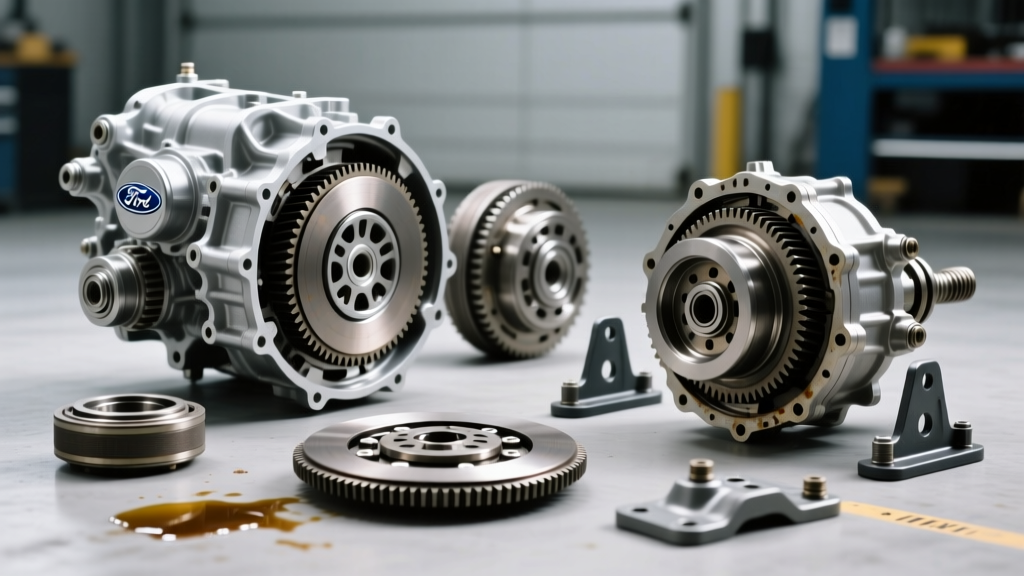
The front-wheel drive (FWD) layout dominates the global commuter vehicle market due to its packaging efficiency and inherent understeer safety characteristics. However, when diagnosing drivetrain vibrations, traction loss, or power delivery faults, a deep understanding of FWD system operation is mandatory. Unlike rear-wheel drive (RWD) configurations that separate the transmission and the differential, FWD vehicles utilize a transaxle—a single integrated housing containing the transmission gearsets, the final drive ring and pinion, and the differential assembly.
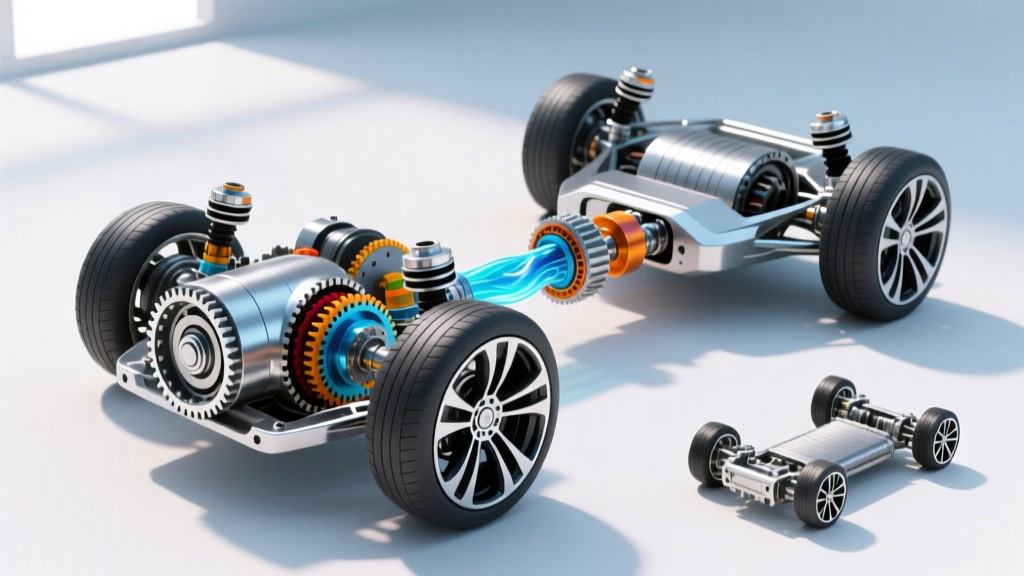
Power flows from the engine’s flexplate into the torque converter, through the planetary gearsets, and into the final drive. From the differential’s side gears, torque is routed outward through the inner Constant Velocity (CV) joints, down the half-shafts, and through the outer Rzeppa CV joints to the wheel hubs. Because the front wheels are responsible for both steering and propulsion, the CV joints must accommodate extreme articulation angles while transmitting high torsional loads.
Common FWD Drivetrain Symptoms & Diagnostics
In 2026, while modern OBD-II and CAN-bus diagnostics can flag electronic solenoid faults or slip-ring sensor errors, mechanical FWD failures require physical troubleshooting. Here are the most frequent FWD operational symptoms and their mechanical root causes:
1. Vibration Under Heavy Acceleration
Symptom: A rhythmic shudder or vibration felt through the chassis and steering wheel specifically during hard acceleration, which disappears when coasting.
Diagnosis: This is the hallmark of inner CV joint (tripod housing) wear. The inner tripod bearings develop flat spots or the housing bore becomes egg-shaped from repeated high-torque loading. When torque is applied, the worn rollers bind and release, causing a cyclical vibration.
Actionable Fix: Replace the complete half-shaft assembly. When reinstalling, the outer CV axle nut must be torqued to exact specifications to prevent hub bearing failure. For example, on a GM 4T65-E transaxle equipped vehicle, the axle nut torque spec is typically 118 lb-ft (160 Nm), while many Honda K-series applications require 134 lb-ft (182 Nm). Always use a new, staked axle nut.
2. Torque Steer and Drivetrain Clunk
Symptom: The steering wheel pulls sharply to one side under throttle, accompanied by a metallic clunk when shifting from Reverse to Drive.
Diagnosis: Torque steer is often caused by unequal half-shaft lengths, leading to differing rates of torsional wind-up. However, if accompanied by a distinct clunk, the transaxle’s internal differential spider gears or side gear thrust washers are likely worn. The excessive backlash allows the gears to slam together when torque direction reverses.
Actionable Fix: Check the transaxle fluid level and condition. A burnt smell or metallic glitter in the fluid confirms internal differential wear. For a GM 4T65-E, the dry fill capacity is 11.2 quarts of Dexron VI. If the fluid is clean but backlash is high, a transaxle teardown and differential rebuild (installing upgraded heavy-duty spider gears and selective-fit thrust washers) is required.
3. High-Speed Cornering Bind-Up
Symptom: A hopping or skipping sensation from the front wheels during tight, low-speed turns, or a humming whine at highway speeds.
Diagnosis: If the vehicle is equipped with a limited-slip front differential (rare, but found in performance FWD cars like the Honda Civic Type R or Ford Fiesta ST), the clutch packs may be degraded or the wrong fluid is installed. For standard open differentials, a highway whine indicates final drive bearing preload loss or ring-and-pinion gear wear.
The Traction Ceiling: Why FWD Fails Off-Pavement
While FWD system operation is highly efficient for paved roads, it suffers from a severe mechanical disadvantage in low-traction environments: dynamic weight transfer. Under hard acceleration, a vehicle's nose lifts, transferring weight away from the front drive wheels and onto the rear wheels. Simultaneously, an open front differential routes torque to the wheel with the least resistance. If the unweighted left front wheel loses traction, it spins freely, and the vehicle goes nowhere.
For enthusiasts, overlanders, and winter-rally builders who have exhausted FWD traction modifications (such as aggressive tread patterns or front limited-slip differentials like the Quaife ATB), the FWD layout ultimately becomes a bottleneck. This limitation forces a fundamental drivetrain layout change, leading to the ultimate traction debate in custom vehicle builds and heavy-duty swaps: locking rear differential vs 4x4.
Upgrading Traction: Locking Rear Differential vs 4x4
When abandoning a FWD layout for a RWD or AWD/4WD platform to solve traction issues, builders must weigh mechanical complexity, weight, and cost. Comparing a locking rear differential vs 4x4 systems requires understanding how each manages torque distribution and weight transfer.
The Locking Rear Differential Approach
Swapping to a solid-axle RWD layout equipped with a locking rear differential is a favorite among drag racers, rock crawlers, and budget overlanders. A locking differential (such as the Eaton Detroit Locker or an ARB Air Locker) mechanically forces both rear wheels to rotate at the exact same speed, regardless of available traction.
- Weight Transfer Advantage: Under acceleration, weight shifts to the rear, planting the tires and maximizing the grip of the locked axle.
- Part Specifics: An ARB RD147 Air Locker for a Dana 44 axle costs approximately $1,150 to $1,250 in 2026. Installation requires setting ring-and-pinion backlash (typically 0.006" - 0.010") and verifying bearing preload.
- Drawbacks: A locked rear axle causes severe chassis bind during tight, paved turns (as the outside wheel must travel further than the inside wheel). It also offers zero front-end pulling power, meaning the front wheels can still be pushed off-line in deep mud or snow.
The Full 4x4 System Approach
A full 4x4 system introduces a transfer case (e.g., the legendary New Process NP205 or the modern electronic BorgWarner 4406) to route torque to both the front and rear axles. This effectively doubles the vehicle's contact patch and pulling force.
- Traction Superiority: By engaging 4WD High or Low, the transfer case locks the front and rear driveshafts together (in part-time systems), ensuring that even if the rear wheels lose traction, the front wheels will pull the vehicle forward.
- Cost and Complexity: A complete 4x4 swap involves sourcing a transfer case, a front driving axle, a divorced or married transmission adapter, and a custom front driveshaft. Complete 4x4 swap kits and donor drivetrains routinely exceed $4,500 to $8,000 in parts alone, not including the hundreds of hours of fabrication and wiring integration.
- Parasitic Loss: A 4x4 system adds 150 to 250 lbs of rotating mass, increasing drivetrain parasitic loss and reducing fuel economy by 10-15% compared to a 2WD setup.
Mechanical Comparison Chart: FWD vs. Locker vs. 4x4
| Drivetrain Layout | Traction Mechanism | Weight Transfer Benefit | Approx. Upgrade Cost | Ideal Use Case |
|---|---|---|---|---|
| FWD (Open Diff) | Single axle, path of least resistance | Negative (Lifts drive wheels) | N/A (OEM) | Commuting, light snow |
| RWD + Locking Rear Diff | Mechanical wheel-to-wheel lock | Positive (Plants drive wheels) | $1,200 - $2,500 | Drag racing, straight-line rock crawling |
| Part-Time 4x4 | Transfer case locks front/rear axles | Neutral (Utilizes all 4 wheels) | $4,500 - $8,000+ | Deep mud, expedition overlanding, heavy towing |
Diagnostic Decision Matrix
When troubleshooting a vehicle that is consistently failing to maintain traction or exhibiting FWD drivetrain bind, use this decision matrix to determine your next mechanical step:
- Is the vibration/slip isolated to one front wheel under load? Diagnose the inner CV joint and half-shaft. Replace and torque to OEM specs.
- Is the FWD transaxle clunking and slipping both wheels in snow/mud? The open differential is operating as designed, but the layout is insufficient. FWD has reached its traction ceiling.
- Do you primarily drive in straight-line, low-traction environments (sand strips, drag strips, steep fire roads)? Abandon FWD. Swap to a solid-axle RWD and install a locking rear differential. It is lighter, cheaper, and maximizes rear weight transfer.
- Do you need to navigate off-camber trails, deep bogs, or heavy winter plowing where front-end steering traction is required? The locking rear differential vs 4x4 debate ends here. You must choose a 4x4 system with a transfer case to pull the front axle through the obstacle.
Conclusion
Diagnosing front-wheel drive system operation requires a technician to look past electronic sensors and understand the physical realities of transaxle gearsets, CV joint articulation, and dynamic weight transfer. While FWD is an engineering marvel for daily efficiency, its inherent traction limits often force enthusiasts to look at alternative drivetrain layouts. Whether you opt for the raw, straight-line grip of a locking rear differential or the ultimate, multi-surface capability of a full 4x4 transfer case system, understanding the mechanical trade-offs ensures your build survives the trail, the track, and the daily commute.