The Anatomy of Front-Wheel Drive Operation: A Diagnostic Refresher
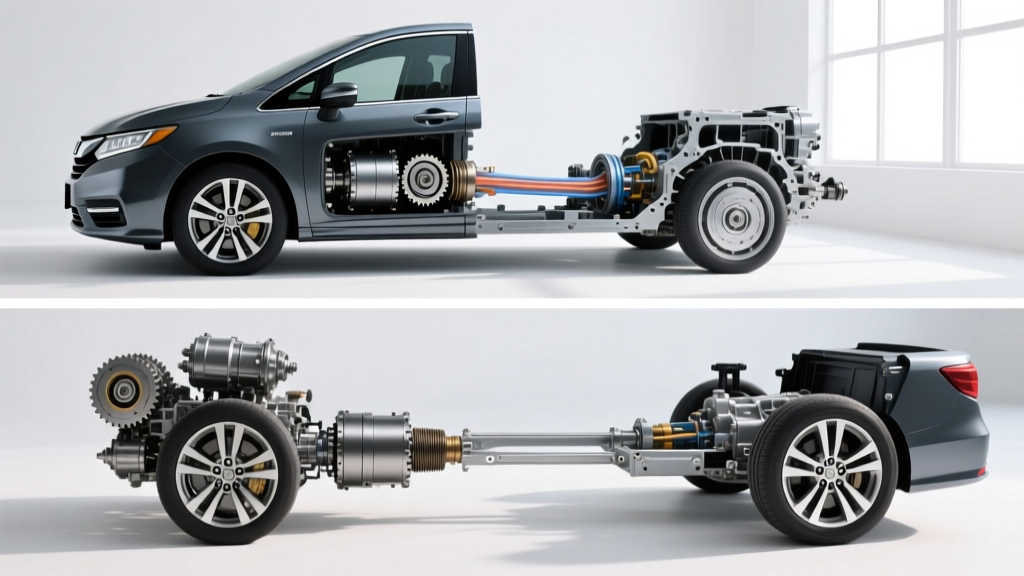
Front-wheel drive (FWD) systems dominate the modern passenger vehicle landscape due to their packaging efficiency, weight savings, and inherent traction advantages in low-grip conditions. However, cramming the transmission, differential, and final drive into a single transaxle housing creates a complex web of rotating masses. For the DIY mechanic or the discerning vehicle owner, understanding how power flows from the engine to the tarmac is the first step in accurate symptom diagnosis.
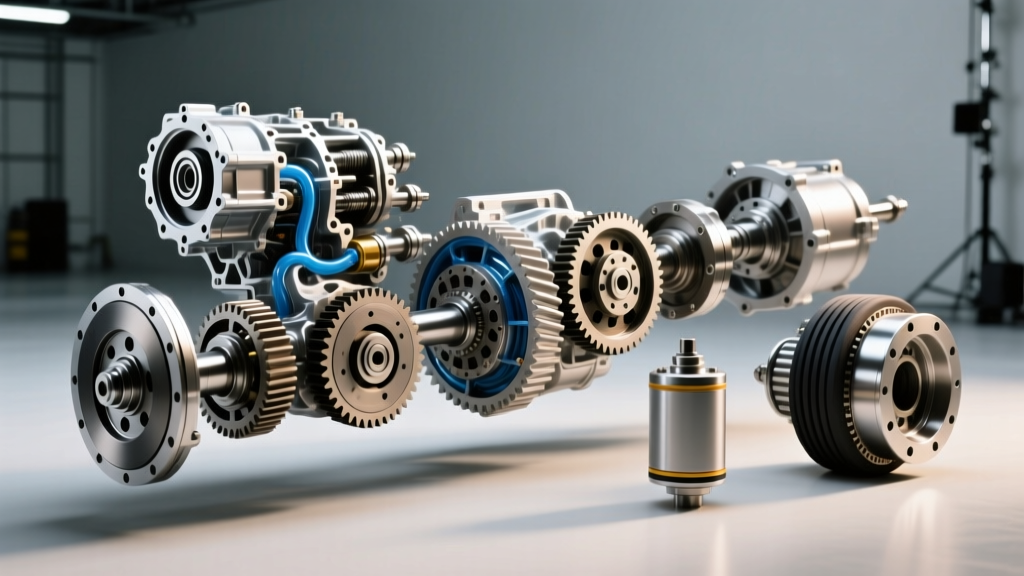
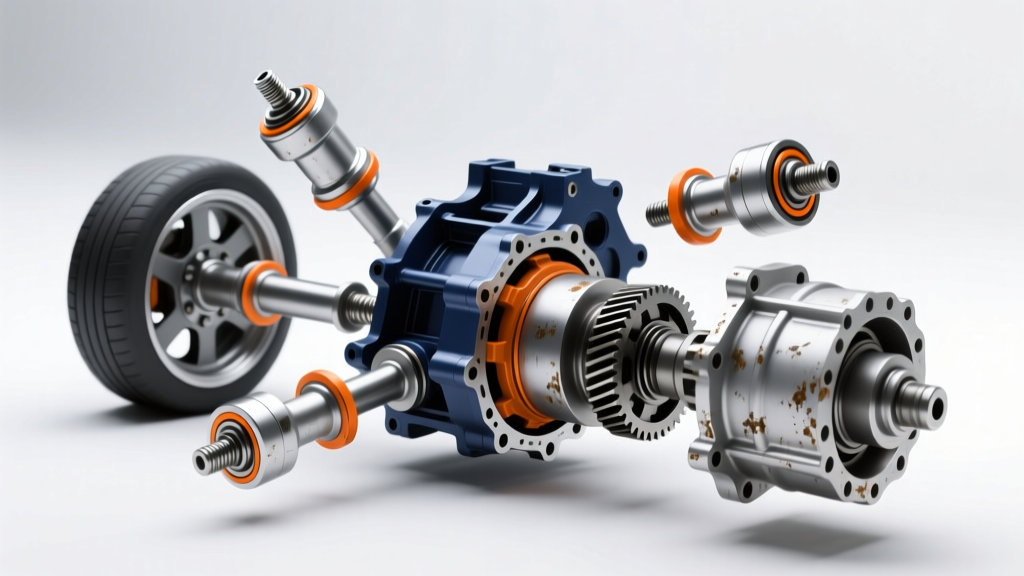
In a typical FWD layout—such as the widely used GM 6T40 or Toyota U660F transaxles—power enters the transmission input shaft, routes through the planetary gear sets, and exits via the differential pinion gear. This spins the ring gear, which is bolted to the differential case. Inside the case, spider gears and side gears distribute torque to the left and right CV (Constant Velocity) axles. Because the transaxle is usually offset to one side of the engine bay, the right and left axles are often of unequal length. To mitigate the resulting torque steer, many manufacturers utilize a right-side intermediate shaft (also known as a stub shaft) supported by a bracket and bearing, equalizing the effective length of both half-shafts.
Decoding FWD Drivetrain Symptoms: What Your Car is Telling You
FWD drivetrains communicate their health through specific auditory and tactile feedback. Misdiagnosing these symptoms can lead to unnecessary parts replacement. Here is how to isolate the most common FWD failure modes.
1. Rhythmic Clicking on Tight Turns (Outer CV Joint Failure)
The outer CV joints are typically Rzeppa-type fixed joints, designed to handle extreme steering angles (up to 45 degrees). When the protective rubber boot tears, moisture and road grit contaminate the molybdenum-based CV grease. The resulting wear causes the ball bearings to skip in their tracks, producing a distinct rhythmic clicking or popping noise during tight, low-speed turns. If the clicking occurs only when turning left, the right outer CV joint is typically the culprit, as it is under the most load and articulation during a left-hand maneuver.
2. Shudder and Vibration Under Hard Acceleration (Inner CV Joint Wear)
Inner CV joints are usually Tripod or Cross-Groove designs, which allow for plunging (in-and-out movement) to accommodate suspension travel. Unlike outer joints, inner joint wear rarely produces a clicking noise. Instead, a worn inner tripod housing will develop a concave wear pattern on its internal tracks. Under load, the rollers bind and release, sending a violent side-to-side shudder through the chassis, typically between 20 and 40 mph. This is frequently misdiagnosed as a transmission torque converter shudder or an engine misfire.
3. Speed-Sensitive Humming from the Right Side (Intermediate Shaft Bearing)
If your vehicle utilizes an intermediate shaft, the support bearing is a prime suspect for speed-sensitive driveline noise. Unlike a wheel bearing, which changes pitch when the vehicle's weight is shifted side-to-side (swerving), an intermediate shaft bearing hum remains constant regardless of steering angle but will change pitch under acceleration versus deceleration. Because this bearing is pressed onto the shaft and housed in a bracket bolted directly to the engine block, it transfers gear whine and bearing growl directly into the cabin.
FWD Diagnostic Matrix: Failure Modes vs. Repair Complexity
| Symptom | Probable FWD Component | DIY Feasibility | Estimated 2026 Repair Cost (Parts + Labor) |
|---|---|---|---|
| Clicking on turns | Outer CV Joint / Axle Assembly | High (Basic hand tools) | $250 - $450 |
| Acceleration shudder | Inner CV Joint / Tripod Housing | High (Requires boot clamps) | $300 - $500 |
| Speed-sensitive hum (Right side) | Intermediate Shaft Support Bearing | Low (Requires hydraulic press) | $400 - $750 |
| Grinding in tight circles | Transaxle Differential / Spider Gears | None (Transaxle teardown) | $2,800 - $4,500 |
When to Search for a "Drivetrain Near Me" vs. General Auto Repair
Not all automotive repair facilities are equipped to handle the full spectrum of FWD drivetrain issues. Replacing a complete CV axle assembly is a straightforward bolt-on job that any general mechanic or competent DIYer can tackle in under two hours. However, when the failure point moves inward toward the transaxle housing, the required tooling and expertise shift dramatically.
When you experience a deep humming from the right side of your engine bay, metallic grinding during tight parking lot maneuvers (indicating differential spider gear failure), or severe torque steer caused by a warped intermediate shaft, you are dealing with press-fit components and精密 machined tolerances. This is the exact moment you should open your browser and search for a specialized drivetrain near me. General quick-lube or brake-focused shops rarely possess the 20-ton hydraulic press equipment, specialized pullers, or the clean-room environment necessary to service FWD transaxle-adjacent components without introducing catastrophic contamination to the differential fluid. Furthermore, a dedicated drivetrain specialist will have the proprietary fixtures required to measure differential backlash and side bearing preload—measurements that are entirely outside the scope of standard OBD2 diagnostics and general repair.
Critical Torque Specs and FWD Reassembly Rules
For those tackling the outer reaches of the FWD system, adhering to manufacturer torque specifications is non-negotiable. The FWD axle nut is not just a fastener; it is a critical structural component that applies the necessary clamping force to keep the CV joint internals from separating under load. According to industry data from GKN Automotive, the leading OEM supplier of CV joints and driveshafts, under-torquing an axle nut will lead to rapid spline wear and catastrophic joint disintegration, while over-torquing can stretch the stub shaft and ruin the wheel bearing.
- GM 6T40 Transaxle Applications (e.g., Chevy Malibu, Equinox): The intermediate shaft bracket-to-engine block bolts require exactly 37 lb-ft (50 Nm). The front axle nut typically requires 155 lb-ft (210 Nm). Always use a new, staked axle nut; never reuse an old one.
- Toyota U660F Transaxle Applications (e.g., Camry V6, Highlander): The front axle nut torque specification is significantly higher at 162 lb-ft (220 Nm). Ensure the CV splines are completely dry and free of oil before installation to prevent micro-movements.
- Honda MCZ / Honda 5AT Applications (e.g., Civic, Accord): Honda utilizes a 32mm or 35mm spindle nut (depending on the year) torqued to 134 lb-ft (181 Nm), followed by staking the nut into the axle shaft groove using a blunt punch.
As noted in the comprehensive diagnostic guides at AA1Car, failing to properly seat the inner CV joint into the transaxle differential side gear is a leading cause of post-repair fluid leaks and vibration. Always listen for the definitive "click" of the internal retaining ring seating into the side gear groove, and verify by gently pulling outward on the inner CV housing—not the boot or shaft—to ensure it is locked in place.
Preventative Maintenance for FWD Longevity
While CV joints are technically sealed, lifetime components, their longevity is entirely dependent on the integrity of their thermoplastic or rubber boots. Inspect your CV boots every 15,000 miles. Look for hairline cracks in the convolutions, especially on the outer joints where steering articulation constantly flexes the material. If a boot is caught early—before moisture ingress or grease depletion occurs—a simple boot replacement and repacking with fresh OEM-spec molybdenum disulfide grease can save the joint. However, if the grease has turned grey or gritty, the joint must be replaced. By understanding the mechanical realities of your FWD system, you can accurately diagnose failures, save money on misdirected repairs, and know precisely when it is time to call in the local drivetrain specialists.