The Core Question: Do FWD Cars Have Differentials?
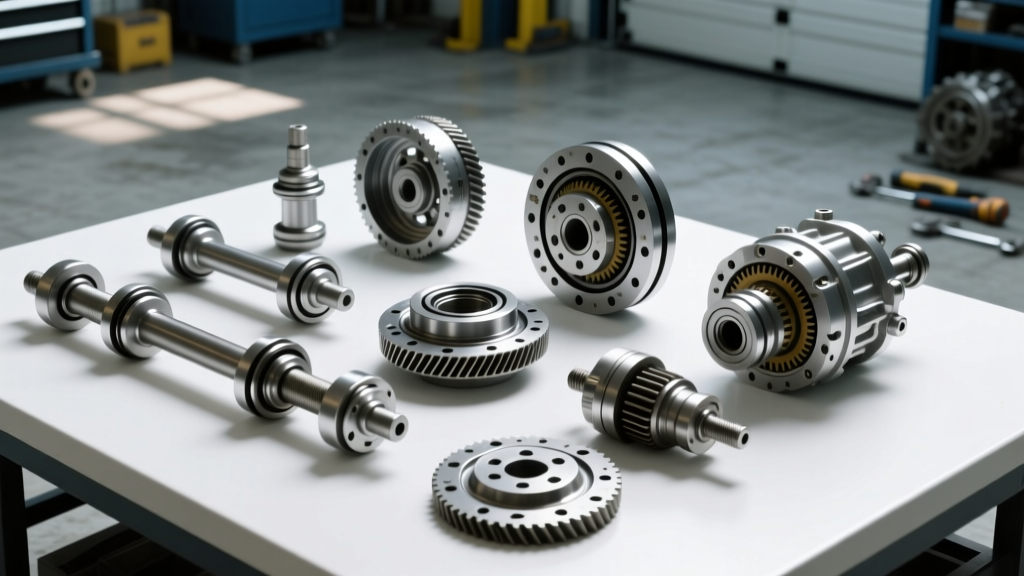
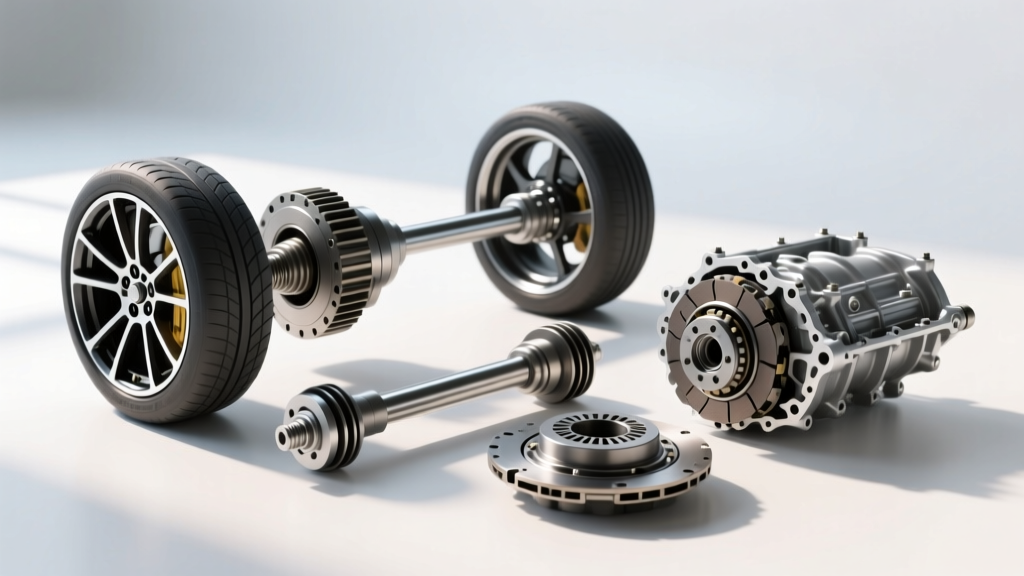
When evaluating used vehicles or troubleshooting Noise, Vibration, and Harshness (NVH) issues, one of the most frequent questions from buyers and novice mechanics is: do FWD cars have differentials? The short answer is yes, but the architecture is fundamentally different from a traditional rear-wheel-drive (RWD) setup. In a Front-Wheel-Drive (FWD) vehicle, the differential is integrated directly into the transmission housing, forming a single unit known as a transaxle. This means the differential shares lubrication with the transmission gears (in most automatic and manual FWD layouts) and sends power laterally to the front wheels via CV (Constant Velocity) half-shafts, rather than longitudinally through a traditional tubular driveshaft.
Understanding this distinction is critical for driveshaft vibration diagnosis. A vibration in a FWD Honda Civic requires an entirely different diagnostic pathway, toolset, and component knowledge base than a vibration in a RWD Ford Mustang or an AWD Subaru WRX. In this 2026 buyer’s and mechanic's guide, we break down how to isolate, diagnose, and repair drivetrain vibrations across different layouts, complete with real-world torque specs and part sourcing data.
NVH Fundamentals: Frequency and Drivetrain Layouts
Professional drivetrain diagnosis relies on frequency analysis. A vibration is simply an oscillating movement measured in Hertz (Hz). To accurately diagnose a drivetrain shudder, you must determine if the vibration is tied to engine RPM, wheel speed, or driveshaft speed.
- Tire/Wheel Imbalance (First-Order): At 60 mph, a standard 27-inch tire rotates at roughly 12.5 Hz. This is felt as a low-frequency steering wheel shimmy or seat bounce.
- FWD CV Axle / Half-Shaft: Because FWD half-shafts rotate at the exact same speed as the wheels, their vibration frequencies mimic wheel-speed issues, but they manifest heavily under load (acceleration) rather than coasting.
- RWD/AWD Longitudinal Driveshaft: A longitudinal driveshaft rotates 2.5 to 4 times faster than the wheels, depending on the final drive ratio. At 60 mph with a 3.55 rear axle ratio, the driveshaft spins at roughly 44 Hz. This creates a high-frequency hum or buzz felt in the floorboards or center console.
Comparative Diagnosis Matrix: FWD vs. RWD/AWD
Use the following diagnostic table to narrow down the culprit based on your vehicle's drivetrain configuration and the specific conditions under which the vibration occurs.
| Symptom / Condition | FWD (CV Axle / Transaxle Diff) | RWD/AWD (Longitudinal Driveshaft) |
|---|---|---|
| Vibration at 55-65 mph (coasting) | Rare (Check wheel bearings, tires, or bent rim) | Driveshaft imbalance, worn U-joints, or failing center support bearing (CSB) |
| Vibration under hard acceleration | Inner CV joint wear (tripod or ball cage pitting) | Pinion angle misalignment, worn slip yoke splines |
| Clunk on gear engagement (Drive/Reverse) | Excessive transaxle differential backlash, worn engine mounts | Worn U-joints, loose pinion flange, worn slip yoke |
| Clicking / Popping while turning | Outer CV joint failure (cage/ball wear) | N/A (Rear axle issues differ; check CV axles on independent rear suspension AWD) |
FWD Half-Shaft & Transaxle Differential Troubleshooting
Since FWD cars do not use a traditional longitudinal driveshaft, vibration diagnosis focuses on the CV axles and the internal transaxle differential. The most common cause of FWD acceleration shudder is a worn inner CV joint. Unlike the outer joints which use a Rzeppa ball-and-cage design for extreme steering angles, inner joints typically use a tripod (tulip) design. When the needle bearings or tripod rollers develop flat spots, the joint binds under load, creating a violent lateral shudder.
Repair Specs & Buyer's Data (FWD)
When replacing FWD drivetrain components, always prioritize OEM or premium aftermarket suppliers like GKN Automotive (the original manufacturer for most European and Japanese OEMs). Cheap, unbranded remanufactured axles often suffer from improper heat treatment and incorrect grease formulations, leading to premature failure.
- Honda K-Series (Civic/Accord): The 36mm front axle nut requires a massive 180 lb-ft (244 Nm) of torque. Always use a new staked nut; reusing an old nut risks the hub bearing loosening under load.
- GM 6T40/6T45 Transaxles: If you suspect internal differential wear (whining under load, metal flakes in the pan), note that these transaxles hold roughly 4.0 to 6.0 quarts of Dexron VI. Rebuilding the helical differential requires specialized pullers and shim-selection tools to set proper gear backlash (typically 0.004 - 0.008 inches).
- 2026 Pricing Guide: A premium GKN/Löbro front CV axle assembly ranges from $140 to $220. OEM dealership pricing usually sits between $350 and $550. Avoid $60 'economy' axles, as they frequently cause immediate out-of-balance vibrations.
RWD/AWD Longitudinal Driveshaft Diagnosis
For RWD and longitudinal AWD platforms (e.g., GM's 6L80/8L90 transmissions, ZF 8HP-equipped Dodge Chargers, or Ford 10-speeds), the traditional tubular driveshaft is the primary suspect for high-frequency NVH issues. Diagnosis requires checking three main areas: the Universal Joints (U-joints), the Center Support Bearing (CSB) on two-piece shafts, and the pinion angle.
U-Joint and Slip Yoke Failure Modes
A failing U-joint will often exhibit a 'squeak' at low speeds, progressing to a high-frequency vibration at highway speeds as the needle bearings disintegrate and the cross-cap develops play. According to technical bulletins from Dana Spicer, improper installation and lack of proper greasing are the leading causes of premature U-joint failure.
- Spicer 1310 Series: Common on Jeeps, light trucks, and older muscle cars. The strap bolts securing the U-joint to the differential yoke must be torqued to exactly 15 to 20 lb-ft. Over-torquing will distort the bearing caps and bind the joint, instantly causing a vibration.
- Slip Yoke Splines: If you feel a distinct 'clunk' when shifting from Reverse to Drive, the slip yoke splines (where the driveshaft enters the transmission tail housing) may be dry or worn. Applying a specialized spline grease (like Motorcraft XG-8) during reassembly is mandatory.
Pinion Angle and Harmonic Imbalance
If the driveshaft is perfectly balanced but a vibration persists, the pinion angle is likely incorrect. The angle of the transmission output shaft and the rear differential pinion flange must be parallel (typically offset by 1 to 3 degrees to allow U-joint cycling). If a vehicle has been lifted or lowered without installing adjustable control arms or a pinion angle shim, the U-joints will operate outside their designed velocity parameters, creating a cyclical harmonic vibration.
- Ford 8.8-Inch Rear Axle: When removing the driveshaft to inspect the pinion flange, the pinion nut requires a holding tool (e.g., OTC 7107) and a torque wrench set to 220 lb-ft (298 Nm) to remove and reinstall. Never use an impact wrench to remove a pinion nut, as this will destroy the collapsible crush sleeve and ruin your differential bearing preload.
2026 Buyer’s Guide: Sourcing Drivetrain Components
Whether you are buying a used vehicle and need to budget for immediate drivetrain repairs, or sourcing parts for a restoration, knowing which brands to trust is vital. The drivetrain market has seen an influx of low-quality offshore components in recent years. Here is how to navigate the market:
- For FWD CV Axles & Joints: Always look for GKN (Löbro) or SKF branding. These companies supply the OEM assembly lines. If you are rebuilding an existing axle, GKN joint kits (including the boot, grease, and circlips) cost around $60-$90 and will outlast a fully assembled budget axle.
- For RWD U-Joints: Stick to Spicer (Dana) or Neapco. A genuine Spicer 5-153X (1310 series) greasable U-joint costs roughly $22 to $35. Avoid unbranded 'white box' joints sold on mega-retailer sites; they often lack proper induction hardening on the cross trunnions.
- Custom Aluminum Driveshafts: If you are upgrading a RWD performance car to eliminate the heavy steel two-piece shaft and its failure-prone center support bearing, a custom 6061-T6 aluminum shaft from a reputable builder (using Spicer 1350 series joints) will cost between $650 and $950 in 2026. This reduces rotational mass and raises the critical speed threshold of the shaft, eliminating high-RPM harmonic vibrations.
Conclusion
Answering the question 'do FWD cars have differentials' opens the door to understanding the vast mechanical differences between transverse and longitudinal drivetrains. FWD vehicles rely on integrated transaxle differentials and CV half-shafts, where vibrations are typically load-dependent and tied to inner joint wear. RWD and AWD vehicles utilize high-speed longitudinal driveshafts, where NVH issues manifest as high-frequency buzzes related to U-joint degradation, slip-yoke wear, or pinion angle misalignment. By utilizing frequency analysis, adhering strictly to OEM torque specifications, and sourcing premium components from manufacturers like GKN and Dana Spicer, you can accurately diagnose and permanently resolve drivetrain vibrations.