Demystifying the Drivetrain: What Are Front and Rear Differentials?
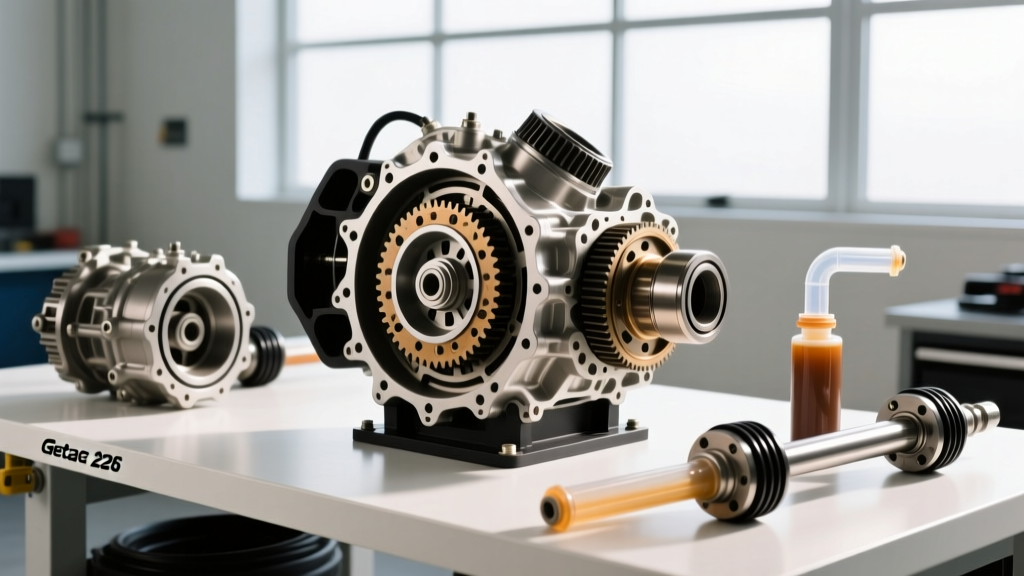
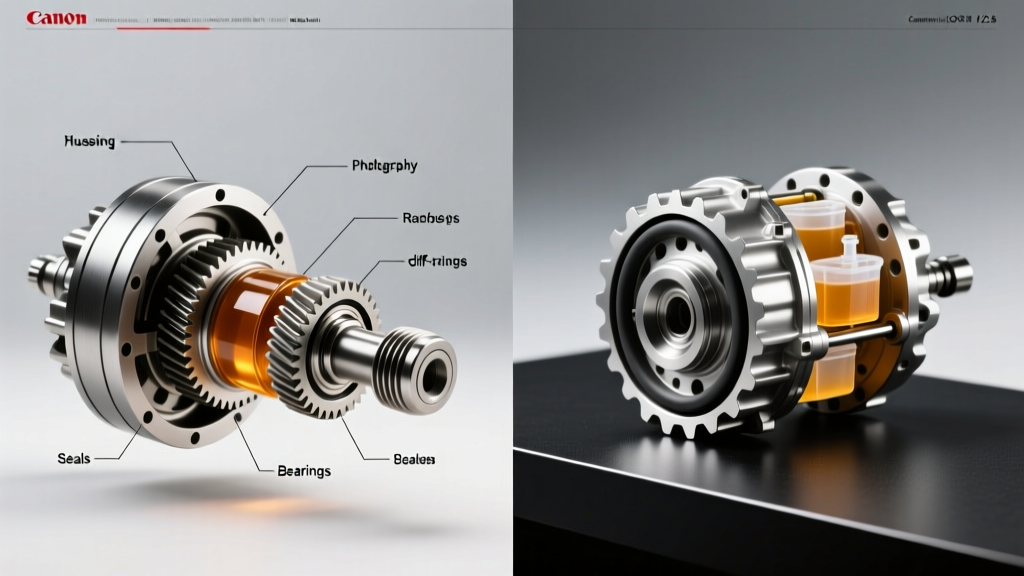
When enthusiasts and daily drivers alike begin diagnosing a whining axle or a puddle of gear oil on the garage floor, a common foundational question arises: what are front and rear differentials, and how do their internal components interact? In the simplest terms, a differential is a complex gear assembly that splits engine torque between two wheels, allowing them to rotate at different speeds while cornering. In rear-wheel-drive (RWD) platforms, the rear differential handles this task via a ring and pinion gear set mated to a carrier. In all-wheel-drive (AWD) and four-wheel-drive (4WD) vehicles, a front differential performs the identical function for the front axle, often integrated directly into the transmission transaxle or mounted as a standalone housing on solid front axles.
Understanding what front and rear differentials are is only the first step. The real mechanical challenge lies in maintaining the precision bearings and high-pressure seals that keep the hypoid gear oil contained and the gear mesh perfectly aligned. When a seal fails, fluid starvation follows. When a bearing fails, catastrophic gear destruction is usually only a few miles away. As of 2026, with modern synthetic gear oils lasting well over 100,000 miles, most differential failures are not due to fluid breakdown, but rather mechanical seal degradation and bearing fatigue.
The Domino Effect: How Seal Failures Destroy Bearings
Differentials rely on a precise splash-lubrication or forced-lubrication system. The ring gear acts as a scoop, picking up heavy 75W-90 or 75W-140 gear oil and slinging it into the upper recesses of the housing, where it drips down through the carrier bearings and pinion bearing journals. If a seal fails and the fluid level drops below the pinion centerline, the pinion bearings are the first to starve.
Pinion Seal vs. Axle Shaft Seals
- Pinion Seals: Located behind the driveshaft yoke, the pinion seal retains fluid at the front of the differential housing. A failure here often sprays gear oil directly onto the exhaust system or undercarriage, leading to rapid fluid loss. More critically, it starves the outer pinion bearing, which spins at driveshaft RPMs (often 3,000+ RPM at highway speeds).
- Axle Shaft Seals: Pressed into the ends of the axle tubes, these seals ride on the machined surface of the axle shafts. A failure here leaks fluid onto the brake pads or rotors, causing severe braking issues and contaminating the carrier bearings rather than the pinion bearings.
Expert Procedure: Pinion Bearing and Seal Replacement
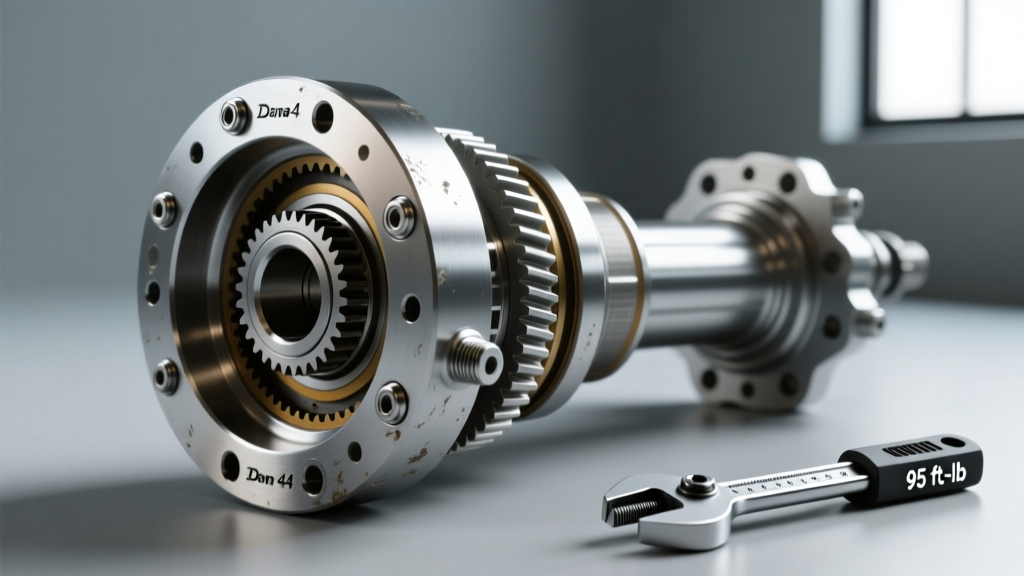
Replacing a pinion seal is not a simple 'unbolt and swap' job. It requires managing the pinion bearing preload, which is typically maintained by a crush sleeve (or a solid spacer in performance builds). If you over-tighten the pinion nut, you will crush the sleeve too far, creating excessive preload that will overheat and destroy the new bearings within 50 miles. According to Ring-Pinion.com technical documentation, improper pinion preload is the number one cause of premature differential failure post-service.
Step-by-Step Pinion Seal Service
- Measure Initial Preload: Before disassembly, remove the driveshaft and use an inch-pound torque wrench on the pinion nut. Record the rotating torque (e.g., 15-30 in-lbs for a GM 8.5-inch 10-bolt).
- Mark the Yoke and Shaft: Use a paint pen to mark the exact relationship between the pinion yoke and the pinion shaft threads. This is critical for reassembly if you are reusing the crush sleeve.
- Extract the Yoke: Never hammer the yoke off. Use a dedicated steering wheel or harmonic balancer puller adapted for yoke removal to avoid damaging the pinion shaft threads or the internal bearing cage.
- Inspect and Replace: Pry out the old seal. If the pinion bearing race shows spalling or bluing from oil starvation, the bearing must be pressed off and replaced. Install the new seal using a seal driver to ensure it seats perfectly square.
- Re-torque to Spec: Reinstall the yoke and torque the pinion nut to the factory specification while checking the rotating preload every few turns.
Expert Pro-Tip: If you are replacing the pinion bearing entirely, discard the factory crush sleeve. Upgrade to a solid pinion spacer kit (like those from Ratech Manufacturing) with precision shims. This eliminates the guesswork of crushing a sleeve and allows for infinite preload adjustments, vastly extending bearing life in high-torque applications.
Critical Specifications: Torque, Preload, and Part Numbers
To execute this repair correctly, you must adhere to exact engineering tolerances. The table below outlines the critical specifications for three of the most common differentials found in North American trucks and SUVs. Always cross-reference with your specific factory service manual, as variations exist between model years.
| Differential Model | Pinion Nut Torque (New Sleeve) | Target Rotating Preload | Carrier Bearing Kit | Pinion Seal Part # |
|---|---|---|---|---|
| GM 8.5' / 8.6' 10-Bolt | 125-150 ft-lbs | 15-30 in-lbs | Timken SET 36 | National 8660S |
| Ford 8.8' (Solid Axle) | 140 ft-lbs | 8-14 in-lbs | Timken SET 20 | National 8660S |
| Dana 35 (Jeep) | 160 ft-lbs | 14-19 in-lbs | Timken SET 34 | National 8660S |
| Toyota 8' (IFS Front) | 130 ft-lbs | 10-16 in-lbs | Koyo TRB Kit | Toyota 90311-38118 |
Sourcing high-quality bearings is non-negotiable. While budget kits are available on standard e-commerce sites for $40, they often feature inferior metallurgy that spalls under heavy load. Stick to Timken, SKF, or OEM Dana Spicer bearing kits, which typically range from $80 to $140 but guarantee proper heat treatment and roller consistency.
Carrier Bearing Replacement: When the Whine Won't Quit
If your differential howls on deceleration, the pinion bearings are usually the culprit. If it howls on acceleration, or produces a rhythmic clunking, the carrier bearings (which support the ring gear and cross-pins) are likely failing. Replacing carrier bearings requires pulling the axle shafts, removing the carrier caps, and pressing the bearings off the carrier housing.
Unlike pinion bearings, carrier bearing preload is adjusted via threaded adjuster rings or selective shims placed behind the bearing races. When reinstalling, you must verify the gear backlash using a dial indicator. The target backlash for most hypoid gear sets is between 0.006' and 0.010'. If the backlash is too tight, the gears will overheat and seize; if it is too loose, the differential will clunk and chip gear teeth under load.
The Fluid Resurrection: Post-Rebuild Fill and Friction Modifiers
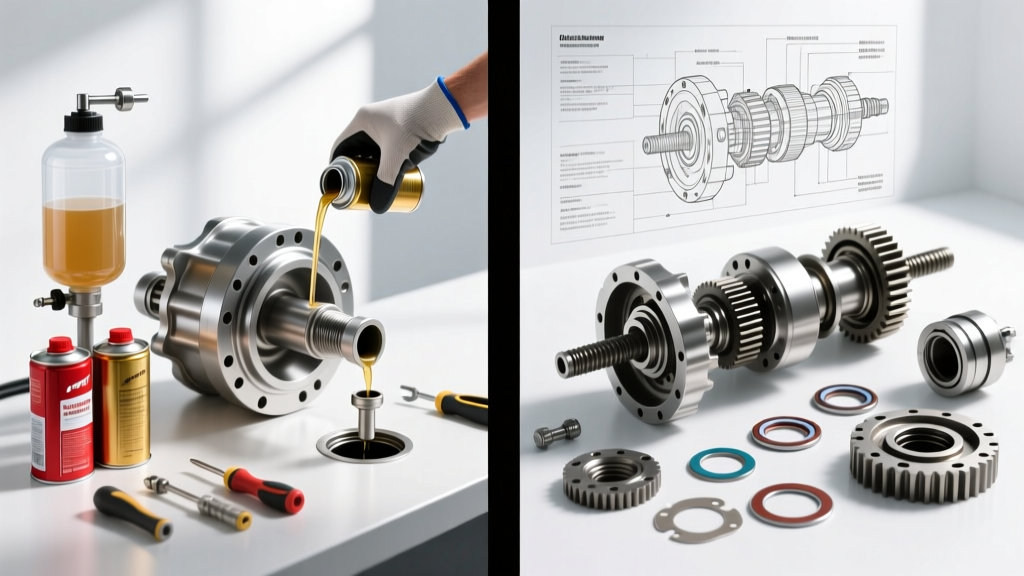
Because bearing and seal replacement inherently involves draining the housing, the final and most critical step is the fluid resurrection. The type of differential fluid you select will dictate the longevity of your new Timken bearings and the smooth operation of your limited-slip clutches.
Selecting the Right Viscosity
For standard half-ton trucks and daily-driven SUVs, a full synthetic 75W-90 gear oil (such as Amsoil Severe Gear or Royal Purple Max Gear) provides excellent cold-weather flow and high-temperature film strength. However, if you are running a modified truck with 35-inch tires, a supercharger, or frequent towing loads, stepping up to a 75W-140 synthetic is highly recommended. The thicker 140-weight fluid resists being sheared out from between the bearing rollers and the gear teeth under extreme shock loading.
The Limited-Slip Additive Trap
If your differential houses a clutch-type limited-slip differential (LSD) like the Eaton Positraction or Auburn LSD, you must add a friction modifier. Without it, the clutches will chatter violently during low-speed turns, generating debris that will quickly contaminate your brand-new bearings. Modern synthetic gear oils often claim to be 'Limited Slip Compatible,' but expert consensus in 2026 still dictates adding 2 to 4 ounces of a dedicated OEM friction modifier (such as GM part # 88900401 or Ford XL-3) to guarantee silent operation.
Fill the differential until the fluid level is exactly flush with the bottom of the fill hole. Overfilling can cause the gear oil to foam as the ring gear aggressively churns it, leading to increased internal pressures that will eventually blow out the very pinion seal you just spent hours replacing. By understanding the intricate relationship between what front and rear differentials are and how their seals, bearings, and fluids interact, you can ensure a drivetrain that is quiet, robust, and ready for hundreds of thousands of miles of service.