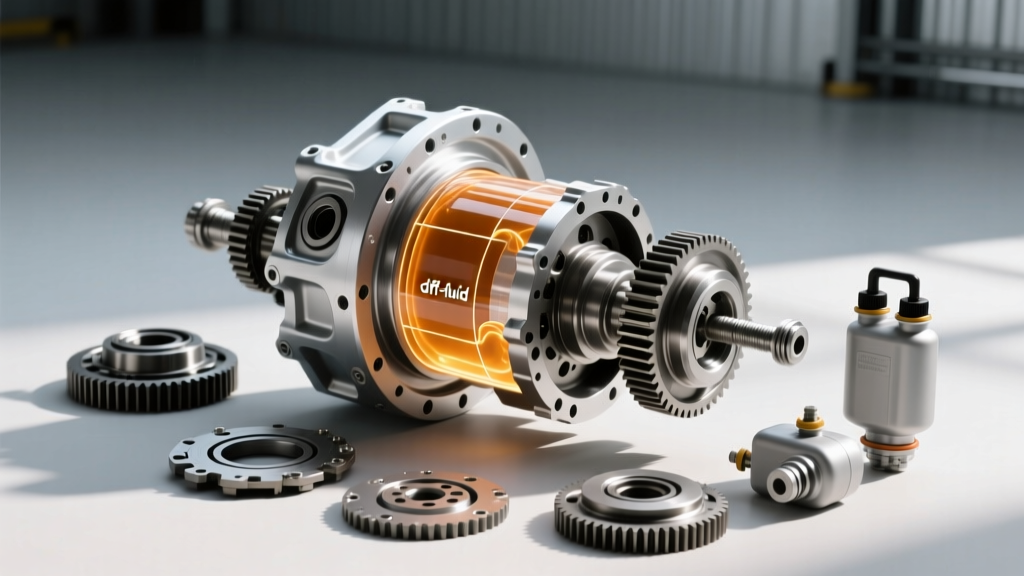
Executive Summary: In 2026, the financial gap between routine axle maintenance and catastrophic drivetrain failure has never been wider. A standard front differential fluid service averages $95 to $145, preserving critical ring and pinion gears. Conversely, neglecting the rear axle often necessitates a complete rear differential repair kit and professional rebuild, pushing costs between $1,200 and $2,100. This guide breaks down the exact economics, torque specifications, and diagnostic tipping points for modern 4WD and AWD systems.
The Drivetrain Maintenance Paradigm
Automotive drivetrain economics are defined by a simple truth: fluid is cheap; hardened steel is expensive. For owners of trucks, SUVs, and off-road vehicles, understanding the cost delta between a routine front differential fluid service and a major hard-parts overhaul is critical for long-term vehicle budgeting. While the front axle often sees less continuous torque bias than the rear during towing or heavy acceleration, its complex integration with steering components and independent suspension systems makes fluid degradation a silent killer of bearings and gear teeth.
Front Differential Fluid Service: Preventative Economics
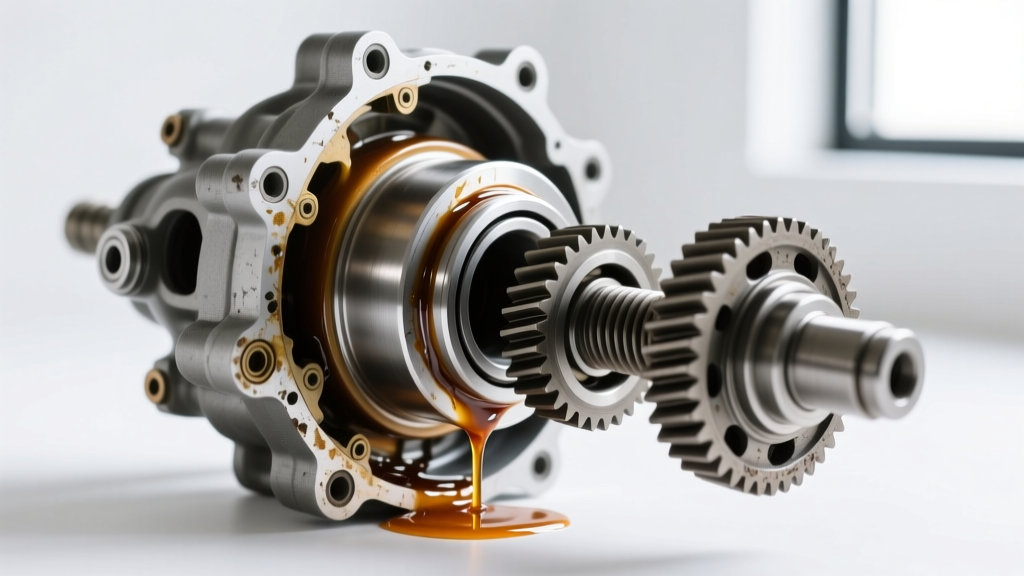
The front differential operates in a harsh environment. It is subjected to water fording, extreme steering angles (which stress the side gears and spider pins), and fluctuating thermal loads. Performing a front differential fluid service is the single highest-ROI maintenance task on a 4WD vehicle.
Independent Front Suspension (IFS) vs. Solid Front Axle (SFA)
The architecture of your front axle dictates both the service procedure and the cost. Modern half-ton trucks like the Chevy Silverado 1500 and Ford F-150 utilize an IFS front differential. These are typically sealed units with drain and fill plugs. The fluid capacity is relatively low—usually between 1.5 and 1.8 quarts of 75W-85 or 75W-90 synthetic GL-5 gear oil. Because there is no differential cover to remove, shop labor is minimal, often billed at just 0.4 to 0.5 hours.
Conversely, vehicles like the Jeep Wrangler JL or Ford Super Duty utilize a Solid Front Axle (SFA), such as the Dana 30 or Dana 60. These often require removing a stamped steel or cast aluminum differential cover. This necessitates cleaning the gasket mating surfaces, applying a precise bead of RTV silicone (like Permatex Ultra Black), and waiting for cure times, slightly increasing labor costs.
The Service Procedure & Torque Specifications
A proper front differential fluid service goes beyond simply draining and filling. It requires strict adherence to manufacturer torque specifications to prevent casing distortion or plug blowouts under thermal expansion. According to Dana Spicer Technical Guides, overtightening cover bolts on a Dana 30 can warp the thin steel cover, leading to chronic weeping and eventual gear oil starvation.
- Jeep Wrangler JL (Dana 30 SFA): Requires ~1.4L of Mopar 75W-85 API GL-5. Cover bolt torque spec is strictly 30 lb-ft. RTV silicone bead must be continuous and 2mm thick.
- Chevy Silverado 1500 (ZF IFS): Requires ~1.8L of ACDelco 75W-90 Synthetic. Drain and fill plug torque spec is 24 lb-ft. Do not use Teflon tape on the threads; rely on the integrated O-ring or specified thread sealant.
- Ford F-150 (IFS): Requires ~1.7L of Motorcraft 75W-140 (for heavy towing packages). Fill plug torque is 22 lb-ft.
When Prevention Fails: The Rear Differential Repair Kit
While the front axle deals with steering and articulation, the rear axle bears the brunt of towing loads, payload weight, and aggressive acceleration. When rear axle maintenance is deferred, or when a pinion seal failure allows water ingress, the result is catastrophic bearing and gear failure. This is where the financial reality shifts from a simple fluid exchange to the purchase of a comprehensive rear differential repair kit.
Inside the Master Rebuild Box
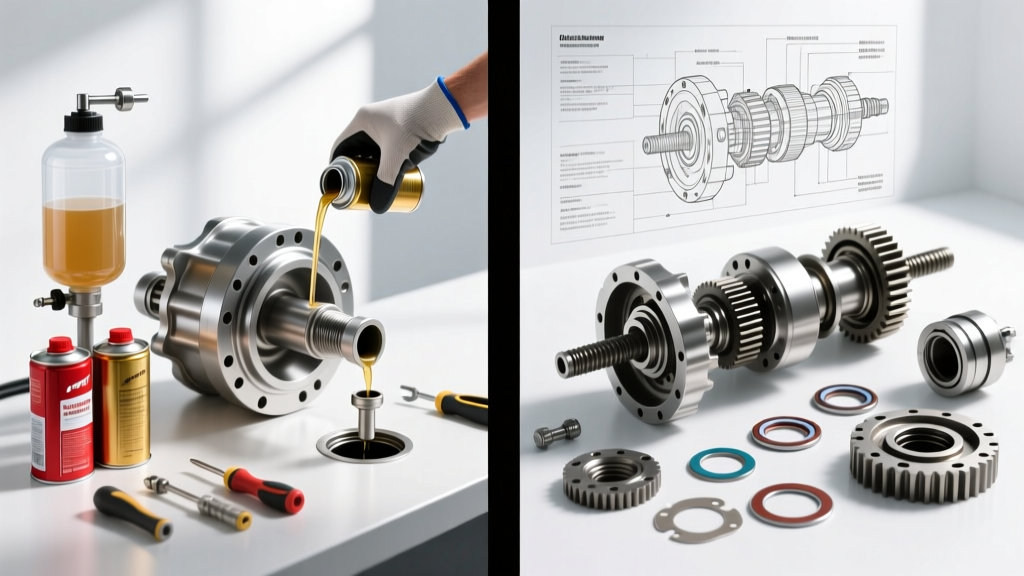
A rear differential repair kit—often referred to as a Master Bearing Kit—is not just a collection of seals. It is a precision-matched set of hard parts required to reset the gear mesh pattern and bearing preloads. A high-quality kit from manufacturers like Motive Gear or Timken includes:
- Pinion Bearings (Inner & Outer): Tapered roller bearings that support the driveshaft input.
- Carrier Bearings: Supporting the differential case and ring gear.
- Crush Sleeve: A one-time-use collapsible spacer used to set pinion bearing preload.
- Pinion Seal & Axle Seals: To retain gear oil and exclude contaminants.
- Ring Gear Bolts: Often required to be replaced as they stretch during initial torqueing.
- Shim Kits: Crucial for setting the precise ring and pinion depth and backlash.
For a common GM 9.5-inch rear axle, a Motive Gear R10RMK master kit costs between $160 and $210. For a Dana 44, the Dana 706008X kit hovers around $240. However, the parts are only a fraction of the total expense.
2026 Drivetrain Cost Matrix
The table below illustrates the stark contrast in 2026 dealership and independent shop pricing between front preventative maintenance and rear axle reconstruction. Labor rates are based on a 2026 national average of $165/hour.
| Service Type | Component Target | Parts & Fluids Cost | Estimated Labor Time | Total Shop Cost |
|---|---|---|---|---|
| Standard Fluid Service | Front Differential (IFS) | $35 - $55 | 0.5 Hours | $117 - $137 |
| Standard Fluid Service | Front Differential (SFA) | $45 - $70 (incl. RTV) | 0.8 Hours | $177 - $202 |
| Seal Replacement | Rear Pinion Seal | $25 - $40 | 1.5 Hours | $272 - $287 |
| Master Rebuild | Rear Differential Repair Kit | $200 - $350 (Kit + Oil) | 6.0 - 8.5 Hours | $1,190 - $1,762 |
Fluid Tribology & Friction Modifiers
Understanding the chemistry of gear oil is vital for both front and rear axles. The API Lubricant Specifications designate GL-5 for hypoid gears found in differentials. GL-5 fluids contain high levels of sulfur-phosphorus extreme pressure (EP) additives. These additives sacrifice themselves under high-shear, high-heat conditions to prevent the ring and pinion gears from microwelding together.
If your front or rear axle is equipped with a clutch-type Limited Slip Differential (LSD), such as Ford's Trac-Lok or GM's G80, the fluid service must include a friction modifier. Without this additive, the clutch packs will chatter violently during low-speed cornering, leading to premature wear and eventual failure of the LSD mechanism. Synthetic 75W-90 fluids often come pre-blended with limited-slip modifiers, but verifying the manufacturer's specific requirement is non-negotiable.
Diagnostic Tipping Points: Service vs. Rebuild
How do you know if you are safely within the window for a $120 front differential fluid service, or if you are staring down the barrel of a $1,500 rear differential repair kit installation? The answer lies in acoustic diagnostics.
1. The Coast-Whine vs. Drive-Whine: If the axle whines only when you let off the throttle (coast side), the pinion depth is likely incorrect, or the pinion bearings are failing. If it whines under acceleration (drive side), the ring gear is taking excessive load, often due to worn carrier bearings or improper backlash. Both scenarios require a rebuild kit, not just a fluid change.
2. The Clunk Test: With the vehicle in park and the engine off, crawl underneath and rotate the driveshaft by hand. If there is more than 1/8th of an inch of rotational backlash before the wheels begin to turn, the spider gears and side gear thrust washers inside the differential are severely worn. Fluid service will not fix mechanical slop.
3. Magnetic Plug Analysis: During a front differential fluid service, inspect the magnetic drain plug. A fine, glitter-like metallic paste is normal wear for a differential with 50,000 miles. However, if you find metallic shards, chips, or roller bearing needles, the differential is actively destroying itself. Immediately cease driving and prepare for a complete teardown and rebuild.
Ultimately, treating your front differential fluid service as a mandatory, calendar-based interval is the most effective way to avoid the catastrophic expense and downtime associated with major axle reconstruction. Keep the fluid clean, respect the torque specs, and your drivetrain will easily outlast the vehicle's powertrain warranty.