The Intersection of Gear Ratios and Seal Longevity
Upgrading the differential gear ratio and performance characteristics of your vehicle is one of the most effective modifications for off-road capability and towing. However, altering the final drive ratio introduces new mechanical stresses that the factory seals were not originally engineered to handle. For owners of the 2018–2026 Jeep Wrangler JL Rubicon equipped with the Dana AdvanTEK M220 rear axle, transitioning from a stock 3.73 ratio to a performance 4.88 or 5.13 ratio to accommodate 37-inch or 40-inch tires frequently exposes a critical vulnerability: the pinion seal.
When the rotational torque multiplication increases at the ring gear, the reactive force exerted on the pinion yoke and its mating seal also spikes. If you are noticing gear oil weeping from the front of the differential housing, a targeted differential fluid leak repair is mandatory before catastrophic bearing failure occurs. This model-specific guide details the exact procedures, torque specifications, and fluid dynamics required to execute this repair while preserving your high-performance gear setup.
Why Re-Gearing Your JL Dana 44 Triggers Leaks
To understand why leaks occur after a regear, we must look at the physics of the drivetrain. The Jeep JL Rubicon pairs its axles with the ZF 8HP75 8-speed automatic transmission. When you install lower numerical gears (e.g., 3.73), the engine operates at lower RPMs at highway speeds, but wheel torque is limited. By installing a 4.88 gear set from Yukon Gear & Axle, you dramatically increase the torque delivered to the wheels, but you also increase the harmonic vibration and thermal load inside the differential housing.
The M220 Solid Spacer Advantage
Unlike traditional Dana 44 axles that use a crush sleeve to set pinion bearing preload, the JL’s M220 rear axle utilizes a solid pinion spacer. This is a massive advantage for your differential fluid leak repair. On a crush-sleeve axle, removing the pinion nut to replace a seal destroys the sleeve, requiring a complete teardown to reset bearing preload. Because the M220 uses a solid spacer and a prevailing torque nut, you can safely remove the yoke, replace the seal, and torque the nut back to factory specifications without altering the bearing preload or ruining your aftermarket gear pattern.
Performance Data: Gear Ratios and ZF 8HP75 RPM Mapping
Before tearing into the axle, it is vital to understand how your chosen gear ratio affects drivetrain performance. The table below maps the engine RPM at 70 MPH in 8th gear (0.67:1 overdrive ratio) for the ZF 8HP transmission, illustrating why specific gear ratios are required for larger tire diameters to maintain optimal performance and prevent excessive heat buildup in the gear oil.
| Tire Diameter | Axle Ratio | Engine RPM @ 70 MPH | Performance & Thermal Impact |
|---|---|---|---|
| 33" (Stock) | 3.73 (Stock) | 1,780 RPM | Optimal for stock setup; low thermal load on fluid. |
| 37" (Upgraded) | 3.73 (Stock) | 1,588 RPM | Severe lugging; transmission hunts for gears; high EGTs. |
| 37" (Upgraded) | 4.88 (Performance) | 2,076 RPM | Ideal powerband; restores towing capability; moderate heat. |
| 40" (Upgraded) | 5.38 (Extreme) | 2,115 RPM | Required for 40s; high rotational mass stresses pinion seal. |
Step-by-Step Differential Fluid Leak Repair (M220 Rear)
Performing this repair requires precision. Improper yoke installation or incorrect fluid selection will destroy a $2,500 ring and pinion setup. Below is the exact protocol for the JL M220 rear axle.
Required Parts and Tools
- Pinion Seal: Mopar P/N 68303885AA (Specific to JL M220; do not use standard Spicer 43189).
- Pinion Nut: Mopar P/N 68303886AA (Prevailing torque; replace if threads are damaged).
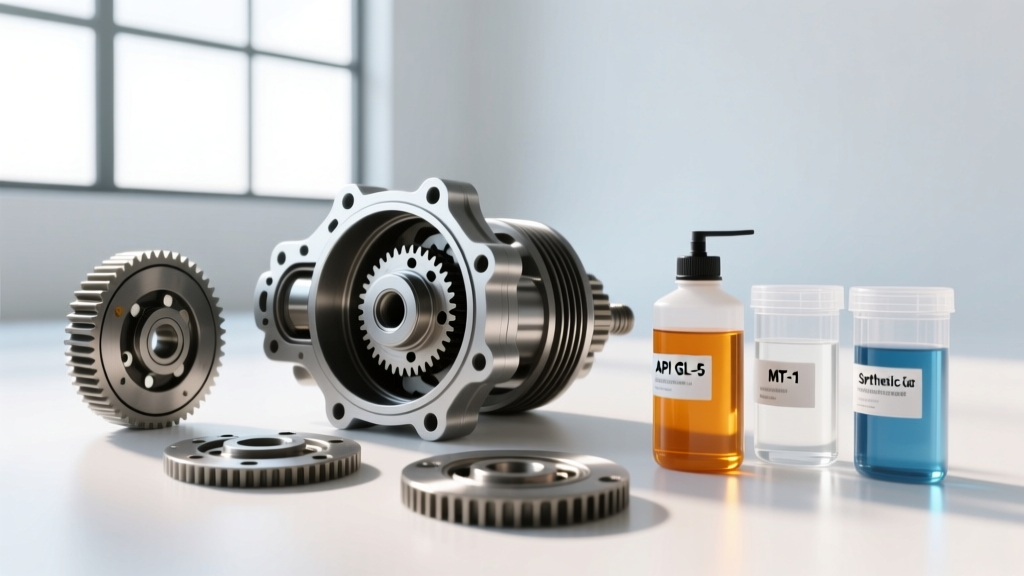
- Gear Oil: Amsoil Severe Gear 75W-90 Synthetic or Mopar 75W-85 API GL-5 (P/N 68218655AC).
- Cover Gasket: LubeLocker LL-D44 (Reusable elastomer gasket) or high-temp RTV.
- Tools: 27mm (or 1-1/16") deep impact socket, 1/2" drive torque wrench (rated to 250 ft-lbs), 13mm socket for cover bolts, dial indicator (optional for backlash verification), seal puller, yoke holder.
Repair Procedure
- Drain and Disassemble: Remove the 13mm differential cover bolts. Allow the fluid to drain completely into a catch pan. Inspect the fluid for metallic glitter, which indicates ring gear or bearing failure. Clean the housing mating surface with brake cleaner.
- Mark the Yoke: Use a paint pen to mark the relationship between the pinion yoke, the washer, and the pinion nut. This ensures you return the assembly to its exact rotational position, preserving the bearing preload established during the regear.
- Remove the Yoke: Secure the yoke with a holding tool to prevent the differential from spinning. Break the pinion nut loose with a high-torque impact or a long breaker bar. Slide the yoke off the splines. Note: If the yoke is seized, use a dedicated 3-jaw puller. Never hammer the yoke off, as this will shatter the pinion bearing races.
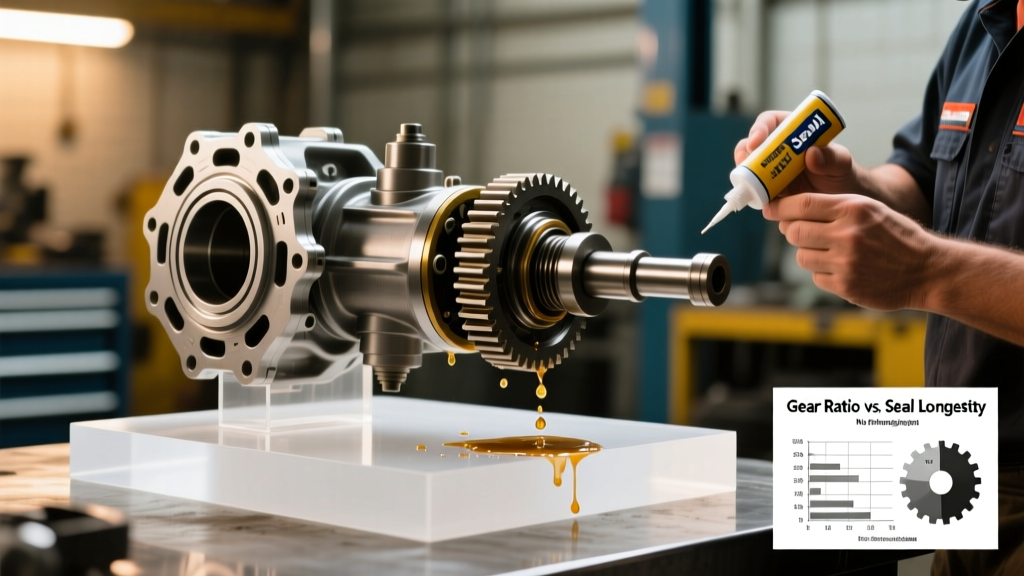
- Extract and Install the Seal: Carefully pry out the old seal using a specialized seal puller to avoid scoring the aluminum housing bore. Lightly coat the outer edge of the new Mopar seal with gear oil and tap it squarely into the bore using a seal driver until it sits perfectly flush.
- Reassemble and Torque: Reinstall the yoke. Apply a small bead of RTV silicone to the inside splines of the yoke to prevent oil from weeping past the splines. Install the new pinion nut. According to Spicer Parts engineering guidelines for solid-spacer axles, torque the pinion nut to 215 ft-lbs. Verify that the rotational torque (breakaway torque) of the pinion matches your pre-teardown baseline (typically 15-25 in-lbs of drag).
- Seal the Cover: If using a LubeLocker gasket, install it dry. If using RTV, apply a continuous 3mm bead around the cover, ensuring you circle the inside of every bolt hole. Torque the 13mm cover bolts to 25 ft-lbs in a star pattern.
Fluid Selection for High-Performance Gear Ratios
When you alter the differential gear ratio for performance, the sliding friction between the hypoid ring and pinion gears increases. Standard OEM fluids often shear under the extreme pressure of a 4.88 or 5.13 ratio paired with heavy off-road use. Selecting the correct viscosity and additive package is critical to preventing future leaks caused by overheated, thinned-out gear oil bypassing the seal lip.
| Fluid Brand / Type | Viscosity | Friction Modifier Required? | Best Application |
|---|---|---|---|
| Mopar OEM GL-5 | 75W-85 | Yes (for Trac-Lok LSD) | Stock 3.73 ratio, daily driving, light trails. |
| Amsoil Severe Gear | 75W-90 | Yes (if equipped with LSD) | 4.88+ ratios, 37"+ tires, heavy towing, rock crawling. |
| Lucas Synthetic Heavy Duty | 75W-140 | Yes (if equipped with LSD) | Extreme competition, 40"+ tires, severe thermal loads. |
Expert Note: The JL Rubicon features an electronic locking differential (ELD), not a traditional clutch-type limited-slip differential (LSD). Therefore, do not add friction modifier additives to your gear oil. Friction modifiers are designed for clutch packs and can cause the electronic locker mechanism to slip or engage improperly. Always consult the latest Mopar technical service bulletins for your specific axle code.
Post-Repair Break-In and Performance Validation
After completing the differential fluid leak repair and refilling the M220 housing with exactly 2.0 Liters of your chosen synthetic gear oil, the break-in procedure is vital. If you just completed a fresh regear alongside this seal repair, you must perform a heat-cycling break-in. Drive the vehicle for 15 miles at varying speeds under 45 MPH, then allow the axle to cool completely. Repeat this process three times. This process cures the gear oil's extreme pressure (EP) additives into the microscopic pores of the new ring and pinion gears, establishing a protective boundary layer that prevents micro-pitting and subsequent seal degradation.
By understanding the relationship between your chosen gear ratio, the ZF 8HP transmission's torque delivery, and the mechanical limits of the pinion seal, you can maintain a dry, reliable axle housing. Proper torque procedures and high-quality synthetic fluids ensure that your drivetrain performs flawlessly, whether you are crawling over Moab slickrock or towing on the highway.