The Hidden Economics of Axle Maintenance
In the realm of four-wheel-drive and all-wheel-drive vehicles, the front differential is a marvel of mechanical engineering, tasked with transferring torque from the transmission to the front wheels while accommodating steering angles and suspension articulation. Yet, it remains one of the most neglected components in routine automotive maintenance. When fluid starvation, water ingestion, or sheer mechanical fatigue takes its toll, owners are suddenly faced with a staggering front differential repair cost that could have been entirely avoided.
As we navigate the 2026 automotive landscape, the complexity of modern independent front suspension (IFS) systems and solid front axles—such as the ubiquitous Dana 30 or the Toyota 8-inch reverse-rotation differential—demands a proactive approach. This comprehensive preventive maintenance guide breaks down the true financial impact of differential neglect, contrasts it with the minimal expense of routine fluid services, and provides the exact specifications required to keep your drivetrain operating flawlessly.
Breaking Down the Front Differential Repair Cost
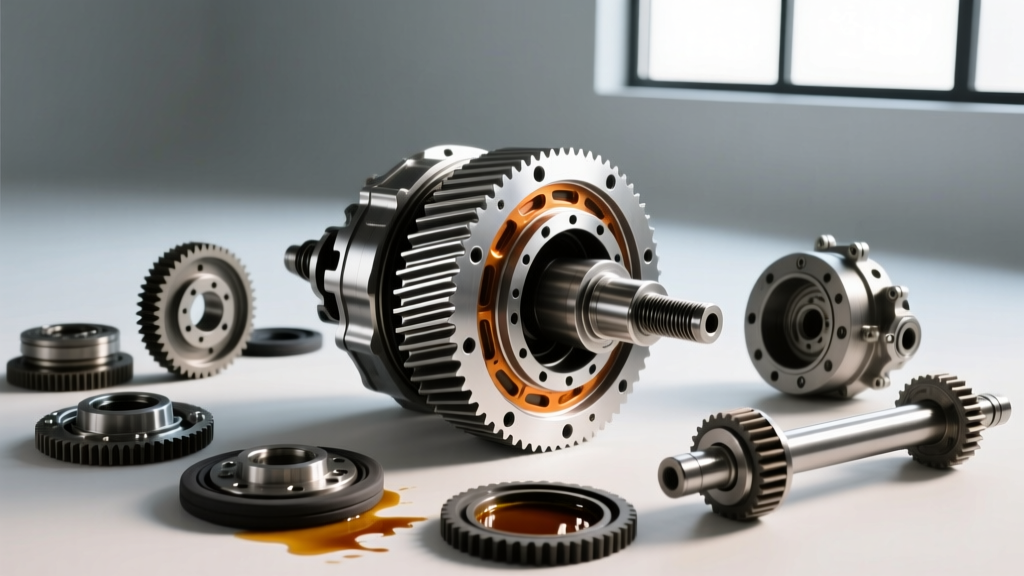
Understanding the financial risk of skipping maintenance requires looking at the anatomy of a differential failure. When gear oil degrades, its extreme pressure (EP) additives deplete, leading to increased friction and heat. This heat destroys the pinion and carrier bearings, eventually causing the ring and pinion gears to lose their precise contact pattern. The result is catastrophic tooth shearing or a seized axle.
Rebuild vs. Remanufactured vs. Used Replacement
If your front differential has failed, you generally face three avenues for repair, each with vastly different price tags and labor implications:
- Complete Rebuild: A specialist will tear down the housing, replace all bearings, seals, and the ring and pinion set, and meticulously set the backlash and bearing preload. Labor alone typically spans 8 to 12 hours. Expect parts and labor to range from $1,800 to $3,200, depending on the axle model and whether specialized tools are required.
- Remanufactured Unit: Swapping in a factory-remanuactured assembly (such as those from Dana Spicer or Jasper Engines) is faster but carries a premium for the core exchange and the unit itself. Pricing generally falls between $2,500 and $4,500 installed.
- Junkyard / Used Replacement: While the cheapest upfront option ($800 to $1,500 installed), sourcing a used front differential is a gamble. Internal wear is invisible, and you inherit the previous owner's maintenance negligence.
According to industry data aggregated by RepairPal, the average labor time to simply remove and reinstall a front differential on a modern IFS truck like the Ford F-150 or Toyota Tacoma is roughly 3.5 to 5.0 hours. When you factor in shop rates averaging $150 to $225 per hour in 2026, the labor overhead alone makes preventive maintenance an absolute financial necessity.
Preventive Maintenance: Differential Fluid Service Pricing
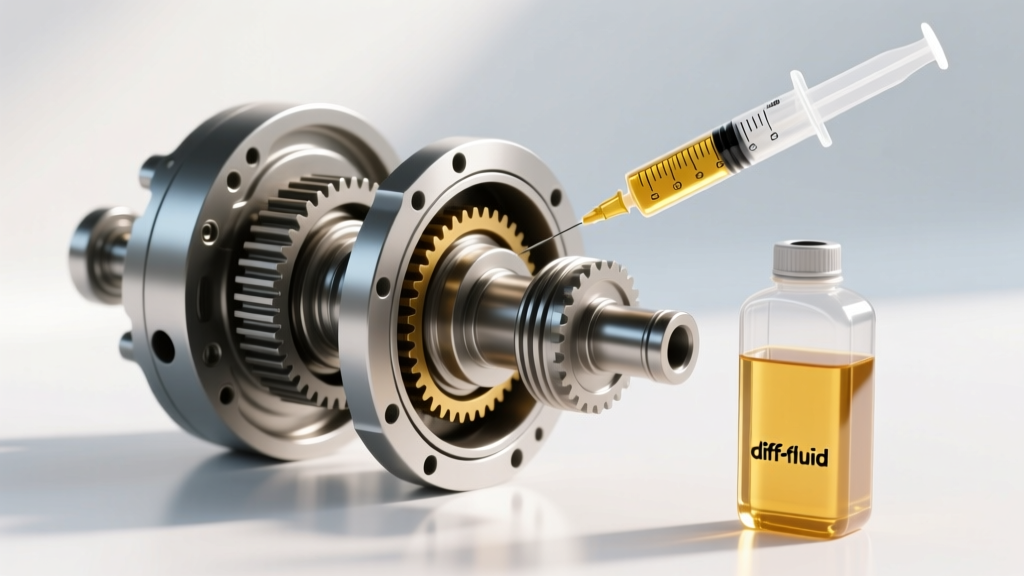
The antidote to a massive repair bill is a disciplined fluid service interval. Differential fluid cost and service pricing vary wildly depending on whether you visit a dealership, an independent specialist, or tackle the job in your own driveway.
Dealership vs. Independent vs. DIY Pricing
Most manufacturers recommend front differential fluid changes every 30,000 to 60,000 miles under normal driving conditions, and as frequently as every 15,000 miles for severe duty (towing, off-roading, or frequent water crossings). Here is what you can expect to pay for a standard front differential drain and fill:
| Service Provider | Estimated Cost (Front Only) | Fluid Type Typically Used | Pros & Cons |
|---|---|---|---|
| OEM Dealership | $150 - $250 | Factory Branded GL-5 Gear Oil | Pros: OEM spec guaranteed. Cons: Highest markup, often bulk-filled. |
| Independent 4x4 Shop | $90 - $160 | High-Quality Synthetic (e.g., Amsoil, Red Line) | Pros: Expert inspection of drain plug for metal shavings. Cons: Requires scheduling. |
| Quick Lube Chain | $60 - $100 | Conventional 80W-90 | Pros: Fast. Cons: High risk of cross-threading or incorrect friction modifiers. |
| DIY (At-Home) | $25 - $55 | Your Choice of Premium Synthetic | Pros: Total control over quality, lowest cost. Cons: Requires tools and safe lifting. |
When you compare a $40 DIY fluid change every 30,000 miles to a potential $3,000 front differential repair cost, the return on investment for preventive maintenance is astronomical.
OEM vs. Aftermarket Gear Oil Specifications
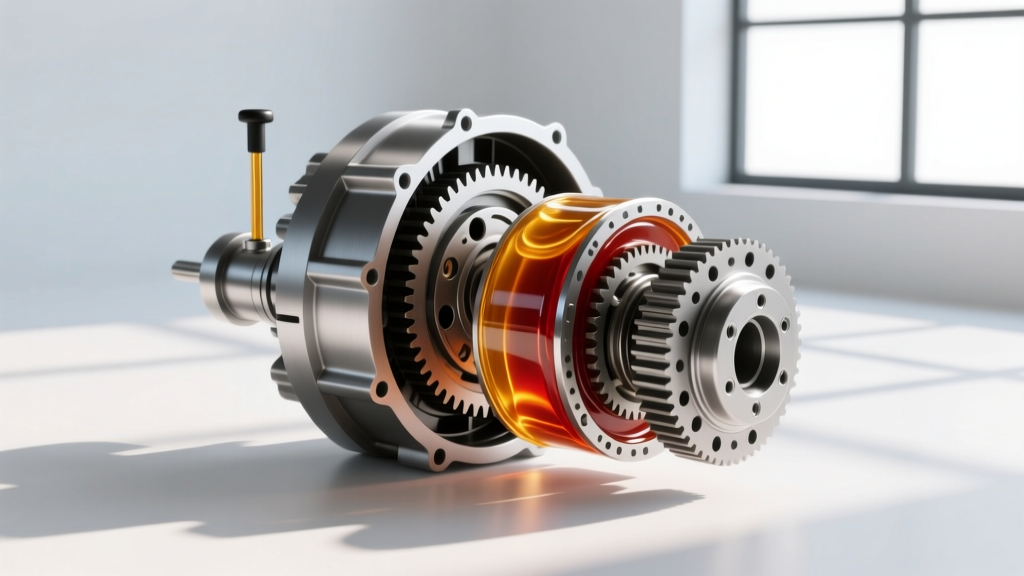
Selecting the correct fluid is paramount. Modern differentials require specific API GL-5 rated gear oils, which contain high levels of sulfur-phosphorus additives to protect hypoid gears under extreme sliding pressures. Furthermore, if your front axle is equipped with a Limited Slip Differential (LSD), you must account for friction modifiers to prevent clutch pack chatter during tight turns.
Top Tier Fluid Recommendations & Part Numbers
- Amsoil Severe Gear 75W-90: An exceptional synthetic that resists thermal breakdown. Ideal for heavy towing and off-road use. (Part Number: SVGQT-EA).
- Red Line 75W-90 GL-5 Gear Oil: Contains polyol ester base stocks for superior film strength. Crucial note: Red Line's standard 75W-90 already includes the necessary friction modifiers for most LSDs, eliminating the need for a separate additive bottle.
- Mopar 75W-85 Synthetic Gear Lubricant: The factory fill for modern Jeep Wranglers and Ram trucks. (Part Number: 68218655AA). Note that Jeep front axles often require a specific friction modifier (Part Number: 4318060AB) if equipped with a Trac-Lok or similar LSD.
- Subaru Gear Oil Extra-X 75W-90: Specifically formulated for the unique metallurgy and tight tolerances of Subaru's Symmetrical AWD front differential housings.
For authoritative specifications on hypoid gear protection and viscosity indexes, drivetrain engineers frequently reference the technical data provided by Amsoil's Gear Oil Engineering Documents.
Critical Torque Specs and Service Procedures
A proper fluid service is not just about draining and filling; it is about preserving the structural integrity of the axle housing. Stripped drain plugs are a leading cause of slow leaks and subsequent differential failure.
Best Practices for the DIY Mechanic
- Always Remove the Fill Plug First: Before draining the old fluid, break loose the fill plug. If the fill plug is seized or strips, you will be left with an empty differential and no way to refill it, turning a simple maintenance task into a tow-truck emergency.
- Inspect the Drain Plug Magnet: Most front differential drain plugs feature a magnetic tip. A fine, glitter-like metallic paste is normal wear. However, if you find large metal shards or chunks of the cage/bearing, internal failure has already begun.
- Never Reuse Crush Washers: Whether your axle uses aluminum, copper, or nylon crush washers, they deform to create a seal. Reusing them guarantees a slow weep. Stock up on OEM washers (e.g., Toyota Part #90430-18008 or standard M18 copper washers).
- Adhere to Torque Specifications: Overtightening can crack the cast iron or aluminum housing; undertightening leads to vibration-induced loosening.
Common Axle Torque Specifications
Always verify with your specific factory service manual, but here are baseline torque specs for popular 4x4 platforms:
- Jeep Wrangler (Dana 30 / Dana 44 Front): Drain and Fill plugs typically require 25 to 30 lb-ft. Refer to Spicer Parts Technical Manuals for exact axle-specific tolerances.
- Toyota Tacoma / 4Runner (8-Inch IFS): Drain plug 27 lb-ft; Fill plug 29 lb-ft.
- Ford F-150 (9.75 IFS): Fill plug often requires 33 to 37 lb-ft.
Expert Insight: When servicing a front differential that has been submerged in water during off-road trails, water ingress often occurs through the axle breather tube due to thermal contraction when hot gears hit cold water. If the drained fluid resembles a chocolate milkshake, you must perform a flush using a cheap GL-5 oil or a dedicated flush solvent, followed by a fresh fill of premium synthetic, to prevent immediate bearing corrosion.
Warning Signs You've Waited Too Long
Preventive maintenance is only effective if performed before mechanical damage occurs. If you experience any of the following symptoms, a simple fluid change will no longer suffice, and you will be forced to confront that dreaded front differential repair cost:
- Whining on Deceleration: Indicates worn pinion bearings or an incorrect gear contact pattern on the coast side of the ring gear teeth.
- Clunking Upon Engagement: Excessive backlash due to worn carrier bearings or stretched ring gear bolts.
- Binding in Tight Turns: If your 4WD system is disengaged but the front end binds or hops on dry pavement, the internal clutch packs in a limited-slip front diff may be welded together from burnt, degraded fluid.
By committing to a rigorous fluid service schedule, utilizing high-quality synthetics, and respecting torque specifications, you can easily extend the life of your front differential well past the 200,000-mile mark. In the world of drivetrain mechanics, an ounce of 75W-90 is truly worth a pound of ring and pinion steel.