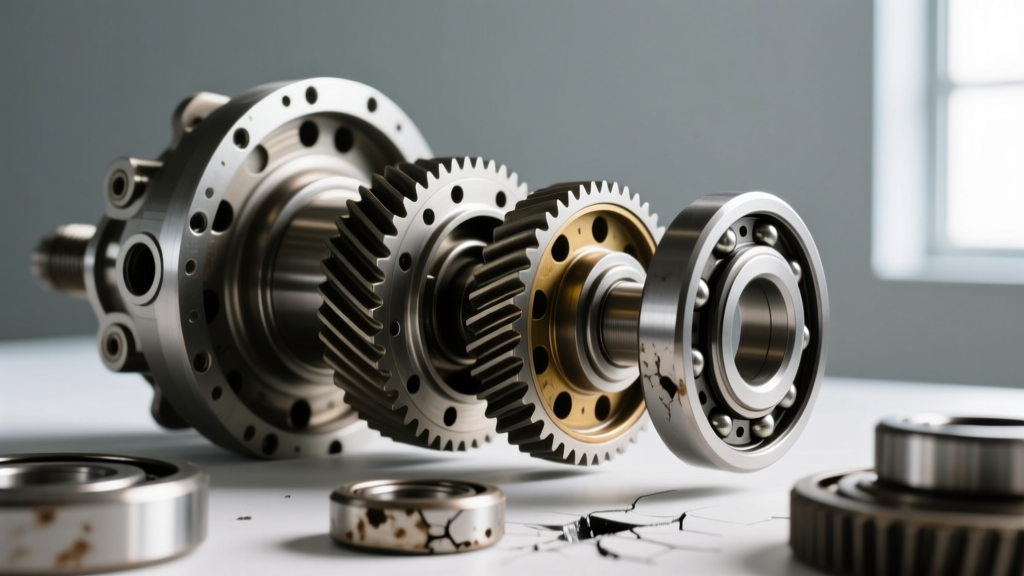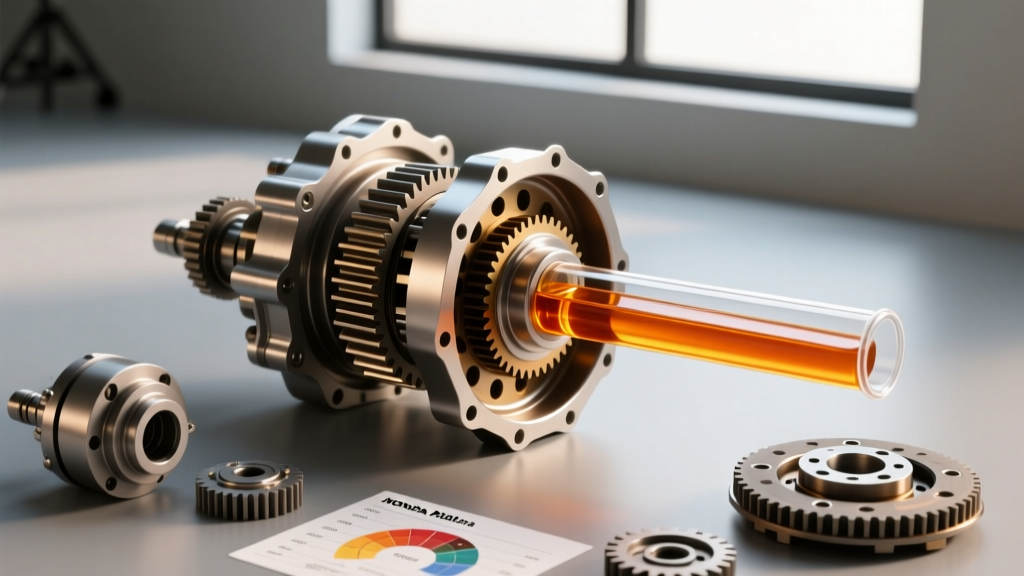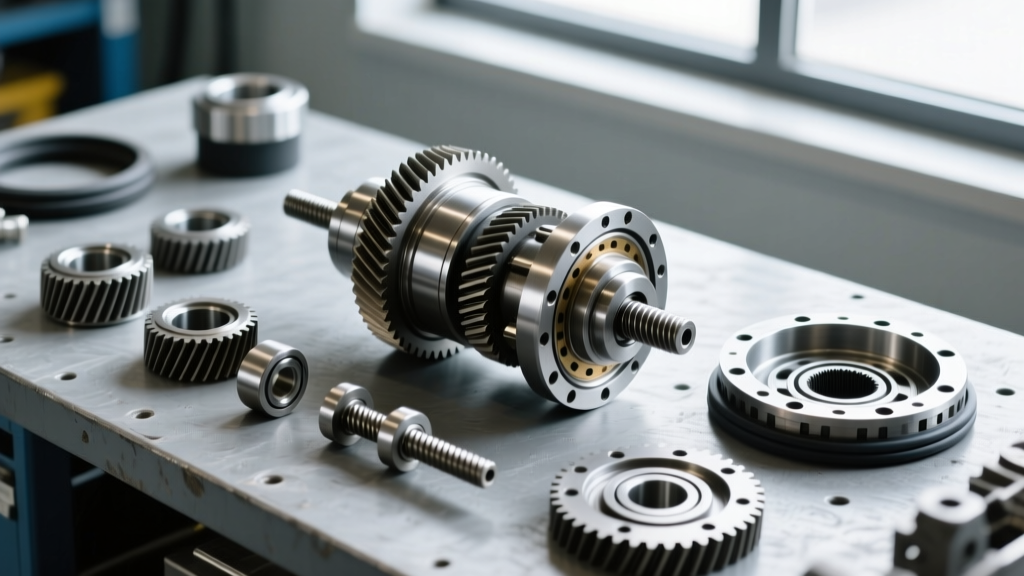
The Critical Role of Gear Oil in Modern Front Axles
Whether you are upgrading to 35-inch tires, recovering from a trail-induced housing crack, or performing routine maintenance, the fluid you choose dictates the lifespan of your ring and pinion gears. In 2026, modern trucks and SUVs are pushing higher torque outputs through relatively compact Independent Front Suspension (IFS) housings like the GM 8.25, GM 9.25, and Ford 9.75. Simultaneously, off-road enthusiasts are subjecting solid front axles like the Dana 44 and Dana 60 to extreme articulation and shock loads. When replacing front differential components or simply servicing the axle, selecting the correct gear oil specification is no longer a guessing game—it is an exact science.
This comprehensive buyer's guide and comparison breaks down differential fluid types, API specifications, viscosity grades, and friction modifier requirements. We will provide real-world torque specs, fluid capacities, and product recommendations to ensure your front axle survives the punishment you put it through.
Decoding API Specifications: Why GL-5 is Mandatory
The American Petroleum Institute (API) classifies gear oils based on their extreme pressure (EP) additives and load-carrying capabilities. For automotive differentials, you will primarily encounter API GL-4 and API GL-5 ratings.
- API GL-4: Designed primarily for manual transmissions and transaxles. It contains moderate levels of EP additives. While safe for yellow metals (brass synchronizers), it lacks the shear stability and extreme pressure protection required for hypoid gear sets found in differentials.
- API GL-5: The undisputed standard for differential ring and pinion gears. GL-5 fluids contain high concentrations of sulfur and phosphorus additives. Under extreme pressure and sliding friction—characteristic of the hypoid gear contact patch in a front axle—these additives form a sacrificial chemical film that prevents metal-to-metal contact and microwelding.
Expert Warning: Never use GL-5 in a manual transmission or transfer case unless explicitly stated by the manufacturer, as the sulfur compounds can corrode brass synchronizers. However, when replacing front differential fluid, GL-5 is an absolute requirement. For a deeper dive into industry standards, refer to the API Gear Oil Standards.
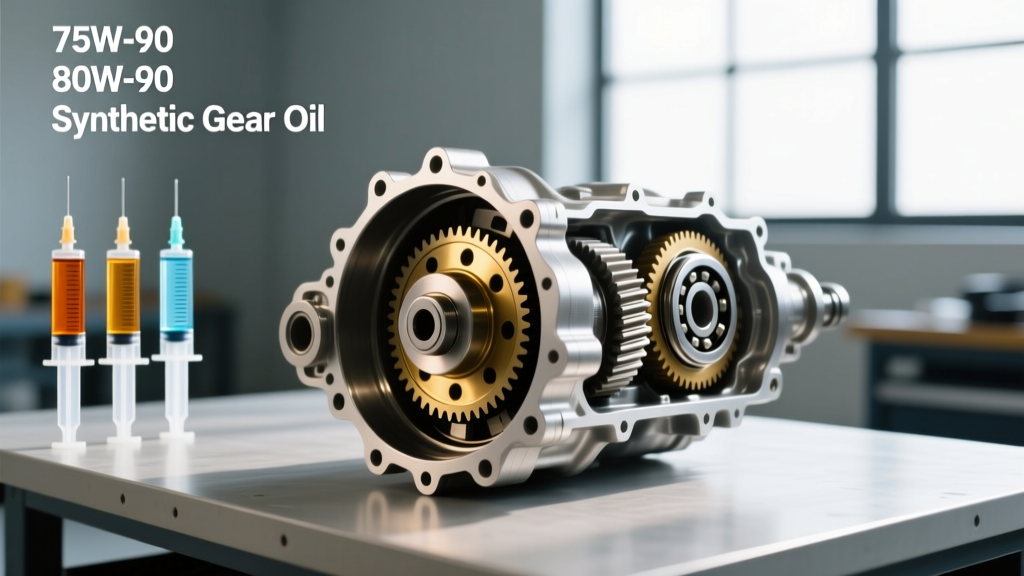
Viscosity Breakdown: 75W-90 vs. 80W-90 vs. 75W-140
Visosity determines the fluid's resistance to flow and its ability to maintain a protective hydrodynamic film under load. The 'W' stands for Winter, indicating cold-temperature flow characteristics, while the second number indicates high-temperature (100°C) viscosity.
Conventional 80W-90: The Budget Fleet Standard
Traditional 80W-90 mineral-based gear oil has been the factory fill for decades. It provides adequate protection for mild climates and standard commuting. However, in sub-zero temperatures, 80W-90 thickens significantly, causing parasitic drag, reduced fuel economy, and delayed lubrication to the outer pinion bearings during cold starts. It is best reserved for older, low-mileage solid axles operating in temperate climates.
Full Synthetic 75W-90: The Modern Performance Choice
Using Polyalphaolefin (PAO) or advanced Group III hydrocracked base stocks, synthetic 75W-90 offers superior shear stability. It flows rapidly at -40°F, ensuring immediate protection to the ring gear and bearings upon startup. Furthermore, synthetics resist thermal oxidation far better than conventional oils, preventing the formation of sludge and varnish in high-temperature IFS differentials. For 90% of daily drivers, overlanders, and weekend warriors, 75W-90 is the optimal choice.
Heavy Duty 75W-140: The Towing and Rock-Crawling Specialist
If you are subjecting a Dana 60 or a Ford 10.5 to continuous heavy towing, high-speed desert running, or low-speed rock crawling where gear oil temperatures exceed 250°F, a 75W-140 is warranted. The thicker high-temperature film prevents the fluid from being squeezed out from between the gear teeth under massive shock loads. Note that 75W-140 will slightly reduce fuel efficiency and may cause stiff steering feel in cold weather due to increased fluid drag in the front axle.
2026 Gear Oil Comparison Chart
Below is a comparison of top-tier gear oils suitable for front differential service. Pricing reflects average 2026 retail estimates per quart.
| Brand & Product | Viscosity | Base Stock | LSD Additive Included? | Best Application | Est. Price/Qt |
|---|---|---|---|---|---|
| Mobil 1 Synthetic Gear Lube LS | 75W-90 | Full Synthetic (PAO) | Yes | Street/Trail IFS & Solid Axles | $11.50 |
| Amsoil Severe Gear | 75W-90 | Full Synthetic | No | Heavy Towing, Extreme Loads | $16.00 |
| Red Line 75W90 NS | 75W-90 | Ester/PAO Blend | No (NS = No Slip) | Torsen / Open Differentials | $18.50 |
| Valvoline Daily Protection | 80W-90 | Conventional | No | Budget Fleet, Mild Climates | $6.50 |
| GM ACDelco Synthetic | 75W-90 | Full Synthetic | No | OEM GM IFS Replacements | $14.00 |
The Friction Modifier Debate: Do You Need It?
One of the most common mistakes made when replacing front differential fluid is mismanaging friction modifiers. These additives alter the coefficient of friction between the clutch packs in a Limited Slip Differential (LSD).
- Clutch-Type LSDs (e.g., Eaton Trac-Lok, Auburn, Dana Trac-Lok): These rely on alternating steel and friction-coated clutch discs. Without a dedicated friction modifier (like Ford XL-3 or GM ACDelco LSD Additive), the clutches will bind and release erratically, causing a violent 'chatter' or 'judder' during tight turns, ultimately destroying the clutch packs. If your chosen gear oil does not explicitly state 'LS' or 'Limited Slip Compatible', you must add a 4 oz bottle of modifier.
- Gear-Type LSDs (e.g., Torsen, Eaton Truetrac): These operate on helical gear meshing and torque biasing, not friction clutches. Do not use friction modifiers in a Torsen or Truetrac. Doing so will reduce the torque biasing capability and render the LSD ineffective. Products like Red Line 75W90 NS (No Slip modifier) are specifically formulated for these units.
- Open Differentials & Lockers (e.g., Detroit Locker, ARB Air Locker): Standard GL-5 gear oil is all that is required. No modifiers are necessary.
Application Guide: Torque Specs and Fluid Capacities
Proper service extends beyond buying the right fluid. Over-torquing drain plugs can crack aluminum IFS housings, while under-torquing cover bolts leads to catastrophic leaks on the trail. Always consult your specific factory service manual, but use these common 2026 benchmarks as a baseline reference when replacing front differential covers or performing fluid swaps.
GM 8.25 & 9.25 IFS (Silverado / Tahoe / Colorado)
- Capacity: ~3.4 to 3.8 Pints (1.7 - 1.9 Quarts)
- Drain/Fill Plug Torque: 24 lb-ft (Aluminum housing - use caution)
- Spec Note: GM often specifies their proprietary ACDelco 75W-90 Synthetic (Part # 88862624). Mobil 1 75W-90 is a widely accepted and superior alternative for heavy-duty use.
Dana 44 Solid Front Axle (Jeep Wrangler JK / Gladiator)
- Capacity: ~2.5 to 2.8 Pints
- Cover Bolt Torque: 25 - 30 lb-ft
- Fill Plug Torque: 25 lb-ft
- Spec Note: If using a reusable Dana Spicer cover or an aftermarket diff cover with an O-ring, do not use RTV silicone. If using a stamped steel cover, apply a continuous bead of Permatex Ultra Black RTV and let it cure for 12 hours before filling.
Ford 9.75 IFS (F-150)
- Capacity: ~3.0 to 3.5 Pints
- Fill Plug Torque: 35 lb-ft
- Spec Note: Ford specifies Motorcraft SAE 75W-140 Synthetic for heavy-duty towing packages. Ensure the fluid meets Ford specification WSL-M2C192-A.
Final Buyer's Checklist for Front Axle Service
- Verify the Differential Type: Pull the cover or check the RPO/VIN code to confirm if you have an Open, Clutch-LSD, or Helical-LSD front axle before purchasing additives.
- Inspect the Magnetic Plug: Most front diff fill/drain plugs are magnetic. Fine metallic fuzz is normal wear. Chunky metal shards or spiral shavings indicate impending ring and pinion failure, requiring a full rebuild rather than just a fluid swap.
- Use a Fluid Transfer Pump: Front differentials on IFS trucks are tucked high behind skid plates. A $15 manual transfer pump saves hours of frustration and prevents spills.
- Fill to the Correct Level: The fluid should be exactly level with the bottom of the fill hole. Overfilling will cause the fluid to foam and blow out the axle seals due to thermal expansion and gear churning.
By matching the correct API GL-5 viscosity and additive package to your specific axle architecture, you ensure maximum longevity and performance. For further technical documentation on hypoid gear lubrication, consult the Mobil 1 Gear Lubricant Technical Data Sheets.