The Financial Reality of a Front Differential Fluid Leak
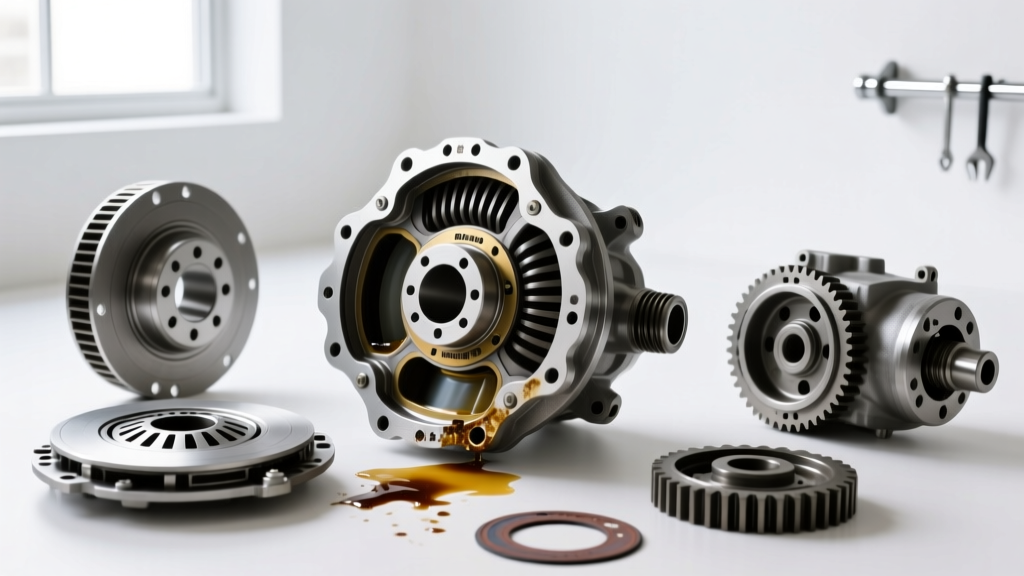
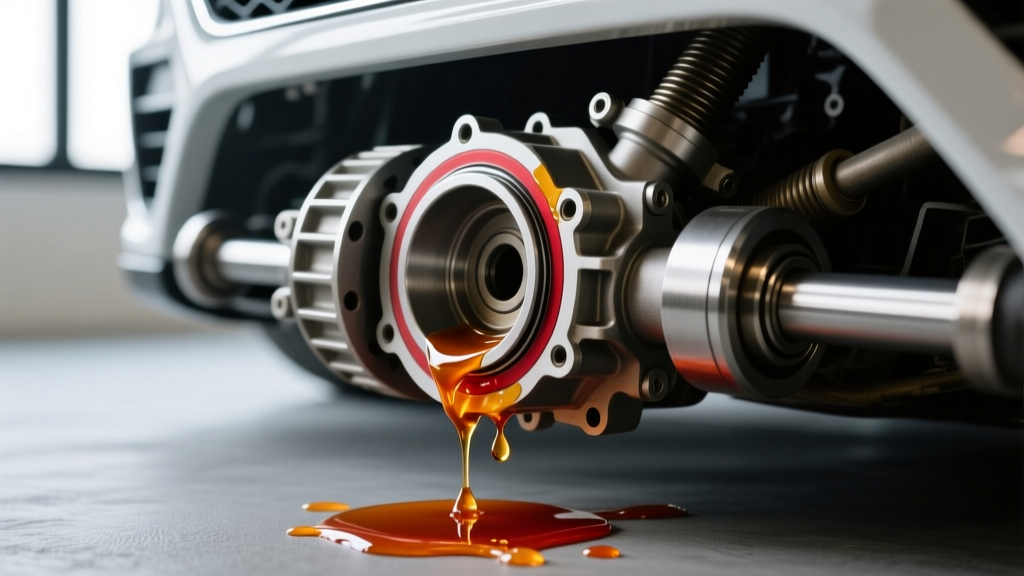
If you have spotted a puddle of thick, sulfur-scented gear oil beneath the front axle of your 4WD or AWD vehicle, you are racing against a very expensive clock. Unlike rear differentials, which typically hold 2.5 to 3.5 quarts of fluid and operate under relatively stable loads, modern Independent Front Suspension (IFS) differentials—such as the GM 8.6-inch or the Ford 9.75-inch front axles—often hold less than 1.8 quarts of lubricant. They also run significantly hotter due to their proximity to exhaust components and the engine oil pan.
A differential fluid leak in the front axle can starve the ring and pinion gearset of lubrication in a matter of days if driven under load. In 2026, replacing a destroyed front ring and pinion assembly, including bearings and shop labor, easily eclipses the $2,200 to $3,500 mark. However, catching the leak early and performing a targeted seal replacement and fluid service is a fraction of that cost. Below, we provide a comprehensive, technician-level cost analysis of front differential leak repairs, breaking down exact part numbers, OEM fluid specifications, and realistic 2026 shop labor rates.
Diagnosing the Leak: Where is the Fluid Coming From?
Before authorizing any repairs, the axle housing must be pressure-washed and inspected. Front differential leaks generally originate from one of three failure points. The repair cost varies wildly depending on the source.
1. Pinion Seal Failure (The Most Common & Costly Fix)
The pinion seal sits where the driveshaft yoke enters the differential housing. It is subjected to intense rotational friction, heat, and harmonic vibration from worn U-joints. If the rubber lip hardens or the internal garter spring breaks, gear oil will sling directly onto the underside of the engine and transmission crossmember.
- Typical Part: National Oil Seals #710928 (GM 8.6" IFS) or SKF #21200.
- Part Cost: $12 to $22.
- The Hidden Cost: If the sealing surface on the driveshaft yoke is grooved from years of friction, a new seal will leak immediately. A machine shop or technician must install a Speedi-Sleeve (e.g., SKF #99181, approx. $28) to restore a pristine sealing surface.
2. Axle Shaft / Output Shaft Seals
These seals sit at the ends of the differential housing where the CV axles insert. Failure here is often caused by pitted CV axle stub shafts, excessive axle end-play, or internal differential bearing wear that allows the gearset to wobble and chew up the seal lip.
- Typical Part: Timken #472195 or OEM equivalent.
- Part Cost: $14 to $35 per side.
- Labor Factor: Replacing this seal requires unbolting the upper and lower ball joints, pulling the steering knuckle, and extracting the entire CV half-shaft assembly.
3. Differential Cover Gasket or Stripped Plugs
Many modern front differentials do not have a traditional bolt-on cover; instead, they use a rear-facing access plug or a structural aluminum cover sealed with RTV silicone. Furthermore, the plastic or aluminum drain/fill plugs are notorious for stripping if over-torqued by previous owners.
- Typical Part: Permatex 81182 Right Stuff RTV ($18) or OEM Crush Washers.
- The Hidden Cost: If the aluminum housing threads are stripped, the shop must use a Time-Sert thread repair kit (approx. $45) or, in worst-case scenarios, remove the entire differential carrier from the vehicle to prevent aluminum shavings from entering the gearset.
2026 Front Differential Service Cost Breakdown
The following table outlines the expected costs for front differential leak repairs in 2026. These estimates assume an independent shop labor rate of $145 per hour and utilize high-quality aftermarket or OEM parts sourced from reliable vendors like RockAuto. Dealership rates will push these totals 30% to 50% higher.
| Leak Source | Parts Cost | Book Labor Time | Est. Shop Total (2026) | DIY Cost (Parts + Fluid) |
|---|---|---|---|---|
| Pinion Seal Replacement | $15 - $40 | 2.2 Hours | $335 - $360 | $65 - $90 |
| Axle Shaft Seal (One Side) | $18 - $35 | 1.8 Hours | $280 - $295 | $68 - $85 |
| Diff Cover Reseal (RTV) | $18 - $25 | 1.5 Hours | $235 - $245 | $68 - $75 |
| Fill/Plug Thread Repair | $45 - $60 | 1.0 Hour | $190 - $205 | $95 - $110 |
| Standard Fluid Service (No Leak) | $35 - $55 | 0.8 Hours | $150 - $170 | $35 - $55 |
Fluid Specifications: Stop Guessing and Start Measuring
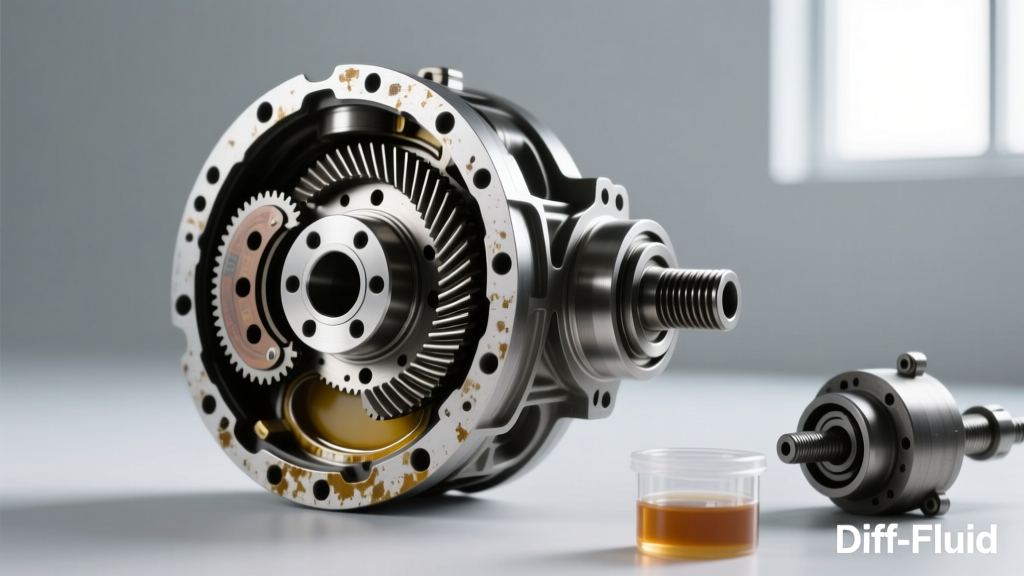
One of the most costly mistakes DIYers and quick-lube shops make is dumping generic 80W-90 GL-5 gear oil into a modern front IFS differential. Many late-model front differentials require highly specific, lower-viscosity synthetic fluids to ensure proper lubrication of the internal actuator motors and clutch-pack lockers. Using fluid that is too thick can cause delayed 4WD engagement and actuator motor burnout.
- GM Light Duty Trucks (Silverado/Sierra 1500): GM specifies 75W-85 Synthetic API GL-5 gear oil (OEM Part #88862624). Capacity is typically 1.4 to 1.6 quarts. Do not add friction modifiers unless equipped with a specific clutch-type limited-slip front locker.
- Ford F-150 (9.75" IFS): Ford typically calls for 80W-90 Premium or 75W-140 Synthetic depending on the towing package and model year (OEM Part #XL-3). Capacity is roughly 1.8 quarts.
- Aftermarket Alternatives: Premium synthetics like AMSOIL Severe Gear 75W-90 or Red Line 75W85 offer superior thermal stability and shear resistance, which is critical for front differentials that see high-heat defrosting from nearby exhaust manifolds.
The DIY Trap: Pinion Nut Preload and Torque Specs
If you decide to tackle a pinion seal replacement in your driveway to save $300 in labor, you must understand the concept of pinion bearing preload. The large nut securing the driveshaft yoke to the pinion gear shaft is not tightened to a simple foot-pound specification. It is a crush-sleeve or solid-spacer adjustment that dictates the rotational drag of the pinion bearings.
Expert Warning: Never use an impact wrench to remove or install a pinion nut. If you over-tighten the nut, you will over-crush the internal bearing sleeve, generating massive amounts of heat and destroying the pinion bearings within 500 miles. A new bearing and sleeve setup requires a complete differential teardown.
The Professional Method: Before removing the old seal, use an inch-pound torque wrench to measure the rotational drag required to turn the pinion gear (typically 15 to 25 inch-pounds of drag). Mark the nut and the yoke with a paint pen. When installing the new seal and yoke, tighten the nut exactly to your paint marks, verifying with the inch-pound wrench that your original preload baseline has been maintained.
Cover Bolt Torque Specs: If you are resealing a bolt-on front differential cover, be incredibly gentle. The housing is cast aluminum. For the GM 8.6-inch IFS, the cover bolt torque specification is a mere 22 lb-ft. For the Ford 9.75-inch, it is roughly 33 lb-ft. Always use a calibrated 3/8-inch drive torque wrench, not a 1/2-inch breaker bar, to avoid snapping the bolt heads or stripping the housing.
Hidden Costs: When a Leak Becomes a Rebuild
What happens if you ignore the differential fluid leak and the whining noise starts? Once the fluid drops below the ring gear's centerline, the hypoid gear teeth begin to experience metal-on-metal boundary friction. This causes micro-pitting and spalling on the ring and pinion faces.
At this stage, a simple $350 seal replacement turns into a full differential overhaul. According to drivetrain specialists at RANDYS Worldwide, a complete ring and pinion rebuild kit (including Timken bearings, shims, and a master rebuild kit) costs between $350 and $600 in parts alone. However, the labor to set the gear backlash (typically 0.006" to 0.010") and pinion depth requires specialized dial indicators and pullers, pushing the total shop bill to $2,400 - $3,200.
Environmental & Disposal Considerations
When budgeting for a DIY differential service, factor in the disposal of the old gear oil. Front differential fluid is heavily contaminated with suspended metallic particulates and sulfur compounds. Most municipal waste centers and auto parts stores will accept used gear oil for free, but it must be kept separate from used motor oil and antifreeze. Purchase a dedicated fluid extraction pump ($35-$50) or a drip pan with a sealed cap to transport the 1.5 quarts of hazardous waste safely without spilling it in your vehicle's trunk.
Expert Verdict
A front differential fluid leak is never a 'wait and see' issue. The low fluid capacity and high operating temperatures of modern IFS axles mean that a minor seal weep can escalate into catastrophic gear failure in less than a week of aggressive driving. By identifying the exact leak source, sourcing quality seals, and strictly adhering to OEM fluid viscosities and bearing preload specs, you can keep your 4WD system operational and protect your wallet from a four-figure rebuild bill.