The Diagnostic Catalyst: Why a Leak Repair is an Upgrade Opportunity
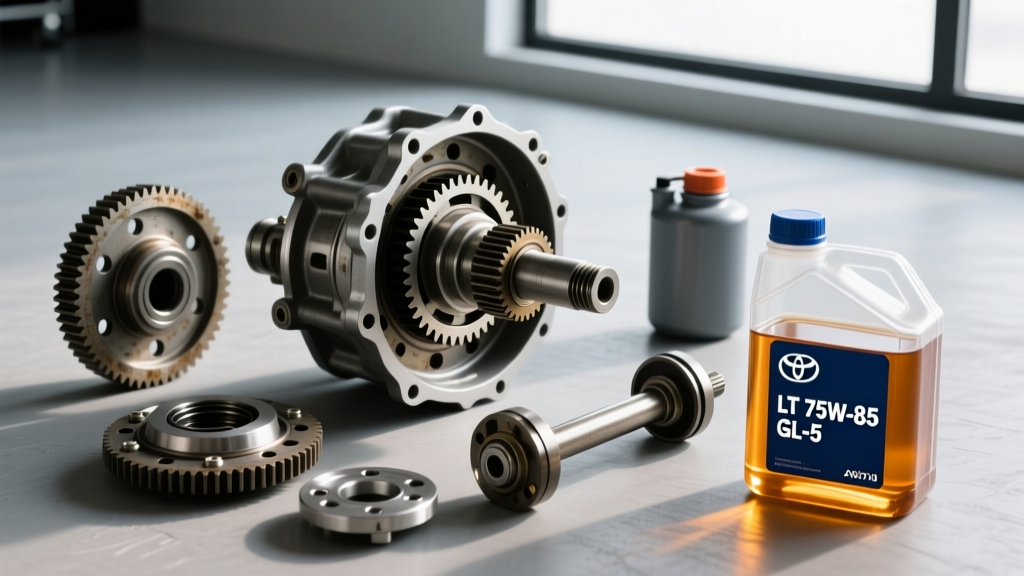
When your 4WD truck starts leaving thick, sulfur-scented gear oil spots on the driveway, a front differential leak repair is inevitable. Whether you are dealing with a weeping pinion seal, corroded differential cover, or failed inner axle tube seals on a GM 8.25-inch IFS or Dana 44 front axle, the repair process is labor-intensive. Diagnosing and fixing inner axle seal leaks requires draining the fluid, pulling the CV axles, removing the driveshaft, and unbolting the carrier assembly from the housing.
For independent 4x4 shops charging 2026 labor rates of $140 to $180 per hour, the labor overlap is massive. If you are already paying for 3 to 5 hours of bench time to reseal the front end and reset the gear mesh, sticking with a factory open differential leaves traction—and money—on the table. This guide compares open versus limited-slip front differentials, providing a buyer's framework for upgrading your carrier while the housing is already cracked open for a leak repair.
Open vs. Limited Slip: Front Differential Comparison Chart
Before selecting a replacement carrier, it is critical to understand how power is distributed. Front axles endure unique steering and binding stresses that rear axles do not, making the choice of limited-slip differential (LSD) type paramount for drivetrain longevity.
| Feature | Factory Open Differential | Clutch-Type LSD (e.g., Auburn) | Helical / Gear-Type LSD (e.g., Truetrac) |
|---|---|---|---|
| Traction Bias | 1:1 (Sends power to slipping wheel) | 2:1 to 3.5:1 (Preload dependent) | 2.5:1 to 3.5:1 (Torque-multiplying) |
| Steering Feel (4WD Engaged) | Smooth, no binding | Heavy binding, understeer on dry pavement | Smooth, minimal steering fight |
| Maintenance Needs | Standard 75W-90 GL-5 | Requires Friction Modifier additive | Standard 75W-90 GL-5 (No modifier) |
| Lifespan / Wear | Infinite (Gears only) | Clutches wear out (60k-100k miles) | Infinite (Gears only) |
| Avg. Carrier Cost (2026) | $150 - $250 (OEM Replacement) | $450 - $600 | $650 - $850 |
Deep Dive: Mechanical Differences & Failure Points
The Open Differential Liability
Most factory front axles (like the Spicer 30 found in older Jeeps or the GM 8.25 IFS) utilize an open carrier. While open differentials are gentle on U-joints and CV joints during tight turns, they offer zero forward traction in snow, mud, or rock crawling. If one front tire lifts or hits ice, 100% of the torque is routed to that spinning wheel, leaving the vehicle stranded. Furthermore, open carriers are prone to cross-pin failure under high-torque shock loads, which can send shrapnel through the ring gear and destroy the entire front axle assembly.
The Clutch-Type LSD Compromise
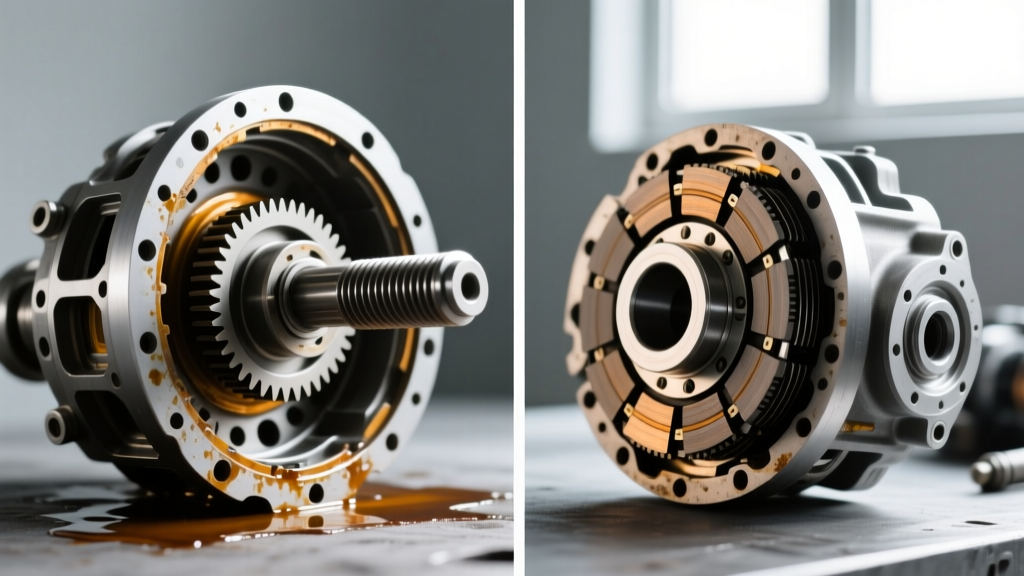
Clutch-based limited slips use a stack of friction discs and S-springs to preload the side gears. While they provide immediate traction off the line, they are generally a poor choice for front axle applications. When you engage 4WD and turn the steering wheel, the front wheels must rotate at different speeds. A clutch-type LSD fights this speed differentiation, causing severe drivetrain bind, accelerated U-joint wear, and dangerous understeer on high-traction surfaces.
The Helical (Torsen/Truetrac) Advantage
Helical gear LSDs, such as the Eaton Detroit Truetrac, use parallel-axis planetary helical gears to multiply torque to the wheel with traction. There are no clutch packs to wear out, and crucially, they do not require friction modifiers. For a front differential, a helical LSD is the undisputed gold standard. It remains completely open and smooth during tight turns on dry pavement but instantly biases torque when a front wheel loses grip in 4WD.
2026 Buyer's Guide: Top LSD Carriers for Popular Front Axles
If your front differential leak repair involves pulling the carrier, here are the exact part numbers and upgrade paths for the most common light-duty truck and SUV front axles.
- GM 8.25" IFS (Silverado/Sierra 1500): Eaton Truetrac Part #917A589 (30-spline). Retail: ~$720. This bolts directly into the factory housing and accepts the OEM ring gear.
- Dana 44 / Spicer 44 (Jeep Wrangler / Ford Super Duty): Eaton Truetrac Part #913A479 (30-spline). Retail: ~$750. Ideal for 35-inch tires and heavy trail use.
- Ford 8.8" IFS (F-150): Auburn Gear Pro-Series (Clutch) or Torsen T-2R. Note: Ford's front 8.8 uses a unique reverse-cut ring gear; ensure you buy the front-specific carrier (e.g., Auburn #542083). Retail: ~$580.
The Hidden Variables: Fluids, Modifiers, and Torque Specs
A proper front differential leak repair is not just about slapping new seals on the housing. The reassembly process dictates the lifespan of your new or upgraded carrier. According to Spicer technical documentation, improper ring gear bolt torque and backlash settings are the leading causes of catastrophic front axle failures post-rebuild.
Gear Oil and Additive Protocols
If you retain an open diff or upgrade to a helical LSD, fill the housing with a high-quality synthetic 75W-90 GL-5 gear oil, such as AMSOIL Severe Gear. Capacity for most half-ton front axles ranges from 1.5 to 1.8 quarts. Do not add friction modifiers to helical gear LSDs; the modifiers reduce the coefficient of friction on the helical gears, severely limiting their torque-biasing capabilities.
If you install a clutch-type LSD, you must add 2 to 4 ounces of a dedicated limited-slip friction modifier (e.g., GM P/N 88900333 or Ford P/N XL-3) to prevent clutch chatter during low-speed turns.
Critical Torque Specifications (GM 8.25" IFS Reference)
When mating your ring gear to the new LSD carrier during the leak repair reassembly, adhere strictly to these benchmarks:
- Ring Gear Bolts: 77 lb-ft. Must be coated with Red Loctite (271) and torqued in a crisscross pattern. Never reuse stretched OEM ring gear bolts.
- Bearing Cap Bolts: 60 lb-ft. Always reinstall caps in their exact original orientation and location (marked from the factory).
- Pinion Nut: Minimum 180 lb-ft, but ideally set by measuring rotational torque (inch-pounds) to achieve 15-25 in-lbs of pinion bearing preload.
- Backlash Target: 0.005" to 0.009". Measured at the ring gear heel using a dial indicator.
Summary: Making the Upgrade Decision
A front differential leak repair is a grueling, messy job that demands precision. By recognizing the labor overlap between resealing the axle tubes and swapping the carrier assembly, you can transform a routine maintenance headache into a massive capability upgrade. Ditch the factory open carrier and its liability of cross-pin failures and zero traction. Invest in a helical limited-slip differential, utilize proper synthetic GL-5 fluids without unnecessary modifiers, and torque every fastener to exact OEM specifications. Your front axle will not only stay sealed, but it will actually pull you through the terrain you bought your 4WD truck to conquer.