Overcoming the Open Differential Front Axle Limitation
When building a dedicated off-road rig or enhancing a daily-driven overland vehicle, the front drivetrain is often the weakest link in the traction chain. Upgrading your differential front axle is not just about installing larger tires or stronger CV joints; it requires a fundamental rethinking of how torque is distributed to the ground. An open differential inherently sends power to the wheel with the least resistance. In off-camber situations or when crawling over uneven terrain, weight transfers to the rear, unloading the front suspension and resulting in the infamous 'one-wheel peel.' To conquer the trails in 2026, selecting the correct locking mechanism and pairing it with the precise differential fluid specification is paramount for both traction and component longevity.
The front axle operates under significantly different stresses than the rear. It must manage steering geometry, CV joint articulation, and the added thermal load of steering friction. Consequently, the fluid inside a front differential degrades differently than in the rear, making the intersection of locker selection and fluid dynamics a critical area of expertise for any drivetrain builder.
Selecting the Optimal Front Axle Locker
Choosing the right locker for your differential front axle depends heavily on your vehicle's suspension architecture (Solid Axle vs. Independent Front Suspension) and your primary driving environment. Let us break down the three dominant categories available on the market today.
Selectable Air Lockers: The Gold Standard for IFS and Solid Axles
For drivers who split their time between highway commuting and severe rock crawling, selectable lockers are the undisputed champions. The ARB Air Locker (such as part number RD116 for the ubiquitous Dana 44) utilizes an onboard air compressor to engage a locking collar. When disengaged, the differential operates as a standard open unit, preserving factory-like highway manners and preventing the binding and steering fight associated with automatic lockers on Independent Front Suspension (IFS) platforms. The installation requires routing a copper or polymer air line through the axle housing via a specialized sealed bulkhead fitting, but the on-demand traction is worth the effort.
Automatic Lockers: Brutal Traction for Solid Axle Crawlers
Automatic lockers, like the Eaton Detroit Locker (part number 19998-01), replace the entire carrier assembly. They utilize a ratcheting mechanism that locks both axles together under torque but allows the outer wheel to overrun during turns. While they offer unparalleled, zero-input traction, they are generally not recommended for the front axle of daily-driven IFS trucks. The harsh engagement and disengagement can cause severe steering wheel feedback, accelerated CV joint wear, and dangerous handling characteristics on wet or icy paved roads. However, for a dedicated, solid-axle-swapped trail rig, they remain a cost-effective and virtually indestructible option.
Helical Gear Limited-Slips: The Smooth Operator
If your goal is enhanced trail manners without the complexity of air lines or the harshness of automatics, a helical gear limited-slip like the Eaton TrueTrac is an exceptional choice. Unlike clutch-based limited-slips that wear out over time, the TrueTrac uses precision-cut helical gears to multiply torque to the wheel with traction. It requires absolutely no special friction modifiers in the differential fluid, making maintenance incredibly straightforward. While it won't hold a locker in extreme, zero-traction scenarios (like both wheels in the air), it provides 80% of the performance with 100% of the streetability.
Differential Fluid Dynamics: Matching Oil to Your Locker
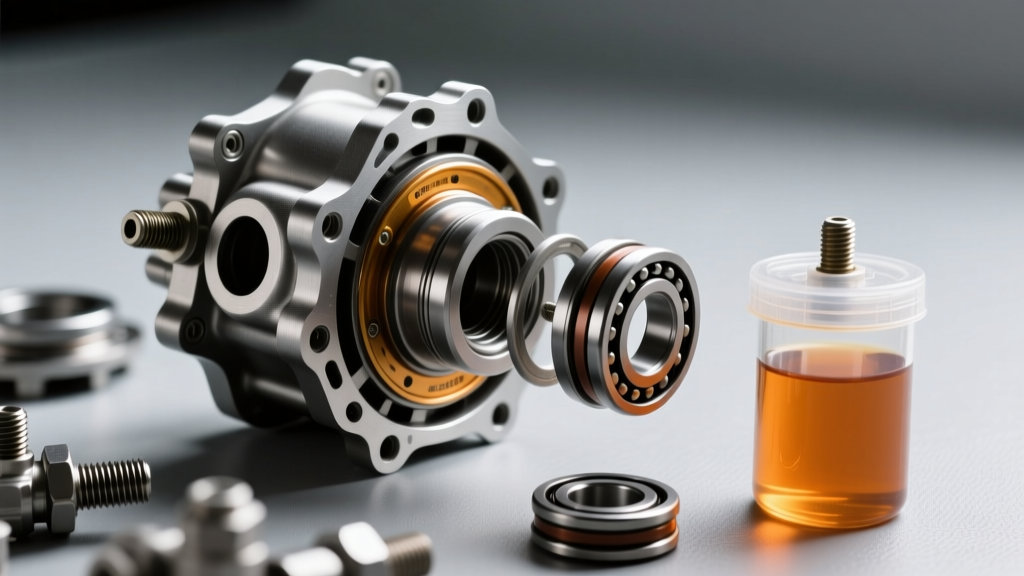
The categorization of this guide under differential fluid maintenance is deliberate. Installing a high-end locker in your differential front axle without understanding the tribology of gear oil is a recipe for catastrophic failure. The front differential operates at higher RPMs during highway driving than the rear (due to typical front differential gear ratios being slightly numerically higher to account for tire scrub and steering angles), generating immense heat.
Viscosity and Thermal Stability
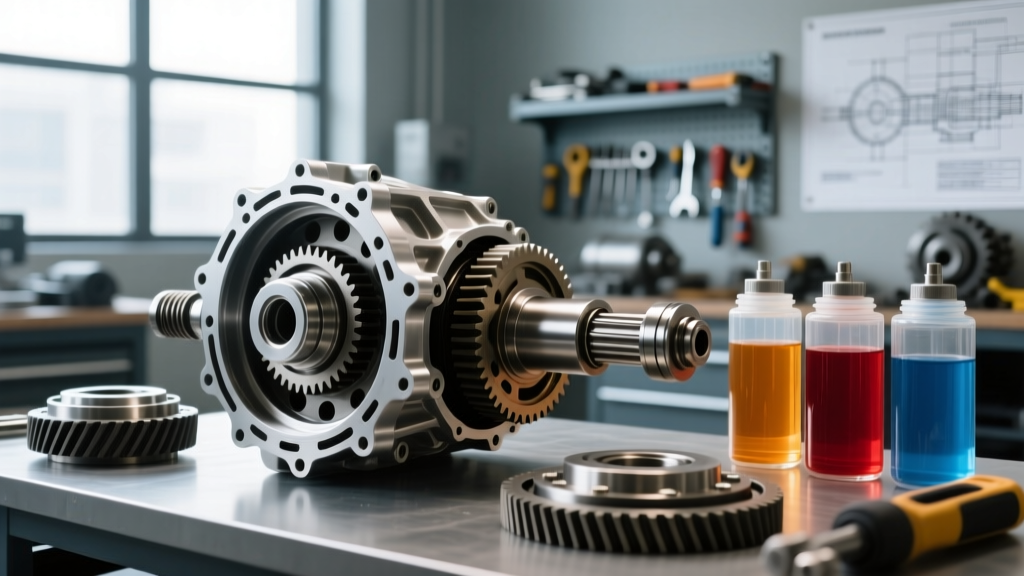
For most modern front axles (Dana 44, GM 8.25 IFS, Ford 8.8), a full synthetic 75W-90 GL-5 gear oil is the baseline. AMSOIL Severe Gear 75W-90 provides exceptional film strength, protecting the ring and pinion teeth from shock-loading when the locker engages abruptly on the rocks. For heavily modified rigs running 38-inch tires and extreme low-range gearing, stepping up to a 75W-140 viscosity provides a thicker protective film, though it may slightly reduce fuel economy and increase cold-weather steering stiffness.
The Friction Modifier Trap
This is where most DIY mechanics destroy their drivetrains. Friction modifiers are designed exclusively for clutch-type limited-slip differentials to prevent chatter. If you install an automatic locker (Detroit, Spartan), a selectable locker (ARB, Eaton E-Locker), or a helical gear unit (TrueTrac), you must NOT add friction modifier. Adding modifier to an ARB Air Locker can cause the internal seals to degrade prematurely, while adding it to a Detroit Locker can cause the ratcheting mechanism to slip under heavy load, leading to catastrophic metal shedding inside the housing.
Expert Rule of Thumb: Only use friction modifiers (like Motorcraft XL-3 or Red Line 80304) if your front axle utilizes a traditional clutch-pack limited-slip differential (e.g., Ford Traction-Lok). For all mechanical lockers, use straight GL-5 synthetic gear oil.
Front Axle Locker & Fluid Specification Matrix
| Locker Type | Example Part # (Dana 44) | Est. Price Range | Recommended Fluid | Friction Modifier? |
|---|---|---|---|---|
| Selectable Air (ARB) | RD116 | $1,050 - $1,200 | 75W-90 / 75W-140 Synth | No |
| Automatic (Detroit) | 19998-01 | $650 - $800 | 75W-90 / 80W-90 GL-5 | No |
| Helical LSD (TrueTrac) | 911A481 | $600 - $750 | 75W-90 Synth GL-5 | No |
| Selectable Elec (Eaton) | 19968-01 | $900 - $1,100 | 75W-90 / 75W-140 Synth | No |
| Clutch-Type LSD | OEM Varies | $400 - $600 | 75W-90 GL-5 | Yes (Required) |
Precision Installation and Fluid Service Protocol
Upgrading the differential front axle requires surgical precision. The front ring and pinion are highly sensitive to backlash and bearing preload. When installing a new locker carrier, you must maintain the factory backlash specification, typically between 0.006 and 0.010 inches, measured via a dial indicator mounted to the axle housing. Shimming the carrier bearings is an iterative process; rushing this step will result in whining gears and premature bearing failure.
Fastener Torque Specifications
The front axle endures severe cyclical loading. All ring gear bolts must be cleaned with brake cleaner, coated with high-strength threadlocker (Loctite 272 Red), and torqued to specification in a multi-pass star pattern. For a standard Dana 44, ring gear bolts require 70-85 lb-ft. Carrier bearing cap bolts must be torqued to 60 lb-ft. Never reuse stretched ring gear bolts from an old open carrier.
The Modern Fluid Service Procedure
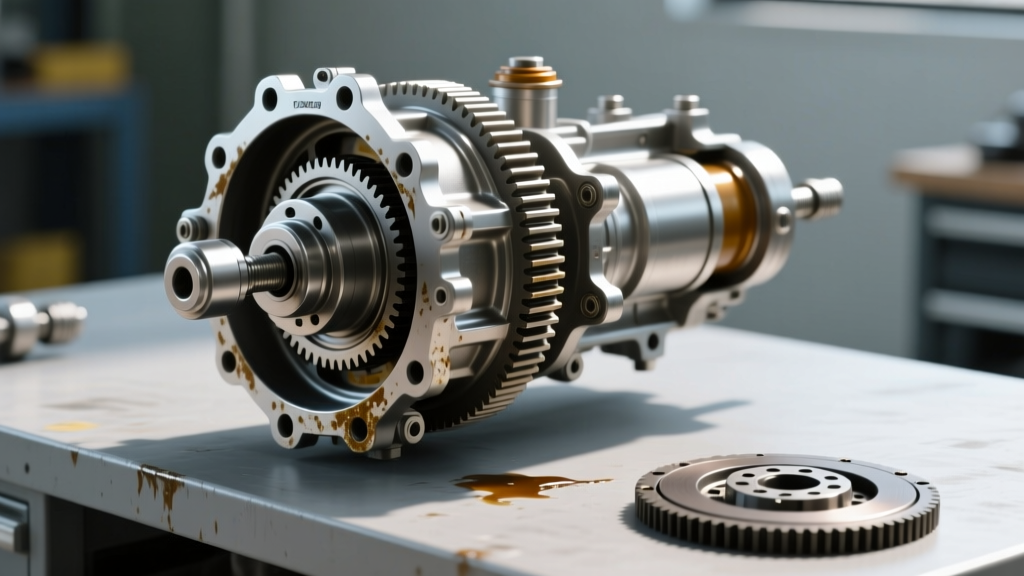
When servicing the differential front axle fluid post-break-in (typically after the first 3,000 miles), avoid cheap silicone RTV. The front diff is subjected to water fording and constant flexing. Utilize a reusable, precision-molded gasket like the Lube Locker, or if using RTV, apply a continuous 3mm bead of Permatex Ultra Black, allowing it to skin over for 10 minutes before mating the cover to prevent silicone extrusion into the gear mesh.
Fluid capacities vary: a Dana 44 holds approximately 2.5 quarts, while a heavy-duty Dana 60 requires up to 3.5 quarts. Always fill until the fluid level is exactly at the bottom of the fill hole with the vehicle sitting on level ground. Overfilling the front differential causes aeration and foaming at high speeds, which drastically reduces the oil's ability to transfer heat away from the pinion bearing, leading to seal blowouts and catastrophic gear welding. By matching the correct locking technology with the exact fluid chemistry, your front drivetrain will deliver uncompromising traction and decade-long reliability.