The Evolution of the FR Drivetrain in the EV Era
For over a century, the FR drivetrain (Front-engine, Rear-wheel drive) has been the gold standard for automotive enthusiasts and luxury sedans alike. By placing the engine longitudinally in the front and sending power via a mechanical driveshaft to the rear differential, engineers achieved near-perfect 50:50 weight distribution, predictable oversteer characteristics, and excellent steering feedback. However, as the automotive industry transitions toward electrification in 2026, the literal interpretation of the FR layout is undergoing a massive paradigm shift.
In the electric vehicle (EV) sector, replicating the dynamics of a traditional FR drivetrain requires a complete reimagining of component packaging. Electric motors are significantly more compact than internal combustion engines (ICE), and running a heavy, friction-prone mechanical driveshaft from a front-mounted motor to the rear axle is largely considered an engineering relic. Instead, modern EV platforms achieve the dynamics of an FR car by utilizing rear-mounted electric drive units (EDUs) on dedicated 'skateboard' architectures. This buyer's guide and technical comparison will break down how the FR drivetrain concept translates to modern EVs, what components to look for, and which 2026 models best capture that classic rear-drive essence.
Literal FR EV Drivetrains vs. The Skateboard Paradigm
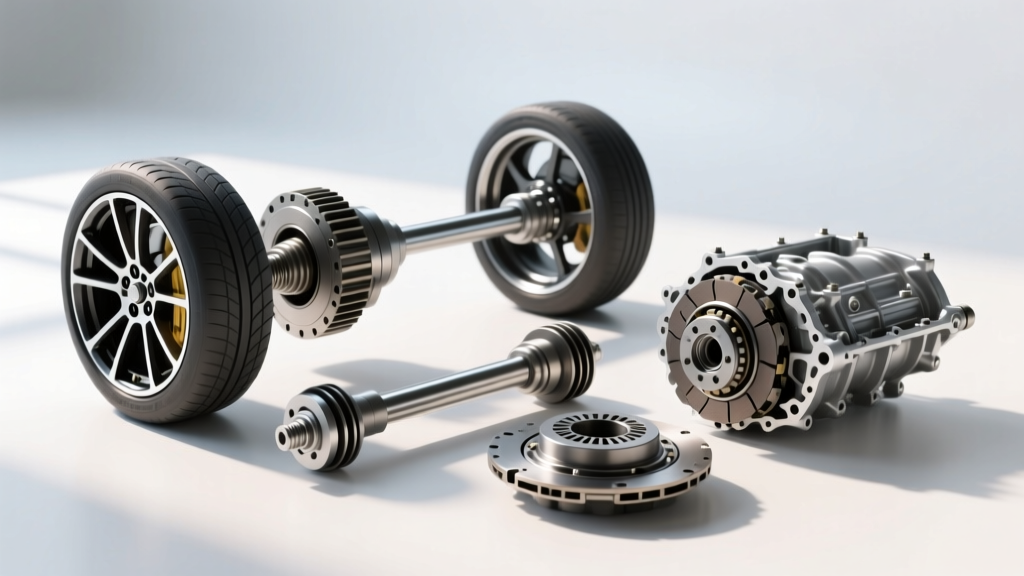
To understand the current EV market, we must distinguish between a 'literal' FR EV drivetrain and an 'FR-equivalent' layout. A literal FR EV drivetrain involves mounting the electric traction motor in the front engine bay, coupling it to a traditional transmission or reduction gear, and utilizing a multi-piece steel or carbon-fiber driveshaft with U-joints to route torque to a rear differential.
While this setup was common in early EV conversions and remains in some heavy-duty commercial electric trucks, it is virtually extinct in modern passenger cars. According to engineering analyses published by SAE International, a mechanical driveshaft introduces parasitic losses ranging from 2% to 5%, alongside significant NVH (Noise, Vibration, and Harshness) issues caused by the instant, high-torque delivery of electric motors. U-joints and carrier bearings simply cannot handle the instantaneous 400+ lb-ft of torque generated at 0 RPM without excessive wear or shudder.
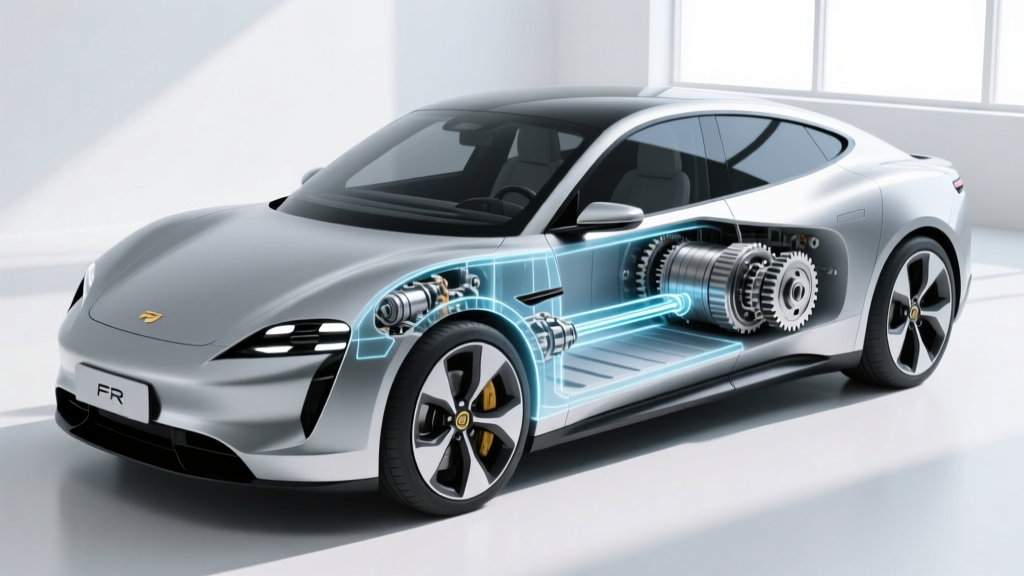
Consequently, the 2026 EV market relies on the 'skateboard' paradigm. To mimic the weight distribution and handling of a classic FR drivetrain, automakers place the battery pack low in the chassis and mount the primary traction motor directly on the rear subaxle. This eliminates the driveshaft entirely, reducing drivetrain mass by up to 60 lbs and improving mechanical efficiency to over 97%.
EV Drivetrain Layout Comparison Matrix
| Layout Type | Motor Placement | Driveshaft Required? | Efficiency / Parasitic Loss | Dynamics & FR Equivalency |
|---|---|---|---|---|
| Literal FR EV | Front | Yes (Mechanical) | ~94% (High NVH risk) | Poor (Front-heavy, torque steer mitigated but drag is high) |
| Rear-Motor RWD (FR-Equivalent) | Rear Axle | No (Direct Drive) | ~98% (Minimal loss) | Excellent (Mimics FR polar moment, natural oversteer bias) |
| Front-Motor FWD | Front Axle | No (Direct Drive) | ~98% (Minimal loss) | Poor (Understeer bias, traction limits under high torque) |
| Dual-Motor AWD | Front & Rear | No (Independent) | ~96% (Inverter switching losses) | Variable (Software-dependent torque vectoring) |
Replicating FR Dynamics: Weight Distribution and Polar Moments
When shopping for an EV that delivers the spirit of a classic FR drivetrain, buyers must look beyond the mere absence of a front engine. The magic of the FR layout lies in its polar moment of inertia and weight distribution. In a traditional ICE FR car, the heavy engine block is pushed behind the front axle, while the transmission and differential balance the rear.
In modern RWD EVs like the Porsche Taycan or the BMW i4 eDrive40, the heavy battery pack is spread across the floor, creating a low center of gravity. However, to achieve the rotational agility of an FR car, automakers concentrate the remaining mass (the EDU, inverter, and cooling pumps) at the extreme ends of the chassis. According to data from fueleconomy.gov, modern RWD EVs typically achieve a 48:52 or 50:50 front-to-rear weight distribution. By placing the drive unit in the rear, these vehicles maintain the 'push-from-behind' sensation that FR drivetrain purists demand, while the low-slung battery eliminates the body roll traditionally associated with high-center-of-gravity ICE vehicles.
Under the Hood: EV Reduction Gears and Inverter Tech
If you are evaluating the mechanical depth of an EV's rear-drive layout, you must understand the components that replace the traditional multi-speed transmission and rear differential.
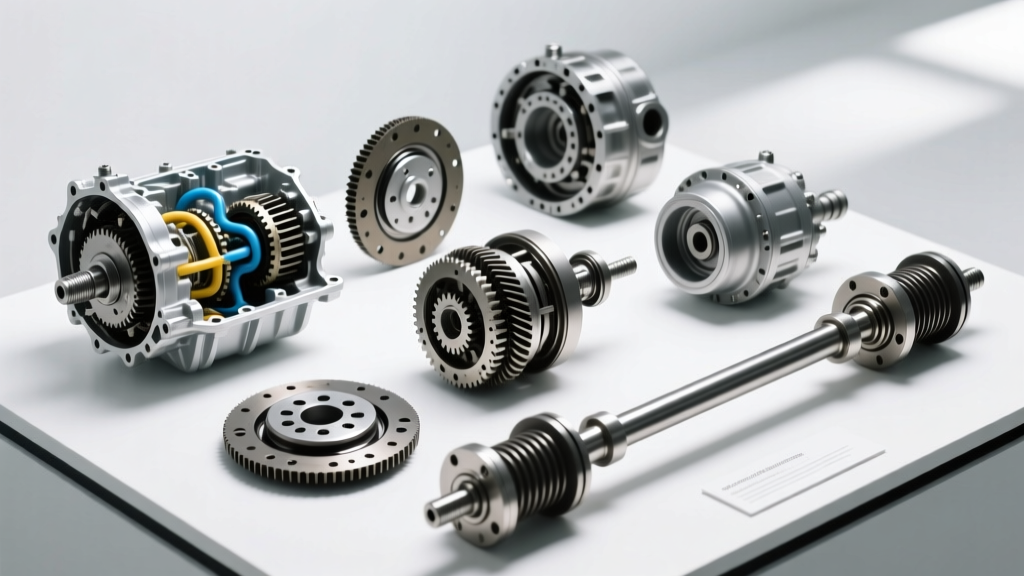
1. Reduction Gearboxes and Final Drive Ratios
Unlike the ZF 8HP or GM 6L80 transmissions found in ICE FR cars, most EVs utilize a single-speed reduction gearbox integrated directly into the rear drive unit (RDU). For example, the Tesla Model 3 RWD utilizes a rear drive unit (Part No. variations like 1127550-00-E) featuring a single-speed helical gear reduction with a ratio of 9.73:1. This multiplies the motor's torque while keeping the motor spinning efficiently at highway speeds.
However, the Porsche Taycan breaks the mold by utilizing a ZF-engineered 2-speed rear axle transmission to better mimic the highway cruising efficiency and aggressive launch of a performance FR drivetrain. First gear is a massive 16:1 ratio for explosive launches, while second gear drops to 8:1 for high-speed efficiency. The Taycan's rear gearbox requires approximately 3.2 liters of specialized ZF LifeguardFluid, a critical maintenance point often overlooked by buyers.
2. Inverter Technology: SiC vs. IGBT
The inverter is the 'brain' of the EV drivetrain, converting DC battery power to AC motor power. For 2026, buyers seeking maximum efficiency and throttle response should prioritize vehicles using Silicon Carbide (SiC) MOSFETs in their rear inverters, rather than older IGBT (Insulated-Gate Bipolar Transistor) modules. SiC inverters operate at higher temperatures, switch faster, and reduce energy loss by up to 8% during partial-load cruising. The Hyundai Ioniq 5 and Lucid Air both utilize advanced SiC inverters paired with 800V architectures, delivering the instantaneous throttle response that makes modern RWD EVs feel incredibly connected to the road.
3. Thermal Management Systems
High-performance rear motors generate immense heat. While older EVs relied on water-jacketed stators, 2026's top-tier RWD EVs utilize direct oil-cooling systems. Oil is sprayed directly onto the copper windings and the reduction gears, allowing for sustained track use without torque derating—a must-have for buyers who intend to drive their EVs with the same vigor as a traditional FR sports sedan.
2026 Buyer's Guide: Top EVs with FR Drivetrain Dynamics
If your goal is to capture the essence of the FR drivetrain in an electric package, here are the top configurations to target in the current market:
- Porsche Taycan (RWD / 2-Speed): The undisputed king of FR-equivalent dynamics. The rear-biased weight distribution, 2-speed ZF rear axle, and sophisticated rear-wheel steering create a driving experience that rivals the legendary Porsche 944 or 928.
- BMW i4 eDrive40: Built on the CLAR platform (which also houses ICE FR cars), the i4 retains the physical proportions and suspension geometry of a classic FR sedan. The rear-mounted Excited Synchronous Motor (EESM) provides linear, predictable power delivery without the reliance on rare-earth magnets.
- Tesla Model 3 'Highland' / 2026 Refresh (RWD): While softer than the Porsche, the base Model 3 RWD offers the most cost-effective entry into rear-drive EV dynamics. The 9.73:1 reduction gear and PMSRM (Permanent Magnet Synchronous Reluctance Motor) provide excellent efficiency, though the steering feedback lacks the mechanical weight of traditional FR hydraulic or EPAS systems.
Maintenance Realities: EV vs. Traditional FR Drivetrains
One of the most significant advantages of the EV rear-drive layout over a traditional FR drivetrain is the elimination of mechanical wear items. There is no front engine to leak oil, no transmission to rebuild, and crucially, no driveshaft U-joints or center carrier bearings to replace. The infamous 'driveline clunk' caused by worn U-joints or sloppy differential backlash is entirely absent in direct-drive EVs.
However, the rear drive unit (RDU) is not entirely maintenance-free. Buyers must adhere to strict reduction gear fluid service intervals. Most manufacturers recommend draining and filling the rear EDU fluid every 60,000 to 100,000 miles. Using the correct low-viscosity, electrically non-conductive fluid (such as Castrol ON V or Pentosin E-Fluid) is critical. Furthermore, the rear half-shafts and CV joints still require inspection; the instant torque of an EV can accelerate CV joint wear if the rubber boots tear and contaminate the grease. When servicing the rear subframe, technicians must adhere to strict torque-to-yield specifications—such as torquing M14 rear drive unit mount bolts to 160 Nm plus an additional 90-degree turn—to prevent catastrophic misalignment under hard acceleration.
Final Verdict
The traditional FR drivetrain, with its longitudinal engine and spinning driveshaft, is a mechanical masterpiece of the 20th century. However, the 2026 EV landscape proves that the dynamics of the FR layout are best preserved not by copying its mechanical parts, but by respecting its physics. By utilizing rear-mounted motors, 800V SiC inverters, and sophisticated reduction gearboxes, modern RWD EVs deliver the 50:50 balance, push-from-behind acceleration, and handling purity that FR enthusiasts crave, all while achieving unprecedented levels of efficiency. For the purist buyer, the key is to look past the missing engine block and focus on the rear-axle architecture, thermal management, and chassis tuning that keep the FR spirit alive in the electric age. For more on EV efficiency standards, consult the EPA Green Vehicles database.