The Unique Architecture of the Formula 1 Car Clutch
When diagnosing drivetrain anomalies in top-tier motorsport, engineers must first discard conventional road-car paradigms. The modern formula 1 car clutch is not utilized for gear changes; sequential seamless-shift gearboxes handle upshifts and downshifts via electro-hydraulic actuators and dog-ring engagement. Instead, the clutch pedal—mounted exclusively on the steering wheel as a pair of paddles—is deployed solely for launching the vehicle from a standstill on the starting grid or when exiting the pit lane. Because of this highly specialized operational window, intermittent clutch problems do not manifest as daily drivability issues, but rather as catastrophic launch inconsistencies that can cost a driver multiple grid positions in the first three seconds of a race.
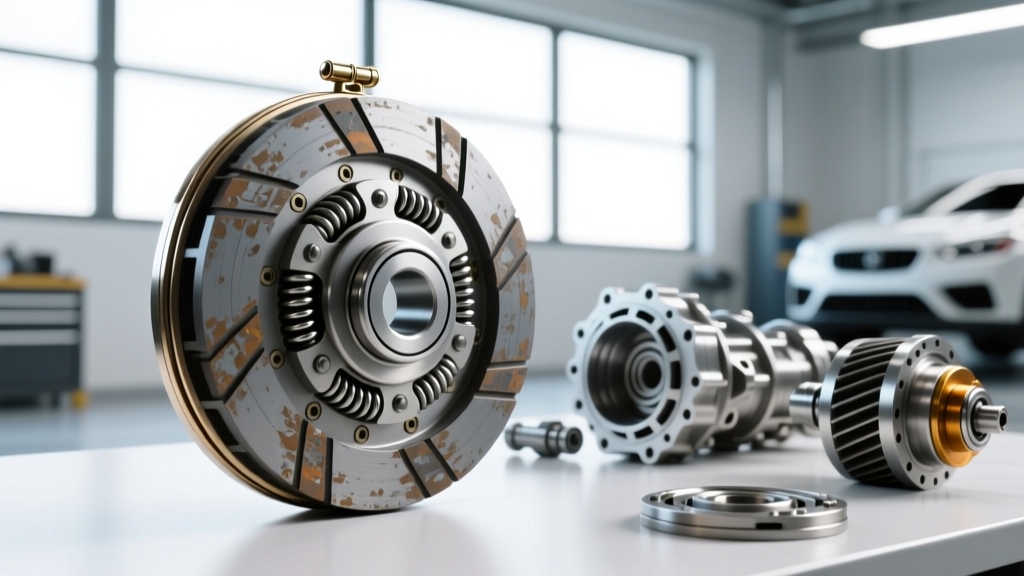
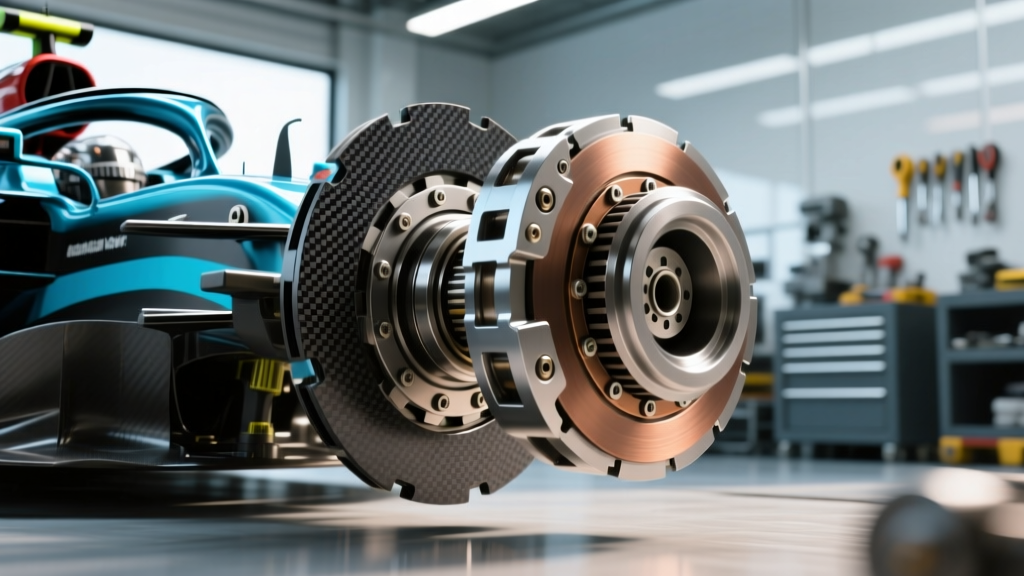
At the heart of the system lies a multi-plate carbon-carbon friction assembly, typically measuring a mere 130mm to 150mm in diameter. Suppliers like AP Racing and Alcon engineer these clutches to withstand the immense transient torque loads generated by modern hybrid power units. With the introduction of the 2026 power unit regulations, which feature significantly enhanced MGU-K electrical deployment and sharper torque delivery maps, the mechanical and thermal shock placed on the carbon friction plates during a launch has increased exponentially. Consequently, diagnosing intermittent slip, grab, or stall conditions requires a sophisticated blend of real-time telemetry analysis and microscopic physical inspection.
Why Intermittent Faults Occur in Carbon-Carbon Assemblies
Unlike organic or sintered metallic clutches found in passenger vehicles, carbon-carbon friction materials exhibit a highly non-linear coefficient of friction that is entirely dependent on temperature. A formula 1 car clutch operates optimally when the friction face reaches between 300°C and 600°C. If the clutch is too cold, it will grab aggressively and stall the engine; if it exceeds the thermal threshold, the carbon surface will glaze or oxidize, resulting in severe slip. Intermittent problems often arise from the system's inability to consistently manage this thermal window across multiple launch attempts, such as during formation lap practice or aborted starts.
Furthermore, the electro-hydraulic release bearing that actuates the clutch diaphragm spring operates under extreme hydraulic pressures, often exceeding 180 bar. Intermittent sponginess or delayed actuator response is frequently traced to microscopic aeration within the hydraulic fluid. As the clutch housing absorbs ambient heat from the adjacent exhaust manifolds and internal combustion engine block, localized boiling or outgassing of the specialized mineral oil can occur. This creates compressible gas pockets within the hydraulic lines, leading to an erratic bite point that shifts unpredictably from one launch to the next.
Telemetry-Driven Diagnostic Framework
Race engineers do not rely on driver feedback alone to diagnose formula 1 car clutch problems; they rely on high-frequency telemetry. The steering wheel paddles are equipped with high-resolution linear potentiometers that measure driver input, while the clutch actuator itself features a positional sensor. By overlaying these data channels with engine RPM, driveshaft torque sensors, and wheel speed sensors, engineers can calculate the exact slip ratio in real time.
The target slip ratio for an optimal F1 launch is generally maintained between 4% and 8%. This micro-slip is essential to keep the carbon plates in their peak friction temperature window without inducing excessive wear. When an intermittent fault is suspected, engineers analyze the derivative of the clutch position relative to the hydraulic pressure demand. A lag in pressure buildup indicates a servo-valve stiction issue or hydraulic aeration, whereas a sudden spike in slip ratio without a corresponding change in pedal position points to physical degradation of the carbon stack.
Intermittent Fault Diagnostic Matrix
| Observed Symptom | Telemetry Signature | Probable Root Cause | Corrective Action |
|---|---|---|---|
| Erratic Wheelspin (Rear) | Sudden slip ratio spike >15% at 4000 RPM | Localized carbon glazing or hot-spotting | Replace carbon friction plates; inspect pressure plate for runout |
| Engine Bogging / Stall | Slip ratio drops to 0% prematurely; RPM collapses | Hydraulic aeration causing rapid clutch engagement | Bleed electro-hydraulic system; check release bearing seals |
| Inconsistent Bite Point | Paddle position vs. actuator position hysteresis varies | Servo-valve stiction or thermal expansion of stack | Flush hydraulic fluid; recalibrate bite-point mapping on ECU |
| High-Frequency Chatter | Oscillating torque sensor readings at 40-60 Hz | Diaphragm spring fatigue or damper spring failure | Replace clutch basket assembly and torsional damper springs |
Pit Lane Physical Troubleshooting Procedures
When telemetry indicates a physical anomaly within the formula 1 car clutch assembly, the gearbox must be removed from the chassis to access the bell housing. In the high-pressure environment of a race weekend, mechanics follow a strict, time-boxed diagnostic protocol to identify and rectify intermittent faults without compromising the parc fermé regulations.
Carbon Stack Height Verification
The most critical physical measurement in F1 clutch diagnostics is the stack height—the total compressed thickness of the alternating carbon friction and steel separator plates. Because the electro-hydraulic actuator relies on a precise closed-loop control algorithm mapped to a specific stack height, even minor wear alters the physical bite point. Mechanics use a calibrated dial indicator to measure the stack height to within 0.05mm. If the carbon plates have worn beyond the manufacturer's tolerance (typically a loss of 0.20mm to 0.35mm per plate), the ECU's bite-point map will no longer align with the physical reality of the clutch, resulting in intermittent slip during the initial torque phase of the launch. A complete set of replacement carbon plates costs between $2,500 and $4,000 and is often swapped every two to three races depending on launch practice volume.
Electro-Hydraulic Actuator and Servo-Valve Testing
If the stack height is within specification, the focus shifts to the hydraulic release mechanism. Intermittent engagement issues are frequently caused by the high-speed servo-valve that meters hydraulic fluid to the release bearing. Over time, microscopic debris from the gearbox's internal hydraulic pump can score the servo-valve spool, causing it to stick momentarily under high thermal loads. Mechanics will connect a diagnostic rig to the gearbox hydraulic manifold, commanding a series of rapid clutch actuations while monitoring pressure decay. A healthy system should hold 180 bar with a pressure drop of less than 2 bar over 60 seconds. Any rapid decay indicates a failing release bearing seal, necessitating a complete rebuild of the actuator assembly.
Thermal Management and ECU Mapping
Diagnosing the formula 1 car clutch also requires an understanding of thermal soak. Between the time the car leaves the garage and the moment it sits on the grid, the clutch assembly absorbs massive amounts of radiant heat from the engine and exhaust. Engineers use infrared telemetry sensors aimed at the clutch basket to monitor this thermal soak. If the clutch exceeds 250°C before the start sequence begins, the carbon material's coefficient of friction drops precipitously. To counteract this, engineers will dynamically adjust the clutch torque map via the steering wheel, commanding the ECU to increase the hydraulic clamping force to compensate for the thermally induced friction loss. Failure to correctly diagnose and map for this thermal state is a primary cause of intermittent grid-start failures.
Component Lifecycle and Replacement Economics
The economic reality of top-tier motorsport dictates that components are run to their absolute performance limits. A complete carbon-carbon clutch assembly, including the titanium basket, diaphragm spring, and electro-hydraulic release bearing, carries a replacement cost ranging from $9,000 to $14,000. As detailed by technical analyses in Racecar Engineering, teams do not replace these assemblies based on mileage, but rather on a strict cycle-count of high-torque launches and cumulative thermal degradation metrics. Understanding the precise intersection of material science, hydraulic dynamics, and software mapping is what separates a successful launch from a stalled car on the starting grid. Adherence to the FIA Formula 1 Technical Regulations regarding clutch actuation and control systems further restricts how engineers can mask these physical faults via software, making rigorous mechanical diagnosis an indispensable skill in the modern paddock.