The Carmel Clutch Profile: Why Throw-Out Bearings Fail Prematurely
When upgrading a manual powertrain to handle aggressive torque curves, the Carmel clutch has become a popular choice among enthusiasts and professional builders alike. Known for its high-clamp-load diaphragm springs and robust friction materials, the Carmel clutch kit excels in high-horsepower LS-swapped and Coyote-swapped platforms. However, this immense clamping force comes with a distinct mechanical trade-off: accelerated wear on the throw-out bearing (TOB). In 2026, as aftermarket torque capacities continue to climb, diagnosing throw-out bearing noise and failure in high-pressure setups requires a much more analytical approach than standard OEM troubleshooting.
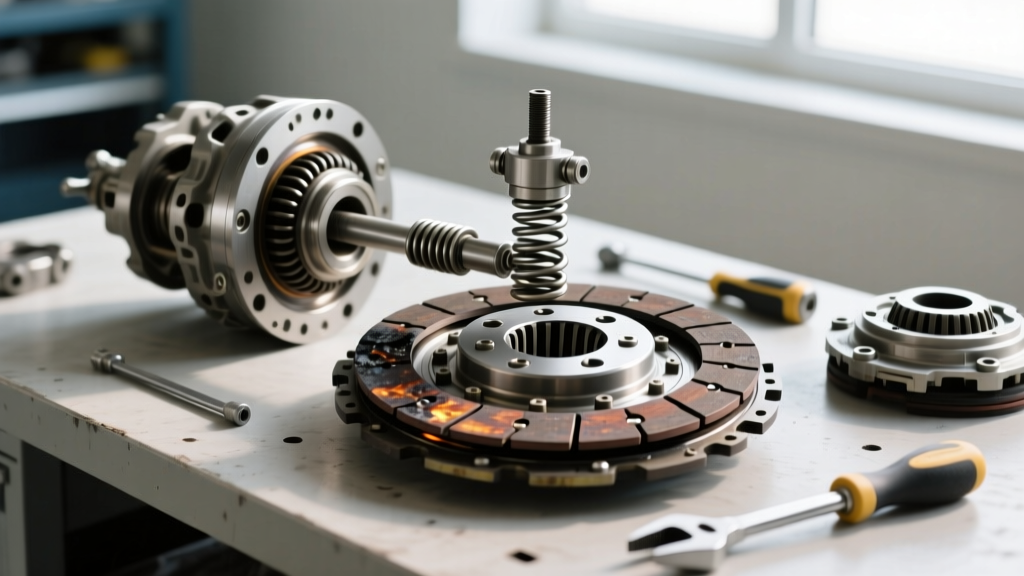
The throw-out bearing is the critical interface between the stationary hydraulic or mechanical actuation system and the spinning clutch pressure plate. In a high-torque Carmel clutch application, the diaphragm spring fingers exert significantly more rotational friction against the TOB face. If the bearing is not perfectly aligned, properly shimmed, or adequately lubricated, the resulting noise is not just an annoyance—it is the auditory warning of impending catastrophic drivetrain failure.
Auditory Triage: Isolating the Throw-Out Bearing Noise
Before dropping the transmission, a precise auditory diagnosis is mandatory. Misdiagnosing a failing pilot bearing or a worn input shaft bearing as a TOB issue will result in wasted labor and an unresolved problem. The Carmel clutch's stiff pedal feel can sometimes mask the subtle vibrations that typically accompany bearing failure, making sound your primary diagnostic tool.
The 'Clutch Depressed' vs. 'Clutch Released' Test
To isolate the throw-out bearing, perform this test with the vehicle in neutral, the parking brake engaged, and the engine idling:
- Clutch Released (Pedal Up): If you hear a low-frequency rumble or growl that disappears when you press the pedal, the issue is likely the pilot bearing or the transmission's input shaft bearing. The TOB is stationary in this state.
- Clutch Depressed (Pedal Down): If a high-pitched squeal, grinding, or metallic chirping occurs the moment you apply pressure to the pedal, you have isolated the throw-out bearing. The noise is generated by the TOB face contacting the spinning Carmel clutch diaphragm fingers under load.
- Clutch Fully Depressed (Holding Pedal): If the noise changes pitch or turns into a harsh grind while holding the pedal to the floor, the TOB has likely suffered structural failure, and the carrier may be scoring the transmission input shaft sleeve.
Model-Specific Application: Tremec T56 Magnum & LS-Swap Platforms
The most common pairing for a heavy-duty Carmel clutch kit is the Tremec T56 Magnum 6-speed manual transmission. When utilizing a hydraulic throw-out bearing (HTOB) in these bellhousings, the margin for error is virtually zero. According to Tremec's official technical documentation, bellhousing concentricity and TOB pre-load are the two primary variables that dictate bearing lifespan.
Critical Clearances and Shimming the Hydraulic TOB
Unlike mechanical linkages that self-adjust via a fork and pivot ball, an HTOB requires precise physical shimming. If the TOB is too close to the Carmel clutch fingers, the bearing will be in constant contact, generating massive heat and rapid failure. If it is too far, the piston will over-travel, potentially blowing the internal seals or failing to fully disengage the clutch.
The Measurement Protocol:
- Mount the Carmel clutch pressure plate to the flywheel and torque to spec.
- Measure the distance from the transmission bellhousing mounting face to the clutch diaphragm fingers using a straight-edge and digital calipers.
- Measure the distance from the transmission case mounting face to the fully compressed HTOB face.
- Calculate the gap. The ideal air gap between the TOB face and the clutch fingers should be between 0.100' and 0.150'.
- Install the appropriate shim kit behind the HTOB retainer to achieve this exact clearance.
Throw-Out Bearing Noise & Failure Matrix
| Symptom / Noise Profile | Pedal State | Probable Root Cause | Required Action |
|---|---|---|---|
| High-pitched squealing or chirping | Initial depression | Glazed TOB face or dry contact surface on Carmel clutch fingers | Inspect fingers for grooving; replace TOB; verify alignment |
| Harsh metallic grinding | Fully depressed | TOB internal ball cage failure; bearing disintegrating | Immediate replacement; inspect input shaft sleeve for scoring |
| Low-frequency rumble / vibration | Released (Pedal up) | Pilot bearing failure or input shaft bearing wear | Replace pilot bearing; check transmission fluid condition |
| Rhythmic clicking or ticking | Depressed | Bent diaphragm spring finger on the Carmel clutch assembly | Replace entire clutch assembly; check flywheel runout |
Step-by-Step Repair Protocol and 2026 Torque Specifications
Once the transmission is removed, the repair process demands strict adherence to torque specifications and runout tolerances. The immense clamp load of a Carmel clutch will magnify any minor imperfection in the mating surfaces.
Bellhousing Runout Verification
Before installing a new TOB, you must verify the bellhousing bore concentricity. Mount a dial indicator to the engine block or crank flange and sweep the inside bore of the bellhousing. Total Indicated Runout (TIR) must not exceed 0.005 inches. If it does, the TOB will wobble as it enters the clutch, causing uneven wear on the Carmel clutch fingers and premature bearing death. Use offset dowel pins to correct any runout exceeding this limit.
Flywheel and Pressure Plate Torque Sequence
Improper flywheel torque can cause micro-warpage, leading to clutch chatter that is often misdiagnosed as a failing TOB. For standard GM LS-platform applications utilizing an aftermarket steel flywheel:
- Flywheel to Crankshaft (OEM Bolts): 15 lb-ft + 50 degrees of rotation.
- Flywheel to Crankshaft (ARP Bolts): 70 lb-ft (with ARP Ultra-Torque lubricant).
- Carmel Clutch Pressure Plate to Flywheel: 22 lb-ft to 25 lb-ft, applied in a crisscross star pattern to ensure even diaphragm seating.
- Bellhousing to Engine Block: 35 lb-ft.
Bench Bleeding the Hydraulic Throw-Out Bearing
Air trapped inside the HTOB will result in a spongy pedal and incomplete disengagement, forcing the driver to 'ride' the clutch, which generates the exact heat that destroys the bearing. Before installing the transmission, bench-bleed the TOB. Submerge the unit in a clean container of DOT 3 or DOT 4 brake fluid. Pump the internal piston slowly using a specialized bleeder tool or a modified pushrod until absolutely zero micro-bubbles emerge from the bleed screw. Upgrading to a premium unit like those offered by McLeod Racing or utilizing the OEM Tremec 1902-010-010 replacement ensures superior internal seal longevity under high-pressure conditions.
2026 Cost Breakdown and Sourcing OEM vs. Aftermarket TOBs
The financial investment required to rectify a throw-out bearing failure in a performance application is significant, primarily due to the labor intensity of removing a heavy-duty manual transmission. Below is a realistic cost breakdown for the 2026 market:
- OEM Replacement HTOB (e.g., GM 88961747): $110 - $160
- Performance Aftermarket HTOB (e.g., McLeod, Tick Master): $280 - $450
- Carmel Clutch Replacement Kit (If fingers are damaged): $750 - $1,100
- Machine Shop Labor (Flywheel resurfacing & runout check): $125 - $175
- Shop Labor (R&R Transmission, 2026 avg. rate $145/hr): $725 - $1,015
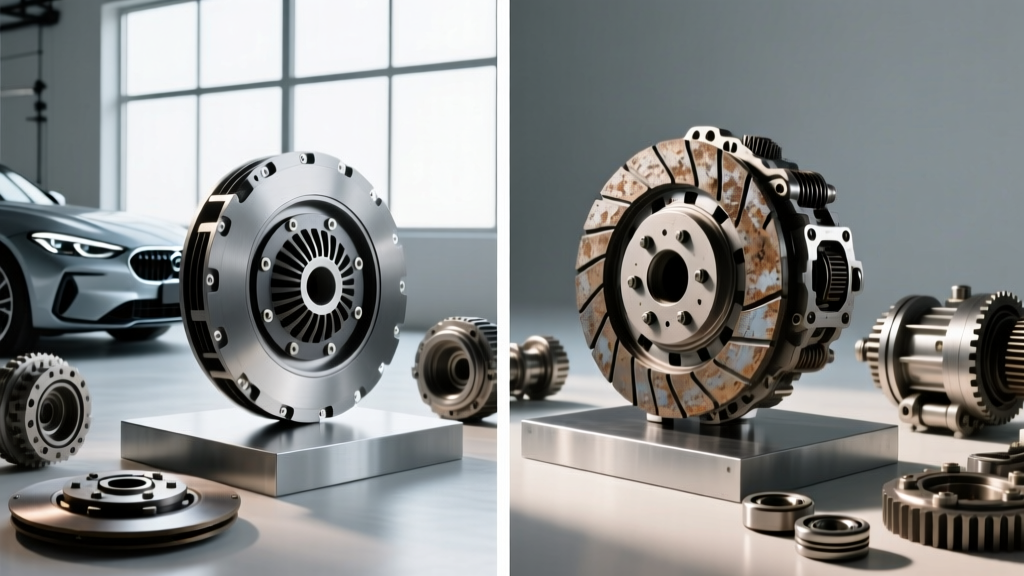
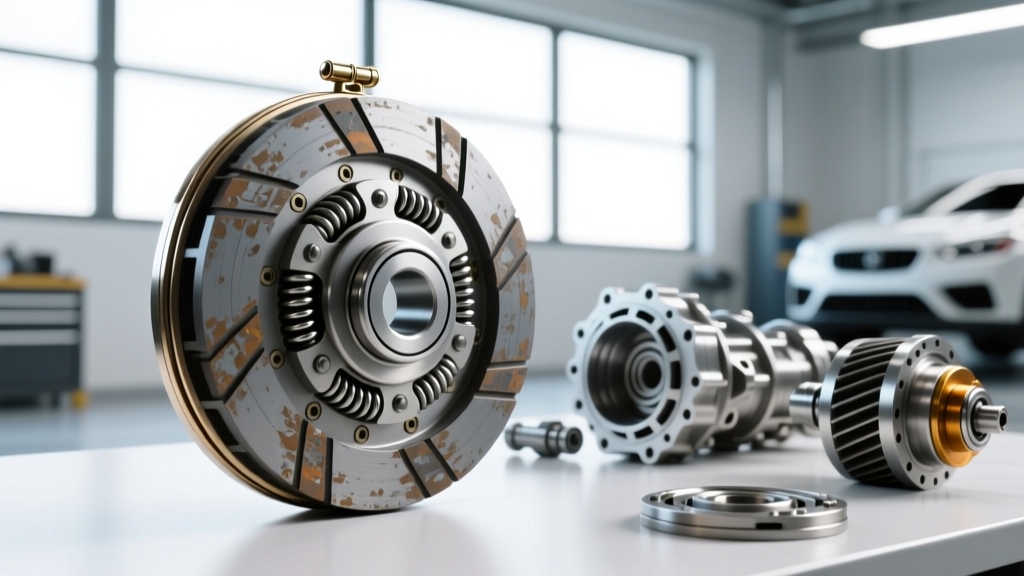
Expert Tip: Never replace a failed throw-out bearing without thoroughly inspecting the Carmel clutch diaphragm fingers. If the old bearing wore a deep groove into the fingers, installing a new bearing against damaged fingers will cause immediate noise recurrence and lead to a second failure within 1,000 miles. Always replace the pressure plate assembly if finger wear exceeds 0.030 inches in depth.