Symmetrical AWD: Identifying Your Forester's Rear Differential
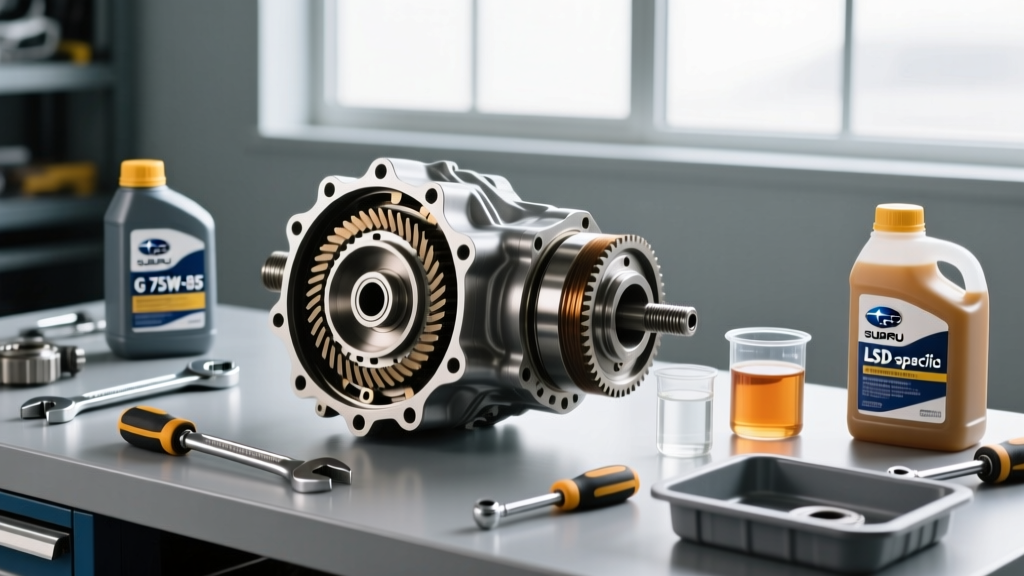
Subaru's Symmetrical All-Wheel Drive system is a masterpiece of mechanical balance, but its longevity hinges on rigorous maintenance. When preparing for a Subaru Forester differential fluid change, the first critical step is identifying whether your specific trim features an Open Differential or a Viscous Limited-Slip Differential (LSD). Unlike the front differential, which is integrated into the transmission casing and shares CVT or manual fluid, the rear differential is a standalone hypoid gear assembly requiring dedicated 75W-90 GL-5 gear oil.
For the SJ (2014-2018) and SK (2019-present) generations, the rear differential operates under immense stress, transferring torque to the rear wheels via a driveshaft connected to the Active Torque Split system. Neglecting this fluid leads to hypoid gear pitting, bearing failure, and catastrophic AWD binding. However, the exact fluid requirements and maintenance nuances differ drastically depending on whether your Forester is equipped with an open or limited-slip rear end.
Open Differential (Base & Premium Trims)
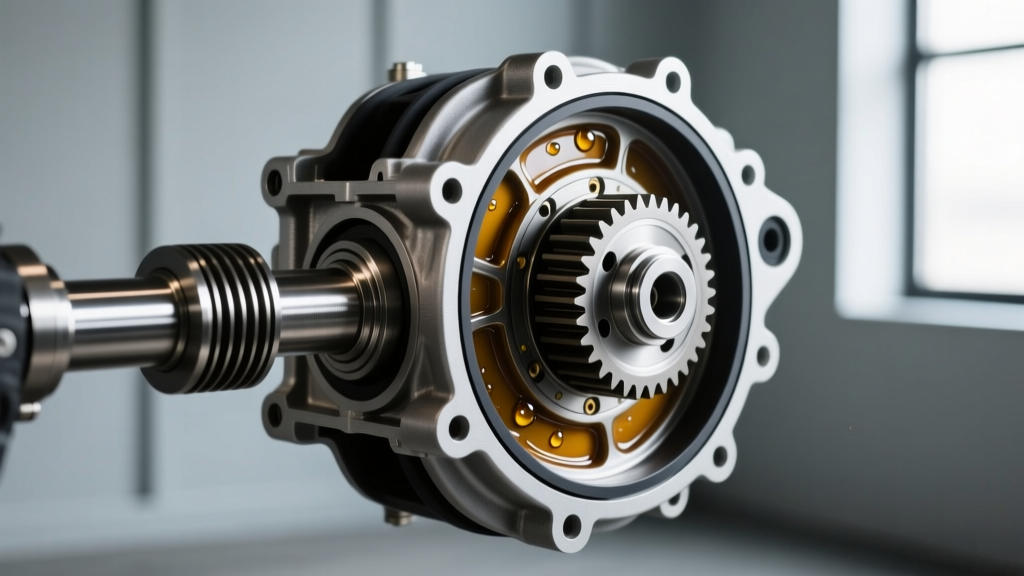
Most base and Premium trim Foresters utilize a standard open rear differential. This setup relies on the vehicle's X-MODE and electronic brake-locking (ABD) to manage wheel slip. The open differential is mechanically simple, featuring a standard ring and pinion gearset, spider gears, and side gears. Because there are no friction clutches or viscous drums inside the housing, the fluid's primary job is purely lubrication and heat dissipation for the hypoid gears and carrier bearings.
Viscous Limited-Slip Differential (Sport, Wilderness & XT Trims)
Higher trims, particularly the XT, Sport, and Wilderness editions, often feature a rear viscous LSD. According to Subaru Symmetrical AWD Technology documentation, this system uses a sealed viscous coupling filled with a specialized silicone fluid. When one wheel spins faster than the other, the shear force heats the silicone, causing it to rapidly thicken and lock the axles together. This provides mechanical traction without relying solely on brake intervention.
The Friction Modifier Myth: Where Mechanics Get It Wrong
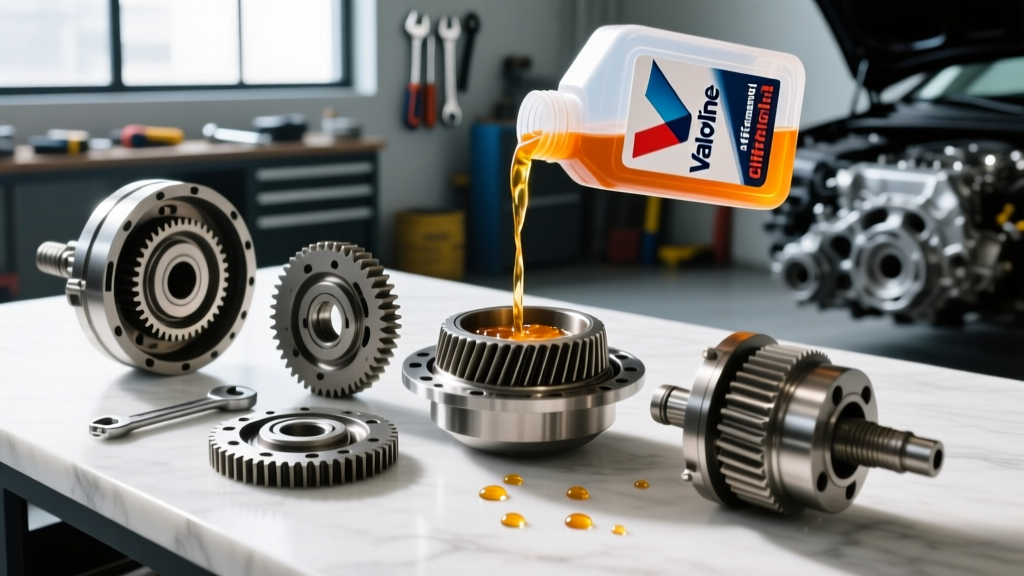
The most common and destructive mistake made during a Subaru Forester differential fluid change is the blind addition of LSD Friction Modifier (FM). Many general lube technicians and DIYers see 'Limited Slip' on the service manual and immediately reach for a bottle of clutch-type FM (like Ford XL-3 or GM EOS).
This is a critical error for Subaru viscous differentials.
Friction modifiers are designed for clutch-type LSDs (such as the Ford 8.8 Traction-Lok or Dodge ZF units) to prevent the physical clutch plates from chattering during tight turns. Subaru's viscous coupling contains no clutch plates. It operates purely on fluid shear dynamics. Introducing clutch-type friction modifiers into a viscous LSD does absolutely nothing to improve traction; worse, it can alter the shear stability and thermal properties of the GL-5 gear oil, potentially leading to premature viscous drum degradation, seal swelling, and erratic torque transfer.
| Feature | Open Differential | Viscous LSD |
|---|---|---|
| Trim Availability | Base, Premium | Sport, XT, Wilderness |
| Traction Mechanism | Spider Gears (Brake ABD) | Silicone Viscous Coupling |
| Required Fluid Type | API GL-5 75W-90 | API GL-5 75W-90 |
| Friction Modifier Needed? | No | NO (Causes Damage) |
| OEM Part Number (Ref) | SOA63504000 (G1) | SOA63504000 (G1) |
| Fluid Capacity | 0.8L (27.1 US oz) | 0.8L (27.1 US oz) |
Step-by-Step Service Nuances & Torque Specifications
Executing a proper rear differential service requires specific tools and adherence to factory torque specifications. The rear differential housing on the Forester features two plugs: a fill plug and a drain plug. Always remove the fill plug first. If the drain plug is removed first and the fill plug is seized or stripped, the vehicle is immobilized.
Tools and Specifications
- Plug Type: Most SJ and SK generation Foresters use a 1/2-inch square drive for both plugs. Some earlier models may use a 13mm hex (Allen) bit.
- Drain Plug Torque: 33 lb-ft (45 Nm).
- Fill Plug Torque: 33 lb-ft (45 Nm).
- Crush Washers: While Subaru doesn't always mandate them for the diff plugs, using new aluminum crush washers (Part # 803918060) is highly recommended to prevent weeping.
- Fluid Pump: A manual hand-pump is mandatory. The fill hole is located mid-housing, and gravity feeding is impossible.
The Service Procedure
- Level the vehicle on jack stands or a lift. The Forester must be perfectly level to ensure an accurate 0.8L fill.
- Clean the area around the fill and drain plugs with brake cleaner to prevent debris ingress.
- Remove the fill plug, followed by the drain plug. Allow the hypoid gear oil to drain completely (expect a pungent, sulfur-heavy odor characteristic of GL-5 fluids).
- Inspect the drain plug magnet. Fine metallic paste is normal for high-mileage diffs; however, chunky metal shards indicate ring gear or bearing failure.
- Reinstall the drain plug and torque to 33 lb-ft.
- Pump exactly 0.8 Liters (or until fluid begins to weep out of the fill hole) of fresh 75W-90 GL-5 gear oil.
- Reinstall the fill plug, torque to 33 lb-ft, and wipe the housing clean.
2026 Buyer's Guide: Selecting the Right Gear Oil
When shopping for fluids, you must select a high-quality API GL-5 rated 75W-90 synthetic gear oil. As of 2026, the market offers several premium options that outperform standard OEM fluids in thermal stability and shear resistance. According to testing data from Red Line Synthetic Oil, synthetic esters provide superior film strength on hypoid gear teeth under high-load cornering.
Top Recommended Fluids
- Red Line 75W90 NS (Non-Slip): Priced around $22 per quart. The 'NS' designation means it contains no friction modifiers, making it the absolute perfect choice for Subaru viscous LSDs and open diffs alike. (Part # 50104).
- AMSOIL Severe Gear 75W-90: Priced around $18 per quart. Offers exceptional extreme-pressure (EP) additives and resists thermal breakdown. Ensure you buy the standard version, not the slip-lock additive version. See AMSOIL Severe Gear Specs.
- Motul Gear 300 75W-90: Priced around $24 per quart. A 100% synthetic Technosynthese oil favored by rally and off-road Subaru builds for its high-temperature resilience.
- OEM Subaru Hypoid Gear Oil G1: Priced around $15 per quart at the dealership. A reliable, baseline mineral/synthetic blend that meets all factory warranty requirements.
Cost Note: A DIY fluid change will cost between $30 and $45 for fluid and supplies. Dealership service departments typically charge $80 to $130 for this service, but they often use bulk conventional mineral oil, which degrades faster under heavy towing or off-road conditions.
Post-Change Diagnostics: Noise and Binding
After completing your Subaru Forester differential fluid change, monitor the vehicle's behavior during the first 100 miles. Understanding the difference between normal gear whine and failure indicators is crucial for drivetrain longevity.
Diagnosing Abnormalities
- Whine on Deceleration: If you hear a distinct howling or whining noise when lifting off the throttle, this indicates pinion bearing wear or incorrect ring-and-pinion backlash. Fresh, thicker synthetic fluid may temporarily mask the noise, but the bearing is on its way out.
- Chatter on Tight Turns: If your Forester hops or chatters during low-speed parking maneuvers, the viscous coupling may be failing internally, or the previous owner mistakenly installed a clutch-type LSD (common in STI R180 rear-diff swaps) without the necessary friction modifier.
- Binding/Hopping (AWD Lock): If the vehicle feels like the brakes are dragging or the drivetrain is binding in tight circles, the viscous drum may have seized due to overheated, degraded silicone fluid. This requires a complete rear differential replacement, as the viscous unit is not serviceable.
- Sweating Seals: If you notice fluid weeping from the axle seals post-change, the differential may have been overfilled, causing internal pressure buildup to blow past the rubber lip seals. Always fill exactly to the bottom of the fill-hole threads.
Final Thoughts on Drivetrain Longevity
A Subaru Forester differential fluid change is a straightforward but highly technical service. By correctly identifying your differential type, avoiding the destructive trap of unnecessary friction modifiers, and utilizing high-ester synthetic GL-5 fluids, you ensure that the rear hypoid gears and viscous couplings survive well past the 150,000-mile mark. Stick to the 30,000-mile severe-duty interval, respect the 33 lb-ft torque spec, and your Symmetrical AWD system will deliver uncompromised traction for years to come.