Understanding the Basics: How Does a Rear Differential Work?
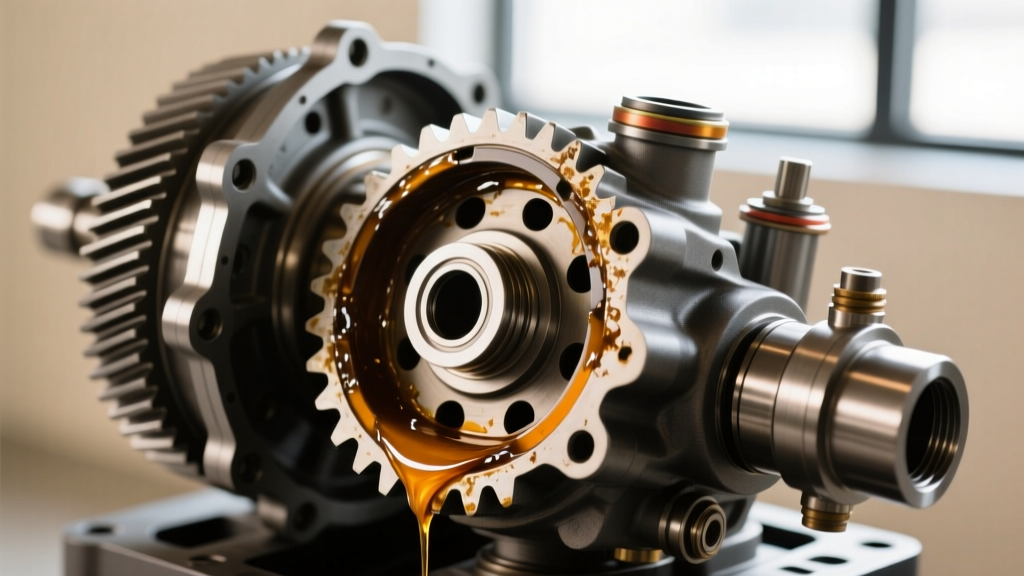
Before grabbing a drain pan and a socket set, it is crucial to understand the mechanical forces at play. If you have ever wondered how does a rear differential work, the answer lies in torque multiplication and rotational variance. The driveshaft delivers rotational force to the pinion gear, which meshes with the ring gear to turn the power 90 degrees toward the wheels. Inside the carrier, spider gears (or planetary gears) allow the left and right axle shafts to spin at different speeds when cornering, preventing tire scrubbing and drivetrain binding.
Because this assembly operates under immense friction and heat, it relies on a sealed bath of high-viscosity gear oil. When those seals fail, the resulting fluid loss leads to catastrophic gear scoring and bearing disintegration. In this 2026 model-specific repair guide, we are focusing on the ubiquitous Ford Super 8.8-inch rear differential (found in 2015–2026 F-150s and select SUVs), detailing exact leak detection methods, OEM part numbers, and critical torque specifications.
The Ford Super 8.8: A Modern Workhorse Prone to Specific Leaks
Introduced to replace the legacy 8.8-inch axle, the Super 8.8 features a larger ring gear, 31-spline axle shafts, and a crucial design shift: bolt-in axle shafts rather than internal C-clips. While vastly superior for load-bearing and off-road durability, the Super 8.8 is still susceptible to the same three primary fluid leaks that plague all hypoid gear axles: the pinion seal, the axle shaft seals, and the differential cover gasket.
Diagnostic Matrix: Identifying Your Leak Source
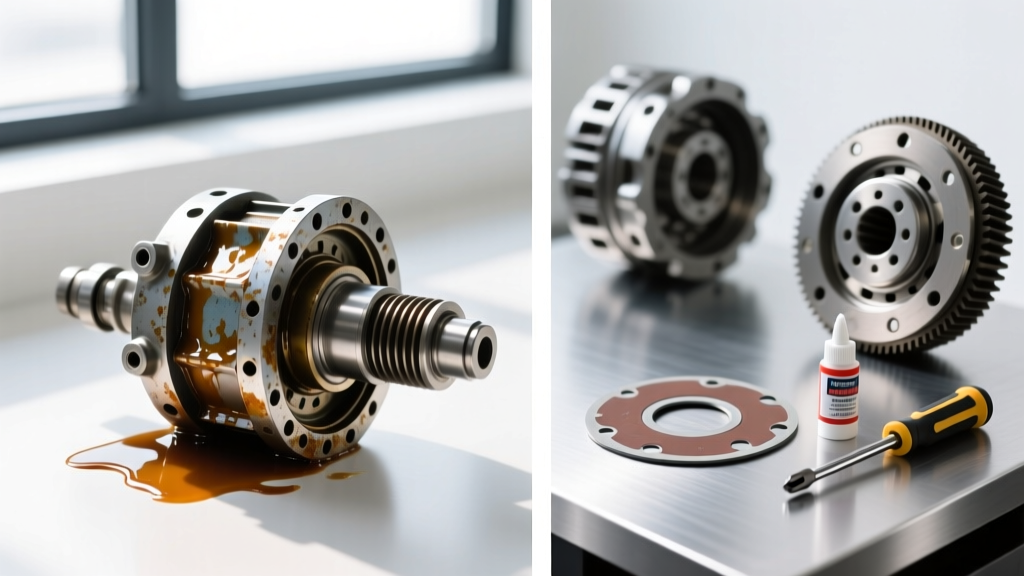
Misdiagnosing a differential leak is a common pitfall. Gravity and aerodynamic undercarriage winds can disguise the true origin of the seepage. Use the matrix below to pinpoint your failure point before ordering parts.
| Leak Location | Visual Symptom | Primary Cause | Estimated DIY Part Cost |
|---|---|---|---|
| Pinion Seal | Fluid slung radially onto the exhaust and underbody crossmembers; wet yoke. | Worn nitrile lip; scored pinion yoke surface; clogged axle breather causing over-pressurization. | $15 – $25 |
| Axle Shaft Seal | Fluid dripping from the back of the brake rotor/drum; wet wheel well backing plate. | Bearing wear causing shaft deflection; dried out seal lip from age or extreme cold. | $20 – $35 (per side) |
| Diff Cover | Seeping along the bottom lip of the differential housing; wet fins. | Degraded RTV silicone; warped stamped-steel cover; overtightened M8 bolts. | $10 – $18 (Gasket/RTV) |
| Breather Valve | Fluid weeping from the top-mounted vent tube cap. | Overfilled fluid level; clogged breather cap; severe towing overheating. | $8 (Replacement Cap) |
Repair Guide 1: Pinion Seal Replacement (The Crush Sleeve Dilemma)
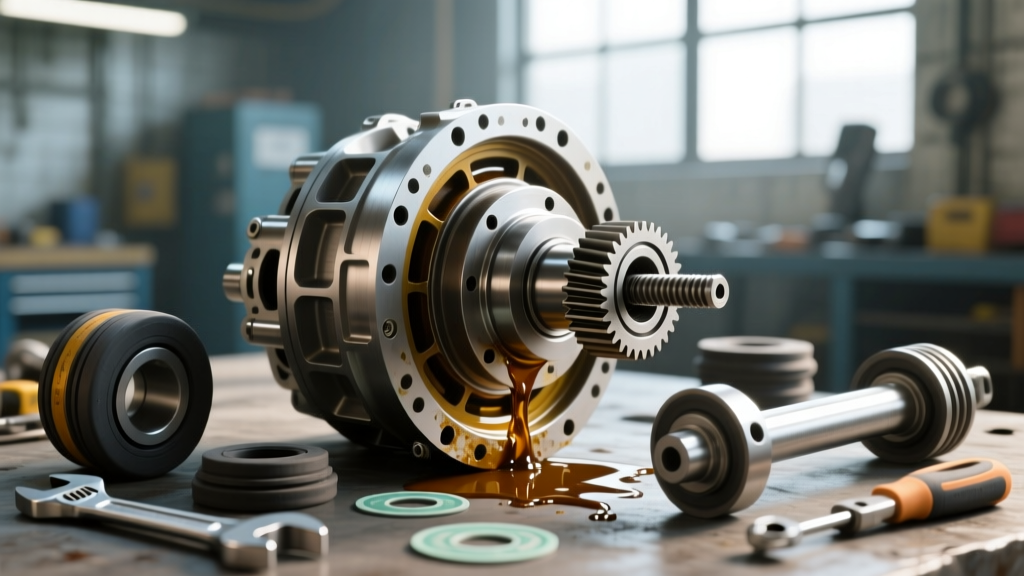
Replacing the pinion seal on the Super 8.8 is not as simple as unbolting the yoke and swapping the rubber lip. The pinion nut secures the yoke against a crush sleeve that sets the preload on the pinion bearings. If you use an impact gun to remove the nut, or overtighten a new nut without replacing the crush sleeve, you will destroy the pinion bearings within 500 miles.
Step-by-Step Pinion Seal Procedure
- Measure Rotational Torque: With the rear wheels off the ground and brake calipers removed, use an inch-pound torque wrench on the pinion nut to measure the rotational drag of the used bearings. For the Super 8.8, expect 8 to 14 in-lbs. Write this number down.
- Mark the Alignment: Use a paint pen to mark the exact thread position of the pinion nut relative to the pinion shaft threads. Count the exact number of exposed threads.
- Remove the Yoke: Use a specialized yoke holder tool (or a heavy-duty strap wrench) to hold the yoke while breaking the nut loose with a 1/2-inch drive torque wrench. Slide the yoke off using a 3-jaw puller. Never hammer the yoke off, as this can shatter the internal bearings.
- Extract and Install Seal: Pry out the old seal (National Part No. 710937 or Motorcraft BR-24). Tap the new seal in using a specialized seal driver until it sits perfectly flush with the housing bore. Pack the seal lip with fresh gear oil.
- Reinstall and Torque: Reinstall the yoke. Thread the new pinion nut on by hand. Tighten it using a torque wrench, checking the rotational drag every quarter-turn. Stop tightening the exact moment your inch-pound wrench reads the baseline measurement you recorded in Step 1 (e.g., 11 in-lbs). Never exceed 250 ft-lbs without installing a brand new crush sleeve.
Repair Guide 2: Axle Shaft Seal Replacement (Bolt-In Design)
Unlike older Ford 8.8 axles that required opening the differential carrier to remove C-clips, the Super 8.8 utilizes a bolt-in flange design. This makes axle seal replacement (SKF Part No. 22315 or Motorcraft BR-23) significantly more straightforward, though it requires care to avoid damaging the ABS tone ring.
Axle Seal Replacement Steps
- Remove the rear wheel and brake caliper/rotor assembly. Hang the caliper with a bungee cord—never let it hang by the brake line.
- Remove the four 15mm axle shaft retaining plate bolts. Torque spec for reassembly is 70 ft-lbs.
- Carefully slide the axle shaft out of the housing. Be incredibly mindful of the ABS sensor ring and the machined splines; dragging splines across the seal housing will score the bore.
- Use a slide-hammer seal puller to extract the failed seal from the axle tube.
- Clean the bore with brake cleaner. Coat the new seal's outer edge with a thin layer of silicone and tap it into place using an appropriately sized PVC pipe or aluminum seal driver.
- Apply a light coat of gear oil to the inner rubber lip, carefully slide the axle shaft back in, and torque the backing plate bolts to 70 ft-lbs.
For deep-dive visual references on the internal bearing arrangement of this specific axle, the F-150 Forum Super 8.8 Teardown thread remains one of the most comprehensive community-driven mechanical archives available.
Differential Fluid Refill and Traction-Lok Additives
Once your seals are verified leak-free, refilling the differential with the correct 2026-specification fluid is paramount. The Ford Super 8.8 requires 75W-85 Full Synthetic Gear Oil for standard towing and daily driving, or 75W-140 if the vehicle is equipped with the Max Trailer Tow Package or frequently sees heavy off-road use.
Capacity and Friction Modifier Protocol
- Total Capacity: 1.6 Liters (3.4 Pints) for the Super 8.8. Fill until the fluid level is exactly even with the bottom of the fill plug hole.
- Traction-Lok (LSD) Additive: If your F-150 or Explorer is equipped with a Traction-Lok limited-slip differential, you must add 4 oz of Motorcraft XL-3 Friction Modifier (or an equivalent API GL-5 LSD additive) before topping off with the base gear oil. Failure to do so will result in severe clutch-pack chatter during low-speed cornering.
- Cover Bolt Torque: If you removed the rear cover for an inspection or flush, clean the mating surfaces with a razor blade, apply a 3mm bead of Permatex Ultra Black RTV, and torque the M8 cover bolts to 24 ft-lbs in a crisscross pattern. Allow 12 hours of cure time before filling.
When to Seek Professional Drivetrain Service
While DIY seal replacement and fluid services can save you between $350 and $600 in dealership labor rates, certain scenarios require a professional drivetrain shop equipped with hydraulic presses and dial indicators. If your pinion yoke exhibits deep radial grooves (requiring a Speedi-Sleeve or new yoke), or if you hear a distinct "howl" on deceleration indicating pinion bearing failure, the differential must be torn down. A complete Super 8.8 rebuild kit (bearings, crush sleeve, shims, and seals) costs roughly $120–$180 via suppliers like Summit Racing or RockAuto, but setting the gear backlash (0.006" - 0.010") and pinion depth requires specialized expertise that goes beyond standard driveway maintenance.
By understanding the mechanics of your drivetrain and adhering strictly to OEM torque specifications, you can keep your Super 8.8 axle sealed, quiet, and reliable for hundreds of thousands of miles.