Differential Leak Triage: Beyond the Puddle
Many owners begin researching the cost to replace differential fluid only after noticing a distinct sulfur odor or a puddle of heavy gear oil on their garage floor. A differential leak is never just a fluid maintenance issue; it is a critical drivetrain failure in its early stages. When gear oil drops below the ring gear's splash-lubrication threshold, the resulting friction will rapidly destroy the pinion bearings, score the ring and pinion teeth, and ultimately seize the axle assembly. In this model-specific repair guide, we will dissect the two most common light-truck and SUV axles on the road—the Ford 8.8-inch and the Jeep Dana 44—to provide exact leak detection protocols, OEM part numbers, and precise repair procedures.
The Diagnostic Washdown Protocol
Before you can accurately estimate repair costs, you must identify the exact failure point. Axle housings accumulate years of road grime, making visual inspection unreliable. Follow this triage protocol:
- Step 1: Elevate the vehicle on jack stands and remove the wheels to prevent brake cleaner from contaminating the brake rotors and pads.
- Step 2: Use a dedicated brake parts cleaner and a stiff bristle brush to completely degrease the differential cover, the pinion yoke, and the axle tube ends.
- Step 3: Take the vehicle for a 15-mile drive at highway speeds to pressurize the housing and heat the gear oil, reducing its viscosity.
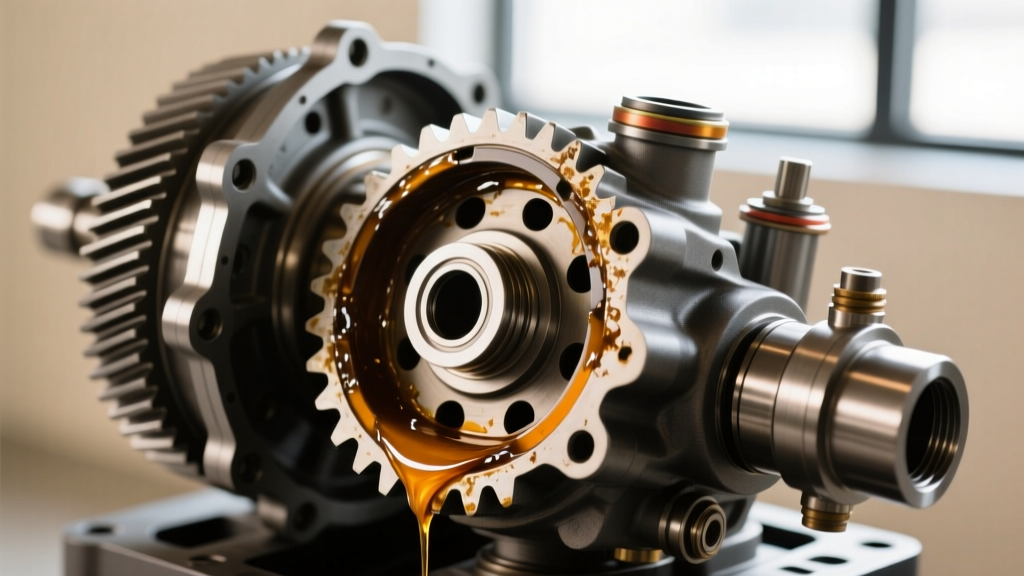
- Step 4: Inspect with a UV flashlight. Fresh leaks will present as wet, shiny trails originating from the pinion seal lip, the axle shaft flanges, or the differential cover mating surface.
Ford 8.8-Inch Axle: Common Leak Points and Solutions
The Ford 8.8-inch rear axle, found in millions of F-150s, Mustangs, and Explorers, is renowned for its strength but is prone to specific seal failures as it ages. The 10-bolt cover design relies on a silicone RTV bead or a cork/rubber composite gasket, while the pinion and axle seals rely on nitrile rubber lips that harden over time.
Pinion Seal and Yoke Grooving
The most frequent leak on a high-mileage 8.8 is the pinion seal. However, simply replacing the seal (National part number 8610 or Timken 8610) often fails to solve the issue. The companion flange yoke develops a deep wear groove from years of friction against the rubber seal lip. If you install a new seal over a grooved yoke, it will leak again within 500 miles. According to RockAuto parts catalogs, the correct fix is either replacing the entire pinion yoke or installing a stainless steel Speedi-Sleeve (SKF part number 99155) over the yoke shaft to provide a fresh, smooth mating surface for the new Viton seal lip.
Axle Shaft Seal Failures
If the leak is originating from behind the brake backing plate, the inner axle shaft seal has failed. The Ford 8.8 uses C-clips to retain the axle shafts inside the differential carrier. Replacing the axle seal (National 8812S) requires removing the differential cover, extracting the cross-pin, and sliding the C-clips out. This is labor-intensive, which heavily influences the overall repair bill.
Dana 44 Axle: Jeep Wrangler Leak Profiles
The Dana 44 is the backbone of the Jeep Wrangler (JK and JL generations) and numerous heavy-duty light trucks. Unlike the Ford 8.8, the Dana 44 does not use C-clips; the axle shafts are retained by a flange bolted directly to the axle tube end. While this makes axle seal replacement slightly more straightforward, the Dana 44 presents its own unique leak challenges.
The RTV vs. Gasket Debate on the Dana 44
Jeep Dana 44 housings feature a machined mating surface that was originally sealed at the factory using high-temp RTV silicone, not a pre-cut gasket. When off-road enthusiasts and inexperienced mechanics attempt to use cheap rubber gaskets during a fluid service, the thick gasket alters the gear oil capacity and often crushes unevenly, leading to immediate weeping. The correct procedure, endorsed by Spicer Parts engineering guidelines, is to scrape the housing perfectly clean and apply a continuous 3mm bead of Permatex 'The Right Stuff' or Mopar OEM RTV (part number 5083849AA). Torque the 10 cover bolts in a star pattern to exactly 25 lb-ft.
Dana 44 Pinion Seal Specifications
The Dana 44 pinion seal (Spicer part number 10731 for JK models) sits behind a massive pinion nut. Because the Dana 44 uses a crush sleeve to set pinion bearing preload, improper removal of the pinion nut during a seal swap can collapse the sleeve further, over-preloading the bearings and causing catastrophic differential whine and failure.
Expert Drivetrain Tip: Never use an impact wrench to remove a pinion nut on an axle with a crush sleeve. Always use a heavy-duty flange holding tool and a long-breaker bar. Better yet, upgrade to a solid pinion spacer kit (available from manufacturers like Ruff Stuff Specialties) during your next gear setup to eliminate crush sleeve variables entirely.
True Cost to Replace Differential Fluid and Seals
Understanding the financial impact of drivetrain maintenance requires separating basic fluid services from mechanical seal repairs. The cost to replace differential fluid varies wildly depending on whether you are performing a simple drain-and-fill or addressing a mechanical breach. Below is a 2026 market analysis of expected costs for the Ford 8.8 and Dana 44 axles, factoring in OEM-grade synthetic 75W-140 gear oils and current independent shop labor rates ($130–$180 per hour).
| Service Scenario | Parts Cost (OEM/Premium) | Shop Labor (Estimated) | Total Cost Range |
|---|---|---|---|
| Basic Fluid Drain & Fill (No Leaks) | $45 - $75 | $90 - $140 | $135 - $215 |
| Cover Reseal & Fluid Service | $60 - $90 (RTV + Fluid) | $120 - $180 | $180 - $270 |
| Pinion Seal Replacement & Fluid | $80 - $150 (Seal + Yoke Sleeve) | $250 - $350 | $330 - $500 |
| Axle Seal Replacement (Per Side) | $110 - $180 (Seal + Bearing) | $300 - $450 | $410 - $630 |
Note: If your vehicle is equipped with a clutch-type Limited Slip Differential (LSD) such as the Ford Trac-Lok or Dana Tru-Lok, you must add a friction modifier (e.g., Motorcraft XL-3 or Mopar 4318060AD) to the new gear oil. Failing to do so will result in severe chatter and binding during low-speed turns, eventually destroying the clutch packs.
The Pinion Seal Replacement Protocol: Setting Preload
Replacing a pinion seal is not a simple 'unbolt and swap' procedure. The pinion nut secures the pinion gear against the inner and outer pinion bearings. The tightness of this nut dictates the pinion bearing preload. If the nut is too loose, the pinion gear will wobble, destroying the ring gear teeth. If it is too tight, the bearings will overheat and seize.
- Measure Initial Preload: Before removing anything, use an inch-pound dial indicator torque wrench on the pinion nut. Record the exact rotating torque required to spin the pinion (typically 15 to 25 in-lbs for used bearings).
- Mark the Alignment: Use a paint pen to mark the pinion nut, the pinion shaft thread, and the yoke. Count the exact number of threads exposed on the shaft.
- Remove the Yoke: Use a specialized yoke puller. Never hammer the yoke off, as this will shatter the differential carrier bearings.
- Swap the Seal: Pry out the old seal. Pack the cavity between the new seal lips with high-temp wheel bearing grease to prevent dry-start burning upon initial operation.
- Reinstall and Torque: Reinstall the yoke and thread the nut back to your exact thread-count mark. Measure the rotating preload with your inch-pound wrench. Tighten the nut in tiny increments (1/16th of a turn) until your recorded preload is matched perfectly. Never exceed your original thread mark if using a crush sleeve, or you will over-crush the sleeve and require a complete teardown.
Fluid Chemistry: Selecting the Right Gear Oil
Modern differentials demand specific chemical formulations. According to Motorcraft and Spicer engineering bulletins, standard GL-5 75W-90 is sufficient for standard open differentials in mild climates. However, for vehicles that tow heavy loads, operate in extreme heat, or feature modified gear ratios (like 4.10 or 4.56 cogs), a full-synthetic 75W-140 is mandatory. The higher viscosity index of 75W-140 maintains a protective hydrodynamic film across the hypoid gear teeth under extreme shearing forces, preventing metal-on-metal contact and the resulting micro-pitting. Always verify your specific axle's fill plug capacity—typically 3.75 pints for the Ford 8.8 and 4.0 pints for the Dana 44—and fill until the oil is level with the bottom of the fill hole threads.