The AWD Drivetrain: Center Differentials and Torque Distribution
When diagnosing all-wheel-drive (AWD) or full-time four-wheel-drive (4WD) systems, understanding the torque distribution architecture is critical. Modern AWD platforms rely on a center differential or a Power Transfer Unit (PTU) to split engine torque between the front and rear axles. Systems like Audi's Torsen-based Quattro, Subaru's Symmetrical AWD with a viscous coupling or active torque split, and Ford's PTU-equipped Explorer all serve the same fundamental purpose: allowing the front and rear driveshafts to rotate at slightly different speeds during cornering or when tire slip occurs.
However, the center differential does not operate in a vacuum. It is part of a closed-loop mechanical ecosystem. If the rear axle experiences a mechanical bind or fluid starvation, the resulting resistance travels back through the rear driveshaft, directly into the center differential, and ultimately to the transmission. This cascading mechanical stress frequently leads to catastrophic misdiagnoses by both amateur enthusiasts and general repair shops.
The Misdiagnosis Trap: Center Diff Binding vs. Rear Axle Starvation
One of the most common and expensive misdiagnoses in AWD troubleshooting is condemning the center differential or PTU when the root cause is actually a fluid-starved rear limited-slip differential (LSD). When an AWD vehicle shudders, hops, or binds during tight, low-speed turns (such as pulling into a parking space or navigating a drive-thru), the immediate suspect is often the center diff. The driver feels the drivetrain 'locking up' and assumes the AWD coupling has failed.
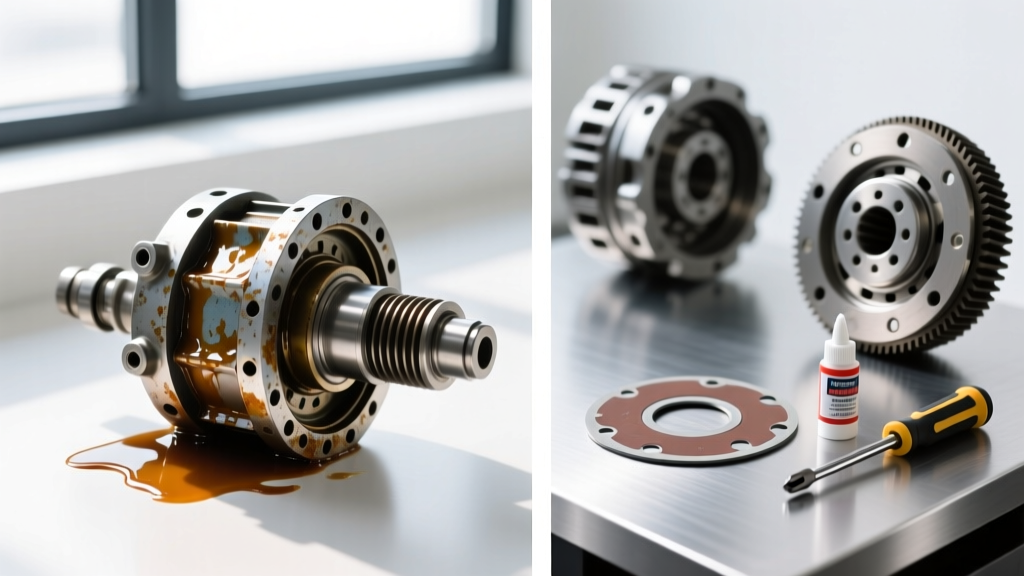
In reality, this symptom is frequently caused by a weeping rear differential cover or axle seal. As gear oil escapes, the fluid level drops below the ring gear's splash-lubrication threshold. The rear LSD clutch packs overheat, lose their friction modifiers, and begin to chatter and bind. Because the rear wheels are no longer differentiating speed properly, the drivetrain binds. The center differential attempts to compensate for this rear-axle lock-up, generating immense heat and shudder that mimics a center diff failure. In these scenarios, a complete rear differential gasket replacement and fluid service will cure the 'AWD shudder' instantly, saving the owner from a $1,500 to $3,000 center differential rebuild or PTU replacement.
Expert Diagnostic Tip: The Figure-8 Test
To isolate the bind, find an empty, dry parking lot. Turn the steering wheel to full lock and drive the vehicle in a continuous figure-8 pattern at 5 mph. If the rear end hops and the shudder feels like it originates from the rear bumper or rear seats, suspect the rear LSD. If the shudder is accompanied by a whining noise from the firewall or transmission tunnel, the center diff or PTU is likely the culprit.
Diagnostic Matrix: Isolating the Drivetrain Shudder
Use the following diagnostic matrix to differentiate between a failing center differential and a rear axle issue requiring a rear differential gasket replacement.
| Symptom / Observation | Center Differential / PTU Failure | Rear Differential Fluid Leak / Starvation |
|---|---|---|
| Shudder Location | Felt in the floorboards, transmission tunnel, or steering wheel. | Felt in the rear seats, rear floor pan, or trunk area. |
| Fluid Leaks | Dark, burnt-smelling oil near the transmission output or PTU housing. | Wet gear oil on the rear diff cover, pinion seal, or axle tube. |
| Noise Profile | High-pitched whining or metallic grinding from the front/mid chassis. | Clunking, chattering, or howling from the rear axle during deceleration. |
| Turning Behavior | Binding occurs in both tight left and right turns equally. | Binding may be worse on one side if a specific rear axle bearing is failing. |
| Corrective Action | PTU replacement or center diff rebuild. | Rear differential gasket replacement, fluid refill, and friction modifier. |
Step-by-Step: Rear Differential Gasket Replacement
If your diagnosis points to the rear axle, addressing the leak is paramount. Many modern AWD SUVs, such as the Ford Explorer (8.8 IRS) or the Toyota 4Runner/Land Cruiser (8-inch solid axle), utilize a bolt-on differential cover sealed with either RTV silicone or a pre-cut gasket. Here is the professional procedure for a rear differential gasket replacement to restore proper LSD operation.
1. Preparation and Drainage
Unlike some differentials that feature a dedicated drain plug, many AWD rear axles require you to break the cover seal to drain the fluid. Place a high-capacity drain pan beneath the rear differential. Using a socket, break loose the bottom-most cover bolt first to allow the fluid to drain, then work your way around the perimeter. Support the cover with your hand as the final bolts are removed to prevent it from dropping violently and damaging the internal ring and pinion gears.
2. Surface Preparation and Gasket Selection
The mating surfaces of the differential housing and the cover must be surgically clean. Use a brass scraper or a dedicated gasket remover tool to avoid gouging the soft aluminum or cast iron. Gouges create permanent weep points. For the new seal, you have two options:
- RTV Silicone: A high-quality, oil-resistant black or grey RTV (like Permatex Ultra Black) applied in a continuous 3mm bead. This requires a 24-hour cure time before filling with fluid.
- Reusable Elastomer Gaskets: Products from manufacturers like Lube Locker use a steel core with a molded O-ring seal. These allow for immediate fluid fill and are highly recommended for AWD vehicles that see heavy towing or off-road use, as they do not degrade under high thermal loads.
3. Torque Sequences and Refill
Reinstall the cover and thread the bolts by hand to prevent cross-threading. Tighten the bolts in a crisscross or star pattern to ensure even clamping force. For a standard Ford 8.8 IRS or Toyota 8-inch 10-bolt cover, the torque specification is typically 25 to 30 ft-lbs. Over-torquing will warp the thin stamped steel cover, leading to immediate leaks.
Fluid Specifications and Friction Modifiers
A successful rear differential gasket replacement is only half the battle; the chemistry of the refill fluid dictates whether the AWD shudder will return. AWD rear differentials equipped with clutch-type LSDs require specific friction modifiers to prevent the clutches from grabbing and releasing (chatter) during cornering.
- Ford Explorer AWD (8.8 IRS): Requires Motorcraft SAE 75W-140 Synthetic Rear Axle Lubricant (Part# XY-75W140-QL) or an equivalent API GL-5 synthetic. If equipped with a Traction-Lok LSD, you must add exactly 4 oz of Motorcraft XL-3 Friction Modifier (EST-M2C118-A).
- Toyota Land Cruiser / 4Runner (8-Inch): Typically requires 75W-90 API GL-5 gear oil. If equipped with an OEM mechanical LSD, Toyota Limited Slip Differential Oil Additive (Part# 08885-81080) is mandatory.
- Subaru Rear Differentials (R160/R180): Subaru uses a drain and fill plug system rather than a bolt-on cover, utilizing aluminum crush washers. They require Subaru Extra-HP 75W-90 GL-5 gear oil. Note that most modern Subarus use a Torsen (helical gear) rear LSD, which does not require friction modifiers.
When sourcing OEM crush washers, RTV, or replacement covers, utilizing established catalogs like RockAuto ensures you receive exact-fit components rather than universal approximations that can lead to improper sealing.
The Cascade Effect: Protecting the Center Differential
Ignoring a minor rear differential weep is a gamble with your entire AWD system. Synthetic gear oils, such as those engineered by AMSOIL, are designed to withstand extreme shear forces, but they cannot protect components that are no longer submerged in the oil bath. When the rear differential runs dry, the resulting mechanical bind places immense shock loads on the center differential's spider gears, viscous fluid, or electromagnetic clutch packs.
By performing a timely rear differential gasket replacement at the first sign of seepage, you maintain the precise delta-speed differentiation required by the AWD system. This not only eliminates low-speed parking lot shudder but also prevents the catastrophic failure of the center differential, ensuring your vehicle's torque distribution system operates exactly as the manufacturer intended for hundreds of thousands of miles.