Mapping the Ford Rear Differential Diagram for Accurate Diagnosis
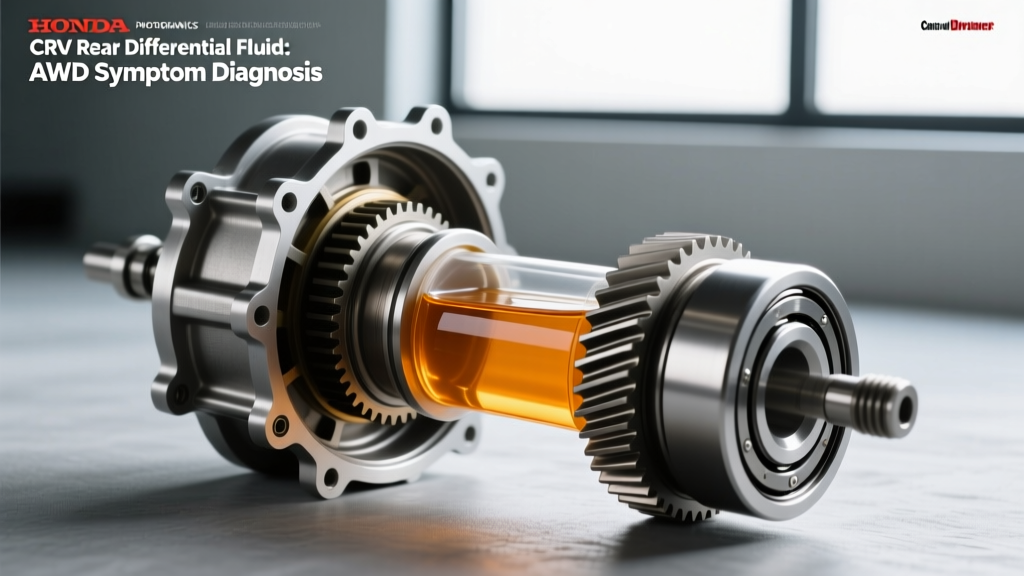
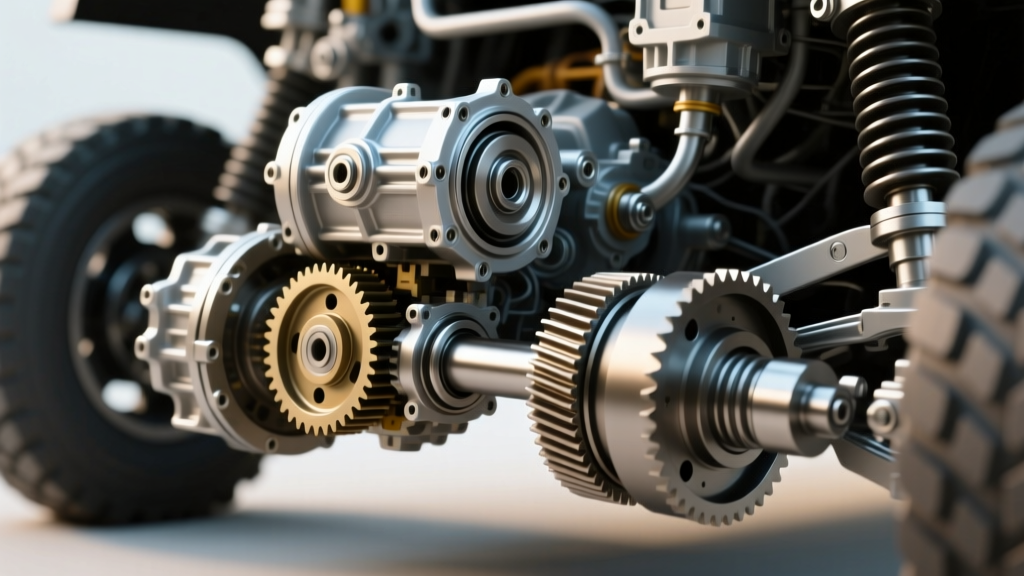
Understanding the internal layout of a Ford rear differential diagram is the critical first step in moving from a simple parts-swapper to a true drivetrain diagnostician. Whether you are servicing a classic Ford 8.8-inch solid axle, the robust Sterling 10.25-inch found in Super Duty trucks, or the Super 8.8 Independent Rear Suspension (IRS) units in modern 2024-2026 F-150s, the fundamental geometry of the ring and pinion remains constant. By visualizing the power flow from the driveshaft yoke, through the pinion bearings, into the ring gear, and out to the axle shafts via the spider and side gears, you can accurately map audible symptoms to specific internal failures.
Too often, DIY mechanics and generalist shops misdiagnose differential noise, leading to unnecessary teardowns or ignored failures that result in catastrophic housing destruction. A proper Ford maintenance protocol relies on interpreting these noises in the context of the differential's mechanical blueprint. Before draining a single drop of gear oil, you must correlate the pitch, load condition, and temperature of the noise to the specific components shown in your service manual's differential diagram.
Axle Noise Diagnosis: Matching Symptoms to Internal Components
When troubleshooting rear axle noise, isolate the variable: does the noise change with vehicle speed (drivetrain) or engine RPM (powertrain)? Once isolated to the rear differential, use the following diagnostic matrix based on the internal component layout.
1. Drive Whine vs. Coast Whine
- Drive Whine (Under Acceleration): This indicates an issue with the drive side (convex) of the ring and pinion teeth, or insufficient pinion bearing preload. If the whine peaks between 40-50 mph, the gear contact pattern has likely shifted toward the toe due to carrier bearing wear or improper backlash settings.
- Coast Whine (Under Deceleration): A whine that appears when you lift off the throttle points to the coast side (concave) of the gear teeth. This is frequently caused by excessive pinion depth or a worn pinion head bearing, allowing the pinion gear to deflect away from the ring gear under negative torque.
2. Low-Speed Clunks and Backlash Issues
A distinct metallic clunk when shifting from Reverse to Drive, or when abruptly lifting off the throttle, is a classic symptom of excessive backlash. Referring to your Ford rear differential diagram, backlash is the physical gap between the ring gear tooth and the pinion gear tooth. While a specification of 0.006" to 0.010" is standard, wear on the spider gear cross-pin, the side gear thrust washers, or the ring gear mounting bolts backing out will cause this gap to widen, resulting in a harsh mechanical impact.
3. Limited-Slip Chatter on Turns
If your Ford is equipped with a Trac-Lok (clutch-type) limited-slip differential, a shuddering or chattering sensation during tight, low-speed turns is the most common complaint. This is rarely a hard-part failure. Instead, it indicates that the friction modifier in the gear oil has sheared down and degraded, causing the clutch packs to grab and release violently rather than slipping smoothly. This is where targeted rear differential service and maintenance becomes the cure.
Essential Rear Differential Service and Maintenance Protocol
Routine rear differential service is frequently overlooked until a failure occurs. For modern Ford trucks subjected to heavy towing, the thermal breakdown of gear oil is a primary catalyst for premature ring and pinion wear. The 2026 consensus for heavy-duty applications mandates the use of full synthetic fluids with high shear stability.
Draining, Inspection, and the Magnet Check
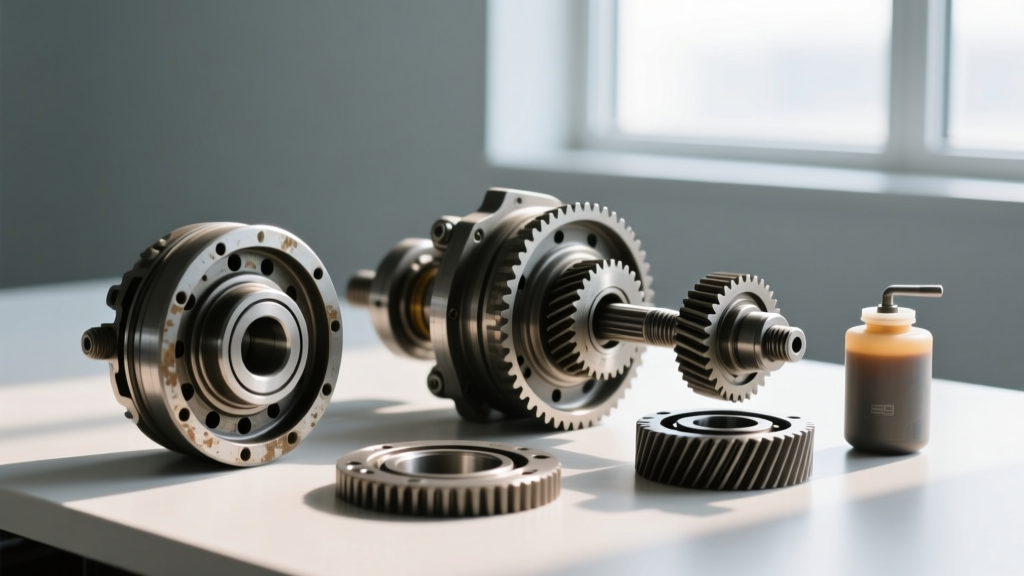
When removing the differential cover (using a 3/8" drive socket, typically 13mm for the Ford 8.8), the condition of the internal fluid and the housing magnet will tell you the exact health of your axle.
Expert Insight: A fine, metallic paste or 'fuzz' on the differential magnet is completely normal and represents standard wear from the bearings and gear mesh. However, if you find distinct metallic chips, needle bearing fragments, or pieces of the crush sleeve, the differential requires an immediate teardown. Do not simply flush the fluid and reassemble.
Clean the housing interior and the mating surface of the cover using brake parts cleaner and a lint-free rag. Avoid using abrasive Scotch-Brite pads on the inside of the housing, as dislodged abrasive particles can become trapped in the bearing races and accelerate wear.
Filling and Friction Modifier Application
Refilling requires precision. For Ford 8.8 and Super 8.8 axles, Motorcraft SAE 75W-140 Synthetic Rear Axle Lubricant (Part# XY-75W140-QL) is the gold standard for towing and heavy payloads. If your axle features a Trac-Lok limited-slip carrier, you must add exactly 4 oz of Motorcraft Friction Modifier Additive (Part# XL-3) before topping off with the base gear oil. Failure to do so will result in immediate clutch pack chatter and accelerated wear. Note: Torsen (torque-sensing) differentials do not require friction modifiers, as they operate on a helical gear binding principle rather than clutch packs.
Ford Axle Service Specifications and Torque Chart
Precision torque application is non-negotiable in drivetrain maintenance. Over-torquing differential cover bolts will warp the stamped steel covers, leading to chronic leaks and compromised bearing alignment. Use the following reference chart for standard Ford rear axles:
| Axle Model | Cover Bolt Torque | Fluid Capacity (Approx) | Recommended Fluid | Friction Modifier |
|---|---|---|---|---|
| Ford 8.8" (Solid) | 33 lb-ft (45 Nm) | 3.75 Pints | 75W-140 Synthetic | 4 oz XL-3 (if Trac-Lok) |
| Ford Super 8.8" (IRS) | 33 lb-ft (45 Nm) | 2.1 Quarts | 75W-140 Synthetic | 4 oz XL-3 (if LSD) |
| Sterling 10.25" (Super Duty) | 45 lb-ft (61 Nm) | 3.7 Quarts | 75W-140 Synthetic | Not Required (Open/Locker) |
| Dana 80 (Heavy Duty) | 45 lb-ft (61 Nm) | 4.0 Quarts | 75W-140 Synthetic | Check Carrier Type |
Advanced Troubleshooting: When Fluid Changes Fail
If a complete fluid service with the correct modifiers does not eliminate a whine or clunk, you must investigate bearing preload and gear contact patterns. According to Dana Spicer drivetrain technical manuals, checking the rotational drag of the pinion gear is the most accurate way to verify pinion bearing preload without a full teardown.
Using an inch-pound torque wrench on the pinion nut, measure the rotational force required to turn the pinion. For a used bearing set, you should see between 15 and 25 inch-pounds of drag. If the drag is below 10 inch-pounds, your crush sleeve has collapsed or the pinion nut has backed off, resulting in zero preload. This allows the pinion gear to oscillate under load, destroying the ring gear contact pattern. Correcting this requires replacing the crush sleeve and using a heavy-duty beam-style torque wrench to tighten the pinion nut (often requiring upwards of 250 lb-ft of torque) while continuously checking the inch-pound rotational drag until the exact specification is met.
Mastering the Ford rear differential diagram means understanding that every sound, leak, and vibration is a direct communication from the internal geometry. By combining methodical symptom diagnosis with strict adherence to fluid specifications and torque data, you can extend the life of your Ford's drivetrain well past the 200,000-mile mark.