The 10R80 Transmission and the Thermal Bottleneck
Since its reintroduction to the North American market, the Ford Ranger has relied heavily on the 10R80 10-speed automatic transmission. Whether you are driving the earlier T6 platform (2019–2023) or the updated T6.2 generation (2024–2026), the 10R80 is an engineering marvel for shift speed and gear ratio spread. However, when pushed to its 7,500-pound towing limit, a glaring vulnerability emerges: severe thermal degradation. At the heart of this thermal bottleneck is the factory torque converter. For owners who tow, haul, or live in high-ambient-temperature climates, understanding the mechanics of Ford Ranger torque converter overheating is critical to preventing catastrophic transmission failure.
Unlike older 4-speed or 5-speed automatics that relied heavily on fluid coupling, the 10R80 utilizes an aggressive Torque Converter Clutch (TCC) lockup strategy. The computer attempts to lock the TCC as early as possible to reduce slippage and improve fuel economy. But when climbing a 6% grade with a 6,000-pound trailer, the ECU often commands partial TCC slip to smooth out drivetrain shock. This controlled slip generates immense friction, rapidly spiking transmission fluid temperatures past the 230°F danger threshold.
TCC Slip and the Origin of the Heat
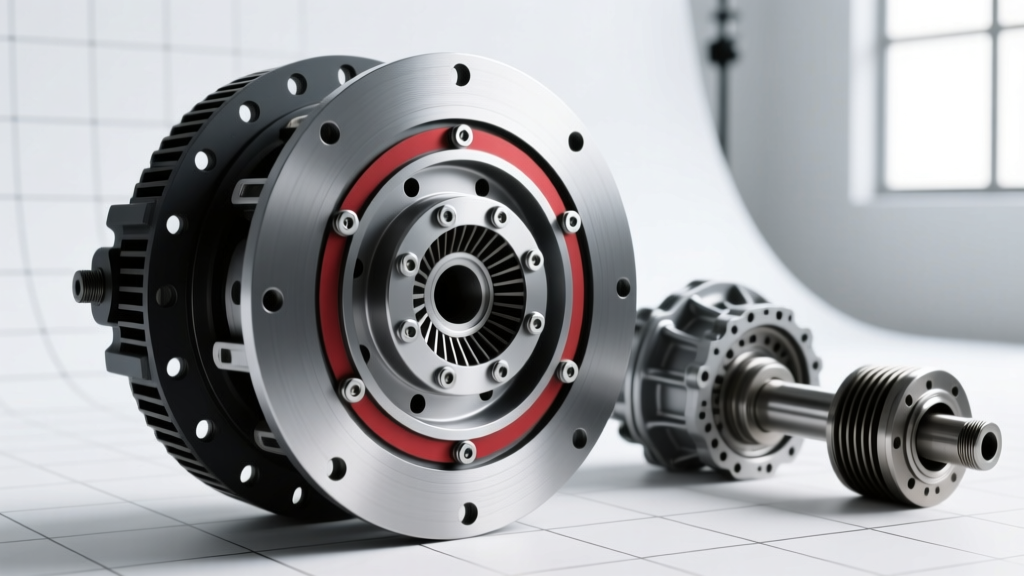
When the multi-clutch TCC inside the factory converter slips under heavy load, the kinetic energy is converted directly into thermal energy. The factory stamp-welded steel cover of the OEM torque converter is prone to flexing under high torque loads from the 2.3L EcoBoost engine. This flexing prevents the TCC friction material from engaging evenly, leading to localized hot spots, glazing of the carbon friction discs, and ultimately, a vicious cycle of increased slip and compounding heat. Once the fluid breaks down, the 10R80's intricate valve body and clutch packs are starved of proper lubrication and hydraulic pressure.
2026 Buyer’s Guide: Choosing the Right Ford Ranger Torque Converter
If your Ranger is exhibiting symptoms of overheating—such as delayed shifts, torque converter shudder, or the wrench light illuminating with reduced power warnings—you must address the root cause. Simply flushing the fluid is a temporary band-aid. Below is a comparison of the primary replacement and upgrade paths available in 2026 for the Ranger's 10R80 transmission.
| Category | Product / Brand | Stall Speed | Friction Material | Best Application | Est. Price (2026) |
|---|---|---|---|---|---|
| OEM Replacement | Motorcraft (JL3Z-7902-B) | ~1800 RPM | Standard Carbon | Daily driving, light utility | $450 - $550 |
| Stage 1 Towing | Circle D 245mm Billet | ~2000 RPM | Kevlar / Carbon Blend | Frequent towing (5k-7.5k lbs) | $850 - $1,050 |
| Stage 2 Heavy Duty | IPT Triple-Disc Billet | ~2200 RPM | High-Energy Kevlar | Max towing, tuned EcoBoost | $1,150 - $1,400 |
For the majority of Ranger owners who use their trucks for weekend towing and daily commuting, the Circle D Specialties billet option represents the best intersection of price and performance. The billet steel cover eliminates the flex inherent in the OEM stamp-welded design, ensuring the TCC applies with 100% surface contact, drastically reducing slip-induced heat.
Essential Companion Upgrades: Valve Body and Cooling
Replacing a failing unit with a heavy-duty alternative will not solve your problems if the supporting hydraulic and thermal systems are neglected. The 10R80 is highly sensitive to fluid pressure variances, and overheating is often a secondary symptom of a primary hydraulic issue.
Fixing the TCC Regulator Valve
A known weakness in the 10R80 valve body is the TCC regulator valve bore. Over time, the constant oscillation of the aluminum valve inside the cast aluminum valve body wears the bore out of spec. This wear allows apply pressure to bleed off, forcing the ECU to command higher duty cycles to maintain TCC lockup, which results in slip and heat. According to technical service data from Sonnax, installing a drop-in TCC regulator valve kit with an anodized steel valve and O-rings restores hydraulic integrity and is a mandatory step when replacing an overheated converter.
Auxiliary Cooling and MERCON ULV Management
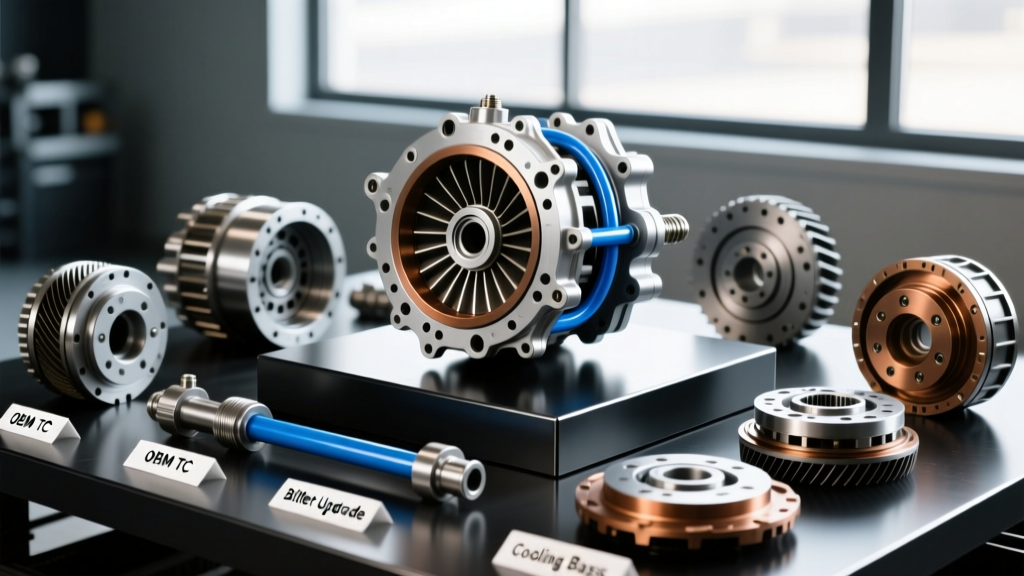
The factory transmission cooler integrated into the Ranger's radiator is adequate for unladen highway driving but falls short under sustained grade climbing. Adding a dedicated auxiliary transmission cooler (such as a Derale Series 8000 or Hayden Rapid-Cool) plumbed in series after the factory radiator cooler can drop peak fluid temperatures by 25°F to 40°F.
Furthermore, you must strictly adhere to Motorcraft specifications by using only MERCON ULV (Ultra Low Viscosity) fluid, part number XT-12-QDC. The 10R80's tight clearances and specialized clutch friction materials will rapidly degrade if standard MERCON LV or older ATF formulations are used.
Real-World Installation Specs and Cost Breakdown
Budgeting for a torque converter replacement requires an understanding of the labor intensity involved. The transmission must be completely removed from the vehicle to access the converter. Below are the critical specifications and estimated costs for a 2024–2026 Ford Ranger 10R80 service.
- Total Fluid Capacity: 13.1 Quarts (MERCON ULV)
- Pan Drop Refill: 5.5 to 6.0 Quarts
- Torque Converter to Flexplate Nuts: 37 lb-ft (50 Nm)
- Bellhousing to Engine Block Bolts: 35 lb-ft (47 Nm)
- Driveshaft Flange Bolts: 76 lb-ft (103 Nm)
- Parts Cost (Upgraded TC + Valve Body Kit + Fluid): $1,100 - $1,600
- Labor (6.5 Book Hours @ $165/hr): $1,072
- Total Estimated Out-the-Door Cost: $2,172 - $2,672
Note: Always measure the distance from the transmission bellhousing mating surface to the torque converter mounting pads before installation. The 10R80 requires a minimum of 1/8-inch to 3/16-inch clearance to ensure the converter is fully seated on the transmission input shaft and stator support. Failing to verify this clearance will result in immediate oil pump failure upon engine startup.
Final Verdict
The factory Ford Ranger torque converter is a casualty of modern fuel-economy mandates, sacrificing thermal mass and heavy-duty friction materials for efficiency. If your Ranger is subjected to regular towing, off-road crawling, or tuned performance, the OEM unit is a ticking time bomb for overheating. Investing in a billet aftermarket torque converter, paired with a Sonnax valve body upgrade and an auxiliary cooler, transforms the 10R80 from a fragile liability into a robust, heat-resistant powerhouse capable of handling the Ranger's maximum rated capabilities well into the future.