Decoding the Drivetrain: Why Kit Selection Dictates Differential Longevity
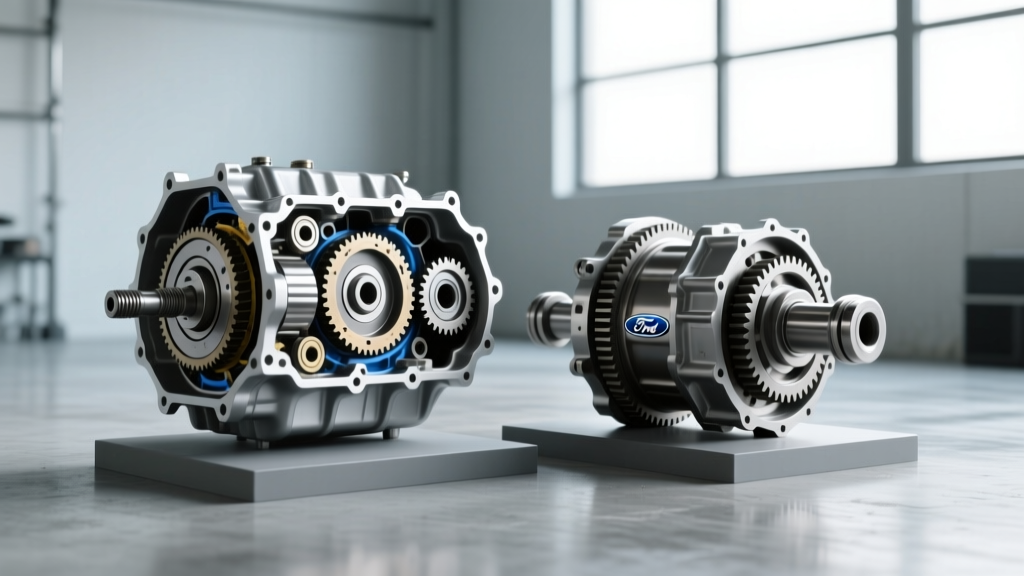
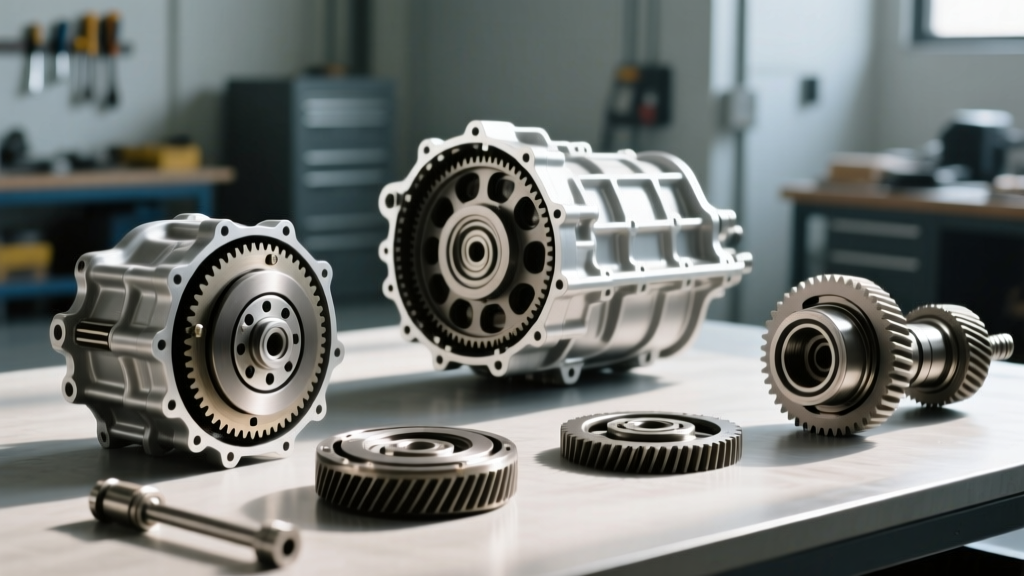
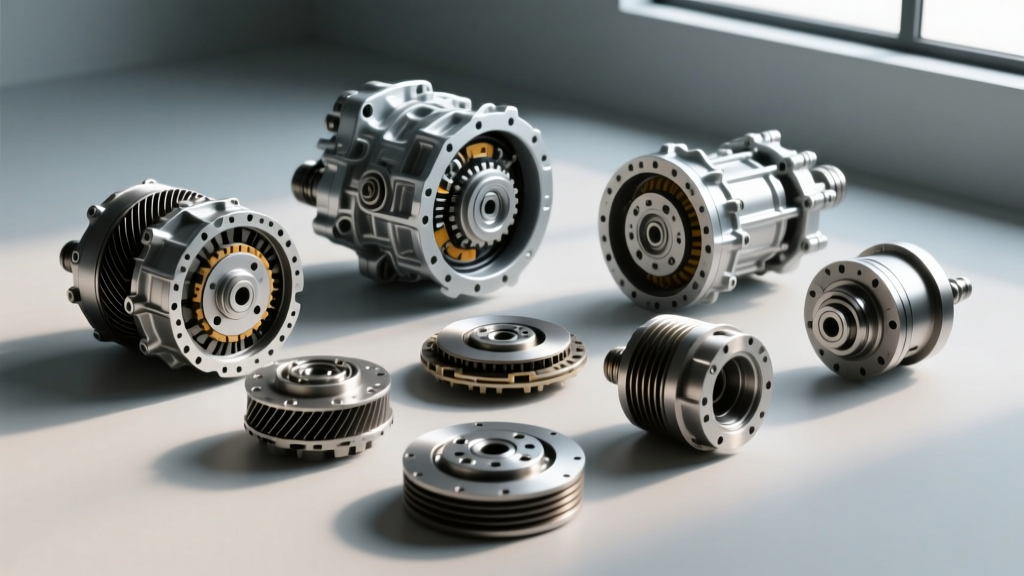
When tackling a drivetrain overhaul, the principles of transmission rebuild kit selection—prioritizing OEM-tier metallurgy, complete hardware refreshes, and precision tolerances—apply directly to the rear axle. The Ford F-150 is one of the most capable trucks on the road, but its rear differential is subjected to immense torsional stress, especially when towing, hauling, or running oversized tires. Selecting the right Ford F150 rear differential rebuild kit is not merely about finding the cheapest box of seals; it is about sourcing precision-machined components that can withstand the rigors of modern truck usage.
In this comprehensive 2026 expert guide, we break down the critical differences between basic seal kits and master overhaul kits, identify the specific axle platforms used in the F-150 lineup, and provide the exact torque specifications and setup tolerances required for a noise-free, long-lasting rebuild.
Identifying Your F-150 Axle: 8.8-Inch vs. 9.75-Inch
Before ordering any components, you must accurately identify your rear axle. Ford has utilized two primary rear differentials in the F-150 over the last three decades, and their rebuild kits are entirely incompatible with one another.
The Ford 8.8-Inch Axle
The legendary 8.8-inch rear end was the standard F-150 axle from 1997 through 2004, and it continued in select applications and light-duty packages well into the 2010s. It features a 10-bolt rear cover and a ring gear diameter of 8.8 inches. The 8.8 is renowned for its strength and massive aftermarket support. When sourcing an 8.8 kit, you will typically look for part numbers referencing the F8.8 or FM 8.8 nomenclature.
The Ford 9.75-Inch Axle
Introduced in the 2004 F-150 Heavy Duty Payload Package and eventually becoming the standard rear axle for the aluminum-body F-150s (2015-present), the 9.75-inch axle features a 12-bolt cover and significantly larger ring and pinion gears. The modern 9.75 utilizes an aluminum differential housing with pressed-in steel bearing cups. Rebuilding the 9.75 requires specialized bearing drivers to avoid cracking or scoring the aluminum housing during race installation.
Master Overhaul vs. Basic Seal Kits: What You Actually Need
A common mistake made by novice DIYers is purchasing a 'Basic Seal Kit' when a full rebuild is required. If your differential is exhibiting gear whine, rotational backlash clunk, or metal flakes on the drain plug, a seal kit will not solve your problem. Here is how the tiers break down:
- Basic Seal Kits ($45 - $85): Includes the pinion seal, axle shaft seals, crush sleeve, pinion nut, and RTV silicone. This is strictly for high-mileage trucks experiencing fluid leaks but possessing healthy bearing preload and gear mesh.
- Standard Master Overhaul Kits ($140 - $220): Includes all seals, plus inner and outer pinion bearings, carrier bearings, races, and a new crush sleeve. Often utilizes economy-tier import bearings.
- Premium Master Kits with OEM Bearings ($250 - $400): The only choice for a professional-grade rebuild. Includes premium seals, solid pinion spacers (eliminating the crush sleeve), and genuine Timken or SKF bearings.
The Bearing Mandate: Why Timken is Non-Negotiable
When evaluating any drivetrain or transmission rebuild kit, the origin of the bearings is the single most critical factor. The market is flooded with economy kits utilizing overseas-manufactured bearings that suffer from inconsistent roller sizing and inferior metallurgy. In a high-torque application like the F-150, these bearings will develop spalling and brinelling within 15,000 miles, resulting in catastrophic gear failure.
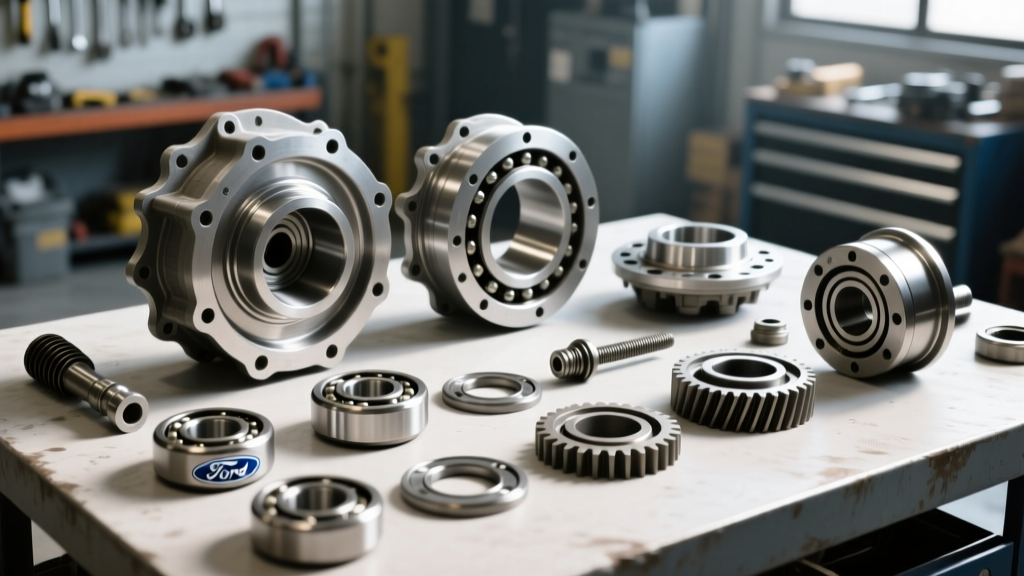
Always verify that your Yukon Gear & Axle or Randy's Ring & Pinion master kit explicitly states the inclusion of Timken or SKF bearings. For the Ford 8.8, the inner pinion bearing (typically Timken HM88648) and outer pinion bearing (Timken LM102949) must be matched with their corresponding races to ensure proper contact patterns and heat dissipation.
Expert Upgrade: Ditch the Crush Sleeve for a Solid Spacer
Factory Ford differentials utilize a crush sleeve to establish pinion bearing preload. While cheap to manufacture, crush sleeves are notoriously difficult to set correctly; overtightening by even a fraction of an inch requires replacing the sleeve and starting over. Furthermore, shock loads from off-roading or heavy towing can cause the crush sleeve to collapse further over time, altering your preload and destroying the pinion bearings.
Best Practice: Discard the crush sleeve included in your kit and purchase a Solid Pinion Spacer Kit (available from manufacturers like Ratech). A solid spacer uses precision-machined steel shims to set the exact rotational preload. It is infinitely reusable, highly resistant to shock loads, and makes the setup process significantly more repeatable.
2026 F-150 Differential Rebuild Kit Cost & Component Breakdown
Below is a realistic cost breakdown for F-150 rear differential rebuild kits based on current 2026 market pricing for premium drivetrain components.
| Kit Tier | Key Components Included | Estimated Cost | Recommended Application |
|---|---|---|---|
| Economy Master Kit | Import bearings, standard seals, crush sleeve | $130 - $170 | Low-mileage fleet trucks, budget flips |
| Premium Master Kit (Timken) | Timken bearings, heavy-duty seals, crush sleeve | $240 - $320 | Daily drivers, standard towing packages |
| Pro-Series Overhaul | Timken bearings, solid spacer kit, ring gear bolts | $330 - $450 | Heavy towing, off-road, high-horsepower builds |
Critical Installation Specs & Setup Tolerances
Selecting the right kit is only half the battle; proper installation dictates the lifespan of the rebuild. When setting up an F-150 rear differential, you must adhere strictly to the following engineering tolerances. Deviating from these specs will result in gear whine, excessive heat, and premature failure.
Pinion Bearing Preload
Pinion preload is the rotational resistance of the pinion gear without the carrier installed. Target Spec: 15 to 25 inch-pounds of rotational torque for new bearings (or 10 to 15 inch-pounds if reusing the original pinion gear). You must use a calibrated inch-pound beam-style torque wrench to measure this. Guessing by 'feel' is the leading cause of differential rebuild failures.
Ring Gear Backlash
Backlash is the amount of rotational play between the ring gear and the pinion gear. Target Spec: 0.008 to 0.012 inches. This must be measured using a magnetic-base dial indicator mounted to the differential housing. Backlash that is too tight will cause the gears to bind and overheat; backlash that is too wide will result in a clunking noise upon throttle tip-in and accelerated gear tooth wear.
Hardware Torque Specifications
- 8.8-Inch Ring Gear Bolts: 70 to 85 lb-ft. Always clean the threads with brake cleaner and apply a high-strength threadlocker (such as Permatex Red 272) before torquing in a star pattern.
- 9.75-Inch Ring Gear Bolts: 90 to 110 lb-ft. Ensure the left-hand thread bolts (if applicable to your specific carrier) are identified and torqued correctly.
- Pinion Nut Torque: When using a factory crush sleeve, the nut is typically tightened to 200-250 lb-ft while constantly checking rotational preload. When using a solid spacer kit, follow the manufacturer's specific torque sequence to achieve the target inch-pound preload.
- Carrier Bearing Cap Bolts: 70 to 85 lb-ft (8.8-inch) / 90 to 100 lb-ft (9.75-inch). Never mix up the left and right bearing caps; they are line-bored at the factory and are not interchangeable.
Cost Analysis: DIY Rebuild vs. Professional Shop Rates
Understanding the financial landscape of drivetrain repair is essential for making an informed decision. In 2026, professional drivetrain shops charge a premium for the specialized tooling and liability associated with differential setups.
A complete professional rebuild of an F-150 rear differential (labor only, assuming your existing ring and pinion are in good condition) typically ranges from $800 to $1,400. If the gear set is damaged and requires replacement alongside the master overhaul kit, total shop invoices frequently exceed $2,200 to $3,500.
Conversely, a DIY approach utilizing a Premium Master Kit with Timken bearings ($280), a solid spacer kit ($45), 75W-140 full synthetic gear oil and friction modifier ($60), and a differential service tool kit ($120) brings the total material cost to roughly $505. While the DIY route requires patience, a hydraulic press, and precision measuring tools, the cost savings are substantial.
Final Verdict: Sourcing the Right Kit
When selecting a Ford F150 rear differential rebuild kit, never compromise on bearing quality or hardware completeness. The foundational rules of transmission rebuild kit selection demand that you replace every wearable surface and friction point during a teardown. By opting for a premium master kit featuring Timken bearings, upgrading to a solid pinion spacer, and rigorously verifying your backlash and preload specs with precision instruments, you can build a rear axle capable of handling the most demanding towing and off-road environments for hundreds of thousands of miles.