The 2026 Ford F150 Transmission Rebuild Cost Landscape
When your truck drops into limp mode or starts slipping between gears, researching the ford f150 transmission rebuild cost becomes an immediate priority. For the 2026 model year, the F-150 platform remains heavily populated by two dominant automatic transmissions: the ZF-derived 6R80 (2011–2017) and the Ford-GM joint-venture 10R80 (2018–present). Both are engineering marvels, but both are subject to specific, high-cost failure modes once they surpass the 120,000-mile mark.
Truck owners facing a catastrophic transmission failure are immediately confronted with a critical fork in the road: do you pay a local machine shop to rebuild your existing unit, or do you purchase a dyno-tested remanufactured transmission? The answer requires a deep dive into labor rates, parts availability, core charges, and long-term warranty implications. This guide provides a forensic cost breakdown and technical analysis to help you make the most financially sound decision for your F-150.
Defining the Contenders: Local Rebuild vs. Remanufactured
Before analyzing the financial data, it is vital to understand the mechanical distinction between a "rebuilt" and a "remanufactured" transmission. The terminology is often conflated by dealerships and independent mechanics, but the engineering processes are vastly different.
The Local Rebuild Process
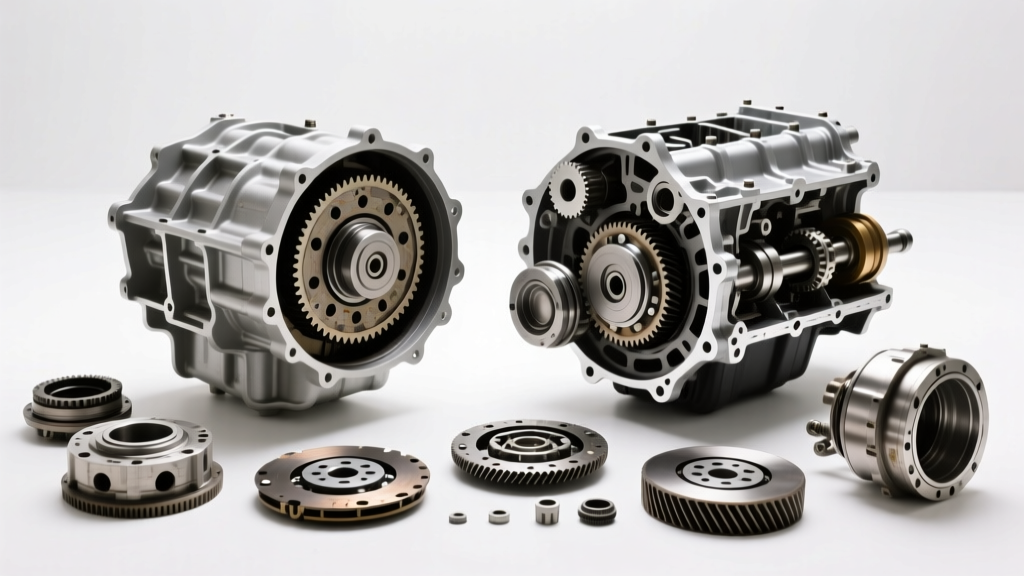
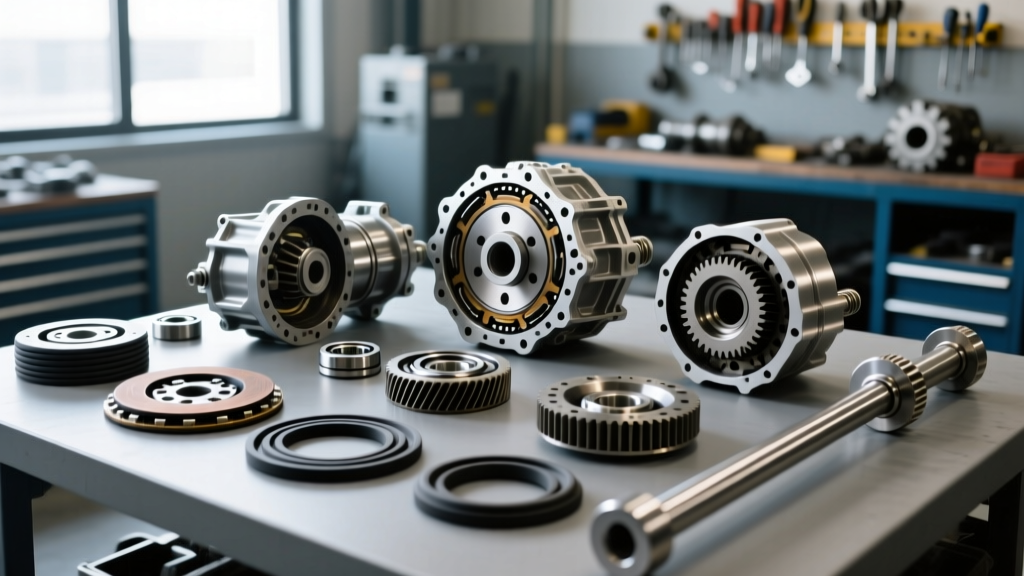
A local rebuild involves removing your F-150's transmission, tearing it down on a bench, and replacing only the components that have failed or fall outside of OEM clearance specifications. If your 6R80 failed due to a burnt E-clutch, a local builder might replace the clutch pack, the sealing sleeves, and the torque converter, but leave the original valve body and stator support bushings intact if they "look fine." While this can save money on the parts invoice, it leaves latent wear items in the drivetrain that may fail 30,000 miles later.
The Remanufactured Process
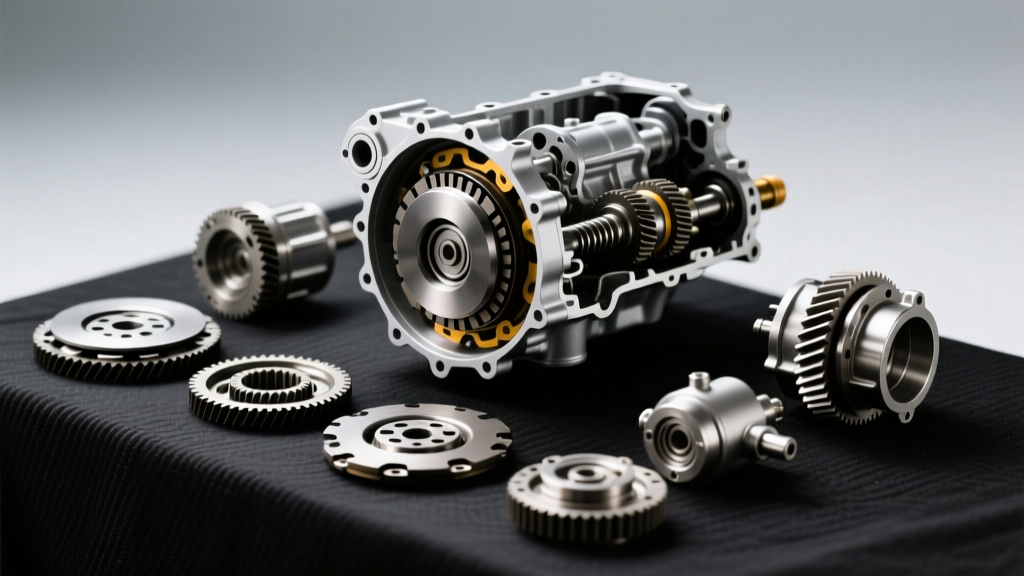
A true remanufactured transmission (from builders like Jasper Engines or ETE Reman) is stripped to the bare aluminum casing. Every wear item—including bushings, seals, friction clutches, and steel plates—is replaced with new or re-engineered components, regardless of their current condition. Furthermore, remanufactured valve bodies are line-bored and fitted with upgraded components, such as Sonnax Zip Kits, to correct known OEM hydraulic flaws. Finally, the unit is hot-tested on a dynamometer to simulate real-world shifting under load before it is shipped.
Line-Item Cost Breakdown: 6R80 and 10R80 Transmissions
To provide an accurate 2026 cost analysis, we must look at the standard labor times and parts pricing for the 4WD F-150. The standard Removal and Replacement (R&R) labor time for a 6R80 is approximately 7.4 hours, while the 10R80 requires roughly 7.8 hours due to the additional cooling line routing and transfer case adapter complexities. Assuming an average independent shop rate of $145 per hour, the baseline R&R labor cost sits between $1,073 and $1,131.
| Cost Factor | Local Rebuild (6R80) | Remanufactured (6R80) | Local Rebuild (10R80) | Remanufactured (10R80) |
|---|---|---|---|---|
| Unit / Rebuild Kit Cost | $550 - $850 (Master Kit) | $2,600 - $3,200 | $750 - $1,100 (Master Kit) | $3,400 - $4,100 |
| Bench Labor (Teardown & Build) | $900 - $1,400 | $0 (Included in Unit) | $1,200 - $1,800 | $0 (Included in Unit) |
| Vehicle R&R Labor (Shop Rate) | $1,073 (7.4 hrs) | $1,073 (7.4 hrs) | $1,131 (7.8 hrs) | $1,131 (7.8 hrs) |
| Torque Converter | $350 - $500 | $0 (Included) | $450 - $650 | $0 (Included) |
| Fluids & Consumables | $160 - $210 | $160 - $210 | $220 - $280 | $220 - $280 |
| Estimated Total Cost | $3,033 - $4,433 | $3,833 - $4,483 | $3,751 - $5,381 | $4,751 - $5,511 |
| Typical Warranty | 1 Year / 12,000 Miles | 3 Year / 100,000 Miles | 1 Year / 12,000 Miles | 3 Year / 100,000 Miles |
Hidden Costs and Core Charge Realities
When evaluating the ford f150 transmission rebuild cost, buyers often overlook the logistics of core charges and fluid requirements. If you opt for a remanufactured unit from a supplier like Jasper Engines, you will be hit with a core charge ranging from $500 to $850. This deposit is fully refunded once you return your broken F-150 transmission, provided the casing is not cracked and the bellhousing is intact.
Furthermore, fluid costs have escalated. The 6R80 requires Motorcraft MERCON LV (XT-10-QLVC), with a dry-fill capacity of 13.1 quarts. The 10R80, however, demands the highly specialized Motorcraft MERCON ULV (XT-12-QLV). ULV fluid is significantly more expensive per quart than LV, and the 10R80's 14-quart capacity means you will spend upwards of $250 just to fill the pan and cooler lines. Attempting to save money by using generic, non-OEM fluid in a 10R80 will rapidly destroy the clutch friction materials due to the precise hydraulic tolerances of the 10-speed valve body.
Technical Deep Dive: Why Remanufacturing Often Wins on Value
To understand why a remanufactured unit commands a higher upfront price but offers superior long-term value, we must examine the specific failure modes of the F-150's transmissions and how remanufacturers engineer them out of the system.
The 6R80 Molded Lead Frame and Bushing Wear
The 6R80 is notorious for two specific failures. First, the molded lead frame (the electronic sensor array located inside the transmission pan) frequently cracks or shorts out, causing erratic shift solenoid behavior. Second, the stator support bushings wear down, leading to a loss of hydraulic pressure to the clutch packs. A local rebuilder might simply swap the burnt clutches and reuse the worn bushings if they pass a visual inspection. A quality remanufacturer will install upgraded, Teflon-coated bushings and brand-new OEM Motorcraft lead frames, effectively bulletproofing the unit against its most common flaws.
The 10R80 C-Clutch Hub and Valve Body Separator Plate
The 10R80 is a highly complex, tightly packaged 10-speed unit. By 2026, transmission specialists have documented widespread wear in the C-clutch hub and severe degradation of the valve body separator plate. The OEM separator plate orifices wear out from the constant abrasion of the check balls, leading to harsh 2-3 and 4-5 shifts. Remanufactured 10R80 units feature hardened, precision-drilled separator plates and updated clutch hubs sourced from aftermarket engineers. Attempting a local rebuild on a 10R80 requires specialized alignment tools and a pristine clean room; even a microscopic piece of debris left in the valve body during a local rebuild will cause a solenoid failure within 500 miles.
Critical Installation Specifications
Whether you choose a local rebuild or a remanufactured crate unit, the installation process dictates the lifespan of the transmission. If you are auditing a shop's work or attempting a DIY R&R, adherence to Ford's torque specifications is non-negotiable. Improper torque on the bellhousing or torque converter will result in catastrophic case warping or flexplate shearing.
- Bellhousing to Engine Block (M12 x 1.75 bolts): 55 Nm (41 lb-ft)
- Torque Converter to Flexplate (6R80): 26 Nm (19 lb-ft)
- Torque Converter to Flexplate (10R80): 28 Nm (21 lb-ft)
- Transmission Crossmember to Frame: 76 Nm (56 lb-ft)
- Transfer Case to Transmission Adapter: 34 Nm (25 lb-ft)
Expert Tip: Never use an impact wrench to seat the torque converter bolts. You must thread them by hand to ensure the converter is fully seated into the transmission oil pump. If the converter is not fully seated (usually requiring three distinct "clicks" or drops as it passes the input shaft and pump gears), tightening the bellhousing will instantly crack the aluminum transmission case.
Final Verdict: Which Path Protects Your Wallet and Truck?
If you are driving an older F-150 equipped with the 6R80 and plan to sell the truck within the next 18 months, a local rebuild utilizing a high-quality master kit (such as the Raybestos Z-Pak) and a billet torque converter is a financially viable route. It keeps your upfront cash expenditure closer to the $3,200 mark.
However, if you own a 2018 or newer F-150 with the 10R80, or if you rely on your truck for heavy towing and daily commercial use, the remanufactured route is the undisputed winner. The sheer complexity of the 10-speed hydraulic system makes local rebuilds incredibly risky unless performed by a dedicated, high-volume transmission specialist. Paying the $4,800+ premium for a remanufactured 10R80 buys you dyno-tested peace of mind, upgraded internal components, and a 3-year/100,000-mile warranty that will protect your investment well into the future. When factoring in the long-term reliability and the elimination of latent wear items, the remanufactured cost analysis heavily favors the truck owner who plans to keep their F-150 on the road for the long haul.