Introduction to the Ford 9.75-Inch Axle Rebuild
The Ford 9.75-inch semi-floating rear axle is the heavy-duty backbone of modern F-150 trucks equipped with the Max Trailer Tow Package. While robust, high mileage, heavy towing, and aggressive tuning can lead to ring gear tooth spalling, pinion bearing failure, or severe whining. A complete differential rebuild is not for the faint of heart; it requires precision measuring tools, an understanding of gear geometry, and strict adherence to torque specifications. Furthermore, the break-in process and the selection of the correct f150 differential fluid are just as critical as the mechanical assembly itself. In this comprehensive guide, we will walk through the complete rebuild procedure for the Ford 9.75-inch axle, from teardown to the final fluid fill.
Essential Tools and Rebuild Components
Before unbolting the differential cover, you must gather the proper tools and high-quality replacement parts. Reusing old bearings or crush sleeves is a guaranteed path to premature failure. Below is a breakdown of the essential components required for a professional-grade rebuild.
| Component | Part Number / Spec | Purpose |
|---|---|---|
| Master Rebuild Kit | Yukon YK F9.75-REV | Includes Timken bearings, races, pinion seal, and shims |
| Pinion Bearing Set | Timken SET-34 | Inner and outer pinion bearings for 9.75 axle |
| Carrier Bearing Set | Timken SET-36 | Carrier bearings (requires case spreader or C-clamps) |
| Solid Pinion Spacer | Yukon YS-01 | Replaces factory crush sleeve for adjustable preload |
| Ring Gear Bolts | Grade 8 / ARP 200K | Must be replaced; never reuse stretched OEM bolts |
| Dial Indicator | 0.001" Resolution | Measuring exact backlash tolerances |
| Inch-Pound Torque Wrench | Beam or Digital | Setting precise pinion bearing rotational preload |
Step 1: Teardown and Case Inspection
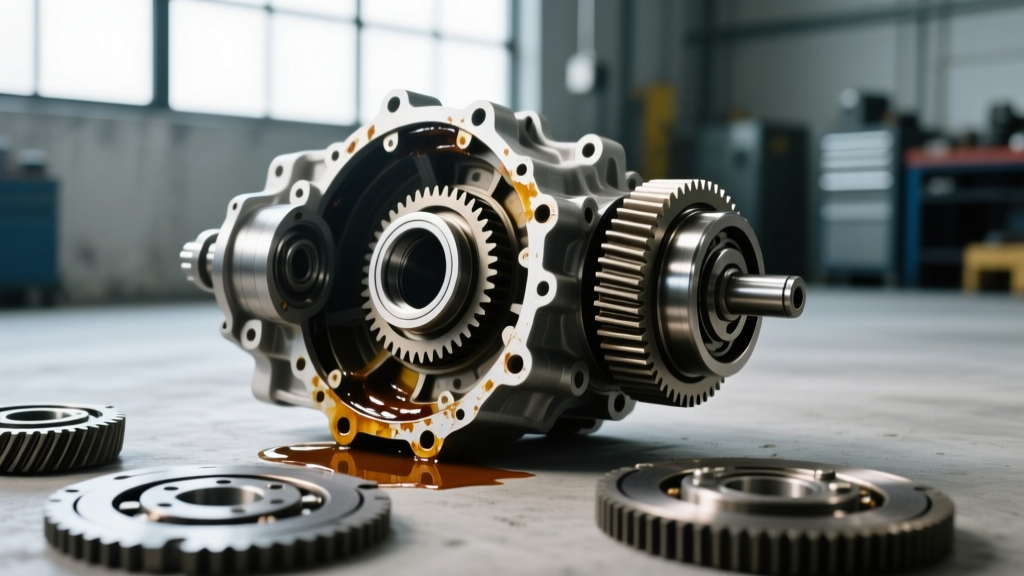
Drain the old gear oil and remove the rear differential cover. Before removing the carrier, use a dial indicator mounted to a magnetic base to check the ring gear runout. Mount the indicator tip against the back of the ring gear and rotate the carrier. Runout should not exceed 0.003 inches. Excessive runout indicates a warped case or a ring gear that was not seated flush against the carrier register during the previous assembly.
Mark the bearing caps and the axle housing with a paint pen so they can be reinstalled in their exact original locations and orientations. The caps are line-bored from the factory with the housing; swapping them or installing them backward will destroy the new carrier bearings. Remove the pinion nut, pull the yoke using a specialized gear puller, and drive the pinion shaft out of the housing using a brass drift to avoid damaging the threads.
Step 2: Ring and Pinion Setup (Backlash and Pattern)
The core of any differential rebuild is setting the pinion depth and the backlash. This is where the Yukon Gear & Axle technical guidelines become invaluable.
Setting Pinion Depth
Pinion depth dictates how deeply the pinion gear meshes into the ring gear. On the Ford 9.75, this is adjusted via shims placed between the pinion head bearing and the pinion shaft. Use a "setup bearing" (a bearing with a slightly enlarged inner diameter) so you can slide the pinion in and out by hand while testing different shim thicknesses. Apply gear marking compound (yellow for the drive side, red for the coast side) and torque the pinion nut temporarily. Rotate the gears and inspect the pattern. The ideal pattern is centered vertically on the tooth face and slightly biased toward the heel under load.
Setting Backlash and Preload
Backlash is the amount of rotational play between the ring and pinion gears. For the Ford 9.75-inch axle, the target backlash is between 0.008 and 0.012 inches. This is adjusted by swapping shims on the left and right sides of the carrier bearings. If backlash is too tight, move shim thickness from the ring gear side to the opposite side. If it is too loose, do the reverse.
Once the depth and backlash are perfect, you must set the pinion bearing preload. If you are using a factory crush sleeve, you must torque the pinion nut (often requiring over 250 lb-ft of force) while constantly checking rotational drag with your inch-pound torque wrench until you reach 8-14 in-lbs of rotational preload. However, upgrading to a solid pinion spacer with shims is highly recommended for F-150s that tow heavy loads, as it eliminates the risk of over-crushing the sleeve and destroying the new bearings.
Step 3: Selecting the Correct F150 Differential Fluid
With the mechanical assembly complete, sealing the differential cover (using RTV silicone, allowing 12 hours to cure), and torquing the cover bolts to 24 lb-ft, it is time to address lubrication. Selecting the correct f150 differential fluid is not just about topping off the axle; it is the lifeblood of your new gear set. The Ford 9.75-inch axle operates under immense thermal stress, especially when towing. Standard 75W-90 or 80W-90 conventional oils will experience severe viscosity breakdown under these conditions.
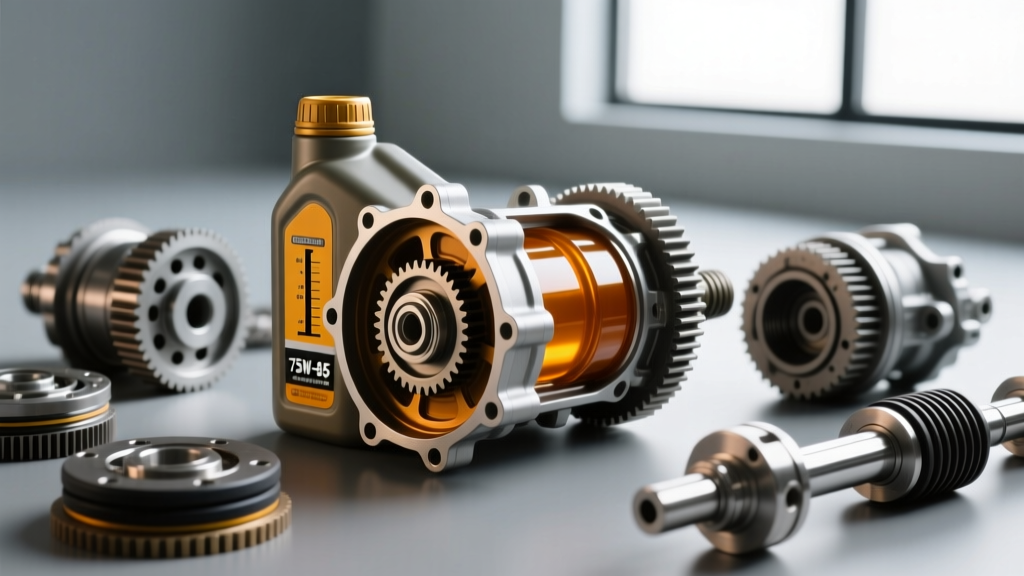
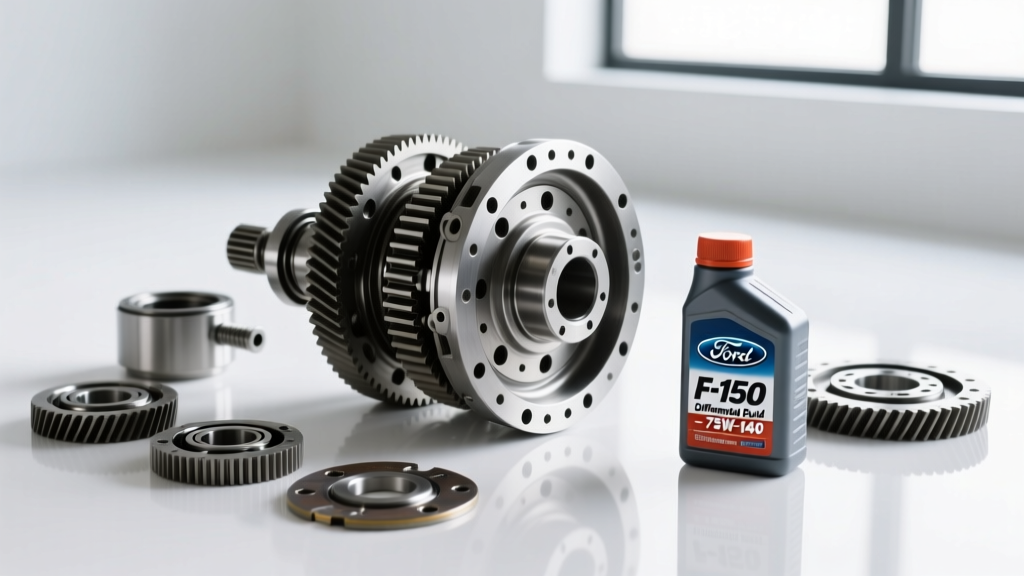
Ford specifies a SAE 75W-140 Full Synthetic gear oil for the 9.75 rear axle. According to Motorcraft's official lubricant specifications, the recommended fluid is the Motorcraft SAE 75W-140 Synthetic Rear Axle Lubricant (Part Number: XY-75W140-QL). This fluid contains extreme pressure (EP) additives specifically formulated to protect the hypoid gear cut of the ring and pinion.
Limited Slip Additive Requirements
If your F-150 is equipped with a factory clutch-type Limited Slip Differential (LSD), you must add a friction modifier. Without it, the clutch packs will chatter aggressively during low-speed turns, leading to rapid wear and failure. Motorcraft XL-3 Friction Modifier Additive (Part Number: XL-3) is required. Add 4 ounces of the modifier before filling with the 75W-140 gear oil. Note: If you have upgraded to a helical gear LSD (like an Eaton Truetrac) or a full locking differential (like a Detroit Locker or ARB Air Locker), the friction modifier is not required and should be omitted.
| Fluid Type | Viscosity | Application | Capacity (9.75 Axle) |
|---|---|---|---|
| Motorcraft Synthetic | 75W-140 | Heavy Towing, High Heat, OEM Spec | 2.5 - 3.0 Quarts |
| Amsoil Severe Gear | 75W-140 | Extreme Duty, Aftermarket Upgrade | 2.5 - 3.0 Quarts |
| Valvoline SynPower | 75W-90 | Light Duty / Base Payload (Not Rec. for 9.75) | 2.5 - 3.0 Quarts |
Step 4: The Critical Break-In Procedure
The most common cause of a newly rebuilt differential failing within the first 1,000 miles is improper break-in. New ring and pinion gears have microscopic machining marks. The break-in process uses controlled friction and heat to lap the gears together, creating a perfect mating surface. If you overheat the gears during this window, the oil will break down, the gears will gall, and the differential will whine permanently.
Expert Break-In Protocol: Drive the truck for 15-20 minutes at varying speeds between 30 and 50 MPH. Do not exceed 60 MPH. Pull over and let the axle cool completely to ambient temperature (about 30-45 minutes). Repeat this heat-cycle process 4 to 5 times. Do not tow a trailer or haul heavy payloads for the first 500 miles. After 500 miles, drain the break-in fluid (it will look metallic and dark due to the lapping process), inspect for large metal chunks, and refill with fresh 75W-140 synthetic.
Troubleshooting Post-Rebuild Noise
Even with meticulous setup, noise can occur if tolerances drift or if the wrong f150 differential fluid was utilized. Here is how to diagnose post-rebuild auditory cues:
- Whine on Acceleration: The pinion depth is too deep, or the backlash is too tight. The drive side of the gear teeth is overloading.
- Whine on Deceleration: The pinion depth is too shallow, or the backlash is too loose. The coast side of the gear teeth is overloading.
- Howling at Specific Speeds (e.g., exactly 55 MPH): This is often a result of used ring and pinion gears being reinstalled, or an issue with the pinion bearing preload being too loose, allowing harmonic resonance.
- Chatter on Tight Turns: If equipped with a clutch-type LSD, the friction modifier was either omitted, under-dosed, or the wrong f150 differential fluid base stock was used, preventing the modifier from properly suspending in the oil.
Rebuilding the Ford 9.75-inch differential is a demanding but rewarding process. By adhering to strict measurement tolerances, utilizing high-grade Timken bearings, and filling the housing with the exact 75W-140 synthetic f150 differential fluid required by Ford engineering, you will ensure your truck's drivetrain is ready for hundreds of thousands of miles of heavy-duty service. For further community troubleshooting and specific axle code decoding, the archives at Ford-Trucks.com remain an excellent supplementary resource for F-150 owners.