Introduction to the GMT360 Front Axle Ecosystem
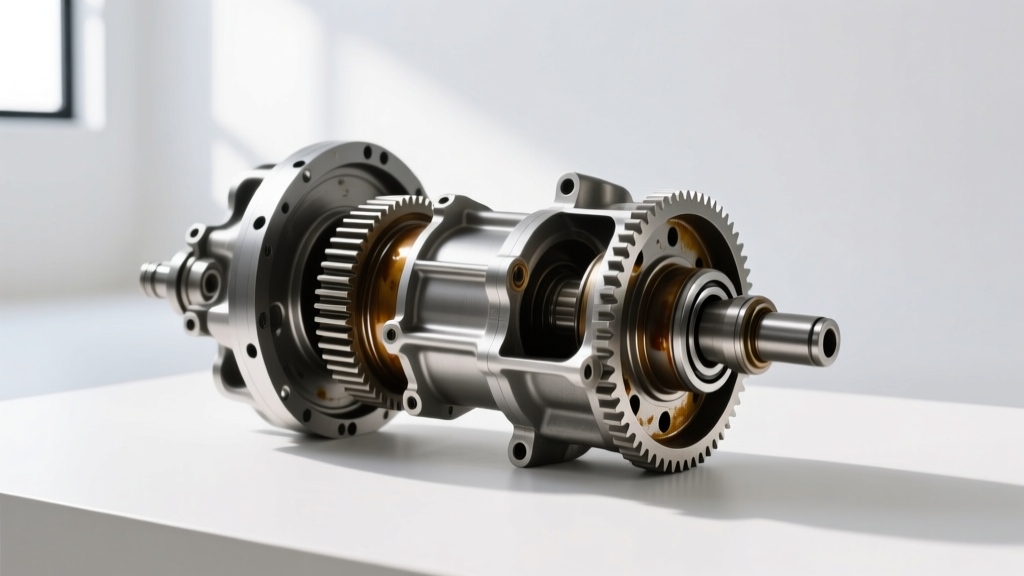
The 2003 Chevrolet Trailblazer, built on General Motors' robust GMT360 platform, utilizes an Independent Front Suspension (IFS) system powered by the GM 8.0-inch front differential. Unlike solid front axles found in heavy-duty trucks, this aluminum-housed unit is designed for weight savings and high-speed stability. However, its unique engineering—specifically the split-housing 'clamshell' design—makes preventive maintenance and fluid diagnostics vastly different from traditional rear differentials.
Understanding the health of your front axle requires more than just checking a dipstick; it requires interpreting the physical condition of the gear oil. When technicians and advanced DIYers pull up a 2003 Trailblazer front differential parts diagram OEM in the dealer portal, they are not just looking at gear ratios. They are mapping out a sealed ecosystem where the condition of the 75W-90 synthetic fluid directly correlates to the wear of specific bearings, seals, and thrust washers depicted in that schematic.
Decoding the 2003 Trailblazer Front Differential Parts Diagram OEM
To accurately diagnose fluid contamination, you must first understand the architecture of the GM 8.0-inch IFS differential. Referencing the OEM parts breakdown reveals three critical vulnerability points where external elements enter or internal metals shed:
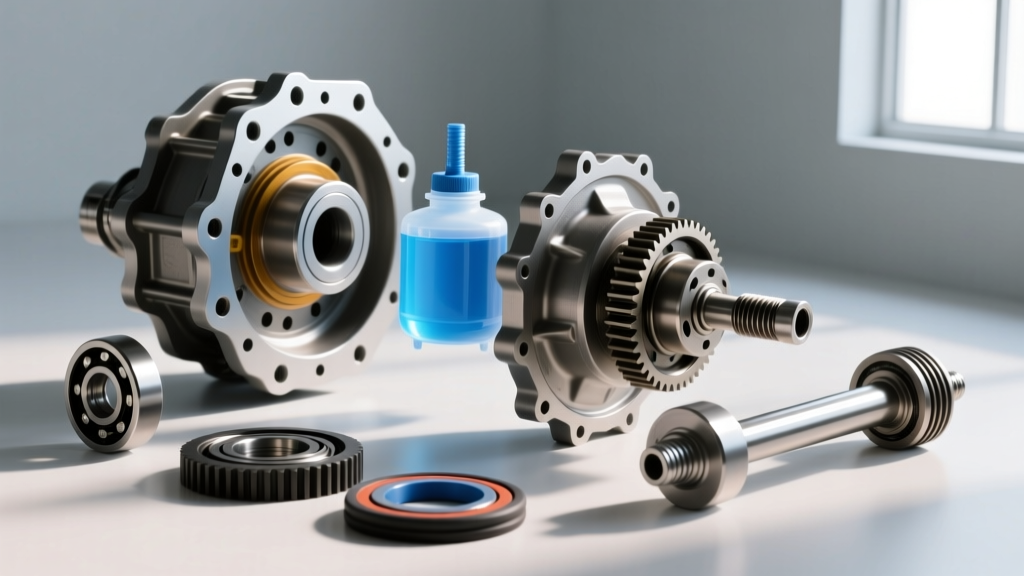
- The Pinion Seal (OEM Position #14): Located at the yoke where the front driveshaft connects. A failure here allows hypoid gear oil to leak onto the skid plate, dropping fluid levels and causing thermal runaway.
- The Axle Shaft Seals (OEM Position #22 & #23): Pressed into the outer edges of the clamshell housing. When these harden or tear, they admit water and road grit directly into the bearing journals.
- The Differential Breather Valve (OEM Position #8): A small, easily overlooked cap on the top of the axle tube. If clogged, internal pressure from heat expansion will blow out the pinion seal. If the attached hose is missing or submerged during off-road driving, it acts as a siphon for water.
Because the front differential on the GMT360 platform is an open differential (locking and torque vectoring are handled rearward by the NV246 / NP246 transfer case), the fluid inside does not require limited-slip friction modifiers. This pure hypoid gear oil environment makes visual and olfactory diagnostics highly reliable.
Diagnostic Matrix: Fluid Color, Smell, and Component Wear
Extracting a sample of your front differential fluid is the most cost-effective way to predict catastrophic axle failure. Below is a diagnostic matrix mapping fluid condition to the specific OEM components that are likely failing.
| Fluid Appearance | Odor Profile | Diagnostic Conclusion | OEM Diagram Component Focus |
|---|---|---|---|
| Clear Amber / Honey | Mild Petroleum | Normal Operation. Fluid is within service life. | N/A |
| Milky / Chocolate Emulsion | Sour / Damp Earth | Water Ingress. Oil and water are mixing under gear shear. | Breather Hose, Axle Tube Seals |
| Dark Brown / Black | Burnt / Acrid | Thermal Breakdown. Fluid has exceeded its thermal stability limit. | Pinion Bearings, Low Fluid Level |
| Silver Micro-Glitter | Metallic / Sharp | Normal Break-in or Mild Ring & Pinion Wear. | Ring and Pinion Gear Teeth |
| Chunky / Magnetic Sludge | Heavy Iron / Rust | Catastrophic Bearing Failure. Immediate teardown required. | Carrier Bearings, Pinion Race |
| Gold / Brass Flakes | Hot Copper | Thrust Washer or Bushing Degradation. | Side Gear Thrust Washers |
Deep Dive: Contamination Pathways in the Clamshell Housing
The 'No Drain Plug' Dilemma
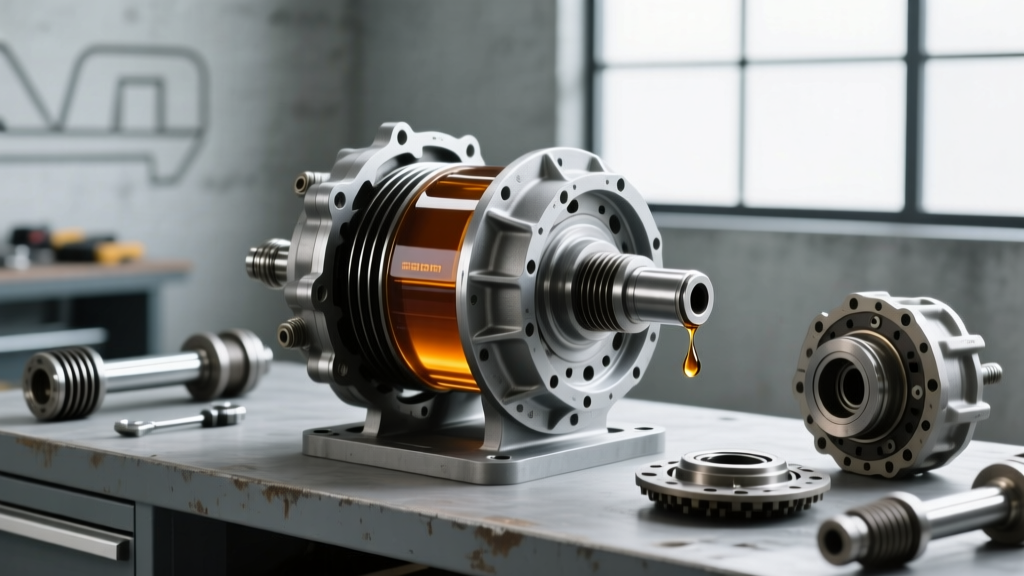
One of the most vital pieces of E-E-A-T knowledge for GMT360 owners is the physical construction of the differential housing. If you study the OEM GM parts catalog, you will notice the GM 8.0-inch IFS front differential is a 'clamshell' design. The housing is split horizontally (front and rear halves) and sealed with RTV silicone. There is no traditional drain plug.
Because there is no drain plug, performing a simple 'drain and fill' is impossible without specialized equipment. To check fluid condition, you must use a fluid extraction pump inserted through the fill plug located on the passenger-side axle tube. If your extracted fluid shows heavy metallic chunks or severe milky emulsion, a suction pump will not remove the settled debris from the bottom of the clamshell. The only proper remedy for severe contamination is to unbolt the front housing half, clean the casing manually, and reseal it with GM P/N 12378261 (or equivalent high-temp RTV).
Water Ingress and the Breather Tube
Milky fluid is the most common issue on Trailblazers used in snowy climates or light off-roading. The differential heats up during highway driving, expanding the air inside. When you park, or if you submerge the axle in cold water, the rapid temperature drop creates a vacuum. If the OEM breather tube is cracked, disconnected, or routed too low, water is sucked directly past the axle seals into the gear oil. Once water mixes with 75W-90 synthetic oil, the lubricant's film strength drops by over 60%, leading to rapid scoring of the pinion bearing races.
Preventive Maintenance: Fluid Specs, Capacity, and Torque
Adhering to exact OEM specifications is non-negotiable for the longevity of the GM 8.0-inch IFS unit. Overfilling can cause fluid to aerate and blow past the pinion seal, while underfilling starves the carrier bearings.
- Fluid Specification: SAE 75W-90 Synthetic Axle Lubricant. (ACDelco Dexron 75W-90 or equivalent API GL-5 rated oil). Do not use friction modifiers, as the front axle is an open differential.
- Exact Capacity: 1.1 Quarts (1.04 Liters). Always verify by filling until the fluid reaches the exact bottom lip of the fill plug hole.
- Fill Plug Torque: 18 lb-ft (24 Nm). The fill plug typically requires a 3/8-inch square drive or a 10mm hex bit. Do not overtighten, as the aluminum axle tube threads strip easily.
- Service Interval: Every 50,000 miles for normal highway use; every 15,000 miles if the vehicle is subjected to deep water fording, heavy towing, or sub-zero thermal cycling.
For sourcing high-quality replacements, the ACDelco official parts catalog remains the gold standard for GM-specific seals and lubricants that match the original factory fill chemistry.
Step-by-Step Fluid Condition Check & Service
- Preparation: Drive the vehicle for 15 minutes to bring the differential fluid up to operating temperature. This suspends metallic particles in the oil, giving you an accurate diagnostic sample.
- Access: Safely lift and support the front of the Trailblazer on jack stands. Remove the front skid plate (usually secured by 10mm and 13mm bolts).
- Extraction: Clean the area around the passenger-side fill plug. Remove the plug using the appropriate tool. Insert the hose of a manual fluid evacuator pump to the bottom of the housing.
- Diagnosis: Pump the fluid into a clear glass or plastic receptacle. Inspect under bright white light for the color and particulate markers outlined in the diagnostic matrix above. Swipe a magnet through the extracted fluid to differentiate between normal clutch/gear wear (fine fuzz) and bearing failure (hard chips).
- Refill: If the fluid is in acceptable condition or after a full clamshell teardown, use a transfer pump to inject exactly 1.1 quarts of fresh 75W-90 synthetic oil. Reinstall the fill plug and torque to 18 lb-ft.
Conclusion
Preventive maintenance on the GMT360 front axle is less about routine draining and more about intelligent diagnostics. By cross-referencing your fluid's physical condition with a 2003 Trailblazer front differential parts diagram OEM, you can pinpoint failing seals, clogged breathers, and degrading bearings long before they leave you stranded on the trail. Treat your fluid extraction sample as a window into the mechanical soul of your front drivetrain, and address contamination pathways immediately to ensure your IFS system lasts well past 200,000 miles.