The Visual Diagnostic: Decoding Ford F150 Rear Differential Fluid
The rear axle of a Ford F150 is a marvel of high-torque engineering, tasked with transferring the output of everything from the 2.7L EcoBoost to the high-output 3.5L V6 directly to the pavement. Whether you are driving a 13th-generation (2015-2020) or the newer 14th-generation (2021-2026) model, the health of your rear axle is entirely dependent on the thin film of synthetic gear oil protecting the ring and pinion. While many owners adhere strictly to mileage-based service intervals, the true indicator of axle health lies in the ford f150 rear differential fluid color and condition. By learning to read the visual and olfactory clues left behind in your gear oil, you can predict bearing failures, identify water intrusion, and save yourself from a catastrophic $3,000 axle rebuild.
Establishing the Baseline: Factory Fill Specifications
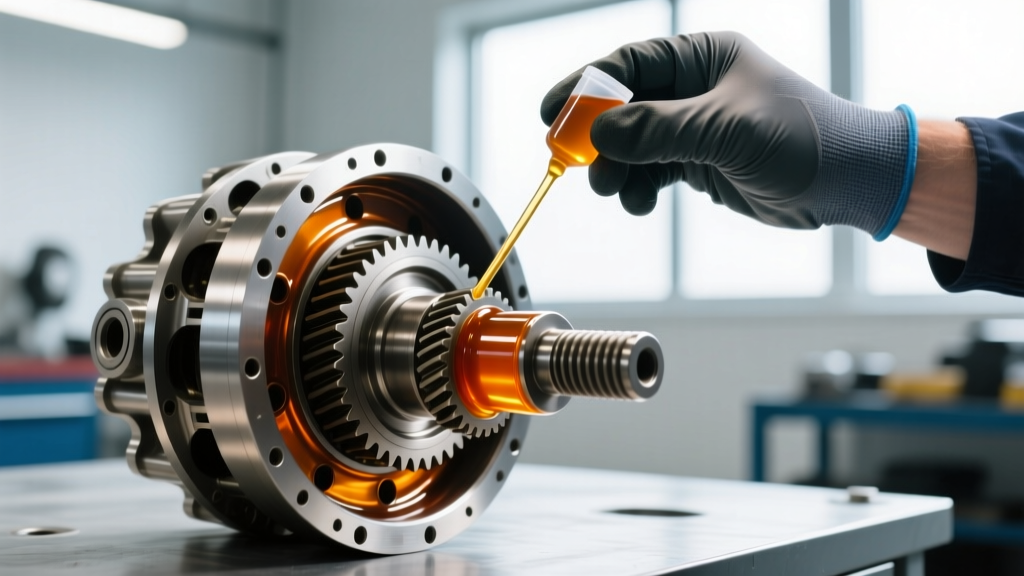
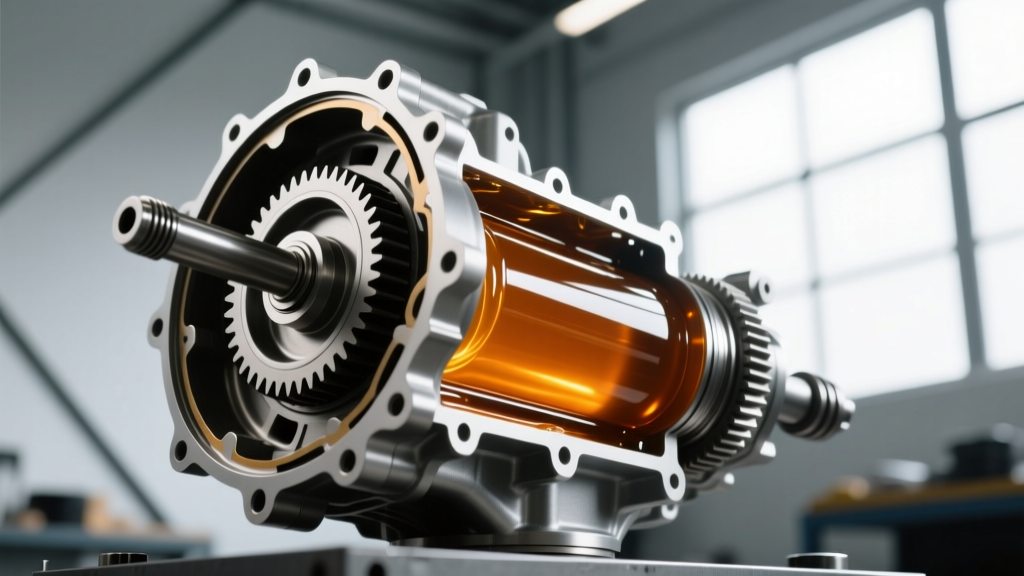
Before you can diagnose a problem, you must understand what healthy fluid looks like. Modern F150s typically utilize either the 9.75-inch or the heavy-duty 10.5-inch Sterling rear axle. Ford’s factory fill for standard duty applications is usually Motorcraft SAE 75W-85 Premium Synthetic Axle Lubricant (Specification WSS-M2C942-A). For Heavy Duty Payload Packages (HDPP), Max Tow configurations, or models equipped with a mechanical Trac-Lok limited-slip differential, the requirement steps up to SAE 75W-140 Synthetic (WSS-M2C934-A).
In its virgin state, this synthetic polyalphaolefin (PAO) and ester-based gear oil is a pale, translucent yellow to light amber. It possesses a distinct, sharp sulfur-like odor due to the extreme-pressure (EP) sulfur-phosphorus additive package. This baseline is critical; any deviation in color, viscosity, or smell during a preventive maintenance inspection is a direct communication from your differential’s internal components.
Ford F150 Differential Fluid Diagnostic Matrix
When pulling the fill plug or dropping the cartridge-style diff cover on your F150, use the following diagnostic matrix to interpret the fluid’s condition. This framework is widely utilized by drivetrain specialists and tribologists to determine whether an axle requires a simple fluid swap, a clutch-pack rebuild, or a complete teardown.
| Fluid Color & Appearance | Texture & Odor | Mechanical Diagnosis | Required Action |
|---|---|---|---|
| Pale Amber / Translucent | Smooth, sharp sulfur smell | Optimal condition; additives are active. | Reinstall plug; no service needed. |
| Dark Brown / Opaque | Slightly thicker, burnt toast smell | Thermal oxidation from heavy towing or high ambient heat. | Flush and refill; consider an aftermarket diff cover for cooling. |
| Milky / Chocolate Milk | Emulsified, may smell like wet dog | Water intrusion via submerged axle or failed hub seal. | Immediate flush, inspect axle seals and vent tube. |
| Grey / Sludgy with Streaks | Gritty, smells like burnt brake pads | Trac-Lok carbon-fiber clutch pack degradation. | Rebuild limited-slip clutch packs; add XL-3 friction modifier. |
| Black with Metallic Glitter | Smooth but reflective in sunlight | Normal break-in wear or early crown gear polishing. | Drain, clean magnetic plug, refill, and monitor via UOA. |
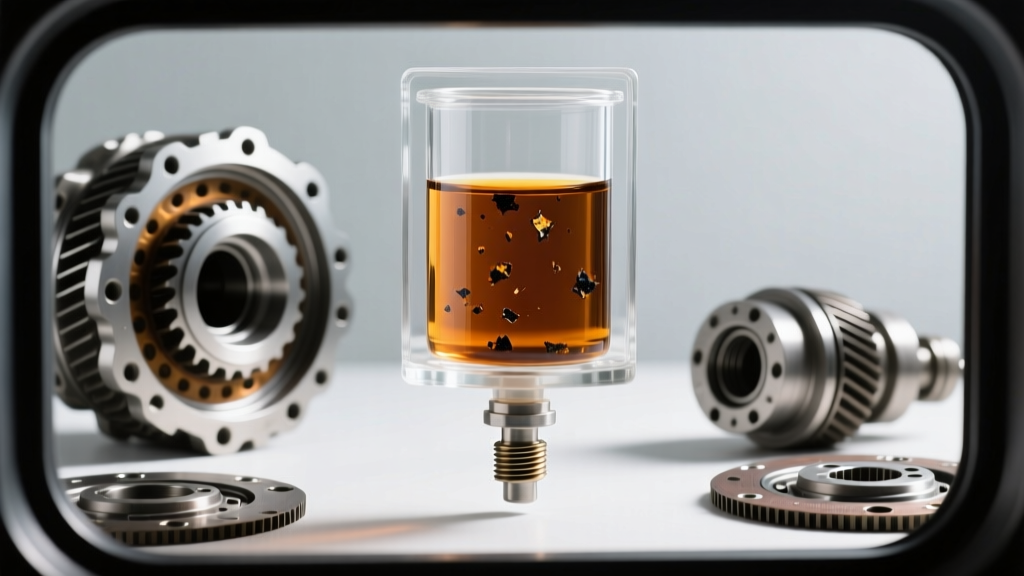
| Black with Jagged Flakes | Chunky, metallic grinding sound when turning | Spalling on pinion bearings or ring gear teeth. | Axle teardown and rebuild required immediately. |
Deep Dive: Contaminants and Wear Metals
The 'Chocolate Milk' Emulsion
Water and gear oil do not mix, but the churning action of the ring gear will emulsify them into a thick, milky paste that looks exactly like chocolate milk. This is a severe condition. The F150 rear axle features a vent tube routed high up behind the bed to prevent water ingestion during river crossings or deep puddle traversal. If this tube becomes clogged with mud or debris, the axle cools down after a hot run, creating a vacuum that sucks moisture past the axle shaft seals. Water rapidly strips the sulfur-phosphorus EP additives from the oil, leading to micro-pitting on the hypoid gear faces within just a few hundred miles.
Metallic Glitter vs. Chunky Shrapnel
It is vital to differentiate between 'glitter' and 'shrapnel'. The fill plug on the Ford 9.75 and 10.5 axles is equipped with a strong neodymium magnet. A fine, metallic paste resembling graphite or silver paint on this magnet is entirely normal, especially in the first 50,000 miles. This is the result of the ring and pinion gears polishing against one another and the wearing of the bronze thrust washers. However, if you can feel distinct, jagged edges when rubbing the fluid between your gloved fingers, or if you find chunks of metal larger than a grain of rice, your pinion bearings are likely spalling. According to used oil analysis (UOA) data shared on Bob Is The Oil Guy, iron (Fe) levels above 150 ppm or chromium (Cr) spikes indicate accelerated bearing wear requiring immediate mechanical intervention.
Trac-Lok vs. Electronic Locking Differential (E-Locker) Wear Signatures
The F150 is offered with different rear differential configurations, and each leaves a unique signature in the fluid.
- Trac-Lok (Clutch-Type Limited Slip): This differential uses carbon-fiber friction clutches to bias torque. When these clutches slip during tight turns, they shed microscopic composite material. If the previous owner neglected to add the required Motorcraft XL-3 Friction Modifier (EST-M2C198-A), the clutches will chatter and wear prematurely, turning the fluid a dark, opaque grey with a distinctly acrid, burnt smell.
- Electronic Locking Differential (E-Locker): Found on FX4, Lariat, and Tremor packages, the E-Locker uses a mechanical dog-clutch mechanism rather than friction plates. It does not require friction modifier. However, if a driver engages the E-Locker while the wheels are spinning at different speeds (e.g., on dry pavement), the dog clutches will violently clash. This impact shears the steel engagement teeth, leaving sharp, crescent-shaped steel flakes in the fluid.
- Torsen (Torque-Sensing): Standard on some higher trims, the Torsen uses a helical gear design with no friction clutches. Fluid from a Torsen differential should remain remarkably clean and amber-colored even at 100,000 miles. Dark fluid here almost exclusively indicates severe thermal breakdown from towing.
Step-by-Step Condition Inspection Protocol
To properly inspect the fluid condition on a 2015-2026 F150 without dropping the entire assembly, follow this preventive maintenance protocol:
- Preparation: Drive the truck for 15 minutes to bring the axle up to operating temperature (approx. 140°F - 180°F). Warm fluid flows easier and keeps particulates suspended.
- Access: Safely support the rear axle on jack stands. Clean the area around the fill plug with brake cleaner to prevent dirt from entering the housing.
- Extraction: Use a 3/8-inch hex drive or 15mm socket (depending on the exact year and axle ratio tag) to remove the fill plug. Note that many modern F150s do not have a dedicated drain plug; fluid is removed via a suction pump inserted into the fill hole.
- Sampling: Draw the first 4 ounces of fluid into a clear sample bottle. This fluid represents the lowest point in the housing where water and heavy metals settle. Hold it to a bright LED light to check for translucency and emulsion.
- Magnet Inspection: Wipe the magnetic fill plug on a white paper towel. Evaluate the color and texture of the residue against the diagnostic matrix above.
- Reassembly: If the fluid is healthy and you are only topping off, ensure the fill plug is torqued to exactly 33 lb-ft (45 Nm). Over-torquing can crack the aluminum or thin-walled steel differential housing.
The Economics of Axle Neglect
Ignoring the visual warnings in your differential fluid is a costly gamble. A standard preventive fluid service using 2.5 quarts of Motorcraft 75W-85 or 75W-140 synthetic costs roughly $45 to $65 in materials and takes less than 30 minutes. Conversely, if black, glitter-heavy fluid is ignored, the resulting pinion bearing failure will destroy the ring gear and the differential case. Replacing a complete Ford 10.5-inch rear axle assembly or paying a drivetrain shop for a master rebuild kit, new bearings, seals, and labor will easily exceed $2,500 to $3,500. For authoritative maintenance intervals and fluid specifications, always cross-reference your specific VIN with the Ford Official Maintenance Guides. By treating your differential fluid as a diagnostic window rather than just a consumable liquid, you ensure your F150 remains capable of handling maximum payloads and heavy towing for hundreds of thousands of miles.