The Anatomy of Differential Gear Noise
As we navigate the automotive landscape in 2026, drivetrain systems are subjected to unprecedented torque loads, particularly in modern half-ton trucks and heavy-duty SUVs. Whether you are running a Ford 10.5-inch rear end, a classic GM 8.5-inch 10-bolt, or a rugged Dana 44, differential gear noise is rarely an issue you can afford to ignore. Ignoring a subtle whine or clunk can escalate a $150 fluid and friction modifier service into a $2,500 complete axle rebuild. As drivetrain specialists, we must approach axle acoustics with clinical precision, separating fluid-induced harmonics from catastrophic hard-part failures.
To accurately diagnose differential gear noise, you must first understand hypoid gear geometry. Unlike straight-cut or helical gears, hypoid ring and pinion gears feature an offset centerline. The pinion gear sits below the center of the ring gear, creating a massive amount of sliding friction alongside the rolling contact. This sliding action requires specialized API GL-5 gear oils packed with Extreme Pressure (EP) additives—typically sulfur-phosphorus compounds. When these additives deplete or the base 75W-90 or 80W-90 oil shears under high thermal loads, boundary lubrication fails, leading to micro-pitting, spalling, and the tell-tale howl of a dying differential.
Acoustic Diagnostic Matrix: Mapping the Sound
The most critical step in differential noise diagnosis is mapping the acoustic profile against vehicle load and speed. A trained technician does not just listen; they correlate the frequency and load-state of the noise to specific internal components. Below is our proprietary acoustic matrix used for isolating differential gear noise on the road test.
| Acoustic Profile | Load Condition | Probable Root Cause | Recommended Action |
|---|---|---|---|
| High-pitched Whine | Acceleration (Drive Side) | Pinion depth too shallow, pinion bearing wear, or degraded GL-5 fluid film. | Check fluid condition; verify pinion depth shim stack. |
| Low-frequency Howl | Deceleration (Coast Side) | Excessive backlash, worn ring gear heel/toe, or loose pinion nut preload. | Measure backlash with dial indicator; check pinion rotational torque. |
| Rhythmic Chatter | Low-speed tight turns | Depleted Limited Slip (LS) friction modifier; glazed clutch packs. | Drain fluid, add 4-8 oz of LS modifier (e.g., Motorcraft XL-3), perform figure-8 burn-in. |
| Metallic Clunk | Load reversal (Drive to Coast) | Worn pinion shaft splines, excessive side gear clearance, or stretched ring gear bolts. | Inspect side gear thrust washers; torque ring gear bolts to spec (e.g., 70-85 lb-ft on Ford 8.8). |
| Growling / Rumble | Constant speed (45-60 mph) | Pitted or brinelled carrier or pinion bearings (often due to water intrusion). | Replace bearings with premium Timken or SKF units; inspect axle seals. |
Fluid-Related Noise vs. Mechanical Failure
Before tearing down an axle, you must rule out the fluid. We see countless misdiagnosed differentials where a simple fluid exchange would have cured the noise. Gear oil degrades over time. The EP additives sacrifice themselves to protect the hypoid sliding contact. Once depleted, the metal-on-metal contact generates high-frequency harmonics that mimic mechanical wear.
The 'Drain and Inspect' Protocol
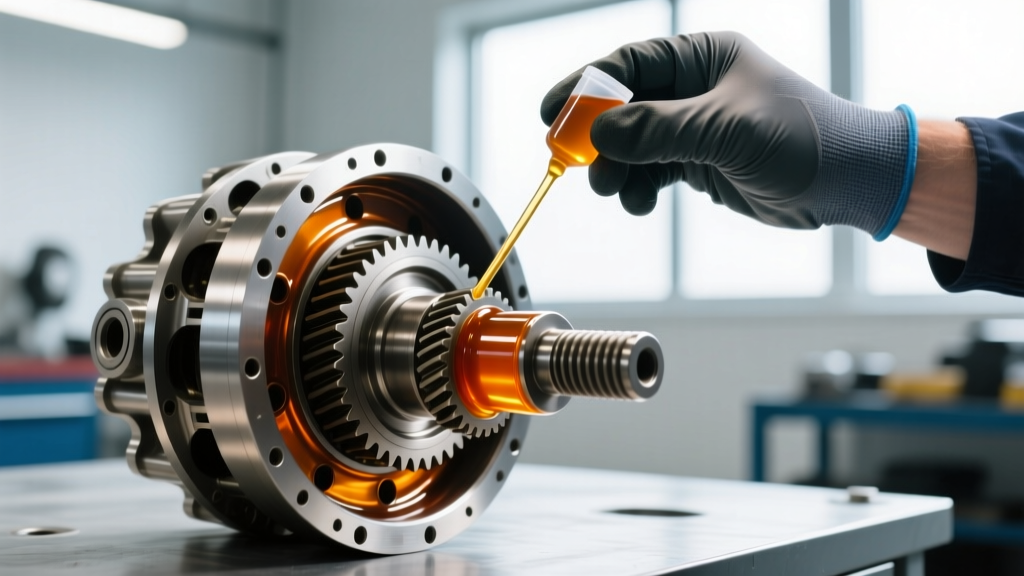
Always perform a fluid analysis before opening the differential cover. Place a clean drain pan under the axle and remove the fill plug first, followed by the drain plug or cover. Evaluate the magnetic plug or the internal diff cover magnet:
- Fine Metallic Fuzz: Normal wear for the first 30,000 miles. Indicates healthy gear meshing and break-in of the bearings.
- Chunky Metal Shavings: Catastrophic failure. A bearing cage has likely disintegrated, or a gear tooth has sheared. A full teardown is mandatory.
- Glitter/Mica-like Flakes: Advanced bearing wear. The brass or steel cage material is grinding down. Plan for a master rebuild kit.
- Milky/Chocolate Fluid: Water intrusion past a failing axle seal or vent tube blockage. Water destroys GL-5 EP additives rapidly, causing rust on the bearing races which leads to severe growling noises.
Precision Troubleshooting: Step-by-Step Diagnostics
If the fluid is clean and properly filled to the bottom of the fill hole (or to the exact OEM fluid capacity spec), the differential gear noise is mechanical. Follow this expert-level diagnostic sequence to pinpoint the failure.
Step 1: Pinion Bearing Preload Verification
A loose pinion nut is a primary culprit for coast-side howl and drive-side clunks. Using a high-quality inch-pound beam torque wrench, measure the rotational preload of the pinion flange. For most solid-spacer axles (like the Dana 35 or GM 8.5), used bearings should exhibit 10 to 15 in-lbs of rotational drag. New bearings with a crush sleeve require 15 to 25 in-lbs. If the flange spins with less than 8 in-lbs of resistance, the pinion bearing is unloaded, allowing the pinion gear to deflect under torque, destroying the gear pattern and generating immense noise.
Step 2: Backlash Measurement
Mount a magnetic dial indicator to the axle housing and position the probe perpendicular to the ring gear teeth. Rotate the ring gear back and forth while holding the pinion flange stationary. Standard backlash specifications for most passenger and light truck axles fall between 0.006 and 0.012 inches. If backlash exceeds 0.015 inches, the gears are slapping together during load reversals, causing a distinct clunk and accelerating wear on the ring gear's coast side.
Step 3: Gear Pattern Analysis
If noise persists but backlash and preload are within spec, the gear setup is fundamentally flawed. Clean three teeth on the ring gear with brake cleaner and apply a generous coat of yellow gear marking compound. Rotate the gears under moderate resistance (use a rag wrapped around the ring gear for drag). Inspect the pattern:
- Ideal Pattern: Centered on the tooth face, covering about 50-70% of the tooth width, with slight bias toward the heel on the coast side.
- Toe Pattern (Narrow edge): Pinion is too deep. Requires a thinner pinion depth shim.
- Heel Pattern (Wide edge): Pinion is too shallow. Requires a thicker pinion depth shim.
- Top Land Pattern: Backlash is too tight.
- Root Pattern: Backlash is too wide.
For an in-depth visual guide on gear pattern reading, we highly recommend consulting the technical archives at Ring-Pinion Technical Support, which offers industry-standard pattern charts for various hypoid ratios.
Real-World Repair Costs and Component Sourcing
When differential gear noise mandates a rebuild, sourcing quality components is non-negotiable. The market is flooded with cheap offshore ring and pinion sets that will whine from day one due to poor lapping and metallurgical inconsistencies. Always specify OEM-equivalent or premium aftermarket brands like Yukon Gear & Axle, Motive Gear, or Richmond Gear, and pair them with genuine Timken or SKF bearings.
| Repair Scenario | Required Components | Estimated Parts Cost (2026) | Estimated Shop Labor |
|---|---|---|---|
| Limited Slip Chatter Service | 75W-90 Synthetic GL-5, LS Friction Modifier | $60 - $90 | $100 - $150 |
| Pinion Seal & Bearing Refresh | Pinion Seal, Pinion Nut, Outer Pinion Bearing | $80 - $140 | $250 - $400 |
| Complete Master Rebuild | Master Kit (Bearings, Seals, Shims), Crush Sleeve | $180 - $280 | $800 - $1,200 |
| Full Ring & Pinion Replacement | R&P Set, Master Kit, Gear Oil | $450 - $700 | $1,000 - $1,500 |
For specific torque specifications, crush sleeve yield points, and shim thickness charts for heavy-duty applications like the Dana 60 or Ford 10.5, refer directly to the Dana Spicer Support Portal. Setting up a differential is an exercise in thousandths of an inch; relying on memory rather than factory service data is a guaranteed path to a noisy, failing axle.
Final Expert Recommendations
Diagnosing differential gear noise requires a methodical elimination of variables. Never assume a whining axle needs a new ring and pinion immediately. Verify your fluid level, check for water contamination, test your pinion preload, and measure your backlash with a dial indicator. By combining acoustic road-test mapping with precision measurement tools, you can accurately pinpoint the root cause of the noise, saving thousands of dollars in unnecessary drivetrain replacements and ensuring your axle operates quietly for the next 100,000 miles.