The Core Debate: What Separates a Powertrain from a Drivetrain?
When shopping for a midsize family hauler, understanding the 2025 Ford Explorer drivetrain options is crucial for making an informed purchase. However, dealership showrooms and owner's manuals frequently throw around two terms that confuse even seasoned car buyers: powertrain and drivetrain. While often used interchangeably in casual conversation, these terms represent entirely different mechanical boundaries. As we navigate the automotive landscape in 2026, knowing the exact distinction can save you thousands of dollars in misdiagnosed repairs and misunderstood warranty claims.
To put it in beginner-friendly terms: if your vehicle were a restaurant, the powertrain is the entire operation—from the kitchen cooking the food to the waitstaff delivering it. The drivetrain, on the other hand, is strictly the waitstaff. It does not create the power; it only delivers it to the tables (the wheels).
Defining the Powertrain
The powertrain encompasses every component involved in generating power and delivering it to the road surface. This includes the engine (the power source), the transmission (the gear multiplier), and the entire drivetrain assembly. If a component is essential to the vehicle's forward or backward movement under its own power, it is part of the powertrain.
Defining the Drivetrain
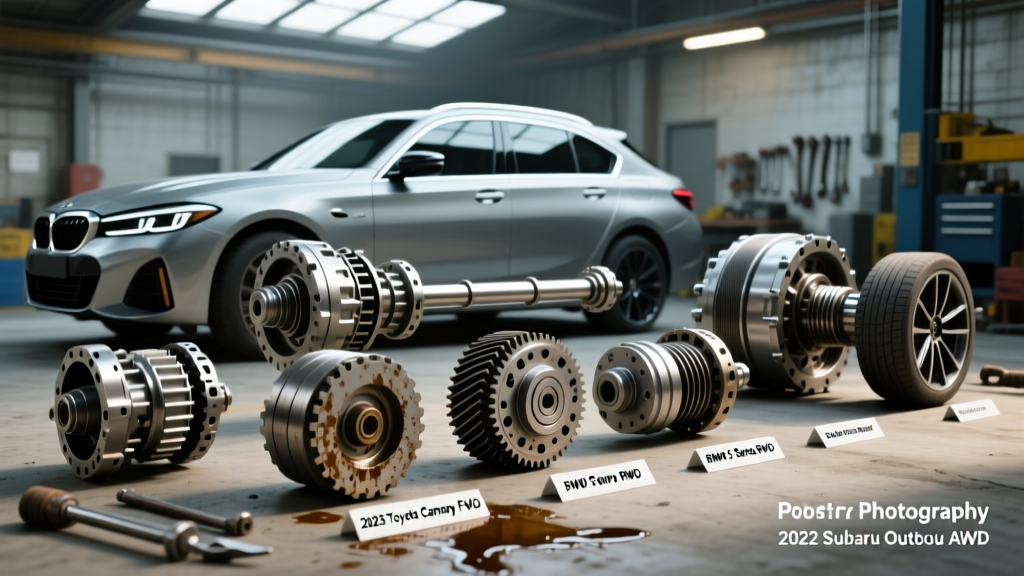
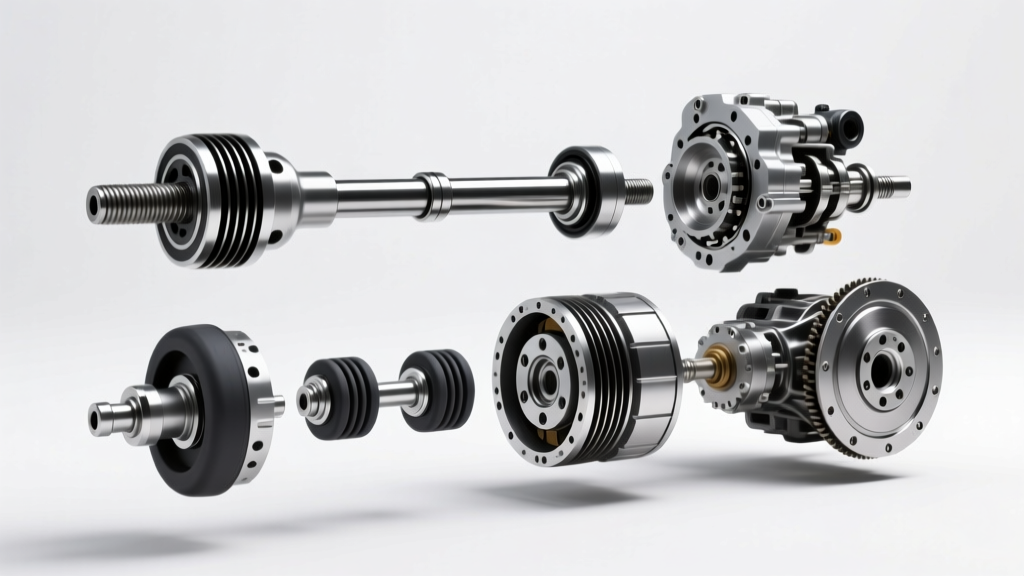
The drivetrain is a sub-system of the powertrain. It consists exclusively of the components that transfer torque from the transmission to the drive wheels. This includes the driveshaft, universal joints (U-joints), constant velocity (CV) axles, differentials, and in all-wheel-drive applications, the transfer case or Power Transfer Unit (PTU). The engine is entirely excluded from the drivetrain definition.
Breaking Down the 2025 Ford Explorer Drivetrain Options
To truly understand these differences, let us apply them to a real-world scenario. The 2025 Ford Explorer offers two primary engine choices—the 2.3L EcoBoost I4 (300 hp) and the 3.0L EcoBoost V6 (400 hp in the ST trim). Both engines are mated to the Ford/GM co-developed 10R60 10-speed automatic transmission. From the output shaft of the 10R60 backward to the wheel hubs, we enter the drivetrain territory.
The Base RWD Configuration
In its standard layout, the Explorer is rear-wheel drive (RWD). The drivetrain here is relatively straightforward: torque exits the 10R60 transmission, travels through a two-piece aluminum driveshaft supported by a center bearing, and enters the rear Super 8.8-inch differential. From there, it is split to the left and right rear CV half-shafts. The front wheels are completely unpowered, meaning the front axles and front differential are absent, reducing weight and mechanical drag.
The Intelligent AWD System
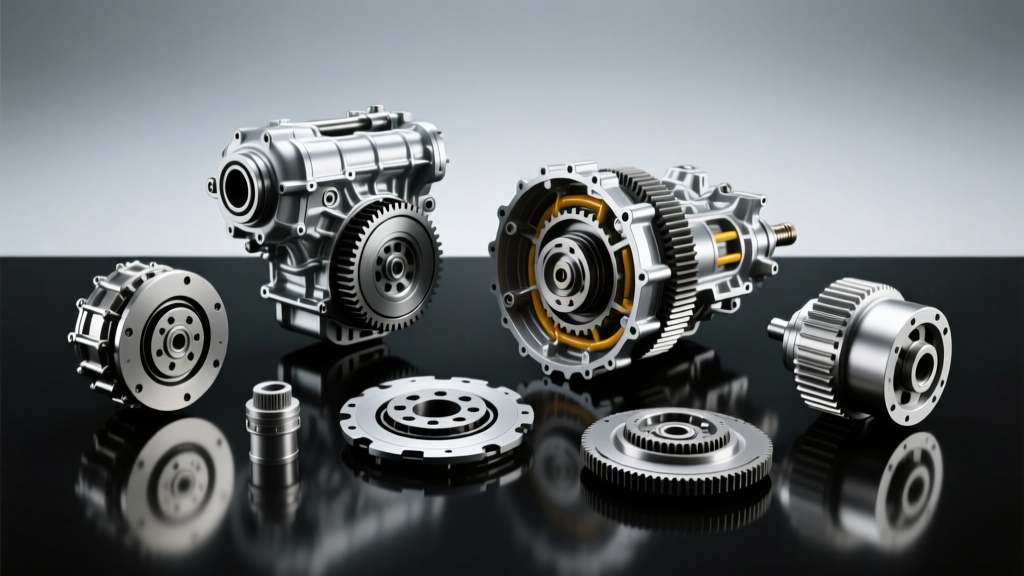
When you opt for the Intelligent All-Wheel-Drive system, the drivetrain complexity increases significantly. Ford utilizes a Power Transfer Unit (PTU) bolted directly to the front of the 10R60 transmission case. The PTU acts as a front-mounted transfer case, intercepting torque and routing it forward to the front differential and rearward via the driveshaft to the rear axle. This system can shift up to 50% of the engine's torque to the rear wheels in milliseconds when slip is detected.
Component Checklist: Powertrain vs. Drivetrain
The table below illustrates exactly where the mechanical boundary lies for the 2025 Explorer, helping you identify which system a specific part belongs to.
| System Category | Specific Components | 2025 Explorer Examples |
|---|---|---|
| Powertrain Only | Engine block, cylinder heads, pistons, fuel injection, engine control module (ECM) | 2.3L / 3.0L EcoBoost engine, turbochargers |
| Powertrain & Drivetrain (Overlap) | Transmission casing, torque converter, internal clutch packs, valve body | 10R60 10-speed automatic transmission |
| Drivetrain Only | Driveshaft, U-joints, PTU, differentials, CV axles, wheel hubs | BorgWarner PTU, Super 8.8 rear diff, aluminum driveshaft |
Deep Dive: 10R60 Transmission and PTU Mechanics
As an automotive transmission expert, I cannot stress enough how vital proper maintenance is for the Explorer's specific drivetrain components. The 10R60 transmission is an engineering marvel, but it requires exact fluid specifications to operate its complex clutch-to-clutch shifting architecture. It requires MERCON ULV (Ultra Low Viscosity) fluid. A standard dry-fill capacity is roughly 13.1 quarts (12.4 liters). Using older MERCON LV or standard ATF will cause immediate shudder and premature clutch pack failure.
The PTU: The Achilles Heel of AWD Drivetrains
In AWD Explorers, the PTU is the most critical—and historically most vulnerable—drivetrain component. Because it sits inches away from the hot exhaust catalytic converters and the transmission cooler lines, the gear oil inside degrades rapidly. For the 2025 model year, Ford has improved the thermal management, but owners must still adhere to strict service intervals.
- PTU Fluid Specification: Motorcraft 75W-85 Hypoid Gear Oil.
- PTU Capacity: Approximately 0.85 Liters (28.7 oz).
- Service Interval: Every 30,000 miles for severe duty (towing, city driving), or 60,000 miles for normal use.
If you are performing a rear differential fluid change at home, the fill and drain plugs on the Super 8.8 axle require a torque specification of 22 lb-ft (30 Nm). Over-torquing these plugs can strip the aluminum differential housing, leading to a $1,200 replacement bill. Furthermore, the rear driveshaft pinion flange bolts should be torqued to 76 lb-ft (103 Nm) to prevent driveline vibration at highway speeds.
Warranty Implications: What is Actually Covered?
Understanding the difference between a powertrain and a drivetrain is never more important than when a warranty claim is filed. Ford's standard 5-year/60,000-mile Powertrain Limited Warranty covers the engine, transmission, and internally lubricated drivetrain components. According to Motorcraft warranty guidelines, this means the PTU internal gears and the rear differential ring-and-pinion are covered.
However, here is where beginners get caught off guard: wear-and-tear drivetrain components are excluded. If your Explorer's driveshaft U-joint begins to clunk, or if a CV axle boot tears and leaks grease onto your garage floor, these are considered maintenance items. They are part of the drivetrain, but they are not covered under the Powertrain warranty. Similarly, engine and transmission mounts—which dampen the vibration between the powertrain and the chassis—are excluded.
Maintenance Realities: What Owners Actually Pay For
To help you budget for life with the 2025 Explorer, here is a realistic breakdown of out-of-pocket drivetrain and powertrain maintenance costs at an independent shop versus a dealership in 2026:
- 10R60 Transmission Fluid Flush (Dealership): $350 - $450 (Requires specialized MERCON ULV fluid and a heated flush machine).
- 10R60 Transmission Fluid Drain & Fill (Independent): $180 - $220 (Only replaces ~5 quarts of the 13.1 quart capacity).
- PTU Fluid Exchange: $150 - $200 (Labor intensive due to the tight clearance near the passenger-side catalytic converter).
- Rear Differential Fluid Service: $90 - $130 (Requires 75W-140 synthetic if you frequently tow near the 5,600 lb max capacity).
- Complete Driveshaft Replacement (OEM): $1,100 - $1,400 (Usually only required if the center bearing fails or the aluminum tubing is damaged by road debris).
Summary: Making the Right Choice
When evaluating the 2025 Ford Explorer drivetrain options, remember that you are not just choosing between RWD and AWD; you are choosing between two vastly different maintenance schedules and mechanical complexities. The RWD model offers a lighter, simpler drivetrain with fewer failure points, making it ideal for southern climates and buyers who prioritize long-term reliability. The Intelligent AWD system provides unparalleled all-weather security but demands rigorous adherence to PTU and differential fluid service intervals.
By understanding that the powertrain is the complete power-generating ecosystem, while the drivetrain is the specific network of shafts and gears delivering that power, you can better navigate NHTSA service bulletins, negotiate warranty claims, and speak confidently with your service advisor. Whether you opt for the base RWD or the fully equipped AWD ST, treating the drivetrain components with the respect they demand will ensure your Explorer conquers the road for well past the 100,000-mile mark.