The 2013 Ford Edge AWD Drivetrain: RDU vs. PTU
As we navigate the maintenance landscape in 2026, the 2013 Ford Edge AWD is now well over a decade old, pushing many of its original drivetrain components past their engineered service life. When AWD owners experience rear-biased drivetrain noise, the immediate internet search often leads to a 2013 Ford Edge rear differential replacement. However, accurate symptom diagnosis requires separating the Rear Drive Unit (RDU) from the Power Transfer Unit (PTU).
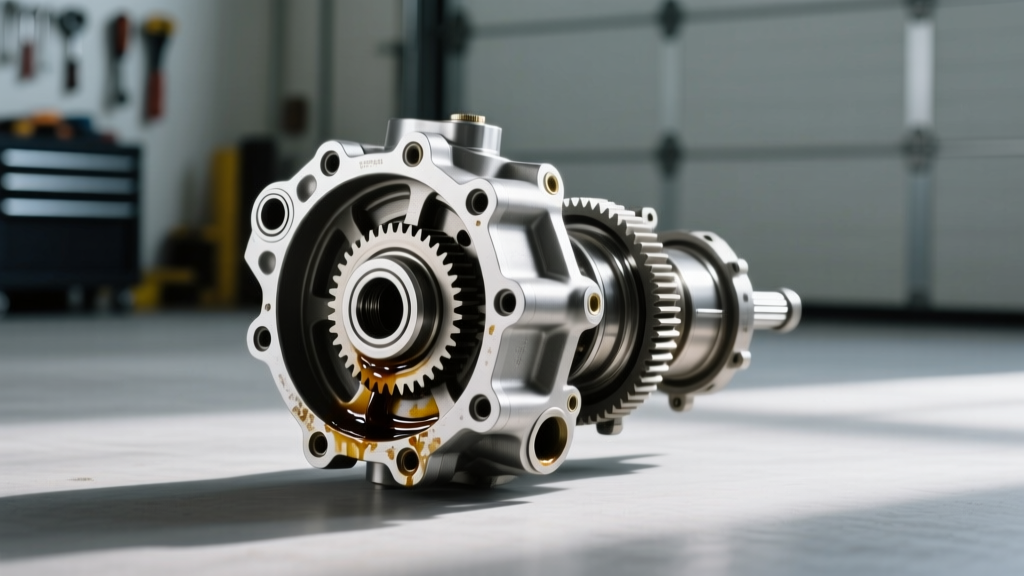
The PTU is mounted to the front transaxle and contains the electronic clutch pack that routes torque rearward. The RDU, located between the rear wheels, is essentially an open differential that splits that torque left and right. Misdiagnosing a failing PTU as a bad rear differential is a costly mistake. True rear differential failure on the 2013 Edge typically presents as isolated rear-end whining, rotational grinding, or clunking during low-speed load reversals.
Symptom Diagnosis: Is Your Rear Differential Failing?
Before ordering a replacement assembly or pulling the drain plug (which, as we will cover, does not exist on this unit), you must isolate the noise and vibration signatures specific to the Edge's independent rear suspension (IRS) axle.
Auditory Clues: Whine vs. Growl vs. Clunk
- Coast-Down Whine: A high-pitched whine that peaks between 45-60 MPH specifically when you lift off the throttle indicates worn pinion bearings or improper ring-and-pinion backlash inside the RDU.
- Low-Speed Binding/Clunk: If the rear end feels like it is "hopping" or binding during tight, low-speed parking lot turns, the issue is rarely the RDU itself. This is a classic symptom of a degraded PTU clutch pack or contaminated PTU fluid up front.
- Rotational Grinding: A metallic grinding that correlates directly to wheel speed—not engine RPM—points to catastrophic failure of the RDU carrier bearings or water ingress destroying the gear set.
Vibration and Handling Anomalies
A failing RDU will often transmit a low-frequency harmonic vibration through the rear subframe. Because the 2013 Edge uses a multi-link independent rear suspension, worn differential mounting bushings can mimic internal gear failure. Always use a chassis ear or stethoscope to probe the RDU housing directly while the vehicle is on a lift and the wheels are spun in gear to confirm internal mechanical degradation.
Fluid Analysis: The Ultimate Troubleshooting Tool
One of the most critical E-E-A-T insights for Ford AWD systems is that the 2013 Edge Rear Drive Unit does not have a factory drain plug. To service or sample the fluid, you must use a vacuum extraction pump through the fill hole. This design quirk means many owners neglect the rear axle, leading to premature bearing failure.
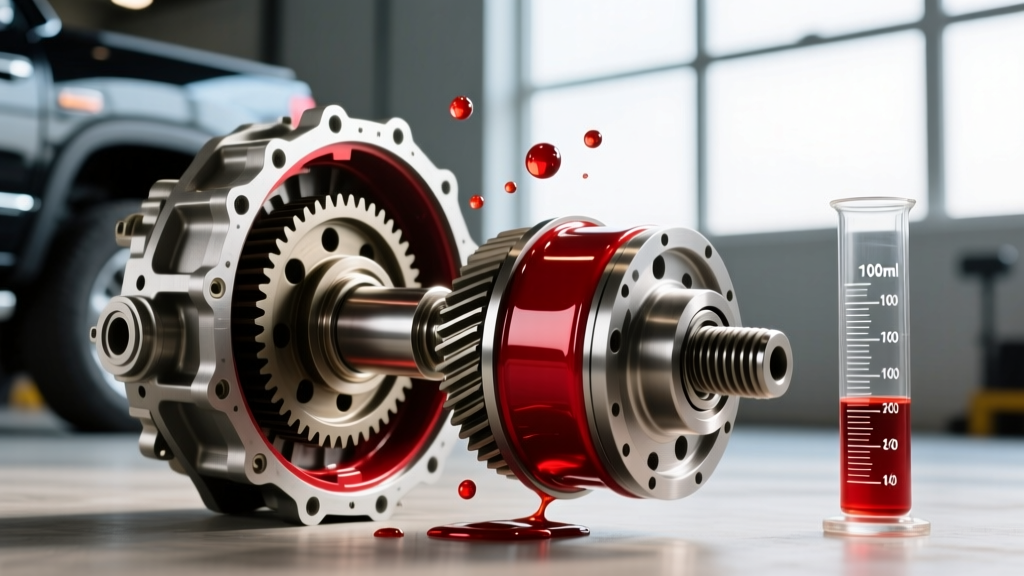
Extracting a 50ml sample of gear oil will tell you exactly whether a simple fluid service will suffice or if a full replacement is mandatory.
| Fluid Condition | Diagnostic Meaning | Required Action |
|---|---|---|
| Dark but translucent, mild sulfur smell | Normal thermal degradation | Extract and refill with fresh 80W-90 |
| Opaque black, heavy burnt odor | Severe overheating, likely from low fluid level or seized bearing | Flush twice; inspect for play |
| Milky or chocolate-milk color | Water ingress through degraded axle seals or vent tube | Replace RDU seals, flush immediately |
| Glitter/Metallic flakes on magnet | Active bearing or gear tooth spalling | 2013 Ford Edge rear differential replacement required |
Pro-Tip: Wrap a rare-earth magnet around your extraction tube hose. When you pull the tube out, inspect it for ferrous shavings. Fine paste is normal for a 13-year-old vehicle; chunky metal shards mean the RDU is a ticking time bomb.
2013 Ford Edge Rear Differential Replacement vs. Rebuild
If your fluid analysis reveals heavy metal contamination or the pinion seal is leaking beyond the ability of a simple swap, you are facing a replacement scenario. Rebuilding an aluminum-housing Ford RDU requires specialized bearing pullers and shim-selection tools that make DIY rebuilds impractical for most home mechanics.
2026 Cost & Sourcing Breakdown
- OEM Ford Assembly: $1,600 - $2,200. (Part numbers vary by axle ratio, typically 3.16 or 3.39). Best for long-term reliability but expensive for a vehicle with depreciated value.
- Remanufactured Aftermarket: $650 - $950. (Sourced via platforms like RockAuto). Usually includes a 12-to-24-month warranty. Ensure the supplier guarantees new bearings, not just cleaned races.
- Used/Junkyard Pull: $250 - $450. High risk. Only recommended if you can verify the donor vehicle's mileage and inspect the fluid before purchase.
- Labor Costs: 3.5 to 5.0 hours of shop time ($450 - $750). Dropping the rear subframe or unbolting the RDU requires disconnecting the rear driveshaft, ABS sensor lines, and half-shafts.
OEM Service Specifications & Torque Data
If your diagnosis confirms the internal gears are healthy and you only need to perform routine rear differential service and maintenance, adhere strictly to these factory specifications. For deeper technical community discussions on extraction methods, the Ford Edge Forum remains an invaluable resource for DIYers.
Required Fluids and Capacities
According to Motorcraft chemical specifications, the 2013 Edge RDU requires:
- Fluid Type: Motorcraft SAE 80W-90 Premium Rear Axle Lubricant (Part # XY-80W90-QL) meeting Ford specification WSS-M2C942-A.
- Capacity: 1.15 Liters (1.21 Quarts). You will need to purchase two standard bottles to complete the fill.
- Friction Modifier: NOT required for the standard open RDU. (Only required if your specific trim features a factory limited-slip rear axle, which is rare on the 2013 Edge).
Crucial Torque Specifications
When reinstalling components after a fluid service or full replacement, precise torque is vital to prevent housing warpage or vibration.
- RDU Fill Plug: 24 lb-ft (33 Nm). Use an 8mm or 10mm hex socket depending on your exact build date. Do not overtighten, as the aluminum housing strips easily.
- Rear Axle Shaft Nuts: 184 lb-ft (250 Nm). These are torque-to-yield in many Ford applications; replace them if removed during an RDU swap.
- Driveshaft to Pinion Flange Bolts: 76 lb-ft (103 Nm).
- RDU to Subframe Mounting Bolts: 76 lb-ft (103 Nm).
Common Edge RDU Failure Modes to Watch For
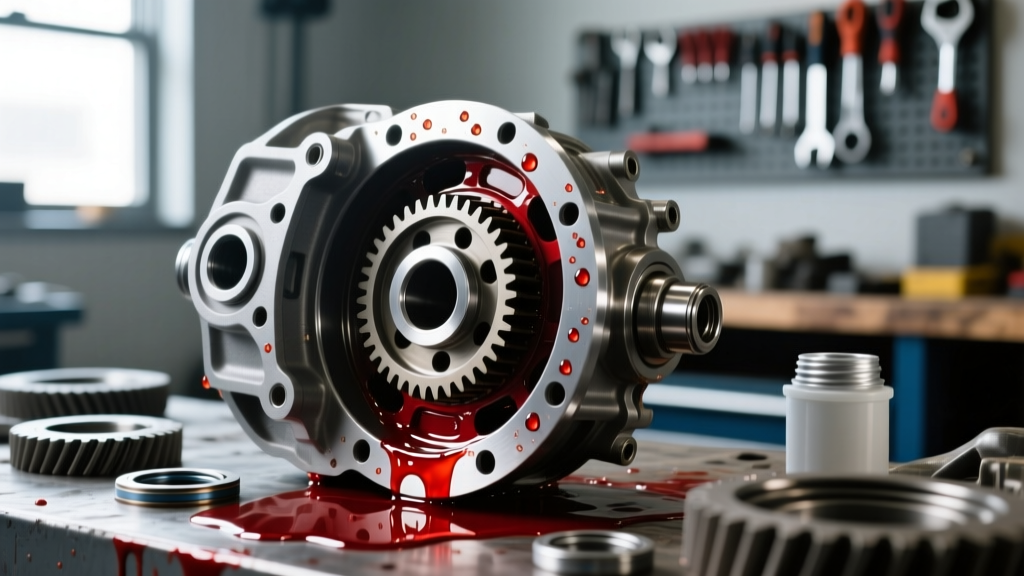
Beyond internal gear wear, the 2013 Edge RDU suffers from two specific environmental failure modes. First, the pinion seal is exposed to road debris and salt; once it weeps, fluid levels drop, and the pinion bearing starves. Second, the axle tube seals where the half-shafts enter the RDU can harden and crack. If you notice gear oil coating the inside of your rear brake rotors, the RDU is leaking onto the ABS tone rings, which can trigger false traction control codes. Catching these seal leaks early via visual inspection can save you from needing a complete rear differential replacement.
Conclusion
Troubleshooting the AWD system on a 2013 Ford Edge requires a methodical approach. By distinguishing between PTU clutch issues and true RDU bearing failure, and by utilizing a vacuum pump to extract and analyze the gear oil, you can make an informed decision. Whether you opt for a simple 80W-90 fluid service or proceed with a full 2013 Ford Edge rear differential replacement, adhering to exact fluid capacities and torque specs will ensure your AWD system remains capable and quiet for the next 100,000 miles.