The AWD Misconception: Transfer Case vs. PTU
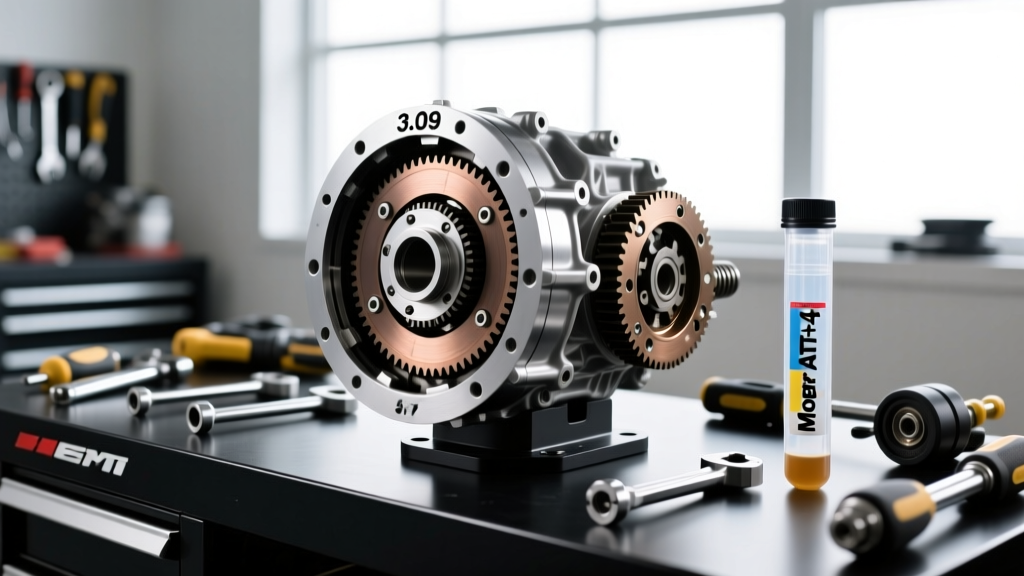
If you are a new owner of an All-Wheel-Drive (AWD) crossover, you might be searching for maintenance guides on your vehicle's transfer case. However, when it comes to the Ford Edge, traditional truck terminology doesn't quite apply. Unlike a body-on-frame SUV like the Ford Explorer or F-150, which uses a traditional, heavy-duty transfer case bolted to the back of a longitudinal transmission, the Ford Edge utilizes a transverse engine layout. This means it uses a Power Transfer Unit (PTU).
For beginners, think of the PTU as the Ford Edge's version of a transfer case. Its primary job is identical: it takes rotational power from the front transaxle and redirects it 90 degrees down a driveshaft toward the rear of the vehicle. Understanding the mechanical relationship between this front-mounted PTU and the Ford Edge rear differential is the key to preventing catastrophic drivetrain failures and avoiding thousands of dollars in repair bills.
The Drivetrain Chain: How Power Reaches the Back
To understand how these components interact, we need to trace the path of torque from the engine to the pavement. The AWD system in the Ford Edge (spanning the 2015+ CD4 platform generations) operates in a specific sequence:
- The Transaxle: Power leaves the engine and enters the automatic transaxle (e.g., the 6F35, 8F35, or 8F57, depending on your engine and model year).
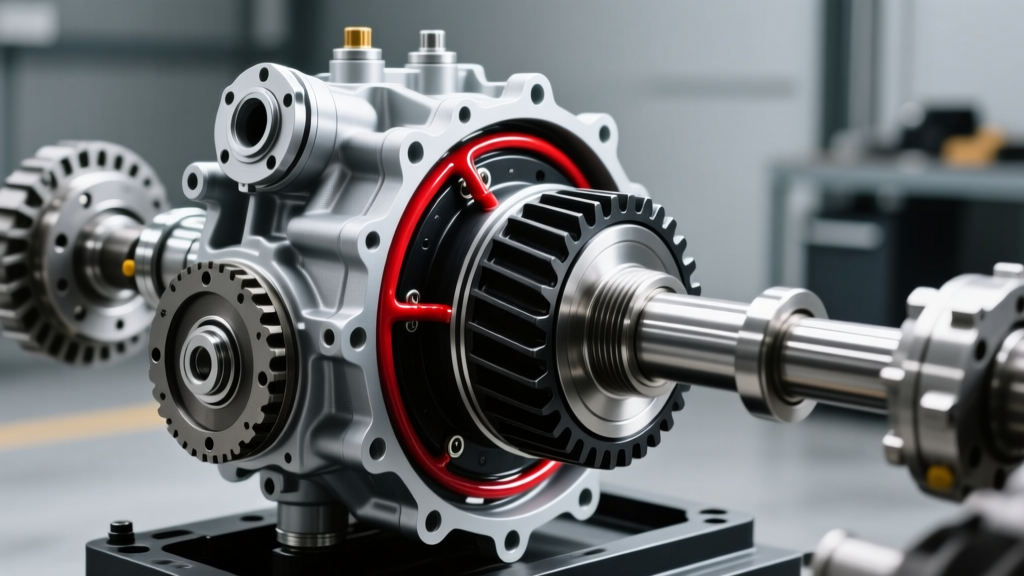
- The PTU (Transfer Case Equivalent): Bolted directly to the side of the transaxle, the PTU contains a helical gear that meshes with the front differential's ring gear. As the front wheels turn, the PTU is constantly spinning an output shaft.
- The Driveshaft: A two-piece aluminum or steel driveshaft carries this rotational energy from the PTU to the rear of the vehicle.
- The Ford Edge Rear Differential (RDU): The driveshaft connects to the pinion gear of the rear differential, officially known in Ford engineering circles as the Rear Drive Unit (RDU).
The Brains of the Operation: The Electronic Clutch Pack
Here is where the beginner-friendly explainer gets into some serious automotive engineering. In older, full-time AWD systems, a center differential or viscous coupling managed the front-to-rear torque split. The Ford Edge does things differently to save weight and improve fuel economy.
The PTU is always engaged to the driveshaft. However, the driveshaft is not always engaged to the rear wheels. The magic happens inside the Ford Edge rear differential. Inside the RDU housing, alongside the hypoid ring and pinion gears, sits an electronically controlled wet clutch pack.
When the Powertrain Control Module (PCM) detects front wheel slip via the ABS wheel speed sensors, it sends an electrical signal to an electromagnetic coil inside the rear differential. This coil compresses the clutch plates, locking the driveshaft's input to the rear axle side gears, instantly sending torque to the rear wheels. When traction is regained, the clutch pack relaxes, and the rear driveshaft freewheels to reduce parasitic drag and save fuel.
Why the PTU Threatens the Rear Differential
You might wonder why a guide about the rear differential is focusing so heavily on the front-mounted PTU. The answer lies in fluid degradation and mechanical binding.
The Ford Edge PTU is notorious in the automotive community for running incredibly hot. It is positioned mere inches from the catalytic converter and holds a minuscule amount of fluid—typically just 0.6 quarts. Because of this low volume and extreme heat exposure, the gear oil inside the PTU bakes into a thick, acidic sludge over time.
When the PTU fluid degrades, the internal bearings and gears begin to wear prematurely. If the PTU begins to bind or physically lock up due to metal-on-metal friction, that binding force is transmitted directly down the driveshaft and into the Ford Edge rear differential, potentially warping the clutch pack or chipping the ring and pinion teeth.
Furthermore, if the PTU disintegrates, it can send shockwaves through the drivetrain that damage the rear differential's electronic clutch actuator. Maintaining the 'transfer case' is the best way to protect the rear axle.
Fluid Specifications and Torque Data
Using the correct fluid is non-negotiable. The friction modifiers required for the rear differential's clutch pack are entirely different from the extreme-pressure additives needed for the PTU's helical gears. Below is the factory specification chart for modern Ford Edge AWD models (2.0L EcoBoost and 2.7L EcoBoost).
| Component | Motorcraft Fluid Spec | Part Number | Capacity | Plug Torque |
|---|---|---|---|---|
| PTU (Transfer Case) | SAE 75W-85 Premium Synthetic Hypoid | XO-75W85-QAPI | ~0.6 Qt (0.56L) | 33 lb-ft (45 Nm) |
| Ford Edge Rear Differential | SAE 80W-90 Premium Rear Axle | XY-80W90-QL | ~1.1 Qt (1.04L) | 24 lb-ft (33 Nm) |
Note: Always verify your specific year's owner's manual, as some newer 2021+ models may specify 75W-85 for the rear axle as well to meet stricter CAFE fuel economy targets.
Diagnosing Drivetrain Binding: The Tire Size Trap
One of the most common mistakes beginners make with the Ford Edge AWD system is ignoring tire tread depth. Because the PTU is constantly turning the driveshaft, and the rear differential clutch pack is highly sensitive to rotational speed differences, your tires must match.
If you replace only two blown tires on your Ford Edge, the new tires will have a larger circumference than the worn tires. This causes the front and rear axles to spin at slightly different speeds. The PCM will think the vehicle is constantly slipping, causing the rear differential clutch pack to remain partially engaged at highway speeds. This results in:
- Severe overheating of the rear differential fluid.
- Premature wear of the clutch friction plates.
- A noticeable 'hopping' or 'binding' sensation when turning in parking lots.
- Eventual failure of the PTU due to drivetrain wind-up.
Always replace tires in sets of four on AWD crossovers, or have new tires 'shaved' down to match the tread depth of your existing rubber.
Your Beginner Maintenance Strategy
To keep the relationship between your PTU and your Ford Edge rear differential healthy, follow this actionable maintenance schedule:
1. The PTU Fluid Extraction (Every 30,000 Miles)
Many Ford Edge PTUs do not have a traditional drain plug; they only have a fill plug. Dealerships often charge upwards of $250 to remove the PTU from the vehicle to drain it. As a DIYer, you can purchase a $15 fluid extraction pump from an auto parts store. Insert the pump tube into the fill hole, suck out the degraded 75W-85 fluid, and pump in fresh Motorcraft synthetic. This simple $30 maintenance can save you a $2,500 PTU replacement.
2. The Rear Differential Service (Every 60,000 Miles)
The rear differential is much easier to service. Locate the 3/8-inch square drive fill plug on the rear axle housing. Remove it first (always remove the fill plug before the drain plug to ensure you don't get stranded). Drain the old 80W-90 fluid into a pan. Inspect the fluid for glitter-like metal shavings, which indicate ring and pinion wear. Reinstall the drain plug, torque to 24 lb-ft, and use a hand pump to fill the rear diff with fresh fluid until it drips out of the fill hole.
Conclusion
The AWD system in your crossover is a marvel of modern engineering, relying on a delicate mechanical handshake between the front transaxle, the PTU, the driveshaft, and the Ford Edge rear differential. By understanding that your 'transfer case' is actually a heat-vulnerable PTU, and that your rear differential houses a sensitive electronic clutch pack, you are now equipped to maintain your vehicle like a seasoned drivetrain technician. Keep the fluids fresh, keep your tires matched, and your AWD system will provide years of reliable, all-weather traction.
For official fluid specifications, always consult the Motorcraft Lubricants Catalog. For real-world discussions on PTU failures and rear differential clutch pack replacements, the Ford Edge Forum AWD Section remains an invaluable community resource for owners and DIY mechanics alike.