Understanding the Ford DPS6 PowerShift Architecture
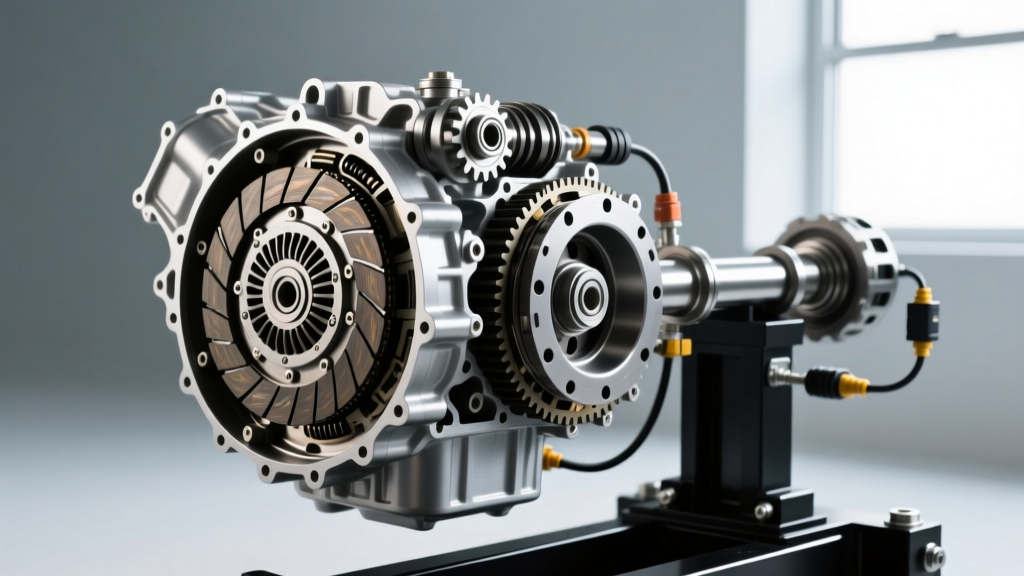
Diagnosing a Ford dual clutch transmission requires abandoning traditional automatic transmission logic. The Ford DPS6 (6DCT250) PowerShift is essentially two manual transmissions housed in a single dry-clutch bellhousing, controlled by an electro-mechanical Transmission Control Module (TCM). Because it lacks a torque converter and operates with dry friction plates, the failure modes manifest uniquely. As of 2026, aftermarket diagnostics have matured, allowing technicians and advanced DIYers to pinpoint issues without immediately resorting to a full teardown.
This step-by-step guide breaks down clutch system diagnostics by the three primary sensory symptoms: vibration (shudder), noise, and shift feel. We will focus heavily on the infamous 2011–2018 Fiesta and 2012–2018 Focus platforms, utilizing real-world PID data, factory torque specifications, and exact component part numbers.
Step 1: Baseline TCM Adaptation and Data Logging
Before physically inspecting the clutch assembly, you must interrogate the TCM. The DPS6 relies on continuous clutch position adaptation. If the adaptation is corrupted, the clutch motors will over-stroke, causing artificial shudder and engagement delays that mimic mechanical failure.
Required Tooling and Procedure
Connect an advanced OBD-II scanner capable of reading Ford-specific PIDs, such as FORScan with an ELM327 V1.5 adapter. Perform a TCM adaptation reset (often labeled as 'Clutch Touchpoint Adaptation' or 'Clutch Learn Procedure'). Drive the vehicle through the adaptation cycle (typically 0–40 mph with light, steady throttle) and immediately log the following live data PIDs:
| PID Parameter | Normal Operating Value | Failure Indication |
|---|---|---|
| CLT1_SLIP_RPM (Clutch 1 Slip) | < 30 RPM at steady cruise | > 75 RPM indicates severe friction material glazing or contamination. |
| CLT2_SLIP_RPM (Clutch 2 Slip) | < 30 RPM at steady cruise | > 75 RPM indicates worn friction discs or weak actuator pressure. |
| CLT_ACT_DUTY (Actuator Duty Cycle) | 15% – 40% during engagement | > 60% indicates mechanical binding or failing clutch motor brushes. |
| CLT_POS_ERR (Position Error) | < 2.5 mm variance | > 5.0 mm points to a failing fork position sensor or stripped actuator gear. |
Expert Note: If the slip RPMs are within spec but the vehicle still shudders, the issue is likely harmonic (Dual Mass Flywheel) rather than friction-based.
Step 2: Diagnosing Vibration and Low-Speed Shudder
Shudder is the most heavily documented symptom in the NHTSA Focus Database, often occurring between 10 and 25 mph under light acceleration. To diagnose this mechanically, perform the 'Creep Test'.
The Creep Test Procedure
- Find a flat, empty parking lot. Keep your foot completely off the accelerator.
- Release the brake pedal and allow the vehicle to creep forward in Drive.
- As the clutches engage, monitor the steering wheel and floor pan for high-frequency vibration.
Diagnosis A: Glazed or Contaminated Clutches. If the shudder is accompanied by a faint burning odor or if your FORScan slip RPMs spike above 100 RPM during the creep test, the dry clutch friction material is glazed. More critically, inspect for input shaft seal leaks. The DPS6 input shaft seals (Part No. AE8Z-7052-A) are notorious for weeping gear oil onto the dry clutch plates. Once contaminated with oil, the dry clutches cannot be cleaned; the entire clutch pack must be replaced.
Diagnosis B: Dual Mass Flywheel (DMF) Degradation. If the slip RPMs are perfectly stable but a heavy, rhythmic 'thumping' vibration is felt through the chassis at idle and low speeds, the internal damping springs of the DMF have collapsed. You can verify this by removing the inspection cover and checking for excessive rotational free-play (greater than 15 degrees) between the primary and secondary flywheel masses.
Step 3: Auditory Diagnostics (Noises and Whines)
Because the DPS6 uses electric motors to actuate the clutch forks instead of hydraulic fluid, the auditory feedback is entirely different from a traditional manual transmission. You must differentiate between bearing failure and actuator motor noise.
Pinpointing the Source of the Whine
- High-Pitched Whine During Gear Changes: This is typically the dry clutch release bearing (Part No. AE8Z-7A548-A). Unlike wet clutches, the DPS6 release bearing operates in a dry, high-dust environment. When the grease dries out or the cage fractures, it emits a metallic squeal that correlates exactly with clutch actuation (shifting between 1-2 or 3-4).
- Grinding or 'Zip-Tie' Ratcheting Sound: If you hear a plastic grinding noise from the front of the bellhousing, the clutch actuator motor gears are stripping. The TCM commands the motor, but the stripped gears fail to move the clutch fork. This will usually trigger a P090C (Clutch Actuator Circuit Low) or P090D code. The actuator motor assembly (Part No. CU5Z-7C600-A) must be replaced. Do not attempt to rebuild the plastic planetary gears inside the motor; aftermarket 2026 revisions use hardened steel gears that solve this permanently.
- Clunking on Deceleration: This is rarely the clutch itself. It is usually excessive backlash in the differential or worn engine/transmission mounts allowing the drivetrain to shift violently under load reversal.
Step 4: Evaluating Shift 'Feel' and Engagement Hesitation
In a traditional manual, 'feel' refers to the physical resistance of the clutch pedal. In the Ford dual clutch transmission, the brake pedal acts as the clutch disengagement switch, and 'feel' translates to the subjective quality of gear engagement and shift harshness.
Diagnosing the 'Rubber Band' Effect
Drivers often report a 'rubber band' sensation: the engine RPMs flare up, but vehicle acceleration is delayed, followed by a harsh, sudden jolt when the gear finally catches.
Diagnostic Truth: RPM flaring between shifts on a dry DCT is almost never a clutch slip issue if it only happens during the 1-2 or 2-3 upshift under heavy throttle. It is usually a TCM shift-scheduling hesitation or a failing clutch fork position sensor. The TCM misreads the fork's physical location, delaying the torque handover between Clutch 1 and Clutch 2.
To test this, log the CLT1_POS and CLT2_POS PIDs during a wide-open-throttle (WOT) pull. If the position sensor voltage drops out or spikes erratically just before the RPM flare, the sensor (integrated into the TCM on early models, or external on later revisions) is failing. If the position data is smooth but the RPMs still flare, the clutch pack thickness has worn beyond the TCM's maximum adaptation limit, requiring a physical clutch replacement and a manual shim measurement.
Repair Specifications, Costs, and Torque Data
If your diagnostic steps confirm mechanical failure, precise reassembly is critical. The DPS6 tolerances are incredibly tight. Below are the factory specifications required for a successful clutch and actuator replacement.
Essential Component Part Numbers and Pricing (2026 Estimates)
- Dry Clutch Kit (Includes friction plates and alignment tool): AE8Z-7540-A (Approx. $450 – $650 via RockAuto or dealer)
- Clutch Actuator Motor Assembly: CU5Z-7C600-A (Approx. $350 – $500)
- Input Shaft Seals (Replace in pairs): AE8Z-7052-A (Approx. $25 each)
- Clutch Release Bearing: AE8Z-7A548-A (Approx. $80 – $120)
Critical Torque Specifications
Failure to adhere to these torque specs will result in immediate clutch drag or bellhousing misalignment, destroying the new friction plates within 500 miles.
- Dual Mass Flywheel to Crankshaft (M10x1.5 bolts): 115 Nm (85 lb-ft). Note: Always use new stretch bolts and apply a medium-strength threadlocker.
- Bellhousing to Engine Block: 48 Nm (35 lb-ft).
- Clutch Actuator Motor to Bellhousing: 15 Nm (11 lb-ft). Overtorquing these small M6 bolts will crack the aluminum actuator housing.
- Clutch Pressure Plate to Flywheel: 25 Nm (18 lb-ft) in a star pattern, using the mandatory alignment tool included in the clutch kit.
Final Expert Recommendations
Never attempt to 'flush' or add friction modifiers to the gear oil to cure a Ford dual clutch transmission shudder. The DPS6 gear oil (Motorcraft Dual Clutch Transmission Fluid, Part No. XT-11-QDC) only lubricates the gears and differential; it does not touch the dry clutches. Adding friction modifiers will degrade the synchronizers and void any remaining Ford Powertrain Warranty coverage. Stick to the data, trust the FORScan PIDs, and replace the mechanical components when the slip thresholds are breached.