The Olfactory Diagnostic: Burnt Friction vs. Melting Elastomers
When a pungent, acrid odor invades your vehicle cabin during hard acceleration or low-speed maneuvering, the immediate assumption among many drivers and novice technicians is a slipping manual transmission clutch. However, in modern front-engine, rear-wheel-drive, and all-wheel-drive layouts, the accessory drive system sits directly in front of the engine block, and its failures can produce odors that are easily misdiagnosed. Specifically, a failing ac compressor clutch bearing can seize, overheat, and generate a severe burning smell that mimics drivetrain friction failure. At AutoGearNexus, we emphasize that accurate clutch system diagnostics require isolating the exact chemical signature of the smell, understanding parasitic engine loads, and performing targeted mechanical verifications.
A manual transmission clutch disc is composed of phenolic resins, fiberglass, and ceramic or metallic friction materials. When this disc slips against a cast-iron or steel flywheel under load, it generates temperatures exceeding 500°F (260°C). The resulting odor is distinctly sharp, resembling burnt brakes or scorched asbestos. Conversely, the smell originating from a failing AC compressor clutch bearing is a complex mixture of melting EPDM (ethylene propylene diene monomer) serpentine belt rubber, hot steel, and occasionally, the sharp ozone tang of a burning electromagnetic coil. Because the HVAC system's fresh air intake is located at the base of the windshield, directly above the accessory drive, these odors are pulled straight into the cabin, creating the illusion of a failing transmission.
The Parasitic Drag Edge Case: When the AC Destroys the Clutch
There is a critical edge case where the AC compressor clutch bearing and the manual transmission clutch are directly linked in a failure cascade. When the pulley bearing (typically a double-row angular contact ball bearing, such as the NSK 35BD5020T12) loses its grease or suffers seal intrusion, it begins to pit and bind. If the bearing seizes entirely while the engine is running, the serpentine belt will either snap or smoke profusely against the locked pulley.
However, if the bearing binds intermittently, it creates massive parasitic drag on the engine crankshaft. A locked Sanden SD7V16 or Denso 10S17C compressor can draw upwards of 8 to 12 horsepower. If a driver is executing a steep hill-start and the compressor suddenly binds, the engine RPM will plummet. To prevent stalling, the driver will instinctively feed more throttle and slip the manual transmission clutch aggressively. In this scenario, the failing AC compressor clutch bearing is the root cause, but the actual burning smell is the manual transmission clutch friction material being destroyed by the driver's compensation for the parasitic drag.
Comparative Smell and Symptom Matrix
To accurately diagnose the source of the burning smell, technicians must evaluate the symptom under controlled variables. Use the following matrix to isolate the failing component.
| Diagnostic Variable | Manual Transmission Clutch Slip | AC Compressor Clutch Bearing / Belt |
|---|---|---|
| Odor Profile | Acrid, metallic, burnt brakes, phenolic resin | Melting rubber, hot grease, ozone (if coil burns) |
| Trigger Condition | High gear, low RPM, heavy throttle (e.g., 4th gear at 40mph) | Idling, A/C engaged, or serpentine belt speed-dependent |
| RPM vs. Vehicle Speed | RPMs flare without proportional vehicle acceleration | RPMs drop or engine bogs; vehicle speed unaffected by slip |
| A/C System Dependency | Smell persists regardless of HVAC settings | Smell only occurs or worsens when A/C compressor is engaged |
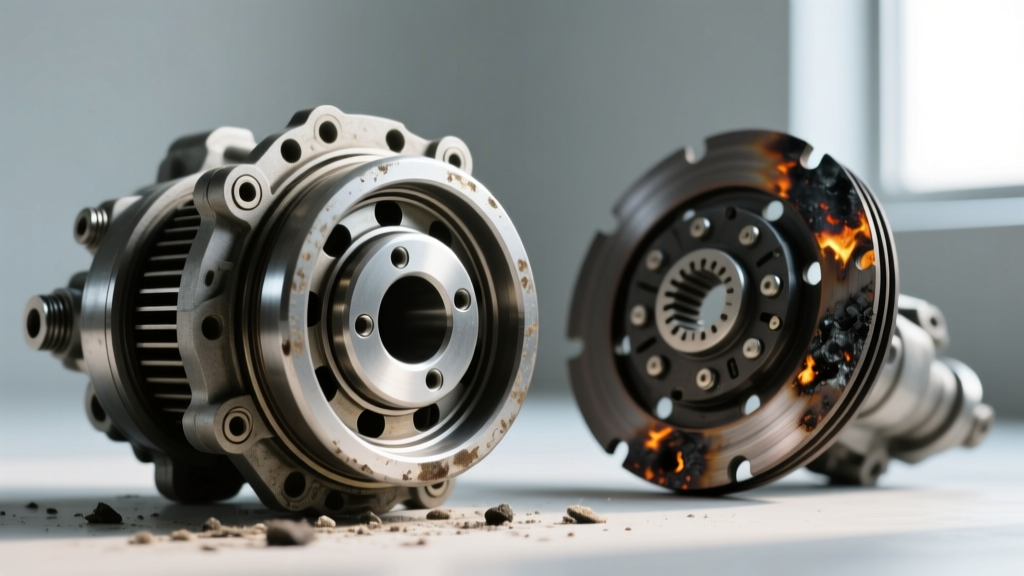
| Visual Evidence | Glazed flywheel, blue pressure plate fingers, clutch dust | Melted belt cord, scored pulley face, bearing grease slung |
Step-by-Step Isolation Testing
Test 1: The Static A/C Engagement Test
With the vehicle stationary, the parking brake engaged, and the transmission in Neutral, start the engine. Turn the climate control to maximum A/C and the blower to high. Observe the AC compressor clutch. If the clutch engages but you immediately hear a metallic grinding or growling noise from the pulley, followed by a hot rubber smell, the ac compressor clutch bearing is failing. According to Denso Automotive Compressors technical documentation, a healthy clutch should engage with a crisp 'click' and spin silently. If the pulley wobbles or the belt chirps continuously during engagement, the bearing race is compromised.
Test 2: The Drivetrain Load Test
To verify the manual transmission clutch, find a safe, empty incline. With the A/C turned completely OFF, start in second gear instead of first. Apply moderate throttle while slowly releasing the clutch pedal. If the engine RPMs rise sharply but the vehicle struggles to climb the incline, and the distinct phenolic 'burnt brake' smell enters the cabin, the transmission clutch friction disc is worn past its service limit or the pressure plate diaphragm springs have fatigued. This confirms the transmission is the culprit, independent of the accessory drive.
Mechanical Verification: Air Gap and Bearing Play
If the AC system is suspected, a physical inspection of the compressor clutch assembly is mandatory. The electromagnetic clutch relies on a precise air gap between the clutch plate (armature) and the rotor. Over time, the friction face wears down, widening this gap.
- Target Air Gap Spec: 0.35mm to 0.60mm (0.014' to 0.024').
- Excessive Gap (>0.8mm): The electromagnetic coil must pull excessive amperage to bridge the magnetic field. This causes the coil to overheat, melt its internal varnish, and produce a distinct electrical burning smell.
- Bearing Axial/Radial Play: Grasp the clutch plate and attempt to rock it. Any discernible clack or gritty rotation indicates the internal bearing seals have failed. Moisture intrusion destroys the bearing races, leading to eventual seizure.
For serpentine belt tension and routing verification, always consult Gates Technical Resources to ensure the automatic tensioner is providing the correct Newton-force rating, as a weak tensioner will cause the belt to slip on the AC pulley, generating a burning rubber smell that mimics a bearing failure.
2026 Repair Realities: Parts, Torque Specs, and Costs
Addressing these issues requires precision. Below are the current market realities and mechanical specifications for resolving both ends of this diagnostic spectrum.
AC Compressor Clutch and Bearing Repair
- Clutch Bearing (e.g., NSK 35BD5020T12): $25 - $45. Requires a specialized bearing puller and snap-ring pliers to replace without damaging the rotor.
- Complete Clutch Assembly Kit: $120 - $250. Includes coil, rotor, and clutch plate. Recommended if the coil shows heat discoloration.
- Coil Resistance Check: Must read between 3.5 and 4.5 Ohms at 20°C. Anything outside this range mandates coil replacement.
- Compressor Mounting Torque: Typically 25 Nm (18 lb-ft) for M8 bolts into aluminum engine blocks. Always use new stretch bolts if specified by the OEM.
Manual Transmission Clutch Replacement (e.g., Tremec T56 / Subaru 6MT)
- Clutch Kit (LuK RepSet or Sachs): $250 - $450. Includes disc, pressure plate, and release bearing.
- Flywheel Resurfacing/Replacement: $150 - $600. If the clutch has burned severely, the flywheel will exhibit heat checking (micro-cracks) and hard spots. Dual-mass flywheels (DMF) cannot be resurfaced and must be replaced.
- Flywheel Runout Spec: Must not exceed 0.003 inches (0.075mm). Excessive runout causes uneven clutch engagement and premature burning.
- Flywheel Bolt Torque (Example: GM LS / Ford Coyote): Often requires a torque-angle sequence, such as 25 Nm + 50 degrees. Never reuse torque-to-yield (TTY) flywheel bolts.
- Bellhousing Torque: 35 lb-ft to 55 lb-ft depending on the casing material. Ensure the clutch fork pivot ball is inspected for spherical wear, as a worn pivot alters the clutch release geometry, leading to incomplete engagement and subsequent slipping.
Summary
Diagnosing a clutch burning smell requires looking beyond the transmission tunnel. By understanding the chemical differences between burning friction material and melting accessory drive elastomers, technicians can avoid costly misdiagnoses. Whether the root cause is a seized ac compressor clutch bearing creating parasitic drag, an out-of-spec electromagnetic air gap, or a genuinely worn manual transmission clutch disc, methodical isolation testing and adherence to precise torque specifications will ensure a permanent repair.