The Critical Role of the Ford Differential Tag in Axle Diagnosis
When diagnosing a whining, clunking, or chattering rear end on a Ford F-150, Mustang, or Super Duty, guessing the internal gear ratio, ring gear size, or limited-slip status is a recipe for misdiagnosis and wasted labor. Before you break the bead on a rear differential cover or order replacement Timken bearings, you must identify the exact axle assembly. This is where a Ford differential tag decoder becomes your most vital diagnostic tool.
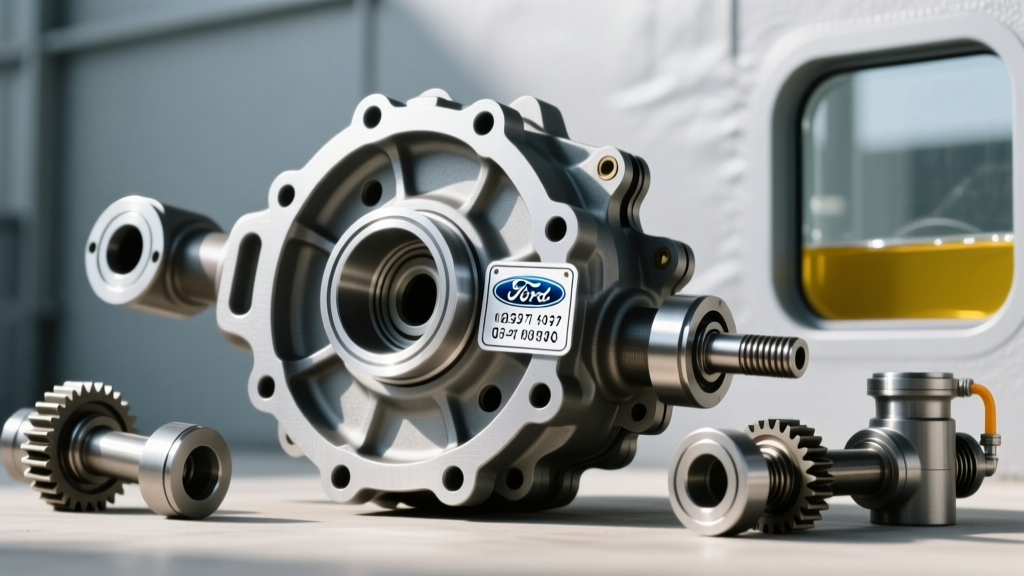
Unlike many domestic competitors that stamp their gear ratios directly onto the axle housing or rely solely on RPO/VIN codes, Ford has historically utilized a small, metal identification tag bolted directly to the differential cover. This tag contains the axle code, manufacturing date, and gear ratio data necessary to prescribe the correct rear differential service, fluid specification, and friction modifier requirements.
Locating and Decoding the Ford Axle Tag
The identification tag is typically secured under one of the upper differential cover bolts (usually at the 10 o'clock or 12 o'clock position). Over decades of use, these tags can become corroded, painted over, or missing. If the tag is intact, you will see a multi-line alphanumeric stamping.
According to The Ranger Station's Ford Axle Identification Guide, the top line usually indicates the axle code (e.g., S411 or 3L73), the second line shows the ring gear size and manufacturing plant, and the bottom line denotes the build date. Below is a diagnostic matrix to help you decode the most common Ford rear axle tags encountered in the shop.
| Tag Code (Example) | Ring Gear Size | Gear Ratio | Differential Type | Typical Application |
|---|---|---|---|---|
| S355 | 8.8-inch (10-bolt) | 3.55 | Open (Conventional) | F-150 / Mustang (Non-Performance) |
| 3L73 | 8.8-inch (10-bolt) | 3.73 | Traction-Lok (LSD) | F-150 / Ranger / Explorer |
| L373 | 9.75-inch (12-bolt) | 3.73 | Traction-Lok (LSD) | F-150 (Heavy Payload Pkg) |
| 4L10 | 10.5-inch (14-bolt) | 4.10 | Traction-Lok (LSD) | F-250/F-350 Super Duty (Sterling) |
Note: The presence of the letter "L" between the numbers (e.g., 3L73) universally denotes a Ford Traction-Lok limited-slip differential. If the "L" is missing or replaced by an "S" (e.g., S411), it is an open differential.
Troubleshooting Rear Axle Symptoms by Decoded Spec
Once you have utilized the Ford differential tag decoder to identify the exact axle, you can map the customer's symptoms to specific mechanical failure modes inherent to that assembly.
Symptom 1: High-Speed Deceleration Whine (8.8-inch Axle)
A high-pitched whine occurring specifically on coast or deceleration in a decoded 8.8-inch open differential (e.g., S355) almost always points to pinion bearing wear or improper ring-and-pinion backlash. The 8.8-inch axle uses a specific crush sleeve to set pinion preload. If the gear oil was previously over-torqued during a drain plug removal (if an aftermarket pan was installed) or if the fluid broke down due to heavy towing without the Max Trailer Tow package, the pinion bearings will starve and pit. Diagnostic Step: Check for metallic shimmer in the fluid. If present, a full rebuild with a new Timken bearing kit and Motive Gear master install kit is required.
Symptom 2: Low-Speed Chatter on Tight Turns (Traction-Lok Axles)
If your tag decoder reveals a limited-slip unit (e.g., 3L73 or 4L10) and the vehicle exhibits a shuddering chatter during parking lot maneuvers, the clutches inside the Traction-Lok carrier are binding. This is rarely a mechanical failure of the carrier itself; rather, it is a fluid chemistry issue. Ford's Traction-Lok requires a specific friction modifier. If the previous owner serviced the differential with standard 75W-140 gear oil without adding the modifier, the clutches will grab and release violently. Diagnostic Step: Perform a fluid evacuation and refill with Motorcraft SAE 75W-140 Synthetic Rear Axle Lubricant and exactly 4 oz of Motorcraft XL-3 Friction Modifier Additive.
Symptom 3: Heavy Clunk on Load Reversal (10.5-inch Sterling)
Found in Super Duty trucks, the 10.5-inch Sterling 14-bolt axle is notorious for side-gear wear and excessive backlash when subjected to heavy towing. If the tag reads 4L10 and the truck clunks loudly when shifting from Reverse to Drive, the spider gear cross-pin and side gears are likely worn, or the rear driveshaft slip yoke lacks proper lubrication. Diagnostic Step: Before tearing into the differential, grease the rear driveshaft slip yoke with Motorcraft PTFE Grease (PM-19-A). If the clunk persists, remove the 14-bolt cover and check the spider gear endplay.
The "No Drain Plug" Dilemma: Ford Rear Differential Service Protocol
One of the most crucial pieces of knowledge for rear differential service on Ford vehicles is that the vast majority of factory 8.8-inch and 9.75-inch axle housings do not have a drain plug. Only the heavy-duty 10.5-inch Sterling axles and aftermarket differential covers feature them. This fundamentally changes the service protocol.
According to Ford's Official Truck Towing & Maintenance Tech Library, proper fluid evacuation is critical to prevent contamination of the new gear oil. Here is the professional 2026 service protocol for Ford axles without drain plugs:
- Fluid Evacuation: Do not immediately break the cover seal. Insert a pneumatic or manual fluid evacuator pump through the ABS sensor hole (if accessible) or the fill plug hole using a specialized angled extraction hose. Remove as much of the degraded 75W-140 fluid as possible before unbolting the cover.
- Cover Removal & Cleaning: Break the 10-bolt or 12-bolt cover seal using a gasket scraper. Avoid prying between the mating surfaces with a screwdriver, as scoring the aluminum or stamped steel housing will cause permanent leaks. Clean the interior of the housing with brake cleaner and lint-free shop towels. Inspect the magnetic drain plug (if equipped on the cover) for excessive ferrous material.
- Gasket Selection: Abandon factory RTV silicone. Modern best practices dictate using a reusable gasket, such as the Lube Locker Ford 8.8" (Part# LL-88) or 9.75" (Part# LL-975). These feature a steel core with molded rubber O-rings that seal perfectly without the mess and cure-time of RTV.
- Refill & Torque: Reinstall the cover. The torque specification for Ford 8.8-inch 10-bolt cover bolts is 28 to 38 lb-ft. For the 9.75-inch 12-bolt, it is 30 to 40 lb-ft. Over-torquing will warp stamped steel covers and crack aluminum ones. Fill through the upper fill plug until fluid weeps out, indicating the correct level.
2026 Maintenance Cost & Parts Matrix
Budgeting for a proper Ford rear differential service requires accounting for the specific fluid capacities and chemical additives dictated by the axle tag. Below is a real-world pricing and part-number matrix for the most common Ford rear axle services.
| Component / Fluid | Part Number | Application / Notes | Est. Cost (2026) |
|---|---|---|---|
| Motorcraft 75W-140 Synthetic Gear Oil (1 Qt) | XY-75W140-QL | 8.8" (Needs 3 Qts), 9.75" (Needs 4 Qts), 10.5" (Needs 5-6 Qts) | $18.50 / Qt |
| Motorcraft XL-3 Friction Modifier (4 oz) | C0AZ-19B546-A | Mandatory for all "L" coded Traction-Lok axles to prevent chatter | $12.99 |
| Lube Locker Reusable Gasket (8.8") | LL-88 | Replaces messy RTV; lifetime warranty | $34.95 |
| Lube Locker Reusable Gasket (9.75") | LL-975 | F-150 Heavy Payload / Raptor rear axles | $38.95 |
| Fluid Evacuator Pump (Manual 8L) | Various (e.g., EWK) | Essential tool for Ford axles lacking drain plugs | $45.00 |
Final Diagnostic Takeaways
Rear differential service on Ford vehicles is not a one-size-fits-all procedure. By taking the extra three minutes to clean the differential cover bolt and utilize a Ford differential tag decoder, you transition from guessing to precision mechanics. Whether you are diagnosing a worn pinion bearing on a Mustang's 8.8-inch, curing a chattering Traction-Lok on an F-150, or servicing a heavy-duty Sterling 10.5-inch on a Super Duty, the tag holds the blueprint. Always verify the torque specs, respect the lack of a drain plug on light-duty housings, and never skip the friction modifier on limited-slip units. For further verification on axle ratios and towing capacities tied to your specific VIN, always cross-reference with Ford Official Owner Support & Maintenance Guides or check aftermarket part fitments via RockAuto's Drivetrain Catalog before ordering internal rebuild kits.