The True Cost of Servicing a Ford 9 Limited Slip Differential in 2026
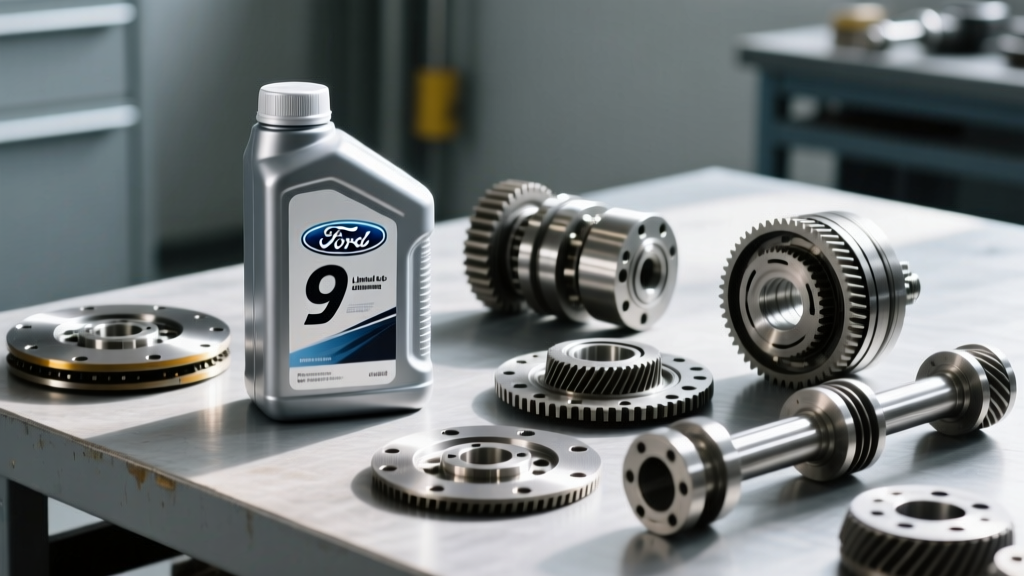
The legendary Ford 9-inch rear end remains one of the most robust and highly sought-after axle assemblies in automotive history. Whether it is resting under a classic 1960s Mustang, a vintage F-100 truck, or a modern restomod built for track duty, the drivetrain's longevity hinges entirely on proper lubrication. Maintaining a ford 9 limited slip differential requires more than just dumping in whatever gear oil is on sale. The intricate clutch packs or helical gears inside a limited-slip differential (LSD) demand precise fluid chemistry, specific friction modifiers, and meticulous service procedures.
As we navigate the 2026 automotive aftermarket landscape, the cost of high-quality synthetic lubricants and specialized sealing components has shifted. For owners and fleet managers looking to budget for preventive maintenance, understanding the exact financial and mechanical requirements of a Ford 9-inch service is critical. This guide breaks down the real-world costs, fluid specifications, and the unique mechanical quirks of the 9-inch housing that separate amateur mechanics from seasoned drivetrain experts.
2026 Pricing Breakdown: DIY vs. Professional Drivetrain Shop
Unlike standard open differentials, limited-slip variants require additional chemical additives and, occasionally, more labor-intensive service methods depending on the housing configuration. Below is a comprehensive cost analysis for a standard Ford 9-inch limited-slip fluid service in 2026.
| Service Component | DIY Cost (2026) | Professional Shop Cost (2026) |
|---|---|---|
| Synthetic 75W-140 Gear Oil (3 Quarts) | $75.00 - $105.00 | $105.00 - $140.00 |
| Friction Modifier (4 oz. Bottle) | $12.00 - $18.00 | $18.00 - $25.00 |
| Third Member Gasket / Sealer | $15.00 - $35.00 | $25.00 - $45.00 |
| Fluid Extraction / Fill Labor | $0.00 (Manual Siphon) | $140.00 - $220.00 |
| Housing Flush (If heavily degraded) | $20.00 (Solvent) | $80.00 - $120.00 |
| Total Estimated Cost | $122.00 - $178.00 | $368.00 - $550.00 |
While the DIY route offers substantial savings, professional shops charge a premium for the 9-inch due to the labor involved in fluid extraction. Because the classic Ford 9-inch third member (often called the 'pumpkin') is front-loaded into the axle housing, many OEM and vintage aftermarket housings lack a dedicated drain plug on the bottom of the casing. Shops must either use a high-viscosity pneumatic siphon through the fill plug or completely unbolt and drop the third member to drain the fluid, inspect the ring and pinion, and clean the housing magnet.
Fluid Specifications: Viscosity and Shear Stability
When servicing a Ford 9 limited slip differential, selecting the correct viscosity is paramount for protecting both the hypoid gear set and the internal clutches. While older factory manuals from the 1970s and 80s often recommended 80W-90 mineral-based gear oils, modern 2026 engineering standards heavily favor full synthetic formulations.
The 75W-140 vs. 75W-90 Debate
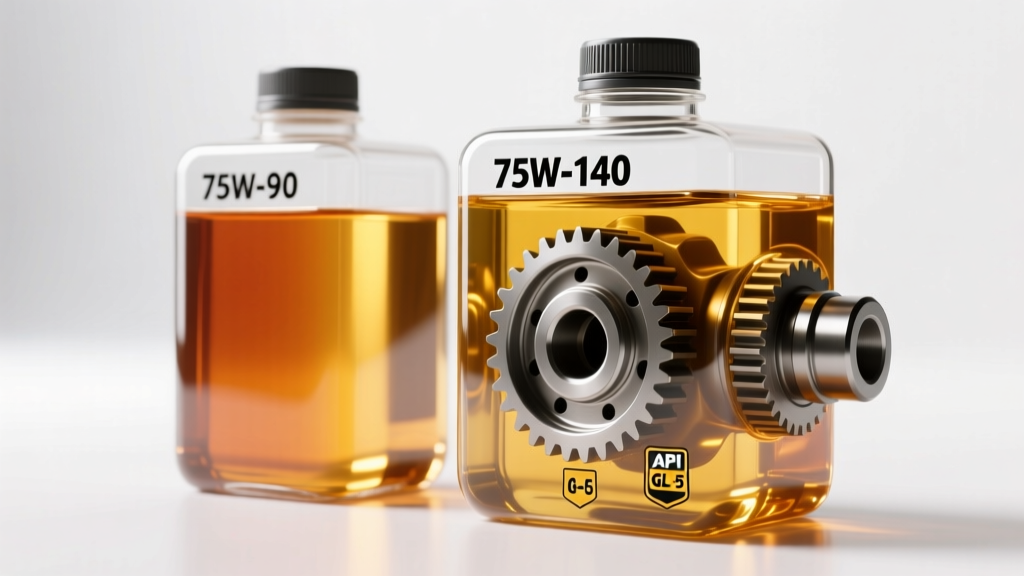
For heavy-duty applications, towing, or track use, 75W-140 synthetic gear oil is the undisputed standard. The higher high-temperature viscosity rating ensures that the fluid film does not rupture between the ring and pinion gears under extreme shear loads. Clutch-type limited-slip differentials (such as the OEM Ford Trac-Lok, AuburnGear Pro-Series, or Eaton Posi) generate immense localized heat when the clutch packs engage during cornering. A 75W-90 fluid can thin out excessively in these scenarios, leading to accelerated clutch wear and gear scoring.
- Motorcraft 75W-140 Synthetic (Part # XY-75W140-QL): The OEM benchmark, featuring excellent shear stability and baseline compatibility with Ford friction modifiers. Expect to pay around $32 per quart.
- Red Line 75W140 NS (Non-Slippery): A favorite among track builders. The 'NS' designation means it lacks pre-mixed friction modifiers, allowing the builder to dial in the exact amount of slip-lock additive required for their specific clutch pack preload.
- Amsoil Severe Gear 75W-140: Offers exceptional extreme-pressure (EP) additives, ideal for off-road trucks utilizing the 9-inch with large 35-inch or 40-inch tires.
The Friction Modifier Imperative
The most common mistake made during a Ford 9 limited slip differential service is ignoring or overusing the friction modifier. If your 9-inch is equipped with a clutch-based LSD, the gear oil alone will not provide the correct coefficient of friction for the clutch plates. Without a modifier, the clutches will bind and release rapidly during low-speed turns, resulting in the notorious 'chatter' or 'grunting' noise that can permanently glaze or shatter the friction discs.
Expert Insight: Never use friction modifiers in helical-gear limited slips like the Eaton Detroit Truetrac. The Truetrac relies on gear separation forces and side-gear pinion friction; adding modifier fluid will cause the differential to act like an open diff, completely defeating its purpose.
For clutch-type units, Ford Motorcraft XL-3 Friction Modifier remains the gold standard. Priced at approximately $14 per 4 oz. bottle, it is formulated specifically for the carbon-fiber and steel clutch materials used in Trac-Lok and modern aftermarket equivalents. The general rule of thumb is to add 2 to 4 ounces of modifier per quart of gear oil. However, the best practice is to start with 2 ounces, perform a series of figure-eight maneuvers in a wet parking lot, and incrementally add 1-ounce doses only if chatter persists. Over-adding modifier will cause the clutch packs to slip continuously under heavy acceleration, leading to overheating and total differential failure.
Service Procedure: The 'No Rear Cover' Reality
Amateur mechanics frequently confuse the Ford 8.8-inch axle with the Ford 9-inch. The 8.8 features a 10-bolt rear cover that is easily removed for draining. The classic Ford 9-inch, however, features a front-loaded third member. To properly service the differential and inspect the internal components, you must address the third member directly.
Method 1: The Siphon Technique (Maintenance Fill)
If the fluid is relatively clean and you are simply performing a 30,000-mile preventive interval change, you can use a manual fluid transfer pump. Insert the extraction tube into the 3/8-inch or 1/2-inch NPT filler plug located on the front face of the third member. Pump out the old fluid until it runs dry. Because the 9-inch housing features a slight downward slope in the axle tubes, you may need to jack up one side of the vehicle to encourage the old oil to flow toward the center pumpkin. Refill with exactly 2.5 to 2.75 quarts of 75W-140 (mixed with your pre-measured modifier) until it reaches the bottom threads of the fill hole.
Method 2: Dropping the Third Member (Deep Clean & Inspection)
For high-mileage axles, or if metallic debris is suspected, dropping the third member is mandatory. This requires draining the fluid, removing the driveshaft, pulling both axle shafts, and unbolting the third member from the housing.
- Axle Retainer Nuts: Typically 3/8" or 1/2" nuts holding the axle shafts. Torque spec upon reassembly is 25-35 lb-ft.
- Third Member to Housing Nuts/Bolts: Usually 1/2"-13 hardware. These must be torqued to 45-55 lb-ft in a crisscross pattern to ensure the gasket seals evenly against the machined face of the axle housing.
- Filler Plug: Do not overtighten the NPT filler plug. Torque to 20-25 lb-ft. Over-torquing a tapered pipe plug can easily crack the cast iron or aluminum third member casing, resulting in a catastrophic fluid leak.
Gasket Selection and Sealing Technologies
When pulling the third member, the mating surface between the pumpkin and the axle housing must be perfectly clean. Historically, mechanics relied on RTV silicone. However, in 2026, reusable elastomer gaskets are the professional standard. Companies like LubeLocker manufacture precision-molded gaskets that eliminate the risk of RTV squeezing inward and clogging the oil galleries or clutch packs. A high-quality reusable third member gasket costs between $25 and $35 but can be reused multiple times, saving money and preventing leaks over the lifespan of the vehicle.
Preventive Maintenance Intervals
To maximize the lifespan of your Ford 9 limited slip differential, adhere to the following service intervals based on your vehicle's duty cycle:
- Street / Highway Cruising: Every 50,000 miles or 5 years.
- Towing / Heavy Payload: Every 25,000 miles or 2 years. The added load drastically increases hypoid gear temperatures.
- Track / Drag Racing / Rock Crawling: Every 2 to 4 events, or at minimum, once per racing season. Clutch-type LSDs shed microscopic friction material into the oil, which acts as an abrasive lapping compound if not flushed regularly.
Ultimately, the cost of a fluid change—whether it is $150 in your home garage or $450 at a specialized drivetrain shop—is a fraction of the $1,500 to $3,000 required to rebuild a destroyed ring, pinion, and clutch pack. By investing in premium 75W-140 synthetics, precise friction modifiers, and meticulous torque procedures, your Ford 9-inch will continue to deliver legendary traction and reliability for decades to come. For further technical specifications on housing configurations and spline counts, builders frequently reference the engineering archives at Currie Enterprises.