The Evolution of the Truck Rear Differential: Why Fluid Choice Matters in 2026
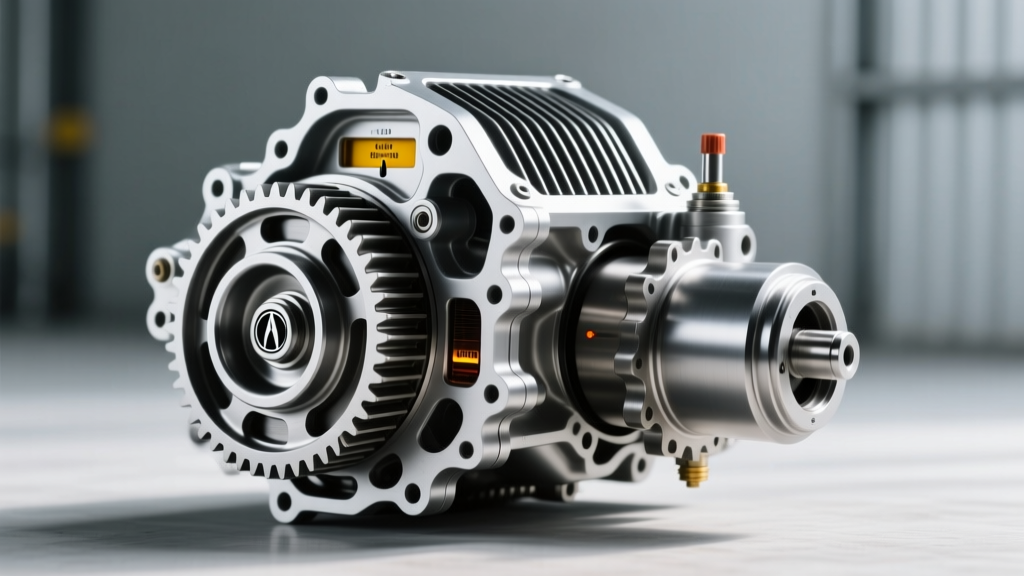
If you are driving a modern heavy-duty pickup, the torque figures are nothing short of staggering. With the 2024-2026 High-Output Cummins pushing 1,050 lb-ft and the Duramax L5P generating up to 1,200 lb-ft from the factory, your drivetrain is subjected to unprecedented mechanical stress. The component taking the brunt of this rotational fury is your truck rear differential. Whether you are rocking a Ford Sterling 10.5-inch, a GM AAM 11.5-inch, or a Ram AAM 11.5-inch axle, the ring and pinion gears rely entirely on a thin film of gear oil to prevent catastrophic micropitting and thermal breakdown.
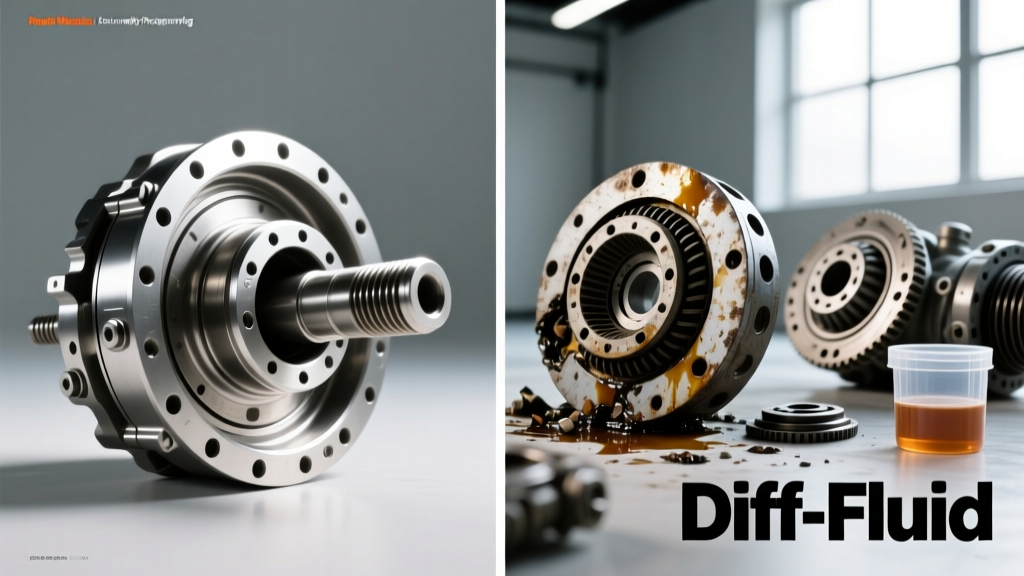
Choosing the right differential fluid is no longer just about grabbing the cheapest jug of 80W-90 from the auto parts store. In this comprehensive 2026 buyer's guide, we break down the exact viscosity specifications, API chemistry requirements, and limited-slip additive nuances you need to know before your next axle service.
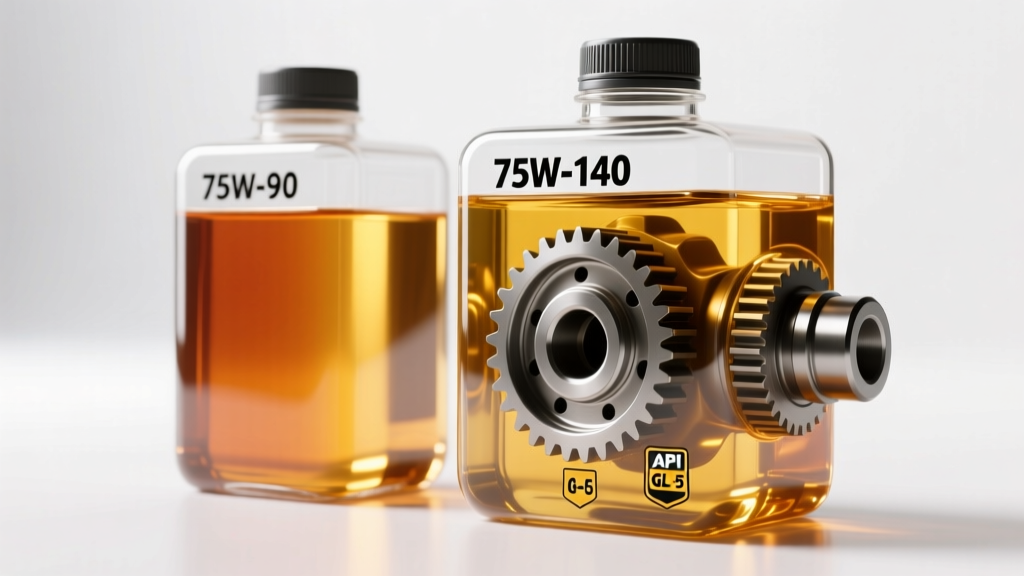
Decoding Viscosity: 75W-90 vs. 75W-140 vs. 80W-90
Gear oil viscosity is governed by the SAE J306 standard, which measures the fluid's resistance to flow at specific temperatures. Understanding these numbers is critical for matching the fluid to your truck's duty cycle.
75W-90: The Daily Driver & Light Towing Standard
For half-ton trucks (F-150, Silverado 1500, Ram 1500) and three-quarter-ton trucks used primarily for daily driving and light towing (under 8,000 lbs), a full synthetic 75W-90 is the gold standard. It offers excellent cold-weather flow, ensuring the ring and pinion are lubricated immediately upon startup, while maintaining a stable hydrodynamic film at standard operating temperatures of 180°F to 200°F.
75W-140: The Heavy-Duty & Severe Service Workhorse
If your truck rear differential is subjected to heavy towing (10,000+ lbs GCWR), commercial plowing, or high-speed desert running, you must step up to a 75W-140. The higher high-temperature viscosity rating prevents the oil from shearing and thinning out when differential temperatures spike past 250°F under extreme load. Most OEMs now mandate 75W-140 for HD trucks equipped with factory towing packages.
80W-90: The Conventional Budget Option
Conventional 80W-90 is largely obsolete for modern HD trucks but remains acceptable for older, lightly used farm or fleet trucks. It suffers from poor cold-weather pour points and rapid oxidation under high heat. We strongly advise against using conventional mineral oils in any 2020-2026 truck rear differential.
API GL-5 vs. GL-4: The Chemistry of Extreme Pressure
Never put API GL-4 gear oil in a truck rear differential. The ring and pinion sets in modern truck axles are hypoid gear designs. This means the pinion gear sits below the centerline of the ring gear, creating a massive amount of sliding friction alongside rolling friction.
To prevent the gears from welding together under load, GL-5 fluids are packed with Sulfur-Phosphorus (S-P) Extreme Pressure (EP) additives. When local gear tooth temperatures exceed 300°F, these S-P additives react chemically with the steel surface to form a sacrificial iron sulfide/iron phosphate layer. This prevents metal-on-metal contact. GL-4 fluids contain only half the EP additives of GL-5 and will lead to rapid, catastrophic wear in a hypoid truck axle. Always verify the API service classification on the bottle to ensure it meets or exceeds GL-5.
The Limited-Slip Friction Modifier Dilemma
Not all truck rear differentials are created equal, and your fluid choice must align with your specific differential type. If your truck is equipped with a clutch-type Limited Slip Differential (LSD)—such as the Auburn LSD, Eaton Trac-Lok, or certain OEM clutch packs—the clutches will chatter, bind, and destroy themselves without a dedicated Friction Modifier (FM).
- Clutch-Type LSDs: Require FM additives (e.g., Ford XL-3 or GM 88900401). Many premium synthetic gear oils come with FM already blended in, but always verify.
- Gear-Type LSDs (Torsen, Eaton Detroit Truetrac): Operate on helical gear torque biasing. They do not require friction modifiers. In fact, adding FM to a Truetrac can slightly reduce its torque biasing efficiency.
- Locking Differentials (Eaton E-Locker, ARB Air Locker): When unlocked, they act as open diffs. When locked, they act as a solid spool. Standard GL-5 gear oil without FM is perfectly safe and recommended.
2026 Gear Oil Comparison Chart: Top Picks for Truck Axles
Below is a curated comparison of the top-tier synthetic gear oils engineered specifically for heavy-duty truck rear differentials.
| Brand & Product | Part Number | Viscosity | Est. Price / Qt | Best Application |
|---|---|---|---|---|
| Amsoil Severe Gear | SVGQT-EA | 75W-90 | $14.50 | Daily driving, light towing, cold climates |
| Amsoil Severe Gear | SVTQT-EA | 75W-140 | $16.00 | Heavy towing, commercial HD, high heat |
| Mobil 1 Synthetic Gear Lube | 104361 | 75W-90 | $11.50 | OEM replacement, budget-conscious synthetic |
| Royal Purple Max Gear | 01314 | 75W-140 | $13.00 | Off-road, high-shock loading, includes FM |
| Red Line Heavy ShockProof | 30104 | 75W-250 | $22.00 | Extreme competition, heavy drag racing |
Expert Tip: When upgrading to a 75W-140 for heavy towing, expect a very slight decrease in fuel economy (usually 0.5 to 1 MPG) due to increased fluid drag. However, the exponential increase in gear protection and thermal stability far outweighs the cost of fuel when towing 12,000+ lbs.
Service Specifications: Capacities & Torque Data
Proper service goes beyond just pouring in the right fluid. Over-tightening the fill plug can crack the differential cover or strip the threads, while under-filling will starve the pinion bearings. Below are the baseline specifications for the most common HD truck rear differentials on the road.
Ford Sterling 10.5" / 10.25" (Super Duty F-250/F-350)
- Fluid Capacity: ~3.7 to 4.0 Quarts (depending on cover depth)
- Fill Plug Torque: 35 lb-ft
- Cover Bolt Torque (if removing): 28 lb-ft
- OEM Spec: WSL-M2C192-A
GM AAM 11.5" (Silverado/Sierra 2500HD/3500HD)
- Fluid Capacity: ~4.2 Quarts
- Fill Plug Torque: 25 lb-ft
- Cover Bolt Torque (if removing): 22 lb-ft
- OEM Spec: GM 12378261 (75W-90) or GM 12378514 (75W-140)
Ram AAM 11.5" / 10.5" (2500/3500)
- Fluid Capacity: ~3.8 to 4.1 Quarts
- Fill Plug Torque: 25 to 30 lb-ft
- Cover Bolt Torque (if removing): 30 lb-ft
- OEM Spec: MS-8985
The 2026 Buyer's Decision Framework
To select the exact fluid for your truck rear differential, run your setup through this quick diagnostic framework:
- Identify the Axle & LSD Type: Check your glovebox RPO codes (GM) or axle tag (Ford/Ram). Determine if you have an open diff, clutch-type LSD, or gear-type LSD.
- Assess Your GCWR (Gross Combined Weight Rating): If you tow over 10,000 lbs more than twice a month, bypass 75W-90 and purchase a high-quality 75W-140 synthetic.
- Check for Friction Modifiers: If you have a clutch-type LSD, ensure your chosen oil states 'Limited Slip Compatible' or purchase a separate bottle of OEM friction modifier to add during the fill process.
- Verify the Fill Level: The fluid level should be exactly at the bottom of the fill plug hole. If your truck has a lifted suspension, the axle pinion angle may be altered; you may need to add an extra 0.5 quarts to ensure the pinion bearing receives adequate splash lubrication.
By matching the precise SAE viscosity and API GL-5 chemistry to your specific truck rear differential, you ensure that your axle survives the immense torque outputs of modern heavy-duty powertrains. Never compromise on gear oil quality; it is the cheapest insurance policy your drivetrain will ever have.