The Ford 9-Inch Legacy and the Traction Dilemma
The Ford 9-inch rear end is arguably the most legendary axle assembly in automotive history. From Pro Stock drag cars to ultra4 rock crawlers, the Hotchkiss-style removable third member (dropout) offers unmatched gear ratio flexibility and structural rigidity. However, as modern engine platforms routinely push past the 600-horsepower mark in 2026, traction management has become the ultimate bottleneck. For decades, builders relied on a standard Ford 9 inch limited slip differential (LSD) to put power to the pavement. But when clutch packs fail and one-wheel peels ruin your pass or trail run, it is time to evaluate locking differential types and select the ultimate traction device for your specific application.
Why Retire Your Ford 9 Inch Limited Slip Differential?
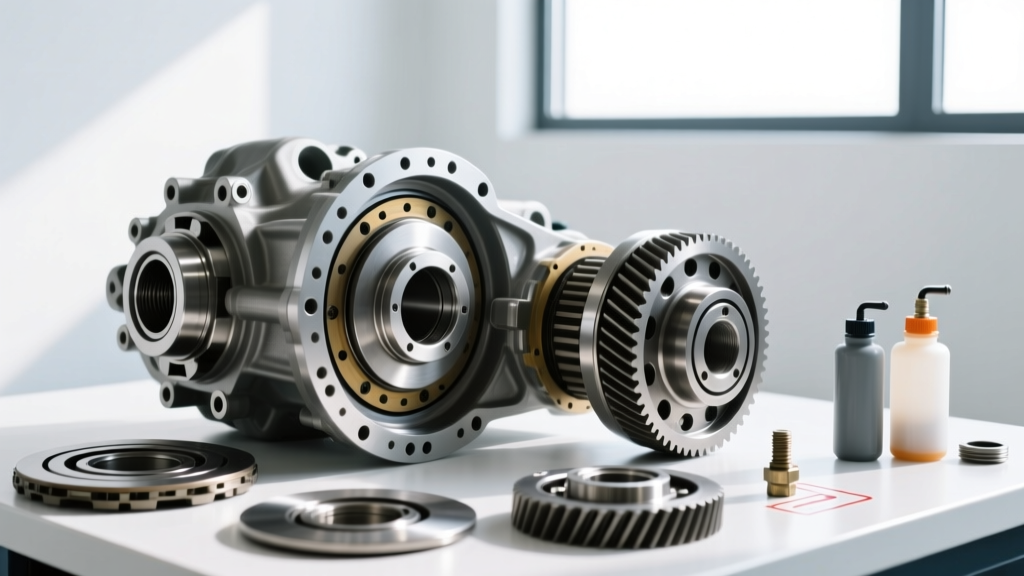
Factory-style and early aftermarket clutch-type limited slip differentials operate using a series of friction discs interleaved with steel plates, preloaded by S-springs or Belleville washers. While adequate for street driving and mild autocross, they possess inherent mechanical limitations under severe duty cycles.
Clutch-Pack Glazing and S-Spring Fatigue
When subjected to high-torque launches or sustained off-road articulation, the friction material in an LSD generates immense heat. This heat causes the clutch material to glaze, effectively turning your limited slip into an open differential. Furthermore, the S-springs that provide the clamping force are prone to metal fatigue and can shatter under shock loads, sending hardened steel shrapnel through your ring and pinion gears. If you are running a high-stall torque converter or sticky 315-width drag radials, a clutch-type LSD is a consumable wear item, not a permanent solution.
Noise Diagnosis: Chatter vs. Gear Whine
Before tearing into the third member, accurately diagnose your differential noise. A rhythmic "clunk-clunk" during low-speed tight turns is classic clutch-pack chatter, indicating depleted friction modifier or worn discs. Conversely, a deceleration whine points to pinion depth issues or worn pinion bearings, while a howl on acceleration suggests ring gear backlash problems. Upgrading to a locker solves the chatter but introduces new acoustic profiles that must be managed via gear oil selection.
Locking Differential Types for the 9-Inch Dropout
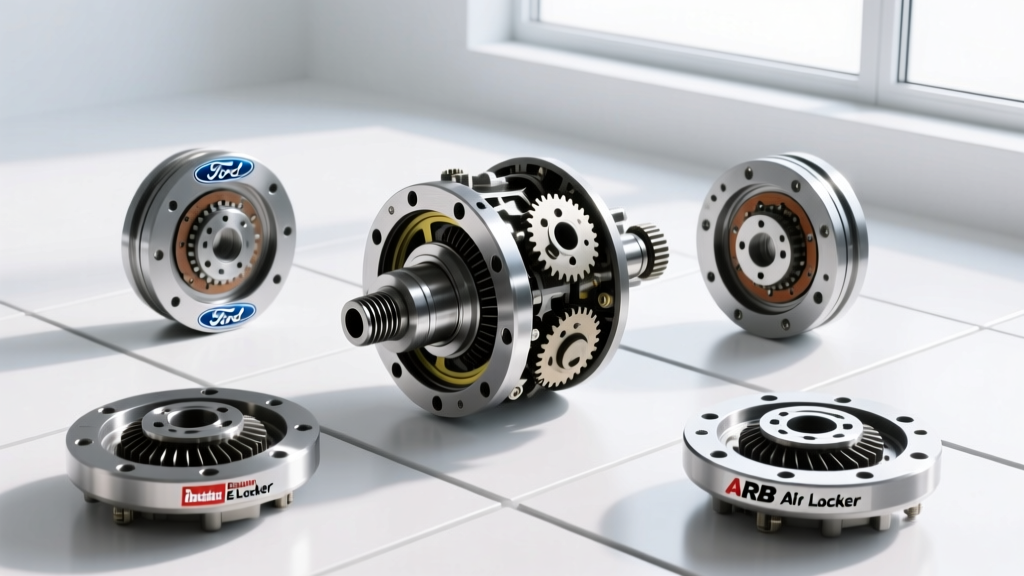
When abandoning the Ford 9 inch limited slip differential, you must choose a traction device that matches your vehicle's weight, power output, and primary use case. Below are the premier locking differential types available for the 9-inch platform.
Eaton Detroit Locker (Mechanical)
The Detroit Locker is a fully automatic, mechanical locking differential. It utilizes a ratcheting dog-clutch mechanism that locks both axles together during straight-line acceleration but allows the outer wheel to over-run (ratchet) during cornering.
- Part Numbers: 225SL28C (28-spline), 225SL31C (31-spline), 225SL35C (35-spline).
- Best For: Drag racing, dedicated off-road trucks, and high-horsepower street/strip builds.
- Drawback: Low-speed steering bind and inherent drivetrain clatter.
ARB Air Locker (Selectable)
The ARB Air Locker replaces the entire carrier and uses an internal pneumatic piston to engage a locking collar. When the 12V onboard compressor is off, it operates as a standard open differential. When flipped on, it provides 100% mechanical lock.
- Part Numbers: RD25 (35-spline, 3.506" bearing journal), RD26 (40-spline).
- Best For: Rock crawling, overlanding, and dual-purpose street/trail rigs.
- Drawback: Requires plumbing, a compressor, and a hollow carrier bearing cap for the air line.
Eaton E-Locker (Electromagnetic)
Similar in concept to the ARB, the Eaton E-Locker uses an electromagnetic coil to push a locking collar into the side gears. It eliminates the need for an air compressor, wiring directly into a 12V dash switch.
- Part Numbers: 19818-01 (31-spline), 19822-01 (35-spline).
- Best For: Street trucks, towing rigs, and mild off-roaders who want push-button simplicity.
Traction Device Comparison Matrix
| Device Type | Typical 2026 Cost | Torque Capacity | Streetability | Maintenance & Fluid Needs |
|---|---|---|---|---|
| Clutch LSD (OEM Style) | $450 - $650 | ~450 lb-ft | Excellent | Requires Friction Modifier; rebuilds every 50k miles |
| Eaton Detroit Locker | $750 - $950 | 1,200+ lb-ft | Poor (Bind/Noise) | NO Friction Modifier; 85W-140 recommended |
| ARB Air Locker | $1,000 - $1,250 | 8,500+ lb-ft (Axle limited) | Excellent (Open diff mode) | Standard GL-5 Synthetic; Air seal inspections |
| Mini-Spool / Full Spool | $150 - $400 | Maximum (Solid lock) | Unusable (Tire scrub) | Standard GL-5; High wear on axle shafts |
The Fluid Dynamics of Lockers vs. LSDs
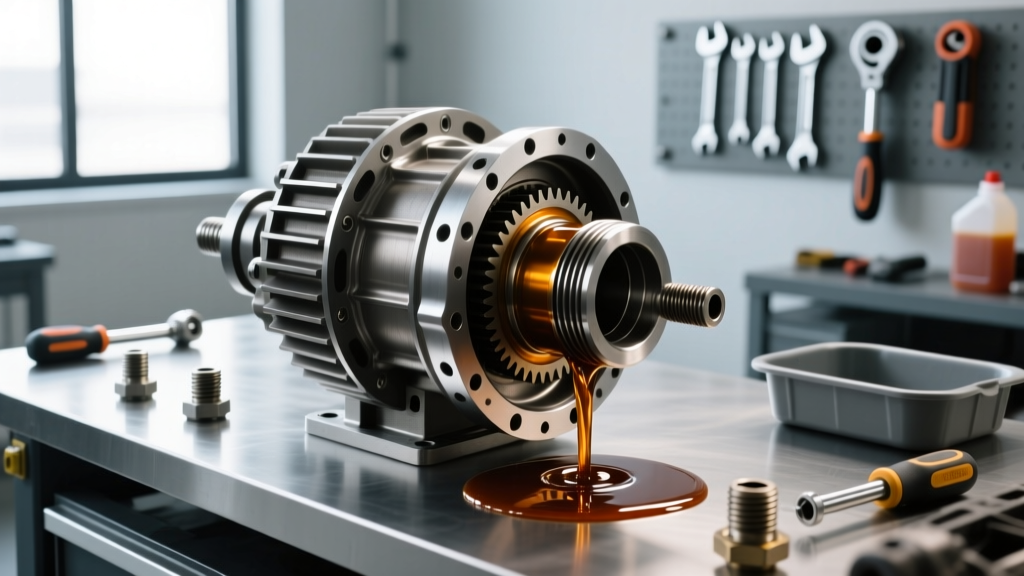
The most overlooked aspect of upgrading from a Ford 9 inch limited slip differential to a mechanical locker is gear oil chemistry. The internal architecture of a locker dictates a completely different lubrication strategy.
Viscosity Selection and the "Locker Howl"
Mechanical lockers like the Detroit Locker rely on dog clutches that physically slam together under load. This metal-on-metal engagement creates the infamous "locker howl" and drivetrain clatter during coasting. To dampen this acoustic vibration, drivetrain engineers recommend stepping up to a heavier 85W-140 mineral-based GL-5 gear oil. The higher viscosity creates a thicker hydrodynamic film that cushions the dog teeth impacts. Conversely, selectable lockers like the ARB or E-Locker do not have ratcheting dog clutches; they can safely run lighter, high-efficiency 75W-90 or 75W-140 full synthetic GL-5 fluids to reduce parasitic drag and operating temperatures.
Additive Protocols: When to Ditch the Friction Modifier
If you are removing a clutch-type LSD, you must completely flush the housing. Clutch LSDs require a Friction Modifier (FM) additive (such as Ford XL-3 or GM 1052358) to allow the clutch packs to slip smoothly. Never use FM in a Detroit Locker or a Spool. Friction modifiers will coat the dog clutches and thrust washers, causing delayed engagement, slipping under load, and premature failure of the internal cross-shafts. According to Eaton Performance Differentials, standard GL-5 hypoid gear oil without any limited-slip additives is the only approved lubricant for their automatic locking differentials.
Precision Setup: Backlash, Pinion Depth, and Torque Specs
Whether you are installing an ARB Air Locker or a Detroit Locker, the 9-inch third member requires exacting setup tolerances. The Hotchkiss dropout design is rigid, but improper setup will destroy a $400 ring and pinion set in under 1,000 miles. Always consult Strange Engineering Tech Info or your specific gear manufacturer for exact pinion depth shim calculations.
Critical Torque Specifications
- Ring Gear Bolts (7/16"-20 UNF): 75-85 lb-ft. Must be cleaned with brake cleaner and secured with Loctite 242 (Blue). Do not use lock washers.
- Pinion Nut (Solid Spacer Setup): 200-250 lb-ft to achieve 15-25 in-lbs of rotating preload.
- Pinion Nut (Crush Sleeve Setup): Tighten incrementally until 20-30 in-lbs of rotational preload is achieved. Never loosen and retighten a crush sleeve.
- Carrier Bearing Cap Bolts: 70-85 lb-ft. Ensure cap alignment marks match the housing saddles.
Backlash and Pattern Verification
Target a backlash of 0.006" to 0.010" measured at the heel, toe, flank, and face of the ring gear using a dial indicator. Because the 9-inch dropout uses side-bearing adjusters (or shims depending on the aftermarket housing), achieving the correct pattern often requires swapping carrier shims multiple times. A perfect pattern will show the drive pattern centered on the face of the tooth, slightly biased toward the heel under load.
Break-In Procedures and the First Fluid Change
When installing a new locker alongside a fresh ring and pinion, the break-in procedure is non-negotiable. The hypoid gear teeth undergo extreme surface loading as they mate.
- Fill the third member with the selected GL-5 gear oil (typically 2.5 to 3.5 quarts depending on housing depth).
- Drive the vehicle for 15-20 miles at speeds under 50 MPH to bring the fluid to operating temperature.
- Allow the axle to cool completely (minimum 8 hours).
- Repeat the heat/cool cycle 3 to 4 times.
- Drain and Refill: At the 500-mile mark, drain the fluid. You will notice a metallic slurry on the drain plug magnet; this is normal lapping compound and microscopic steel from the gear mating process. Refill with fresh synthetic or mineral GL-5 gear oil.
Final Verdict: Choosing Your Traction Device
Upgrading from a Ford 9 inch limited slip differential is a rite of passage for serious performance builders. If your rig is a dedicated drag car or mud truck, the brute-force reliability of the Eaton Detroit Locker remains unbeatable, provided you manage the noise with 85W-140 mineral oil. For weekend warriors who need to drive to the trail, navigate tight switchbacks, and maintain street manners, the ARB Air Locker or Eaton E-Locker offers the ultimate compromise: open-differential civility with the push-button authority of a full spool. Whichever route you choose, precise setup tolerances and strict adherence to gear oil chemistry will ensure your 9-inch axle survives the punishment of modern horsepower.
"The 9-inch dropout is a blank canvas. The traction device you bolt inside it dictates not just how power reaches the ground, but how the entire drivetrain harmonizes under load. Match the locker to the mission, and match the fluid to the locker." — Drivetrain Engineering Principles, ARB Air Locker Technical Resources.