The Thermodynamics of Hypoid Gear Sets
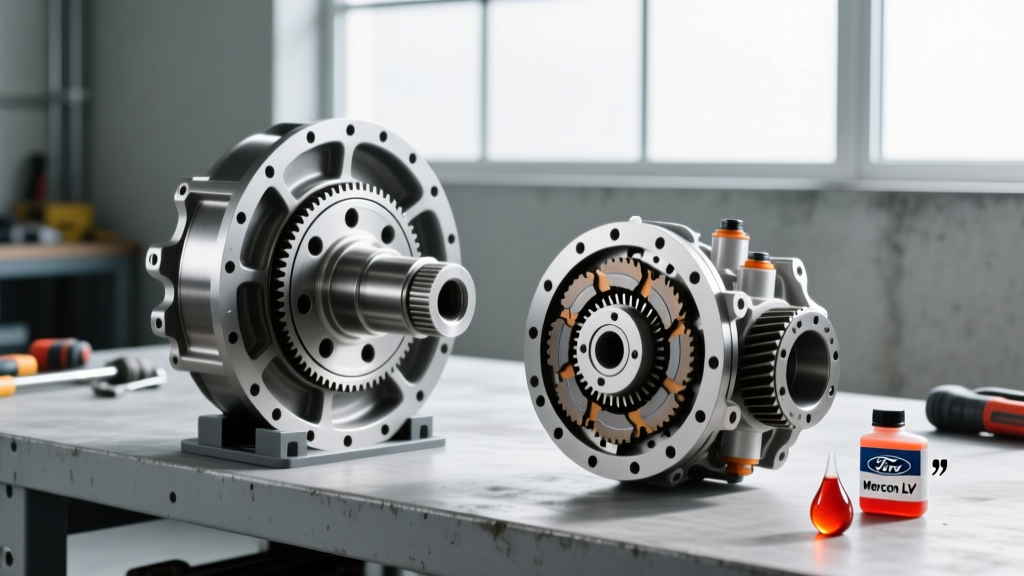
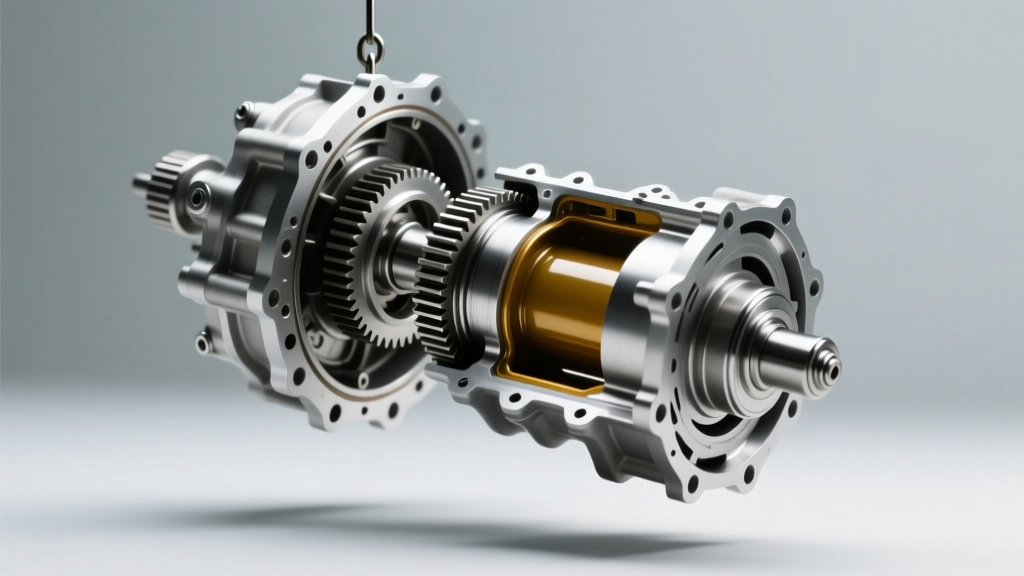
Proper rear differential maintenance extends far beyond simply swapping out old, degraded gear oil. At the core of axle longevity is thermal management. The hypoid ring and pinion gear sets found in 99% of modern solid-axle vehicles (from the Ford 8.8 to the GM 14-bolt 10.5-inch) rely on extreme sliding friction to transmit torque. While highly durable, this sliding action is inherently inefficient compared to helical or spur gears. According to Dana Spicer's engineering documentation, hypoid gear efficiency typically hovers between 95% and 98%. In a heavy-duty application—such as a 400-horsepower diesel truck towing 12,000 pounds—that 2% to 5% parasitic loss translates to thousands of BTUs of pure thermal energy dumped directly into a sump holding barely three quarts of fluid.
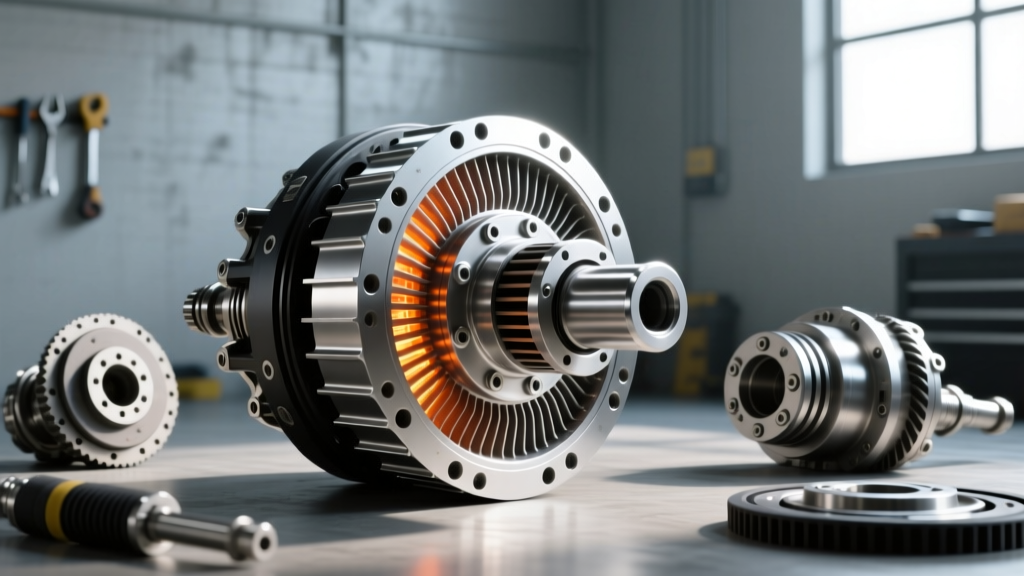
Normal operating temperatures for a differential range from 150°F to 180°F. However, sustained highway towing, off-road crawling, or high-speed desert running can easily push internal sump temperatures past 250°F. At this threshold, standard 75W-90 gear oils begin to suffer from rapid oxidation, viscosity shearing, and additive dropout, leading to accelerated wear on the pinion bearings and gear teeth.
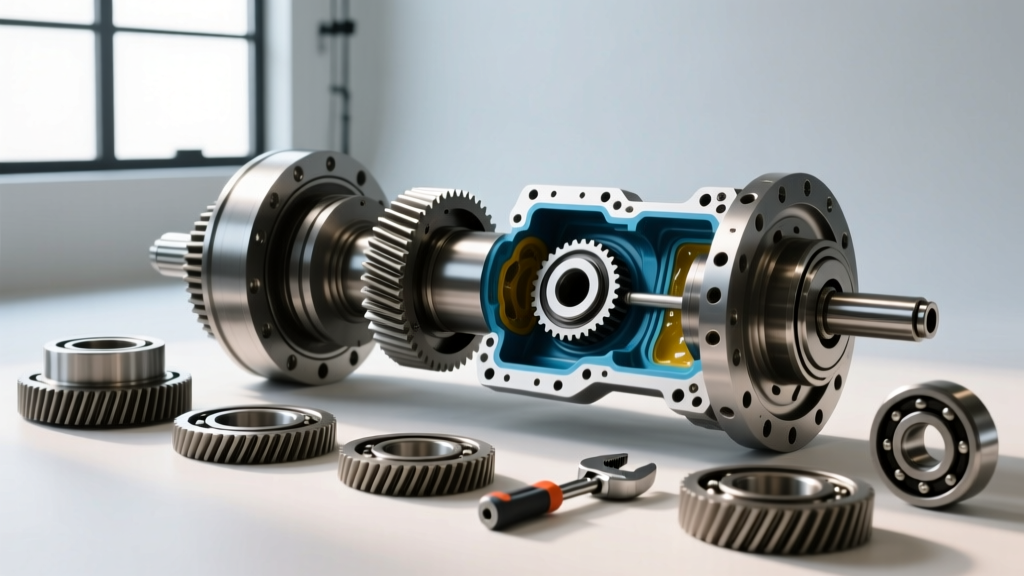
Expert Insight: The pinion bearing is the most thermally stressed component in the axle assembly. It spins at driveshaft speed (often 2,000+ RPM at highway speeds) while supporting the entire thrust load of the pinion gear. Heat-induced thinning of the gear oil directly compromises the roller-to-race separation, leading to brinelling and catastrophic pinion failure.
Why Stock Stamped-Steel Covers Fail Under Load
Original equipment manufacturers (OEMs) prioritize cost and noise, vibration, and harshness (NVH) reduction over thermal dissipation. Most factory differential covers are manufactured from 10-gauge stamped carbon steel. While steel is structurally robust, it is a relatively poor thermal conductor. Carbon steel boasts a thermal conductivity of roughly 50 W/m·K. Furthermore, the smooth, shallow profile of a stamped steel pan offers minimal external surface area for convective cooling.
Inside the housing, the ring gear acts as a centrifugal pump, slinging gear oil against the cover. With a smooth steel cover, the oil simply splashes and falls back into the sump without transferring its heat load to the ambient air. This creates a localized heat sink effect, accelerating fluid degradation and compromising the critical oil wedge that separates the hypoid gear teeth under extreme load.
Upgrading to Cast Aluminum Cooling Covers
The most effective mechanical intervention for thermal management during rear differential maintenance is upgrading to a finned, cast-aluminum differential cover. Cast A356 aluminum offers a thermal conductivity exceeding 150 W/m·K—more than triple that of stamped steel. When combined with deep cooling fins, the external surface area increases by up to 400%, allowing ambient airflow (from vehicle movement or dedicated axle coolers) to strip heat from the housing.
Below is a comparative analysis of common differential cover configurations and their impact on axle thermals:
| Cover Type | Material | Surface Area Gain | Avg. Temp Reduction | Price Range (2026) |
|---|---|---|---|---|
| OEM Stamped Steel | Carbon Steel | Baseline (0%) | N/A | $25 - $45 |
| Smooth Cast Aluminum | A356 Aluminum | +20% | 10°F - 15°F | $80 - $120 |
| Finned Cast Aluminum | A356 Aluminum | +350% to 400% | 20°F - 35°F | $140 - $280 |
| Active Liquid-Cooled | Billet / Cast | +100% (Internal) | 40°F - 60°F | $450 - $800+ |
Industry leaders like Mag-Hytec and PPE (Pacific Performance Engineering) design their finned covers specifically to maximize cross-flow air dynamics. Many of these premium covers also integrate high-strength neodymium magnets in the drain and fill plugs, capturing ferrous micro-shavings before they can circulate and embed into the soft Babbitt material of the pinion and carrier bearings.
Execution: Rear Differential Maintenance with a Cover Swap
Integrating a cooling cover into your rear differential maintenance routine requires precision. Improper sealing or over-torquing can warp the mating surfaces, leading to chronic leaks and bearing misalignment.
1. Drain, Clean, and Inspect
Never rely on a fluid extractor pump through the fill hole. Always use a cover with an integrated, flush-mounted drain plug to ensure 100% of the degraded fluid and suspended metallic particulates are evacuated. Once the cover is removed, spray the interior housing with a non-chlorinated brake cleaner. Wipe down the ring gear, carrier, and ABS reluctor ring with lint-free shop towels. Inspect the magnet on the stock cover; a fine, glitter-like paste is normal wear, but metallic chunks or needle-bearing fragments indicate catastrophic internal failure requiring a full rebuild.
2. Mating Surface Preparation and Sealing
The mating surface on the axle housing must be surgically clean. Use a plastic gasket scraper to avoid gouging the housing. For sealing, you have two premium options:
- RTV Silicone: Permatex Ultra Black (Part #85188) is sensor-safe and highly resistant to synthetic gear oil. Apply a continuous 2mm bead, ensuring you circle every bolt hole. Allow 10 minutes to tack up before mating.
- Reusable Gaskets: Products like the LubeLocker elastomer-coated steel gaskets provide a perfect seal without the curing time or mess of RTV. These are highly recommended for fleet vehicles requiring frequent fluid analysis.
3. Torque Specifications and Sequencing
Warped covers cause pinion bearing preload issues. Always tighten cover bolts in a crisscross (star) pattern, stepping up the torque in three passes. Reference the following common torque specifications:
- GM 10.5-inch 14-Bolt: 25 lb-ft (M10x1.5 bolts)
- Ford 8.8-inch 10-Bolt: 28 to 33 lb-ft (3/8'-16 bolts)
- Dana 44 / 60: 20 to 25 lb-ft (3/8'-16 bolts)
- Chrysler 8.75 / 9.25: 30 to 35 lb-ft
Fluid Pairing: Matching Viscosity to Thermal Reality
A finned cooling cover only solves half the equation; the fluid inside must be engineered for the residual heat. As detailed in AMSOIL's technical whitepapers on drivetrain lubrication, synthetic 75W-140 gear oils are the gold standard for heavy-duty, high-heat applications. The higher base oil viscosity maintains the elastohydrodynamic (EHD) lubrication film between the hypoid gears even when sump temperatures spike to 220°F.
Furthermore, extreme-pressure (EP) additives, typically sulfur-phosphorus compounds, activate under the immense localized pressure of the hypoid contact patch. When fluid temperatures exceed 250°F, these additives can prematurely deplete or react with the copper and bronze alloys found in certain thrust washers and carrier components, leading to corrosive wear. By keeping the baseline temperature 30°F cooler via an upgraded aluminum cover, you exponentially extend the chemical life of the EP additive package, allowing for safe 50,000-mile or even 100,000-mile drain intervals on severe-duty synthetic fluids.
For daily-driven light-duty trucks or sports cars (like the Ford Mustang IRS or Jeep Wrangler Rubicon), a high-quality 75W-90 synthetic remains ideal to minimize parasitic drag and improve cold-weather fuel economy. However, if your rear differential maintenance involves towing or track use, stepping up to a 75W-140 with a dedicated limited-slip friction modifier (if equipped with a clutch-type LSD) is non-negotiable.
Capacity Verification
Aftermarket deep-sump cooling covers often increase fluid capacity by 0.5 to 1.5 quarts. Always fill to the bottom of the fill-hole threads with the vehicle on level ground. For example, a stock GM 14-bolt holds roughly 3.5 quarts, but an upgraded Mag-Hytec deep-pan cover may require up to 4.5 quarts. Always purchase an extra quart of gear oil to account for the increased volume of your new cooling cover.