The MTX-75 Transmission: CSC and Friction Plate Dynamics
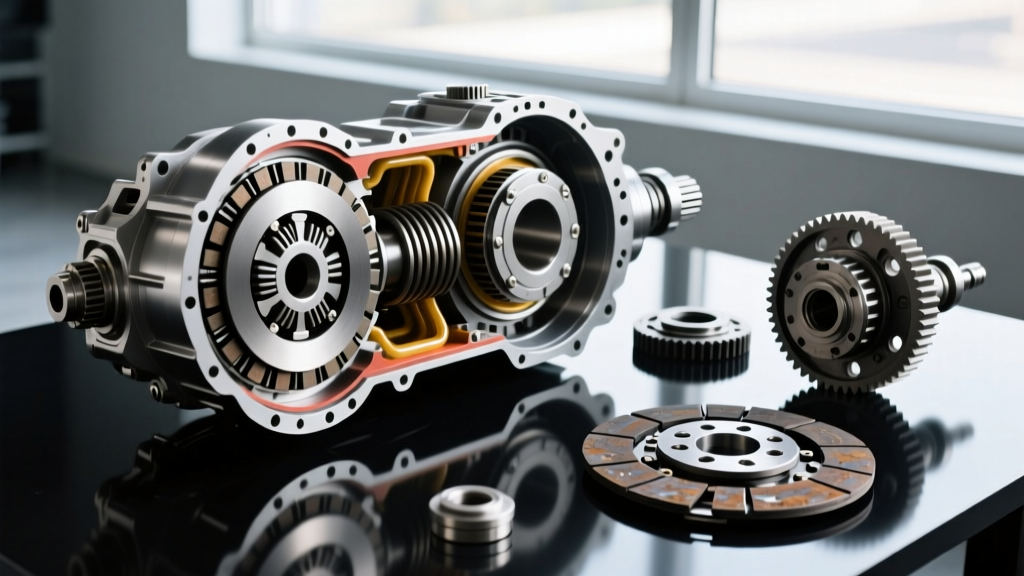
The Ford Focus ST (2013-2018) equipped with the 2.0L EcoBoost engine and the MTX-75 manual transmission remains a benchmark hot hatch. However, as these vehicles age and endure track days, tuned ECU outputs, or aggressive street driving, drivetrain noises become a primary concern for owners and technicians. A frequent point of confusion in the modern workshop is distinguishing between a failing hydraulic throw-out bearing—technically a Concentric Slave Cylinder (CSC)—and a degraded disco de clutch (the globally recognized catalog and bilingual workshop term for the clutch friction disc). Because the MTX-75 utilizes a hydraulic release system that rides constantly on the pressure plate diaphragm fingers, wear patterns and acoustic signatures can easily mimic one another. This model-specific guide provides a definitive, data-driven framework for diagnosing throw-out bearing noise versus friction disc failure, complete with 2026 market pricing, OEM part numbers, and exact torque specifications for the MTX-75 platform.
Auditory and Tactile Diagnostics: Isolating the MTX-75 Noise Profile
When a driver complains of a whirring, grinding, or rattling noise from the bellhousing, the immediate suspect is the release bearing. However, a collapsed marcel spring on the disco de clutch, loose torsional damper springs, or a failing Dual Mass Flywheel (DMF) can generate sympathetic vibrations that travel through the hydraulic line and into the cabin. To accurately diagnose the MTX-75, you must perform a static and dynamic pedal test to isolate the acoustic source.
According to Schaeffler LuK Technical Bulletins, a failing CSC will typically exhibit a gritty, metallic growl that changes pitch exactly in time with engine RPM, but only when hydraulic pressure is applied to the bearing face. Conversely, a worn disco de clutch will often present as chatter upon engagement or a rhythmic knocking at idle that disappears when the pedal is fully depressed (unloading the DMF).
| Diagnostic Symptom | Failing CSC / Throw-Out Bearing | Worn Disco de Clutch / Friction Disc | Failing Dual Mass Flywheel (DMF) |
|---|---|---|---|
| Noise when pedal is DEPRESSED | Yes (Whirring/Growling) | No (Usually quiet) | No (Noise often reduces) |
| Noise when pedal is RELEASED | No (Bearing unloaded) | Possible (Loose hub springs) | Yes (Metallic rattle at idle) |
| Slipping under high boost/load | No | Yes (Glazed or worn material) | No |
| Pedal Vibration / Gritty Feel | Yes (Spalled bearing races) | Yes (Chatter on engagement) | Yes (Severe rotational play) |
| Hydraulic Fluid Loss | Yes (Internal PTFE seal blowout) | No | No |
Concentric Slave Cylinder (CSC) Failure Modes on the MTX-75
The MTX-75 does not use a traditional mechanical throw-out bearing and clutch fork. Instead, it relies on a hydraulic CSC that wraps around the transmission input shaft. The OEM replacement is typically the LuK part number 510 0165 10 (or Ford OEM 6M8Z-7A548-A). In 2026, aftermarket variants are widely available via RockAuto Parts Catalog, but sticking to LuK or OEM Ford is critical due to the high thermal loads generated by the EcoBoost engine's turbocharger proximity.
The most common failure mode for the MTX-75 CSC is not the bearing surface itself, but the internal PTFE hydraulic seal. When this seal degrades due to contaminated DOT 4 fluid or excessive heat soak from the exhaust downpipe, it bypasses fluid internally. This results in a pedal that slowly sinks to the floor while holding the car in gear at a stoplight. If the bearing surface spalls (pitting on the steel races), it will generate a high-frequency whine that is easily transmitted through the aluminum bellhousing. If you find gray, metallic paste coating the inside of the bellhousing inspection cover, the CSC bearing has catastrophically failed and must be replaced immediately to prevent scoring the transmission input shaft sleeve.
Evaluating the Disco de Clutch and Dual Mass Flywheel
If the CSC passes the hydraulic and auditory tests, the noise or chatter is likely originating from the disco de clutch assembly or the DMF. The Focus ST uses a heavy-duty DMF to absorb the low-frequency torsional vibrations inherent to the 2.0L EcoBoost engine. When the internal grease dries out or the internal arc springs fracture, the DMF loses its damping capability.
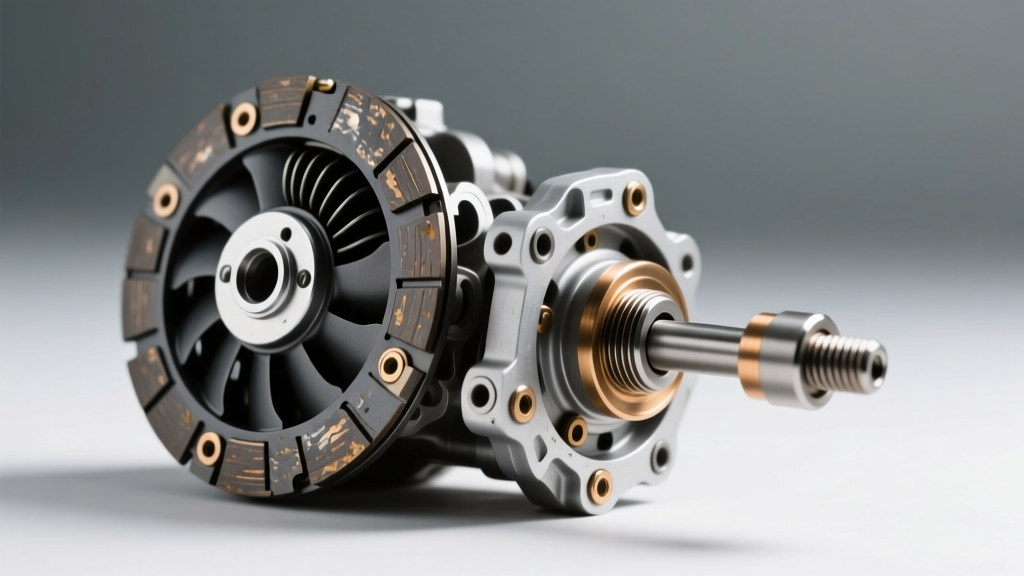
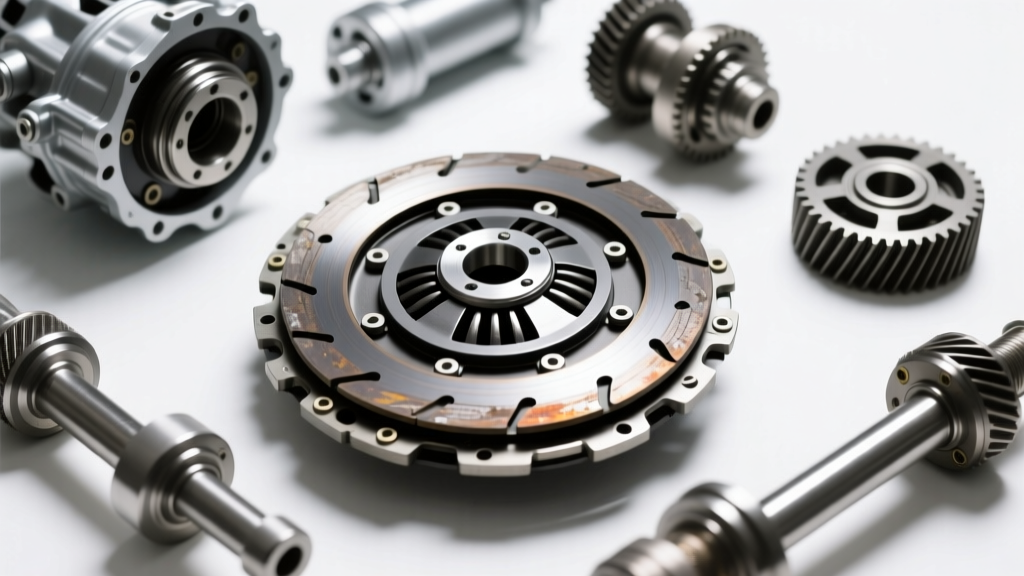
Before ordering a new disco de clutch kit, you must measure the DMF's rotational free-play. Using a flywheel holding tool (such as OTC 45210), measure the rotational play of the secondary mass relative to the primary mass. The maximum allowable rotational play for the MTX-75 DMF is 25mm (approx. 20 degrees). If the play exceeds this, or if the secondary mass has excessive axial wobble (runout greater than 1.5mm), replacing the disco de clutch alone will not solve the vibration issue; the DMF must be replaced concurrently. A worn disco de clutch will typically show blueing on the friction material, indicating severe thermal slip, or cracked marcel springs which cause a harsh, shuddering engagement in first and reverse gears.
Model-Specific Teardown and Torque Specifications
Replacing the CSC or the complete clutch kit on the Focus ST requires dropping the rear subframe and removing the front axles to separate the MTX-75 from the engine block. This is a labor-intensive process. When reinstalling the drivetrain, adhering to exact factory torque specifications is non-negotiable to prevent bellhousing cracks or flywheel bolt shearing under high boost.
| Component | Fastener Size / Note | Torque Specification |
|---|---|---|
| DMF to Crankshaft Flange | Torx T55 (New bolts required) | 74 lb-ft + 90 degrees |
| Pressure Plate to DMF | 8mm Flange Bolts | 22 lb-ft (Star pattern) |
| Bellhousing to Engine Block | 13mm / 15mm Flange | 35 lb-ft |
| Front Axle Nut | 32mm 12-Point (Prevailing torque) | 258 lb-ft |
| Rear Subframe to Chassis | 18mm / 21mm | 111 lb-ft |
| CSC to Bellhousing | Torx T30 | 89 in-lb (Do not overtighten) |
Hydraulic Bleeding Protocol and Fluid Specifications
The MTX-75 hydraulic system is notoriously difficult to bleed due to the low mounting position of the CSC and the convoluted routing of the hard line from the master cylinder. Air trapped in the system will result in a spongy pedal and incomplete disengagement, leading to gear crunching and premature wear on the new disco de clutch.
For 2026 service intervals, Ford specifies Motorcraft DOT 4 LV (Low Viscosity) High Performance Motor Vehicle Brake Fluid (Part# PM-20). Do not use standard DOT 3 or heavy racing DOT 5.1, as the LV formulation is specifically designed for the tight tolerances of the Focus ST's master cylinder and CSC seals. We strongly recommend using a pressure bleeder (such as the Motive 0108) set to 15-20 PSI. Gravity bleeding is rarely successful on the MTX-75 and often leaves a micro-bubble trapped in the CSC piston, leading to premature seal failure.
2026 Cost Breakdown and Sourcing
When quoting a clutch job for the Focus ST, it is highly recommended to replace the CSC, disco de clutch, pressure plate, and DMF as a single unit. The labor overlap is nearly 100%, and a failing $90 CSC will require another $1,000 in labor to replace a year down the line.
- OEM / LuK RepSet Pro (Includes DMF, Disco de Clutch, PP, CSC): $650 - $850 (Sourced via authorized distributors).
- Aftermarket Single-Mass Flywheel Conversion Kit: $450 - $600 (Note: SMF conversions increase cabin vibration and are not recommended for daily-driven EcoBoost applications).
- Motorcraft DOT 4 LV Fluid & Hardware: $35.
- Shop Labor (Book Time 6.2 hours @ $165/hr): $1,023.
By understanding the distinct acoustic and tactile differences between a failing hydraulic throw-out bearing and a worn disco de clutch, technicians can accurately diagnose the MTX-75 on the first lift visit, saving customers from misdiagnosed parts and repeat repairs. Always verify DMF runout and utilize pressure bleeding to ensure the longevity of the EcoBoost drivetrain.